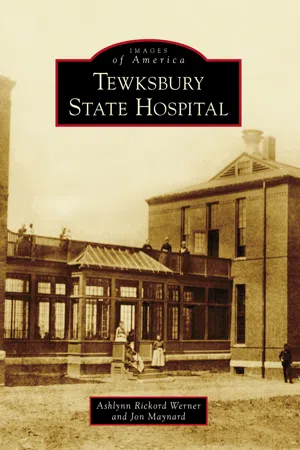
- 128 pages
- English
- ePUB (mobile friendly)
- Available on iOS & Android
eBook - ePub
Tewksbury State Hospital
About this book
Opened on May 1, 1854, the State Almshouse at Tewksbury was a venture by the Commonwealth of Massachusetts to provide economical care for state paupers. Originally intended to accommodate 500 residents, by the end of 1854 the almshouse had admitted well over 2,200 paupers, thus necessitating future expansion. Although the virtue of the institution was called into question in 1883 by Gov. Benjamin Butler, who decried Supt. Thomas J. Marsh, the almshouse would continue to serve the destitute of the commonwealth for years to come. The name would later be changed to Tewksbury State Hospital to reflect the inclusion of the mentally ill, the sick, and those suffering from infectious disease as patients. Today, the hospital remains operational in providing specialized care in the Thomas J. Saunders Building while also serving as host to various governmental agencies and community organizations like the Public Health Museum on its historic campus. Although many of the early structures were demolished in the 1970s, the Tewksbury State Hospital remains an active institution brimming with architectural beauty and a rich public health history.
Information
One
CARING FOR THE POOR
Poverty has seemed an inescapable blight to most governments since the beginning of civilization. As the ancient Greeks and Romans discussed the systematic treatment of the poor, so too did the early settlers of the United States. Throughout the colonial, provincial, and constitutional periods of the United States, members of individual towns were responsible for overseeing the condition and care of their poor. Disagreement was had, however, over the means of care provided to the impoverished. Founding father Benjamin Franklin spoke fervently on this issue. In his article “On the Price of Corn and Management of the Poor,” Franklin wrote:
I am for doing good to the poor, but I differ in opinion of the means. I think the best way of doing good to the poor, is not making them easy in poverty, but leading or driving them out of it. . . . There is no country in the world where so many provisions are established for them; so many hospitals to receive them when they are sick or lame, founded and maintained by voluntary charities; so many alms-houses for the aged of both sexes, together with a solemn general law made by the rich to subject their estates to a heavy tax for the support of the poor.
While Franklin was often a proponent of less government intervention into the welfare of the poor, many local officials felt escalating pressure as the impoverished became more prevalent, demanding further state involvement. Although the erection and maintenance of municipal workhouses and poorhouses can be traced to statutes enacted in the late 17th century, it was not until the statute of 1852, chapter 275, that Massachusetts took full responsibility for its “state paupers.”
One distinct difference separated “state paupers” from paupers—the determination of settlement. Paupers had a legal residence in a town, city, or district, whereas state paupers did not. These “vagrants” were the financial responsibility of the commonwealth, and their care would be provided for at one of the three state institutions that opened in 1854.
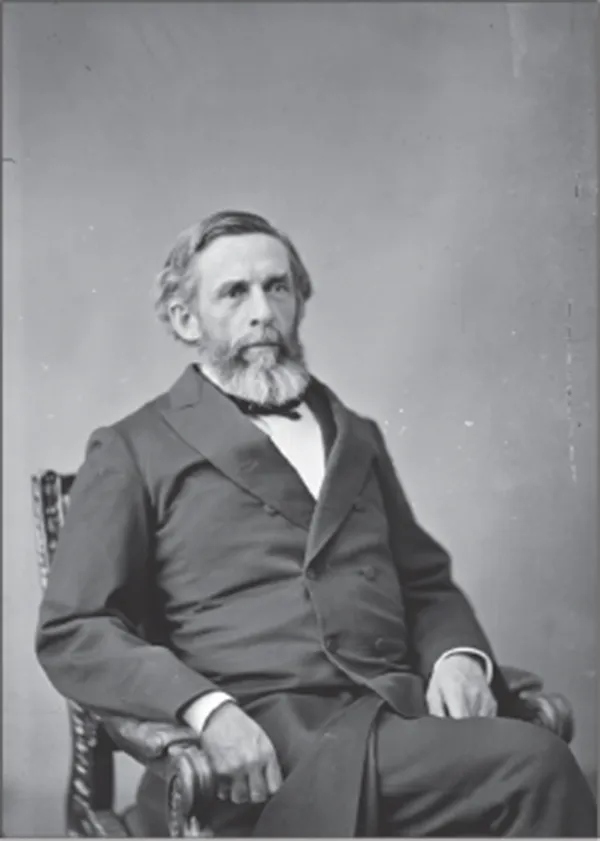
Upon the recommendation of the Joint Special Committee on Alien Passengers and State Paupers in 1852, the Massachusetts legislature authorized Gov. George S. Boutwell to appoint three commissioners to select three sites for the purpose of erecting almshouses that could accommodate 500 state paupers each. The commissioners believed that the expenses incurred to construct these institutions would be recouped within two years from immigration tax income, and the almshouses would become self-sufficient, thus financially beneficial to the state. (Courtesy of the Brady-Handy photograph collection, Prints and Photographs Division of the Library of Congress.)

In selecting three sites, the commissioners were tasked with choosing a location within the counties of Bristol or Plymouth for one, the counties of Essex or Middlesex for another, and to the portion of the commonwealth west of the town of Brookfield for the third. The selected sites were to be in Bridgewater, Monson, and Tewksbury. (Courtesy of the Norman B. Leventhal Map & Education Center at the Boston Public Library.)

While evaluating potential locations for the new almshouses, the commissioners gave priority to sites that were in close proximity to railroad lines, had access to a healthy water source, possessed farmable land, and could be bought for a bargain. Tewksbury met each of these considerations. It was along the Lowell & Lawrence Railroad line, which converged with the Salem & Lowell Railroad about four miles east of the potential almshouse site. The Strongwater Brook passed through the proposed property, and the city of Tewksbury itself sat between the Concord and Merrimack Rivers, creating a natural richness for farming, albeit requiring pauper labor to best cultivate the reclaimed land in the early years. And lastly, the land was able to be purchased for a very low price. In total, roughly 142 acres were purchased in the town of Tewksbury for $3,423.59, about $24 per acre. (Courtesy of the Tewksbury Public Library.)

Financial accommodations were also required for the construction of the almshouse in Tewksbury. The commissioners accepted public bids for the erection of the building in the fall of 1852. Upon review of the bids, the price of construction was significantly higher than initially expected, with the contract being awarded to Albert Currier of Newburyport in the amount of $34,287, which was $15,000 over the initial projection. Cheaper building material was selected to keep the overall price down, while additional funds were needed to outfit the facility with furnishings for patients and staff. The legislature also appropriated funds to construct sheds, outhouses, an icehouse, and a tomb for the almshouse, although upon opening day, the institution was still unfinished.

On May 1, 1854, Gov. Emory Washburn issued a proclamation to open the State Almshouse at Tewksbury. The original building in which the almshouse opened was constructed of wood. The commissioners tasked with erecting the three almshouses chose wood for the building’s construction as it saved $26,462 in comparison to utilizing brick. The commissioners were conscious of the hazards with wood construction, but they believed the structure would suffice for 50 to 75 years. They decided to incur the additional expense of installing a slate roof and iron gutters instead of sawed shingles and wooden gutters, which would boost safety. The almshouse building was a U-shaped structure with four stories at the center and three stories on both wings. The center housed the administrative functions, and the wings housed males on one side and females on the other. Between the wings was a lush courtyard designed to be both majestic to the public and therapeutic for patients.
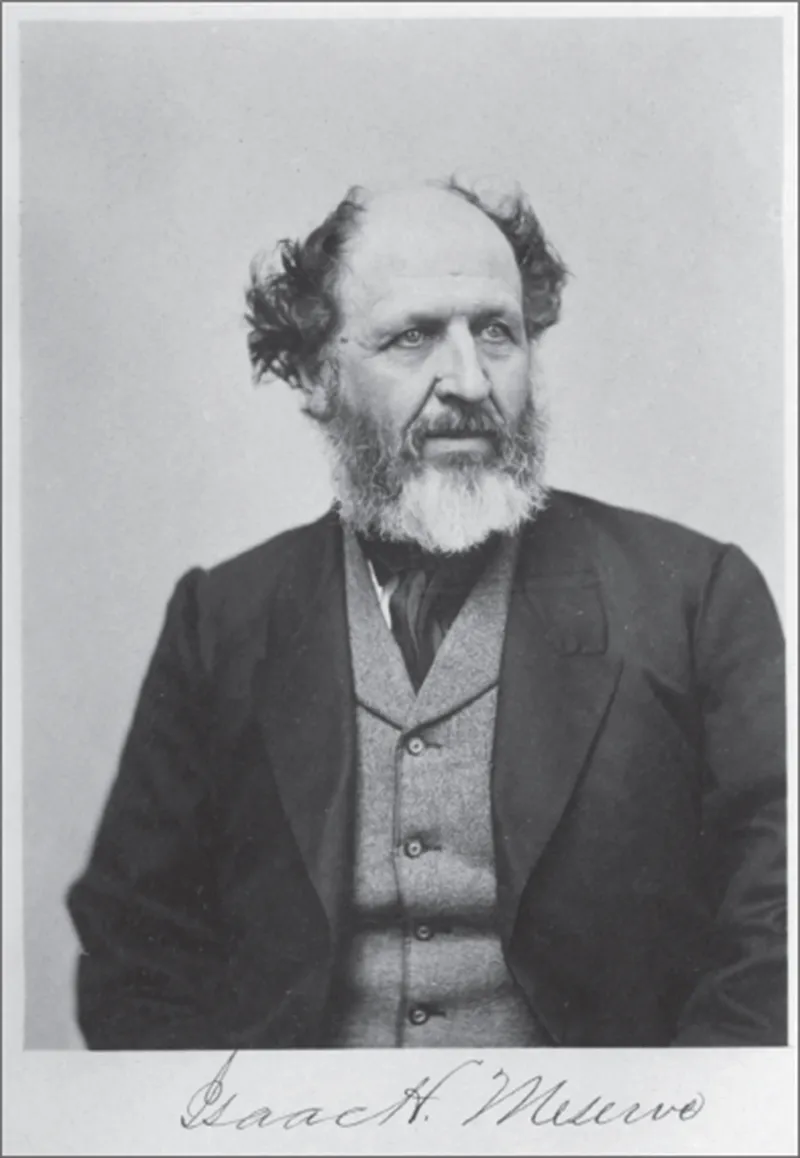
Isaac Hall Meserve was the first superintendent of the State Almshouse at Tewksbury, although he was not new to this type of role. From 1842 to 1854, Meserve served as the superintendent of the Roxbury Almshouse before coming to Tewksbury. Under his leadership, most patients were employed about the almshouse either for housework, in the various shops, or tending to the farm. As superintendent, Meserve routinely called attention to the oversight of the children in the commonwealth’s care. The 1855 Act Providing for the Classification of State Paupers passed by the general court mandated that state pauper children between the ages of five and sixteen be sent to the almshouse at Monson, but Meserve believed this to be problematic as parents incurred much trouble and expense to retrieve them from Monson. Thanks to Meserve and his almshouse colleagues strongly opposing this mandate, the general court repealed the act in May 1856 and allowed for children to be cared for at the almshouse in their respective district. (Courtesy of the State Library of Massachusetts.)

Within his first three years at Tewksbury, Meserve vastly improved the grounds and farmland. The farm, likened to the Sahara Desert in the early years, was brimming with trees, bushes, stumps, stones, and ploughed, sandy earth. Substantial blasting and removal of stone was completed, and the materials were reused to build roads and a stone fence around the yard. The cleared land was cultivated for the harvesting of grains and vegetables for the almshouse. (Courtesy of Harvard Art Museums/Fogg Museum, Transfer from the Carpenter Center for the Visual Arts, Social Museum Collection.)

Unfortunately, the State Almshouse at Tewksbury faced overcrowding from the day it opened its doors in 1854. Originally built to house 500 paupers, on May 1 there were well over 500 persons waiting for admission. By the end of the first week, there were almost 700 paupers in state care, and by December 1, 1854, there had been 2,193 persons admitted to Tewksbu...
Table of contents
- Cover Page
- Half Title
- Title Page
- Contents
- Copyright Page
- Dedication
- Acknowledgments
- Introduction
- 1. Caring for the Poor
- 2. Caring for the Insane
- 3. Caring for the Infirm
- 4. Caring for the Afflicted
Trusted by 375,005 students
Access to over 1.5 million titles for a fair monthly price.
Study more efficiently using our study tools.
Frequently asked questions
Yes, you can cancel anytime from the Subscription tab in your account settings on the Perlego website. Your subscription will stay active until the end of your current billing period. Learn how to cancel your subscription
No, books cannot be downloaded as external files, such as PDFs, for use outside of Perlego. However, you can download books within the Perlego app for offline reading on mobile or tablet. Learn how to download books offline
Perlego offers two plans: Essential and Complete
- Essential is ideal for learners and professionals who enjoy exploring a wide range of subjects. Access the Essential Library with 800,000+ trusted titles and best-sellers across business, personal growth, and the humanities. Includes unlimited reading time and Standard Read Aloud voice.
- Complete: Perfect for advanced learners and researchers needing full, unrestricted access. Unlock 1.5M+ books across hundreds of subjects, including academic and specialized titles. The Complete Plan also includes advanced features like Premium Read Aloud and Research Assistant.
We are an online textbook subscription service, where you can get access to an entire online library for less than the price of a single book per month. With over 1.5 million books across 990+ topics, we’ve got you covered! Learn about our mission
Look out for the read-aloud symbol on your next book to see if you can listen to it. The read-aloud tool reads text aloud for you, highlighting the text as it is being read. You can pause it, speed it up and slow it down. Learn more about Read Aloud
Yes! You can use the Perlego app on both iOS and Android devices to read anytime, anywhere — even offline. Perfect for commutes or when you’re on the go.
Please note we cannot support devices running on iOS 13 and Android 7 or earlier. Learn more about using the app
Please note we cannot support devices running on iOS 13 and Android 7 or earlier. Learn more about using the app
Yes, you can access Tewksbury State Hospital by Ashlynn Rickord Werner,Jon Maynard in PDF and/or ePUB format, as well as other popular books in History & North American History. We have over 1.5 million books available in our catalogue for you to explore.