- 160 pages
- English
- ePUB (mobile friendly)
- Available on iOS & Android
eBook - ePub
Conserving the Historic Environment
About this book
Why do we decide that parts of our built environment are worth the special attention that heritage designation brings? How can the character of conservation areas and other historic places continue to evolve to provide new housing, release their economic potential and enhance communities? What are the principles to understand when judging the impact of new development or alterations to our significant heritage assets? And what about the future of conservation? In seeking to answer such questions, this book provides a grounding for planners and other related professionals in the key concepts associated with conservation and how to apply them in practice.It begins by setting out the values and principles that underpin the current conservation-planning systems, explaining their historic context and evolution and critically examining these systems and possible counter approaches. Illustrated by a wide range of examples of historic and modern buildings, conservation areas, world heritage sites, parks and gardens, it then focuses upon decision-making and the management of change. It discusses how the conservation of the historic environment has become increasingly linked to other social and economic policy objectives before identifying key lessons and implications for future policy development and planning practice.
Information
Topic
ArchitectureSubtopic
Urban Planning & LandscapingChapter 1
Introduction
The principal focus of this book is the activity of English conservation-planning for cultural heritage, or the conservation of the historic environment. However, we hope that it will have a wider relevance, certainly to the rest of the UK where practice is very similar, albeit within different legal frameworks, and to other countries where the debates and principles we discuss are relevant. In this introductory chapter we seek first to explain what we mean by ‘English conservation-planning’, before briefly sketching out the principal legal and policy frameworks that apply in England and how these have evolved. In the final part of the chapter we introduce the organisation of the rest of the book.
Cultural heritage is a very broad concept. A simple, all-encompassing definition is the use of the past in the present, extending to any tangible object or social practice you could imagine, if it means something to someone. Our focus is upon a particular sub-set of this inheritance: the legacies in terms of monuments, buildings and environments deemed to have a protected status within law and government policy and the process of urban planning, usually, although not always, through some form of legally defined status. This status comes about by, at some point in time, there being sufficient political will to introduce legislation giving a measure of state protection. This involves a decision that there is collective importance to temper the rights of individuals. The early origins of such action for the collective good stem back nearly a century and a half, but conservation-planning as we know it today is really the product of the evolving planning system over the last 50 or so years. Local planning authorities are responsible for most day-to-day management of the historic environment across mainland Britain, with various referral processes requiring consultation with national heritage bodies and/or national amenity societies. Some local authorities produce useful over-arching heritage strategies.
This collection of monuments, buildings and environments – including parts of settlements, parks and gardens, and battlefields – is commonly referred to as the historic environment, and the process of managing it as the conservation of the historic environment. Since decisions involving change are generally mediated through the process of urban planning, we frequently use the slightly narrower term conservation-planning. Conservation-planning is closely related in its history and its ideas to other conservation practices, but at the same time it has developed its own knowledge base, its own principles and its own professional culture. 1997 saw the creation of its own professional body, the Institute of Historic Building Conservation, growing from the earlier Association of Conservation Officers. We should note, the conservation of the historic environment also includes the protection and management of monuments and archaeological sites by archaeologists, but archaeology is beyond the remit of this book.

The development of state protection and categories of protection
The first British legislation designed to protect part of the historic environment was the Ancient Monuments Act of 1882, a weak law focused upon a very small number of pre-historic archaeological sites, but which established the archaeological category of Scheduled Ancient Monument that endures today. Twentieth-century legislation introduced a series of other protective categories, which cumulatively added to those in place. Each of these introductions has signalled conceptual changes in terms of the range of heritage that might fall within the scope of the law, as well as an extension of political will to circumscribe private property rights. It is a feature of British legislation that no right of appeal over inclusion within a protected category exists (except over factual inaccuracy), nor is such status accompanied by any measures of compensation or general tax dispensation. This is not the case in all countries. Overall, the British approach to heritage protection might be characterised as extensive (in terms of the sheer quantity of protected heritage) but allowing flexibility of management compared with many other countries. This can alternatively allow a positive creativity in the process or prove weak in the protection it provides. As a system, it has always seemed under-resourced, even in more generously funded times.
The two most important legal categories for this book are listed buildings and conservation areas. The modern listing system was introduced through the 1944 and 1947 Town and Country Planning Acts, as part of the establishment of comprehensive planning laws in the post-war period. While the initial legislation was weak – effective controls arriving later in 1968 – it was a radical extension of the principle of heritage protection to include buildings people use and that have economic utility. Furthermore, the important principle of an inclusive approach based on comprehensive survey was established; that is, all buildings meeting defined criteria will be listed rather than a representative sample.
In England, the primary legislation is now the Planning (Listed Buildings and Conservation Areas) Act 1990 (with various subsequent amendments). Decisions on what to list are made by government, advised by Historic England. This can be done as part of a comprehensive survey (geographical or thematic) or following a request to look at a particular building (often referred to as ‘spot listing’). Buildings are graded as: I (‘one’, only 2.5 per cent of listed buildings); II* (‘two star’, 5.5 per cent); and II (‘two’, 92 per cent). Though the grading indicates the relative importance of the building, the statutory controls that apply are the same for each grade.
Works that would affect the character of a listed building as a building of special architectural or historic interest (the full definition of listed buildings) require listed building consent. This is in addition to any other consent that might be required, such as planning permission. All applications should, in theory at least, include a Heritage Statement, including a ‘statement of significance’ (see Chapter 3). Decisions on listed building consent, and indeed on applications involving all designated heritage assets, are subject to specific policies in the National Planning Policy Framework (NPPF) (Ministry of Housing, Communities and Local Government 2019) and the expectation is that:
- clear and convincing justification should be made for any harm to significance however slight and whether through direct physical impact or by change to the setting,
- substantial harm (direct or by change in the setting) to or total loss of Grade II listed buildings and registered parks and gardens is expected to be ‘exceptional’, and,
- substantial harm to or total loss of Grade I or II* listed buildings and registered parks and gardens, protected wreck sites, battlefields, World Heritage Sites, scheduled monuments and undesignated sites of equivalent importance to scheduled monuments is expected to be ‘wholly exceptional’.
Harm can be justified on the grounds of public benefits that outweigh that harm. Public benefits in this sense will most likely be the fulfilment of one or more of the objectives of sustainable development as set out in the NPPF, provided the benefits will extend to the wider community and not be just for private individuals or businesses.
Box 1.1 Listed buildings
Listed buildings vary enormously in terms of type of building and structure, age and scale. There are approximately 400,000 list entries in England. However, older list entries can encompass a whole street of buildings, so in practical terms the number of individual buildings actually listed is considerably higher and estimates suggest this is over 500,000. There are around 50,000 listed buildings in Scotland, 30,000 in Wales and 9,000 in Northern Ireland. By far the most numerous type of listed buildings is dwellings, ranging from grand stately homes to more humble abodes (Figs 1.2 and 1.3). Other major categories of protection include, for example, churches (Fig.1.1), but listing also extends to a range of structures that are not habitable buildings as such, for example, mile posts and telephone boxes (Fig.1.5).
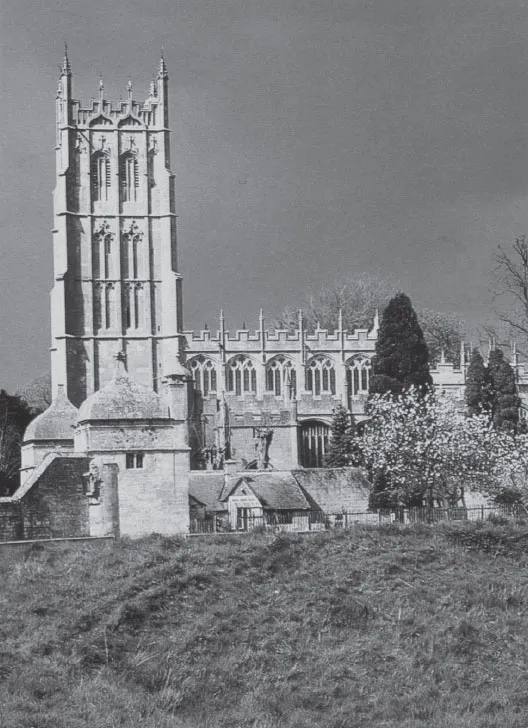
Figure 1.1
St James, Chipping Camden, Gloucestershire, a Grade I listed building, a magnificent church in the Cotswolds.
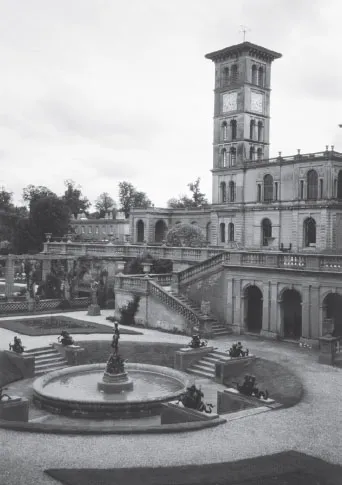
Figure 1.2
Osborne House, Isle of Wight, designed by Prince Albert for Queen Victoria, a Grade I listed building, is at the grander end of houses listed.
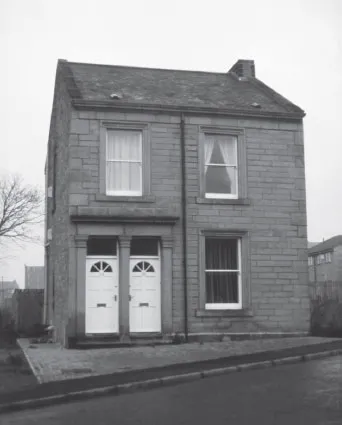
Figure 1.3
33 and 35 Fife Street, Gateshead, a pair of ‘Tyneside flats’ listed Grade II, are at the modest end of houses listed.
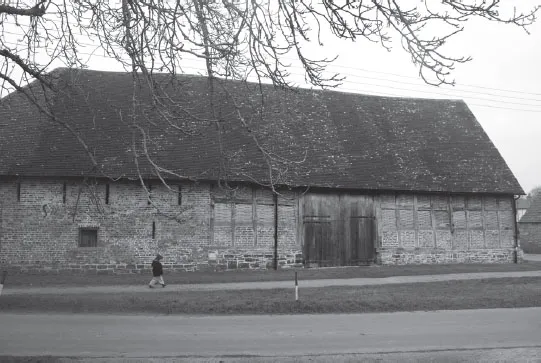
Figure 1.4
Agricultural buildings are a common category of listing – large 17th-century barn, Grade II* listed, Frampton on Severn, Gloucestershire.
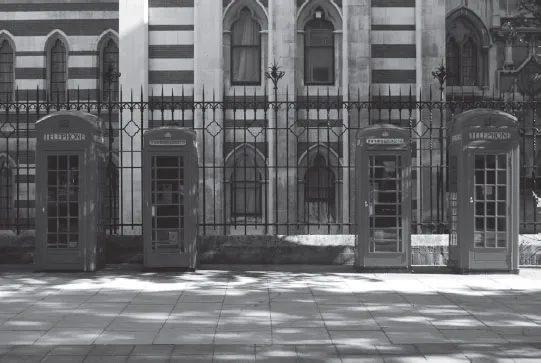
Figure 1.5
Following privatisation in 1982, some traditional, red telephone boxes were listed – this group shows a mixture of K2 and K6 models, Grade II listed, Carey Street, central London.
Conservation areas were introduced by the 1967 Civic Amenities Act. This represents another major conceptual jump by extending heritage protection from individual monuments and buildings to whole areas. At the time, there was much anxiety over the loss of swathes of traditional environments up and down the country in a period when planned comprehensive redevelopment was at its height. They are areas of special architectural or historic interest the character or appearance of which it is desirable to preserve or enhance. Again, the legislation governing conservation areas has developed over time. The responsibility for deciding which areas should be designated as conservation areas usually rests with the local planning authority and, unlike listed buildings, there is no grading system of relative significance. Early estimates had forecast that there might be perhaps 1250 conservation areas, numbers that have long since been exceeded. Occasionally, critics have asserted that local authorities have used their powers too freely, without enough regard to the statutory criteria of ‘special architectural or historic interest’. Equally, there have been complaints about the inadequacy of controls and lack of resources to enable planning authorities to manage change...
Table of contents
- Cover
- Title Page
- Copyright
- Contents
- Foreword by Graham Haughton
- Preface and Acknowledgements
- Chapter 1. Introduction
- Chapter 2. Theories of Conservation
- Chapter 3. Principles of Research, Analysis and Management
- Chapter 4. Managing Change in Historic Buildings
- Chapter 5. Managing Change in Historic Areas
- Chapter 6. Conserving the Heritage of Modernity
- Chapter 7. The Historic Environment and Sustainable Development
- Chapter 8. Conservation Today and Tomorrow
- Bibliography
Trusted by 375,005 students
Access to over 1.5 million titles for a fair monthly price.
Study more efficiently using our study tools.
Frequently asked questions
Yes, you can cancel anytime from the Subscription tab in your account settings on the Perlego website. Your subscription will stay active until the end of your current billing period. Learn how to cancel your subscription
No, books cannot be downloaded as external files, such as PDFs, for use outside of Perlego. However, you can download books within the Perlego app for offline reading on mobile or tablet. Learn how to download books offline
Perlego offers two plans: Essential and Complete
- Essential is ideal for learners and professionals who enjoy exploring a wide range of subjects. Access the Essential Library with 800,000+ trusted titles and best-sellers across business, personal growth, and the humanities. Includes unlimited reading time and Standard Read Aloud voice.
- Complete: Perfect for advanced learners and researchers needing full, unrestricted access. Unlock 1.5M+ books across hundreds of subjects, including academic and specialized titles. The Complete Plan also includes advanced features like Premium Read Aloud and Research Assistant.
We are an online textbook subscription service, where you can get access to an entire online library for less than the price of a single book per month. With over 1.5 million books across 990+ topics, we’ve got you covered! Learn about our mission
Look out for the read-aloud symbol on your next book to see if you can listen to it. The read-aloud tool reads text aloud for you, highlighting the text as it is being read. You can pause it, speed it up and slow it down. Learn more about Read Aloud
Yes! You can use the Perlego app on both iOS and Android devices to read anytime, anywhere — even offline. Perfect for commutes or when you’re on the go.
Please note we cannot support devices running on iOS 13 and Android 7 or earlier. Learn more about using the app
Please note we cannot support devices running on iOS 13 and Android 7 or earlier. Learn more about using the app
Yes, you can access Conserving the Historic Environment by John Pendlebury,Jules Brown in PDF and/or ePUB format, as well as other popular books in Architecture & Urban Planning & Landscaping. We have over 1.5 million books available in our catalogue for you to explore.