Seeing the biblical prophets in context makes all the difference in understanding their messages
In
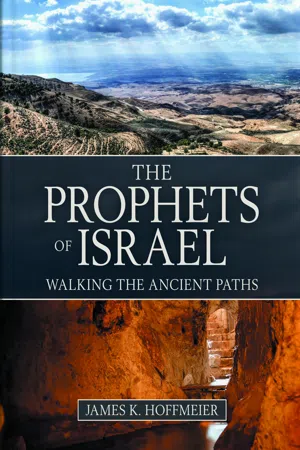
, Old Testament scholar and longtime field archaeologist James K. Hoffmeier explores the biblical prophets through their ancient settings. Readers gain a more accurate and comprehensive understanding through many practical components:
• Full-color photos and images of historical and cultural importance
• Focus on the geopolitical contexts of the prophets
• Clear explanations of the prophets' provoking messages
• Discussion questions for Bible students or instructor use
These features and photos vividly illustrate the biblical narratives and the prophets' concerns, helping readers better comprehend each text's message and make informed theological applications.
The biblical prophetic tradition extends far before and far after the Major and Minor Prophets. Yet all biblical prophets--including recognizable figures like Moses and Elijah, lesser-known prophets like Huldah and Micaiah, and the New Testament prophets--ministered in distinctive cultural and historical circumstances. Hoffmeier draws on his extensive knowledge of ancient Near Eastern culture, geography, political realities, and the Old Testament message to locate the prophets in their worlds. This approach illuminates prophetic messages and ministries with a theological clarity that basic history and literary interpretation cannot achieve.
- 400 pages
- English
- ePUB (mobile friendly)
- Available on iOS & Android
eBook - ePub
About this book
Information
Topic
Teologia e religioneSubtopic
Studi biblici
1
INTRODUCTION TO THE HEBREW PROPHETS
THE PROPHETS IN THE BIBLICAL CANON
The prophets of Israel lived and spoke between 2,500 and 3,000 years ago, and yet their voices ring out with some regularity today. Their messages and words survive in the Hebrew Scriptures or Old Testament. We often hear their words but perhaps don’t realize their origin. During the Christmas season, for example, the words of the Israelite prophet Isaiah are ubiquitous in the hymns we sing (e.g., “Lo How a Rose,” “O Come O Come Immanuel”); and Handel’s “Messiah” (also widely played at Eastertime) is replete with the words of Isaiah, the eighth-century B.C. prophet, and other seers. Malachi, the last Israelite prophet of the Old Testament, lived approximately 2,500 years ago, and yet his words “risen with healing in his wings” are sung annually in the classic Christmas carol, “Hark the Herald Angels Sing.”
Likewise the message of these prophets is still quoted today when it comes to justice and social issues. When Dr. Martin Luther King Jr. proclaimed in his “I Have a Dream” speech “but let justice roll down like waters,” he was quoting the eighth-century prophet Amos (5:24) to make his case for civil rights for all citizens of the United States. As a consequence, of such statements, the expression of speaking with a “prophetic” voice is familiar. One who is prophetic denounces injustice and challenges the status quo and the powerful, while advocating for just causes. Similarly, a person who stands alone on an issue may be likened to Isaiah’s “voice of one who cries in the wilderness” (Isa. 40:3). The word “jeremiad,” referring to a long bitter complaint or lamentation (or a piece of literature that does the same), derives directly from the name of Jeremiah, the seventh-century prophet known also as the “weeping prophet.” According to tradition, he was the author of the book of Lamentations. The expression “seeing the handwriting on the wall,” signifying pending doom or bad news, hearkens back to the book of Daniel (5:24–25). Here the vulnerable ruler Belshazzar’s imminent demise was etched on the wall where he was holding a massive party while the Persians were about to invade. It is therefore safe to conclude that the Hebrew prophets continue to leave their mark in Western culture, and naturally for Jews and Christians, the prophetic books are a critical part of their shared Scriptures.
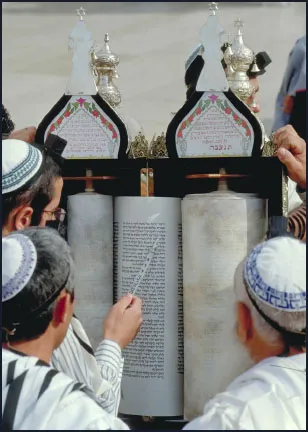
Fig. 1.1 – A Torah Scroll Photo by Alexander Schick/bibelausstellung.de
Browsing the table of contents of most modern translations of the Bible, the reader will notice that the books of Old Testament are divided into rather logical groupings: the Law, the Historical Books, the Poetic books, and the Prophets (see chart). This arrangement is based on the Greek translation of the Old Testament. Commonly known as the Septuagint, the Greek translation was made in Alexandria, Egypt, beginning in the third century B.C. to service the Greek-speaking Jewish community in Egypt (and elsewhere). It seems that the scribes who rendered the Greek organized the canon more by literary categories or genres. Hence the book of Daniel is placed between Ezekiel and Hosea, whereas in the Hebrew sequence, Daniel is found in the third grouping, namely, the Writings.
The Hebrew Bible offers a simpler organizational scheme, consisting of the same books as found in the Septuagint, but just in three units: the Law (Torah), the Prophets (Neviim) and the Writings (Kethuvim). This tripartite structure is reflected in the Jewish tradition of calling the Hebrew Scriptures as Tanakh. The name is an acronym derived by taking the first letter of the three Hebrew words, TNK.
Readers of modern translations may be surprised to see how the Prophets sections vary in the two traditions. In the Hebrew Bible, the Neviim begins with the book of Joshua, followed by Judges, Samuel, and Kings, then Isaiah, Jeremiah, Ezekiel, and then what in the Jewish tradition is known as the book of the Twelve, or simply the Twelve (i.e., Hosea to Malachi). It is not clear why this unit of Scripture includes the so-called “historical” books (Joshua through 2 Kings), although it may be that prophets were the authors or compilers of these.1
English/Greek Canon and the Hebrew Canon | |
Greek/English Canon | Tanakh/Hebrew Canon |
The Law | The Torah/Law |
Genesis Exodus Leviticus Numbers Deuteronomy | Genesis Exodus Leviticus Numbers Deuteronomy |
Historical Books | Neviim/Prophets |
Joshua Judges Ruth 1–2 Samuel 1–2 Kings 1–2 Chronicles Ezra Nehemiah | (Former Prophets) Joshua Judges Ruth 1–2 Samuel 1–2 Kings (Latter Prophets) Isaiah |
Poetic Books | Jeremiah |
Job Psalms Proverbs Ecclesiastes Song of Solomon | Ezekiel Hosea Joel Amos Obadiah |
Prophetic Books | Jonah |
Isaiah Jeremiah Lamentations Ezekiel Daniel Hosea Joel Amos | Micah Nahum Habakkuk Zephaniah Zechariah Haggai Malachi |
Obadiah | Kethuvim/Writings |
| Jonah Micah Nahum Habakkuk Zephaniah Zechariah Haggai Malachi | Psalms Proverbs Job Song of Solomon Ruth Lamentations Ecclesiastes Esther Daniel Ezra Nehemiah 1–2 Chronicles |
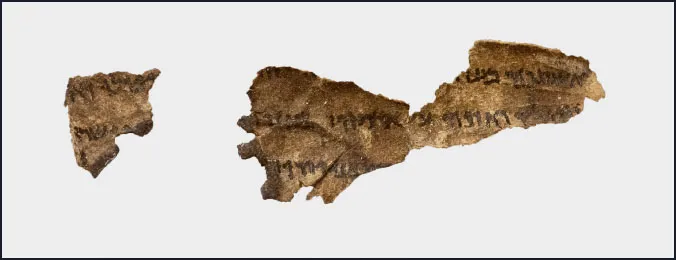
Fig. 1.2 – Dead Sea Scroll Fragment of Amos Lanier Theological Library – photo by Laurel Wilson
According to the first-century-A.D. Jewish historian Josephus, the prophets of Israel were history writers (Contra Apion 1.38–41). This seems to accurately reflect the tradition preserved in 1–2 Chronicles that reports that the author consulted otherwise unknown chronicles written by prophets. The Chronicler actually records the titles of these books and places them as his bibliography at the end of each section on the various rulers. Concerning the reign of David, he lists “The Chronicles of Samuel the seer,” “the Chronicles of Nathan the prophet,” and “the Chronicles of Gad the seer” (1 Chron. 29:29 ESV), and for Solomon, “the history of Nathan the prophet,” “the prophecy of Ahijah the Shilonite,” and “the visions of Iddo the seer” (2 Chron. 9:29 ESV), and “the acts of Uzziah from first to last, Isaiah the prophet the son of Amoz wrote” (2 Chron. 26:22 ESV). Since the books of Samuel, Kings, and Chronicles focus on royal history, that is, the reigns of the kings of Judah and Israel, the prophets who sometimes acted as personal chaplains to the rulers were in an ideal position to record the acts of the kings and comment on the their fidelity to God’s Law.
The Chronicles of Samuel may well be the book of 1 Samuel. Nothing is known of the Chronicles of Gad and Nathan, nor the writings of Ahijah. The book of Isaiah and segments of 2 Kings may well contain portions from what the Chronicler implies was a detailed, chronological report about king Uzziah written by the great prophet. The association of the prophets with the history writing imbedded in the books of Chronicles may account for the inclusion of the books of Joshua, Judges, Samuel, and Kings in the Prophets section. Moreover, the prophet Samuel is a key figure in the first book that bears his name, and prophets such as Elijah and Elisha are known almost exclusively from the books of Kings. These stories about these remarkable prophets may also have influenced the decision to include these more history-based, narrative books in the Neviim.

Fig. 1.3 – Assyrian Scribes writing Nineveh reliefs of Sennacherib. The one on the right is writing on a scroll in Aramaic British Museum – photo by James K. Hoffmeier
The Book of the Twelve
In the Hebrew canonical tradition, what scholars call “the latter prophets” are made up of the three great prophets—Isaiah, Jeremiah, and Ezekiel, but not Daniel—and the so-called twelve minor prophets. These twelve works of varying size were arranged into a single book or scroll by an unknown compiler/s into what is understood to be “a single c...
Table of contents
- Cover
- Title Page
- Copyright
- Dedication
- Contents
- Abbreviations of Reference Sources
- Introduction
- Chapter 1. Introduction to the Hebrew Prophets
- Chapter 2. “This Is What the Lord, the God of Israel, Says”: Prophets in the Old Testament Who Left No Writings
- Chapter 3. “Assyria, the Rod of My Anger”: The Eighth-Century Prophets of Israel
- Chapter 4. “Zion Shall Be Plowed Like a Field”: The Eighth-Century Prophets of Judah
- Chapter 5. “Amend Your Ways and Your Deeds”: The Seventh-and Sixth-Century Prophets of Judah
- Chapter 6. “By the Rivers of Babylon We Sat and Wept”: The Prophets of the Babylonian Exile
- Chapter 7. “When I Restore the Fortunes of Judah and Jerusalem”: The Prophets of the Post-Exilic Period
- Chapter 8. “In the Fullness of Time”: Prophets and Prophecy in the New Testament
- Bibliography
Trusted by 375,005 students
Access to over 1.5 million titles for a fair monthly price.
Study more efficiently using our study tools.
Frequently asked questions
Yes, you can cancel anytime from the Subscription tab in your account settings on the Perlego website. Your subscription will stay active until the end of your current billing period. Learn how to cancel your subscription
No, books cannot be downloaded as external files, such as PDFs, for use outside of Perlego. However, you can download books within the Perlego app for offline reading on mobile or tablet. Learn how to download books offline
Perlego offers two plans: Essential and Complete
- Essential is ideal for learners and professionals who enjoy exploring a wide range of subjects. Access the Essential Library with 800,000+ trusted titles and best-sellers across business, personal growth, and the humanities. Includes unlimited reading time and Standard Read Aloud voice.
- Complete: Perfect for advanced learners and researchers needing full, unrestricted access. Unlock 1.5M+ books across hundreds of subjects, including academic and specialized titles. The Complete Plan also includes advanced features like Premium Read Aloud and Research Assistant.
We are an online textbook subscription service, where you can get access to an entire online library for less than the price of a single book per month. With over 1.5 million books across 990+ topics, we’ve got you covered! Learn about our mission
Look out for the read-aloud symbol on your next book to see if you can listen to it. The read-aloud tool reads text aloud for you, highlighting the text as it is being read. You can pause it, speed it up and slow it down. Learn more about Read Aloud
Yes! You can use the Perlego app on both iOS and Android devices to read anytime, anywhere — even offline. Perfect for commutes or when you’re on the go.
Please note we cannot support devices running on iOS 13 and Android 7 or earlier. Learn more about using the app
Please note we cannot support devices running on iOS 13 and Android 7 or earlier. Learn more about using the app
Yes, you can access The Prophets of Israel by James K. Hoffmeier in PDF and/or ePUB format, as well as other popular books in Teologia e religione & Studi biblici. We have over 1.5 million books available in our catalogue for you to explore.