Essays by a Whiting Award winner: "Like a descendant of Lewis Carroll and Emily Dickinson . . . one of the most exciting and original writers in America." —Yiyun Li, author of
Must I Go
Things That Are takes jellyfish, fainting goats, and imperturbable caterpillars as just a few of its many inspirations. In a series of essays that progress from the tiniest earth dwellers to the most far-flung celestial bodies—considering the similarity of gods to donkeys, the inexorability of love and vines, the relations of exploding stars to exploding sea cucumbers—Amy Leach rekindles a vital communion with the wild world, dormant for far too long.
Things That Are is not specifically of the animal, the human, or the phenomenal; it is a book of wonder, one the reader cannot help but leave with their perceptions both expanded and confounded in delightful ways.
This debut collection comes from a writer whose accolades precede her: a Whiting Award, a Rona Jaffe Award, a
Best American Essays selection, and a Pushcart Prize, all received before her first book-length publication.
Things That Are marks the debut of an entirely new brand of nonfiction writer, in a mode like that of Ander Monson, John D'Agata, and Eula Biss, but a new sort of beast entirely its own.
"Explores fantastical and curious subjects pertaining to natural phenomena . . . for those interested in looking at the natural world through the lens of a fairy tale, this is a bonbon of a book." —
Kirkus Reviews

- 192 pages
- English
- ePUB (mobile friendly)
- Available on iOS & Android
eBook - ePub
About this book
Information
I. THINGS OF EARTH
dp n="16" folio="" ?dp n="17" folio="3" ? Trappists
I am a Trappist like the trees,” the lily thought to herself as she let the breeze move her but said no words to it. “I am a Trappist like the lily,” the creek thought to himself as he swelled with pearly orange fishes but declined to converse with them. “We are Trappists like the creek,” thought the raindrops, as they filled the pond with fresh cloud water, or mixed with the juice of a fallen cherry, or came to rest deep in the dirt, and everywhere neglected to introduce themselves. “I am a Trappist like the rain,” thought the tree, as she felt the taciturn rain dripping off her warm needles onto the ground and the wet birds returning, and she made no speeches. “I am a Trappist like the trees,” the Trappist thought to himself as he walked into the forest, as he let the lily, the creek, and the fishes and the rain move him, and he said nothing.
dp n="18" folio="4" ?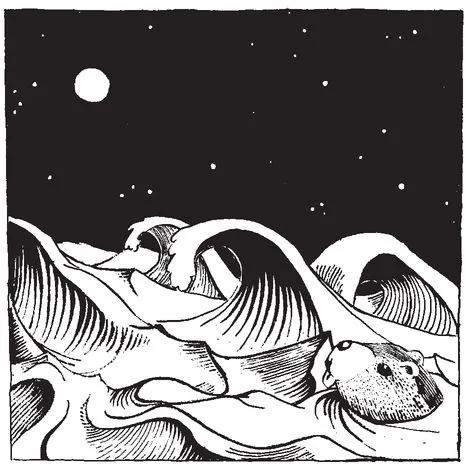
In Which the River Makes Off with Three Stationary Characters
In the seventeenth century, his Holiness the Pope adjudged beavers to be fish. In retrospect, that was a zoologically illogical decision; but beavers were not miffed at being changed into fish. They decided not to truckle to their new specification, not to be perfect fish, textbook fish; instead they became fanciful fish, the first to have furry babies, the first to breathe air and the first fish to build for themselves commodious conical fortresses in the water. If Prince Maximilian, traveling up the Missouri River, had taken it in mind to recategorize them as Druids or flamingos, beavers would have become toothy Druids, or portly brown industrious flamingos.
The beavers’ reaction to the papal renaming highlights two of their especial qualities: their affability and their unyieldingness. They affably yield not. They live in cold wet water but are warm and dry in their oily parkas. If they are deemed fishes, they respond by becoming lumberjacking fishes. They-of-the-Incisors are puppets of no pope, and puppets of no river, either. The river, where the beaver lives, is at cross-purposes with the beaver, in that it is tumbling away, while the beaver wants to produce kindred at One Address. An animal more contrary than the beaver would build a grumpy shanty of sticks in the forest; an animal less contrary the river would drag and distract and make into memorabilia.
The Moon also graces the water without getting floated off its feet, but effortlessly, while beavers have to work as hard as derricks. What it takes for them to prepare a mansion for themselves, in the midst of gallivanting water, with nothing to wield but short arms and long teeth, is constant botheration; they chew and lug and wrestle logs all night long, unless wolverines or humans visit. When these disputatious creatures turn up the beavers swim to the underwater tunnel to their cabin and climb up and hide out, for they do not like to fight.
Beaver babies cannot sink or swim when they are born; if they accidentally slip down the tunnel into the water they are like tiny complaining pontoons. In several hours, though, they can swim, front paws up by their chins, paddling with their huge ducky backfeet; and by May, after drinking a month’s worth of fat buttery milk, the burnished brown babies are working, swimming their little twigs to the dam to help with repairs.
They will never stop working thereafter, unless one of them happens to be voted an extraneous beaver, during the periodic population control that beaverocracies exercise. Even the most agreeable animals can only stand so many of themselves per pond. An expelled beaver by himself will just crouch in a mudhole, like a mouldywarp, and have time to get lost in thought; unlike his cousins and brothers and grandmothers chewing down four hundred trees every year; careening away when the trees start to fall over; shuffling back to drag the timber through the grass, wrangling poplars and birches and piano benches—whatever is wooden; digging log flumes and making log-rolling paths, swimming the trees down the stream, shoving them together into a dam, making the dam wider each night and higher and higher, repairing the dam when a leak springs; heaping up a house of aspens, trundling down the shore with armfuls of muddy rubble to plaster the walls with, repairing the roof after a bear performs roof meddlement, plunging cherry trees underwater, in order to have sumptuous foodstuffs in the larder in January, for the Feast of the Bean-King, when ponds are covered with two feet of ice.
With their powers of reorganization, beavers recapitulate the creation of the world, gathering water together in one place and making dry mounds appear in another. In fact they were probably there at the original one, acting as auxiliary spirits, helping to impose landscape on the mishmash, heaping up dry land for the earthgoers and corralling the waters for the swimming animals. How boggy and spongelike would the world be without beavers to divide it up! What type of tenants would we attract but bladderworts and mud-puppies!
But even if they were the ones who installed it, beavers are still subject to topography. A river’s patron-glacier may melt so catastrophically that the river overthrows a beaver dam, and before they can mobilize Barrier Repair the beaver colony gets bundled off to sea, like fat astonished fishes. Though octopuses make sense in the ocean, beavers and cactuses and pencil-makers do not. When they get there the ocean must derange them, making them delirious, because the sound of water is what triggers their gnawing reflex. As soon as they hear the burbly gushing of a stream, beavers speed to the nearest trees to chisel girdles around their trunks so they go whomping down and then they can stuff them into the chatterboxy river to strangulate it into silence. But the ocean is a wilderness of chatter, and not in all the forests of the world are there enough trees to muzzle its splashing, sloshing, gurgling, yammering, yackety-yacking waves.
LATE IN LIFE, when salmon are old salts, long having lived at sea, they decide to hoist themselves up a river, back to the scene of their nativity, with its particular mushroom-and-lily perfume. They smell their way there. If you subtracted the mushrooms and the lilies and substituted some frumenty and glögg and sagittaries with beer-breath, how would the fishes recognize their birthplace? They would slog right past it, up a tributary creek until they got to the icy seep of the river’s tiny origination faucet.
The brides and grooms toil up their nine-hundred-mile aisle for weeks and weeks to reach the mushroomy altar. Once there, they deposit their ingredients into the bottom-gravel—ingredients which when congealed will result in seven thousand black-eyed eggs. When these spiffy little fishes have hatched from their eggs and self-excavated from the gravel, they hide in crannies and absorb the yolks bequeathed to them. Then the bequests run out; then they swim in place and hold their mouths open to swallow the crustaceans drifting by. Not inheriting little anchors to hook into the riverbed, the fishes countervail the flow of the river by plying their fins, making endless varieties of strokes, all of which mean No. Maybe it feels like maintaining the same longitude on a steam train going east. Maybe it feels like being tossed endless apples while trying to retain a total of zero apples.
The little open-mouthed fishes swim against the river for one-and-a-half years, returning to where they are every moment, exercising all their hydrodynamical competence in not being spun around to the left or to the right, in not pitching head-over-tail or tail-over-head, in not getting rolled sideways like cartwheels in the current—the influential current of ambient custom which would draw all creatures pitching, yawing, rolling down its sinuous swallowing throat, all creatures become gobbets.
The salmon fry live in this milieu as dissenters, like the beavers; and they also labor relentlessly to stay in one place—not by concocting deluxe accommodations for themselves, but by sculling their delicate translucent fins all winter, spring, summer, fall. Their willfulness is their anchor. You would think, after so many months, that the anchor was permanent, that No was the only word they knew, that they would forever correct for the vector of the river.
Then something countervails their will to countervail. Their will tips over and they let the water swoop them away, spilling them backwards down churning frothy staircases of rocks, rushing them through ice-blue hourglasses between basaltic cliffs covered with maidenhair ferns, flicking them down to the fluted mud, where rest jettisoned peace pipes and scarfpins, streaming them under mossy sodden maples and sodden mossy yews, crisscross-fallen in the water, pouring them over shallow stony flats and dillydallying them around lazy crooks and switches, past yellow monkeyflowers on the shore and elfin groves of watercress, depositing them at last in the very vasty habitat of octopuses.
SOMETIMES ON A PORCH in June, a girl begins to plunk her banjo; and after a spell of stillness, while the sound travels down their ear crinkles into their inmost feeling-chambers, the music starts to dance the people passing by. They toss like puppets on a bouncing sheet; like boys without a boat; they swing like weeds in the wind; they leap heptangularly about, dancing eccentric saltarellos, discovering that their springs are not so rusty.
For even if you have built masterful aspen castles in your mind, have toppled whole forests to throttle the writhing elements into a liveably serene personal pond; if you have longtime sculled your ingenious fins to withstand the tumble-crazy currents; there is music that will dissolve your anchors, your sanctuaries, floating you off your feet, fetching you away with itself. And then you are a migrant, and then you are amuck; and then you are the music’s toy, juggled into its furious torrents, jostled into its foamy jokes, assuming its sparklyblue or greenweedy or brownmuddy tinges, being driven down to the dirgy bottom where rumble-clacking stones are lit by waterlogged and melancholy sunlight, warping back up to the surface, along with yew leaves and alewives and frog bones and other strange acquisitions snagged and rendered willy-nilly by the current, straggling away on its rambling cadenzas, with ever-changing sights—freckled children on the bank, chicken choirs, brewing thunderclouds, june bugs perched in wild parsley—until it spills you into a place whose dimensions make nonsense of your heretofore extraordinary spatial intelligence.
dp n="27" folio="13" ? Goats and Bygone Goats
It is too bad that sound waves decay. If they did not, we would still be able to hear melodies by Mesomedes, and Odo of Cluny playing his organis-trum. We would hear extinct toxodons, and prehistoric horses wearing pottery bells, and dead bats chewing crackly flies. We could hear the goats of the past—the old English milch goats, the fatlings of Bashan, thirsty peacock goats, Finnish Landrace goats bleating for their kids, baby Göingegets grizzling for their mothers, and wild mountain ibexes protesting hoarsely at being made to live in the Jardin des Plantes in Paris. The world, full of past sound, would be like the sky, full of past light. The world would be like the mind, for which there is no once.
But the material—air—that makes sound possible also exhausts it. In an unresounding atmosphere, one is left to surmise about the sundered past; about, for example, the precursors of Hungarian improved goats. What were Hungarian unimproved goats like? Probably like any unimproved goats—lousy and ticky, with horehound, clover seeds, and other faults tangled in their fleece; prone to poking each other with their horns. You can make a goat easier to live with by confiscating his horns; but without them the whole goat is more likely to be confiscated. And most goats, except for fainting goats, are not meant for stealing.
A fainting goat often serves as special companion to a herd of sheep. When they get rattled at, screeched at, hollered at, fainting goats sprint away for a second and then freeze, toppling like upended chairs. This is not floppy kid syndrome, nor mad staggers—which entail blindness and spinal disintegration. Fainting goats just fall over for a few seconds, muscles rigidly locked, fully conscious, like terrified figurines. So when a coyote rushes from behind a boulder, the goat is stationary, available, and the cream puffs can totter away.
Experience is so capricious. Now one is supple, now changed to stone. Now the goat in the timothy meadow is standing on lithe legs, magic legs—legs ready to grant her pixiest wishes. Then she hears a growl, or a cracking twig, and her sensitive legs turn to iron pokers, and she tumbles and cannot move. The salty toads vault over her, the thistles nod, the withy-wind waves and the witch moths float by. O gray goat, what can your wishes do without your magic legs? It avails to be a sheep.
Sometimes it avails to be a goat. When the grass withers away in Morocco, sheep will stumble dully along, thinking horizontal thoughts. No grass . . . no grass. But goats look up, start climbing trees. Even with fifteen goats in its crooked knobbly arms, lunching on its suspended fruit, the argan tree is trusty, for its roots are deep clutched in the earth. It does not wait for mercy to fall from heaven: when the sky is dry the tree fathoms the earth, stabbing its roots down until they discover buried rain—rimstone pools undreamt of by the grass lying vegetably on the surface. The argan tree drinks, drinks, while the grass waits, waits. Grass waits for water like sheep wait for grass.
Of the fleecy species, goats are slightly more universal than sheep. In the sixteenth century, explorers sailing around the world took goats with them and sowed them on miscellaneous islands. Wisely, they did not disperse sheep, who would have made hapless pioneers, or a specialist—after even a week on a tropical island, pygmy rabbits, who eat only sagebrush, would have been hot, sandy, sunk in blurry starvation dreams.
But goats are generalists: the world is their meadow. Leave them on an island—they will not spend all their energy on refusal and regret but will experiment until they find something new to eat, life sufficient condiment for the scraggliest fare. Put them in a barn with frocks and cigars and political pamphlets and toy blocks and banjos and yo-yos and frog leather—they will try everything, even the barn studs. They investigate by chewing and chew more than they swallow, in contrast to sharks who investigate by swallowing and swallow more than they chew.
How terrible for the pioneer goats in the end, when the sailors returned! But how splendid in the interim—between the sowing and the reaping! After lives of being followed around by people with shears, people with milk pails, people with scalpels; sharing fields with sheep who never stop communicating; being corralled, prodded, nipped at and yapped at by border collies in the wroth winter weather; then after coopy months on a tossing greasy ship—to be lowered into a wherry and rowed to shore on a palmy blue evening and left behind, to rest their shipworn bodies on the quiet beach for the night, and open their eyes in the morning to lagoon light, translucent yellow fruit and turquoise bird wings and emerald dew-drippy leaves! To be free! On a ferny island! With sweet rainwater and fellow goats! O life like wine!
On some ferny islands the goats ran wild, became as successful as flames (fire is a generalist too). Pinta Island, for example, was fernier before the goats landed and took a fancy to the tree ferns, which giant tortoises had always used as shady canopies. Since the goats ate the tortoises’ food as well, Pinta tortoises eventually lost their grip. All except for Lonesome George. For thirty-five years Lonesome George lived by himself on Pinta Island until he was moved to an institution and beatified alive.
To prevent other tortoises on other islands from becoming similarly rare, similarly sainted, some people have proposed the importation of dingoes. The trouble is, after the dingoes finished the goats they might eat the natives, so crocodiles would have to be introduced to eat the dingoes. A succession of increasingly dangerous animals would have to be sailed to the island until someone would inevitably have to bring thirty hippopotamuses across the ocean and set them loose to squash everything, a stable but sad climax. To circumvent this and other onerous scenarios there is another solution: guns. Some tortoise advocates just shoot the goats from helicopters. If it seems like the noise would bother the tortoises, it does not—such innocents do not know a bang-bang from a ding-dong.
Goats appear to have more misgivings, though, for there are always hundreds who evade the helicopter sessions. To locate these fugitives, a goat will be trapped, given a radio collar and sent back into the bush to search them out, for goats do not like to be alone. If you only own one goat, instead of two, she will flock to you, scramble into your car, chew through the palings between you, climb the fire escape, walk along narrow carpentry, along a drainpipe, over a roof, and bleat a million bleats, just to be with you, to have you rub her long, heavy ears and stroke her withers. So Radio Goat, he goes looking for companions, and when he finds them his collar advises the helicopter, whereupon all the goats are disembodied.
Elsewhere, people are trying to reembody certain goats, like the bucardo, a Spanish mountain goat. (Mountain goats are as agile as tightrope dancers, but who can be agile on a landslide?) The last bucardo was found with her head crushed by a falling tree. It is an old truism that no bygone goat rises again, but this is no longer certain, because someone was careful to preserve a bucardo ear, which is more th...
Table of contents
- Title Page
- Dedication
- Epigraph
- Donkey Derby
- I. THINGS OF EARTH
- II. THINGS OF HEAVEN
- AFTERWORD
- GLOSSARY OF STRANGE BEASTS AND PHENOMENA
- Acknowledgments
- About the Author
- More Nonfiction from Milkweed Editions
- Copyright Page
Trusted by 375,005 students
Access to over 1.5 million titles for a fair monthly price.
Study more efficiently using our study tools.
Frequently asked questions
Yes, you can cancel anytime from the Subscription tab in your account settings on the Perlego website. Your subscription will stay active until the end of your current billing period. Learn how to cancel your subscription
No, books cannot be downloaded as external files, such as PDFs, for use outside of Perlego. However, you can download books within the Perlego app for offline reading on mobile or tablet. Learn how to download books offline
Perlego offers two plans: Essential and Complete
- Essential is ideal for learners and professionals who enjoy exploring a wide range of subjects. Access the Essential Library with 800,000+ trusted titles and best-sellers across business, personal growth, and the humanities. Includes unlimited reading time and Standard Read Aloud voice.
- Complete: Perfect for advanced learners and researchers needing full, unrestricted access. Unlock 1.5M+ books across hundreds of subjects, including academic and specialized titles. The Complete Plan also includes advanced features like Premium Read Aloud and Research Assistant.
We are an online textbook subscription service, where you can get access to an entire online library for less than the price of a single book per month. With over 1.5 million books across 990+ topics, we’ve got you covered! Learn about our mission
Look out for the read-aloud symbol on your next book to see if you can listen to it. The read-aloud tool reads text aloud for you, highlighting the text as it is being read. You can pause it, speed it up and slow it down. Learn more about Read Aloud
Yes! You can use the Perlego app on both iOS and Android devices to read anytime, anywhere — even offline. Perfect for commutes or when you’re on the go.
Please note we cannot support devices running on iOS 13 and Android 7 or earlier. Learn more about using the app
Please note we cannot support devices running on iOS 13 and Android 7 or earlier. Learn more about using the app
Yes, you can access Things That Are by Amy Leach in PDF and/or ePUB format, as well as other popular books in Literature & Literary Essays. We have over 1.5 million books available in our catalogue for you to explore.