![]()
PART I
Mona Winberg’s Story
![]()
– 1 –
Forget you ever had her
It is hard to imagine how a person, so severely afflicted by cerebral palsy that a doctor said she’d never walk or talk, could become a leading advocate for disabled people, an award-winning newspaper columnist, and a member of the Order of Canada.
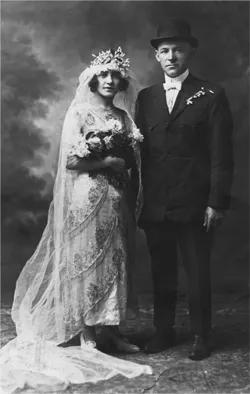
Mona Winberg’s parents met and married at Toronto in 1920, mother Sarah from New York and father Max from Poland. After their August 22 wedding, the couple moved into a rented house at 605 Euclid Avenue in central Toronto and produced a succession of children, Wolfe, Barbara, Sydney and, on January 27, 1932, their fourth and last, Mona.
The Winberg family had been leading a fairly typical life until the 1929 stock market crash triggered an economic depression that began hollowing out everything it touched. As the “Dirty Thirties” dragged on, the Winbergs found it harder to make ends meet. Even when the economy had been buoyant, Max, working mostly in the city’s produce trade, had difficulty keeping a substantial job for long. Now he really struggled to support his family, sometimes traveling great distances in search of paying work. To make matters worse, he was in poor health.
Several months after Mona was born, her mother saw her latest baby was not developing as rapidly as the others had. Even before Mona reached her first birthday, Sarah started making the rounds of doctors, asking why her daughter wasn’t sitting up like most infants. Finally, after too many evasive diagnoses, she took her baby to Dr. Aaron Brown, Toronto’s leading paediatrician. His diagnosis was cerebral palsy, a condition caused by damage to the brain around the time of birth.
No two cases of cerebral palsy were alike. A doctor such as Aaron Brown in Toronto in the early 1930s, recognizing the symptoms of cerebral palsy in an infant, would know the disease was not synonymous with mental deficiency. Yet he would also know that more than half the children afflicted would, to some extent, not develop mentally, a significant fact when trying to make his overall evaluation of the child’s mental deficiency.
Once injured, the brain does not heal without scar tissue. Areas are destroyed and cannot function. While not fatal, this long-term disease of the central nervous system is crippling, with degrees of physical disability, impairment, and mental slowness varying from one victim to the next.
1920: Mona’s parents, Sarah Rose Keller from New York and Max Winberg from Poland, met in Toronto and married on August 22.
Because there was no cure for this condition, any path into the future would be hard. It would require great patience and extensive treatment – muscle training in mild cases, braces to support weak muscles and prevent muscle shortening in more severe ones. Speech therapy would be essential. In the case of Sarah Winberg’s baby, the doctor’s diagnosis was severe cerebral palsy, a type called athetosis, to be precise, which occurs in about ten percent of cases.
The attributes of athetoid cerebral palsy in particular are damage to the cerebellum or basal ganglia, the areas of the brain responsible for processing the signals that enable smooth, coordinated movements as well as maintaining body posture. Damage to these areas may cause a child to develop involuntary, purposeless movements, especially in the face, arms, and trunk. These involuntary movements often interfere with speaking, feeding, reaching, grasping, and other skills requiring coordinated movements. For example, involuntary grimacing and tongue thrusting may lead to swallowing problems, drooling, and slurred speech. The movements often increase during periods of emotional stress and disappear during sleep. In addition, children with athetoid cerebral palsy often have low muscle tone and problems maintaining posture for sitting and walking, one of the symptoms already manifesting in the Winberg baby.
Dr. Brown foresaw a bleak future for Mona and exasperating hardships for her mother. He counselled Sarah from across his desk: “Mother, this child will never walk and she’ll never talk. She’ll be nothing but a human vegetable. The best thing that you can do is put her in an institution and forget you ever had her.”
Sarah Winberg sat in stunned silence. Slowly, she rose from her chair, drew herself up to her full height of four feet, ten inches, and retorted:
“Doctor, I suggest that you try doing that to one of your own children.”
Then she gathered her baby and stomped out.
The Winberg’s three-generation household in 1929: Sarah’s mother Fanny Keller (left) holds her granddaughter Barbara, while Max (right) has son Syd on his knee. In photo as in life, Sarah is the family’s centre. First-born son Wolfe stands at left rear.
The summer of ’32: Baby Mona Fleur Winberg, second daughter and fourth child of Sarah and Max, has now arrived and sunbathes on the grass.
![]()
– 2 –
The stars at night
So began a stubborn transformation to turn the “human vegetable” into a most exotic flower.
Mona’s middle name was, indeed, “Fleur,” which had been inspired when pregnant Sarah was reading a romantic novel with a heroine of this name, one that appealed to her since earlier encountering it in John Galsworthy’s Forsythe Saga. Sarah lived in the imagination through books, and now she and her daughter Mona Fleur would live out the plight of their romantic tale by re-writing the plot.
Mother and daughter resolved to defy all odds with the support of mechanical braces, tough love, and a spunky spirit that over the years miraculously only grew stronger in the face of adversity.
Sarah Winberg rented a tricycle to strengthen the muscles in Mona’s legs. “Every day, someone would accompany me as I peddled down the street.” By age four, the child “who will never walk” started to walk. When she reached age six, the child who would “never talk” also began to talk, and talk, and talk. She certainly had lots to say.
Walking and talking were hardly the only challenges a child like Mona with severe cerebral palsy had to overcome, however. Hearing was difficult, control of hands very limited, and use of thumbs non-existent.
All the same, Mona was able to hear. She listened intently as her mother, judging her daughter now old enough to get an explanation for her questions about why she was different from her brothers and sister, told her the story of Dr. Brown. She explained clearly and directly how her love for Mona had driven her to keep her out of an institution.
1933: Mona is held by her mother on the back steps at 605 Euclid Avenue together with Barbara, Syd, and Wolfe. Sarah Winberg has just learned Mona has severe cerebral palsy.
“Why didn’t you believe what the doctor said?”
“I could see it in your eyes. You were alert to what was going on.”
The three other Winberg children had fun playing with their little sister. Wolfe (ten years older than Mona), Sydney (seven and a-half years older) and Barbara (five and a-half years older) found it easy and natural to be with her, kids fooling around together in the back yard or playing childhood games along the street.
Mona felt the safety of family. Her grandmother, Fanny Keller, had moved in to live with her daughter’s family after her husband died, and helped Sarah with the children. For their part, Mona’s brothers and sister learned, with their mother’s guidance, the delicate balance between being supportive of Mona but not becoming overly protective of her.
1934, early summer: Two-year-old Mona is supported by brother Wolfe and flanked by Syd and Barbara.
1934, late summer: Mona and her mother.
As well, Sarah resolved to continue the family’s summer practice, begun in the 1920s, of going to a rented cottage for a few weeks. It had been easier before the Depression, when money could be saved and Sarah’s father contributed toward the family cottage they’d take turns using. Now, with little money and no financial help from her deceased father, Sarah struggled desperately every year to scrape together funds for their escape to a lakeside cottage. She enjoyed it, and had fun, as did her children. She thought it might be good for Max’s health; certainly it was beneficial for Mona’s. “My mother looked upon this as a form of therapy for me. It was much easier to walk on sand than cement. Also, she encouraged me to do things with my hands, like building sand castles and just playing in the sand.”
1935: Wolfe and Mona, the family’s two curly-heads, with Barbara, Syd, and mother Sarah. The children called their mother “Bubie.”
1935: Three-year-old Mona, with leg weights above ankles to strengthen muscles, supported by maternal grandmother Fanny Keller and Barbara.
Playing at ground level, whether in the Erie’s shoreline sand or the backyard at Euclid Avenue, kept Mona dirty enough for her chummy brother Syd to nickname her “Schmutz,” German for dirt. The moniker others in the family had for her was “Topsy,” deriving somehow from an amalgamation of her curly head of hair, her seemingly large head by age two, and her pigtails. Nobody even remembered her middle name “Fleur,” except the woman who saw her daughter as a flower even before she was born.
Despite Mona’s severe disability of speech, mobility, and hearing, her mother encouraged her to be as independent as possible. Sarah seized every opportunity to give Mona the experience of doing things for herself, and started sending her each summer to a camp for disabled kids at Lake Erie where she could play with other children in a new setting.
Once one of Sarah’s friends asked, “Aren’t you sorry you had Mona? How can she ever accomplish anything in her life?”
“She’s able to look up at the stars at night and see their beauty,” answered Mona’s mother evenly. “Isn’t that better than if she had never existed?”
![]()
– 3 –
Schooling and death
In 1938, when she was six, Mona began attending Wellesley Orthopaedic School, predecessor of Toronto’s Sunnyview School for pupils with disabilities. Wellesley Orthopaedic was located on the same grounds as another elementary school for non-disabled children near the intersection of Wellesley Avenue and Bay Street, a dozen blocks east of the Winberg home.
1936: Mona in her mother’s strong arms, at Van Wagner’s Beach, Lake Erie, near Hamilton.
1937: The Winberg’s happy annual summer holiday at Van Wagner’s Beach, with Sarah holding five-year-old Mona, surrounded by Syd, Wolfe and Barbara.
Years later Mona would say one of her greatest regrets was that she never had the opportunity to attend a regular elementary school. “If I had,” she explained, “I might have been spared the nightmare of being harassed on the street by a group of little boys, all laughing and calling me names. Children don’t torment anyone they are familiar with and understand.”
But segregated schooling for children with disabilities was the order of the day, and at least Mona was in school and supported by a loving family, not vegetating in an institution as Dr. Brown had proposed.
In much the same way the doctor had seen the sensibility of segregating a severely disabled child in an institution, the school authorities thought they were doing the right thing with their two-stream approach. Teachers were not trained to work with disabled children. The school buildings were not accessible, and lacked proper facilities for those with special needs. Segregation was the best way to cope, moreover, because in truth they believed it was impossible to teach these children, openly called “retards.”
Part of their education included field trips by streetcar to city parks, which were little more than supervised excursions to fill time. In place of a teacher to instruct them, a clown might be engaged for a day of “fun,” adults not understanding how universally youngsters fear and dislike clowns. In the case of the Wellesley Orthopaedic students, they felt apprehensive and perplexed by the featured presence of this human caricature.
In 1939, while Mona was in her second year at her elementary school, world events again touched the Winbergs. Just as the 1929 onset of the Great Depression had made its dire impacts felt on the family, Nazi Germany and Imperial Japan began their conquests of other countries that triggered worldwide warfare, which in the process began resuscitating Canada’s economy through wartime production. The Winbergs still managed to rent a summer place, keeping alive one of their best and most important family traditions.
As the months passed, Max Winberg, who had been feeling more poorly than ever, left for British Columbia to see if its climate would make a difference. His health may have improved, but for sure his income did. Before long he had successfully landed war work on the west coast.
With money Max sent from B.C., frugal Sarah did her best to make ends meet for her family. Now in effect a single parent, she ran the household and looked after her four children. Her hope was that, if Max’s health improved, she and the rest of the Winberg family would move to British Columbia to join him.
1938 and another holiday: Barbara and Syd at water’s edge, with vindicated mother Sarah supporting six-year-old Mona, who has just begun to talk.
Mona was three when her mother rented a tricycle to strengthen her leg muscles so she could walk. In this 1940 photo she is eight and able to walk, but still loves her trike, and her frail legs need exercise.
1940: Mona, now eight years old, is attending Wellesley Orthopaedic School in Toronto, segregated from schools for “normal” children. The pupils with disabilities get an outing to High Park, where a clown holds a dissatisfied Mona.
1940: The Winberg family again gathers in summer, with a friend named Evelyn in the picture (right) and Max Winberg, too, about to leave for British Columbia in hopes of better health and paying work. Syd, supine photographer, is represented only by his foot. Wolfe is working.
By early June 1944, w...