Finalist for the 2020 Kobo Emerging Writer Prize in Nonfiction What do you know about your menstrual cycle? Your menstrual cycle is your fifth vital sign — a barometer of health and wellness that is as telling as your pulse or blood pressure. Yet most of us see our periods as nothing more than a source of inconvenience and embarrassment. The reasons for this are vast and complex and many are rooted in misogyny. The fact is, women the world over are taught the bare minimum about menstruation, and the messages they do receive are negative: that periods are painful and gross, that they turn us into hormonal messes, and that they shouldn't be discussed. By examining the history of period shame and stigma and its effects on women's health and wellness today as well as providing a crash course in menstrual self-care, Heavy Flow aims to lift the veil on menstruation, breaking the "curse" once and for all.
- 224 pages
- English
- ePUB (mobile friendly)
- Available on iOS & Android
eBook - ePub
About this book
Information
Topic
MedicineSubtopic
General HealthPART 1
THE BIOLOGY
CHAPTER 1
GETTING TO KNOW YOUR BODY
While it’s likely that most of us who grew up in North America learned what menstruation was before we got our periods — if not from a formal reproductive health program at school, then certainly from television commercials, older siblings or friends, or perhaps our parents — we probably weren’t taught much more than the basics. When you get your period, you’ll bleed about once a month or every twenty-eight days; you’ll need a pad or tampon to manage the blood; it’s probably going to be, at best, uncomfortable; and last, but certainly not least, this means that now you can get pregnant.
Now that we understand the cultural forces that have been keeping us from understanding and claiming the power of our menstrual cycles, it’s time to get to know our cycle and the power that lies within — the critical role that it plays in our health beyond fertility, the possibility of using our hormonal ebbs and flows to our advantage, and the connection between menstruation and something more.
The good news is that your menstrual cycle is yours. You don’t need a doctor or any special equipment like a speculum or an ultrasound machine to really get to know and understand it. A mirror and a thermometer are helpful, but also completely optional! A little information can go a long way toward empowering and advocating for yourself.
Claiming your menstrual cycle goes beyond just understanding how it works — it’s about body literacy, the ability to read and understand the signs and signals of your menstrual cycle and understanding your body within the context of what’s normal. When you know yourself, you can use your menstrual cycle as a lighthouse that guides your overall health and wellness.
At the end of the day, my mission is to provide education to everyone on this planet who has a menstrual cycle. Only when you know what is happening to your body can you truly make informed decisions about what is right for you — that goes for choices around birth control methods, family planning, medical procedures, sex, medications, food, menstrual products — any decision that has an effect on your body.
The first step to claiming your menstrual cycle is to understand the physiology of your body. What exactly is happening every month? What body parts are involved? And how does this affect your day-to-day wellness?
Once you have a solid understanding of how your menstrual cycle works, you can observe your own cycle by tracking or charting it. This allows you to get to know what’s happening with your body and to identify hormonal imbalances and adjust your nutrition or lifestyle. Your cycle will act as a guide to your overall health.
At its most basic, the physiological function of the menstrual cycle is to prepare your body for pregnancy, although fertility isn’t the only reason why the menstrual cycle is valuable to your health and wellness. As we’ll discuss in the following chapters, your menstrual cycle is a vital sign that’s both an indication and promoter of your overall health and wellness.
Menstrual cycles are one of the things that set female bodies apart from male bodies; there is no functional or physiological equivalent in a male body. I want to differentiate that what I mean by this is sex, in a phenotypical body, and not gender, which is much more nuanced. I also want to acknowledge that periods aren’t what make you a woman. There are plenty of people who identify as a woman who don’t menstruate — for reasons such as menopause, medication, hormonal contraception, or health issues that suppress ovulation — and many people that don’t identify as a woman who do.
Today, we in the West are living longer and having fewer babies, which means that we’re having more periods than ever before. In earlier times women spent most of their time pregnant or nursing. Most of us can expect to reach menopause, when the menstrual cycle stops.
Living longer also means living longer post-menopause. The average life expectancy for females in Canada is eighty-four; in the United States it’s eighty-one.1 That means we’re now living a quarter of our lives or more in menopause. Many of the diseases that females are at risk for later in life, like breast cancer, heart disease — the leading cause of death for women — and osteoporosis, are the very things that consistent ovulation protects against.
Those that argue that we don’t really need periods sometimes blame “incessant menstruation” — having regular periods for the better part of our adult lives, about forty years — as a contributing factor for female health issues. Laura Wershler, a veteran sexual and reproductive health advocate, stresses that it is inconsistent ovulation that contributes to women’s health issues, not incessant menstruation.2 The importance of ovulation to bone, breast, brain, and heart health is not something that can be underestimated.
So, let’s get down to basics, shall we? It’s time to learn everything about our menstrual cycles that we didn’t in high school health class.
REPRODUCTIVE ANATOMY AND GENITALS
Let’s start this journey into discovering the magic of menstruation with a look at the female reproductive system and genitals. Sometimes our internal organs feel very far away, which contributes to things like menstruation and reproductive health feeling mysterious. But they’re really not.
I don’t blame you for being oblivious to what’s literally hidden right under the surface — much of the education you may have received about menstruation as an adolescent had more to do with selling products than actually educating you about your body and giving you the tools to understand it. When I first started teaching workshops about menstruation, I assumed that people just knew what body parts were involved, until I got questions like “Can I pee with a menstrual cup in?” or “What exactly is a uterus anyway?” Don’t be ashamed if you haven’t gotten intimate with your parts — it’s never too late to get to know your own body.
Understanding your anatomy is a critical component of body literacy. It helps to demystify reproductive health and menstruation by helping you situate these processes within your body. Knowing your anatomy is also useful when advocating for yourself at the doctor’s office. Telling your doctor that you’re experiencing pain in your vagina is the not the same as pain in your vulva.
We’re going to consider both the internal reproductive anatomy and the external genitalia — what they look like, where they are, and what they do.
A disclaimer: bodies are amazing and incredibly unique, which means that there are any number of variations on what is “normal” in terms of the way that they look. Some variation in size and shape is not only perfectly normal, but to be expected. We are all beautiful, unique snowflakes.
So, if your body doesn’t look exactly like what is pictured here, know that’s totally okay — it’s not that your body is wrong or bad, it’s just that the limitations of this book are such that I was unable to include several dozen images to ensure that everyone is represented! And if your only exposure to vulvas other than your own is through pornography, you might be surprised to learn how different various vulvas can look. Check out the Labia Library online at www.labialibrary.org.au for a beautiful gallery of vulvas of all shapes, sizes, and colours!
DECOLONIZING THE FEMALE ANATOMY
Surprising to no one who has a female reproductive system, the road to modern gynecology was paved with misogyny, racism, and abuse (for example, experiments were often carried out on black female slaves against their will). Medicine is also steeped in patriarchy, and many body parts, reproductive or otherwise, are named after the men who “discovered” them. For example, fallopian tubes are named after Gabriel Fallopian. And Ernst Grafenberg is the one who “discovered” the infamous, elusive G-spot. Some feminist health practitioners and linguistics experts argue that continuing to use these names perpetuates medical gender bias, and body parts should instead be renamed with descriptors that are meaningful and useful to the body’s owner. I have chosen to use descriptive terms as much as possible.
The Phenotypical Female Reproductive System
Ovaries
Ovaries are about the size and shape of an almond and contain up to a million immature eggs at the time of birth — as in your birth. Each egg is contained in an ovarian follicle, a sac-like structure similar in shape and function to your hair follicles. Ovaries produce steroid hormones including progesterone and estrogen during the reproductive years. Most of us have two, although it’s possible for your reproductive system to function with just one!
Corpus Luteum
After ovulation, the ruptured follicle is transformed into the corpus luteum (see Figure 3), which produces progesterone and eventually degenerates, either at the end of the menstrual cycle or in early pregnancy when the placenta takes over progesterone production.
Oviduct/Ovarian Tubes (Fallopian Tubes)
These ducts receive the egg after ovulation and provide a site where fertilization can occur. Each tube is about ten centimetres long. Ducts are not directly connected to the ovary.

FIGURE 1 – PHENOTYPICAL FEMALE REPRODUCTIVE ANATOMY
Fimbriae
These finger-like projections create fluid currents that work to carry the egg into the uterine tube where it begins its journey to the uterus. Not all eggs make it to the uterine tubes, as the fimbriae often “miss” (despite having just one job).
Uterus
Put your hands under your belly button — there’s your uterus, just under the surface. Some prefer to refer to it as the womb or womb-space. About the size of a lemon and the shape of an upside-down pear, it’s a hollow organ that receives, retains, and nourishes a fertilized egg. Throughout your cycle, the uterine lining builds up and is either shed during menstruation or remains to nourish a pregnancy.
Cervix
A narrow opening that connects the uterus and vagina below. It acts as a physical barrier to protect the uterus from bacteria and infection. Looking at a diagram of the reproductive system, it’s easy to assume your cervix is deep inside you, but it’s really not — just about a finger’s length away from the opening of your vagina.
The cervix opens and closes during ovulation and menstruation and dilates up to ten centimetres during childbirth. Throughout the menstrual cycle, the cervix hardens and softens and moves around within the vaginal canal. Glands in the cervix produce cervical mucus, the primary sign of fertility. This mucus helps to move sperm through the uterus to meet an egg in the oviducts, and even helps to eliminate sperm that may have genetic defects or are not strong enough to reach the uterine tubes. During pregnancy, the cervix creates its own mucus plug to seal the uterus.
Vagina
About eight to ten centimetres long, the vagina is an elastic, muscular passage between the vulva and the cervix. It creates a passage for menstrual blood to flow from the uterus, acts as the birth canal, and stretches during penetrative sex.
The Vulva and External Genitals
If you’ve been calling your external genitalia your vagina, then allow me to introduce you to your vulva. Your vulva is the external portion of your genitals, home to the opening of your vagina and your clitoris. It’s an important distinction — and not just one of semantics. An inability to name your body parts directly affects your personal power to advocate for yourself, particularly in the doctor’s office and within sexual relationships.
The word vagina is derived from a Latin term that means “sheath of the sword.” Interestingly, other languages don’t emphasize the penis in relation to the vagina. My personal favourite is the Sanskrit word for the vulva, yoni, which means “portal to the cosmos.”
Labia Majora
The external folds of the vulva enclose “the vestibule” which contains the external openings of the urethra, where urine passes, and your vagina.
Greater Vestibular Glands
These glands (not pictured in Figure 2) flank the vagina and produce secretions to lubricate the outer end of the vagina when aroused.
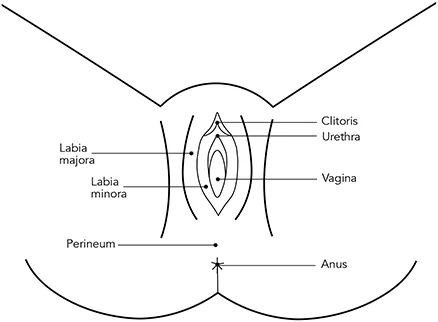
FIGURE 2 – PHENOTYPICAL EXTERNAL FEMALE GENITALIA
Clitoris
The outer part of the clitoris that is visible on the vulva is referred to as the glans and is covered by the clitoral hood. But this is quite literally the tip of the iceberg; the clitoris also has wings that reach out from the glans inside your body and down around the urethra and vaginal opening. The clitoris is made of sensitive erectile tissue that contains many nerve endings, becoming swollen with blood during arousal.
Labia Minora
The internal folds of the vulva, covering the vaginal opening.
Perineum
The space between the vagina and the anus.
Anus
The external opening to your colon.
Urethra
The tube that drains urine from the bladder.
HORMONES: THE BAND MEMBERS OF YOUR HORMONAL ORCHESTRA
Now that we’ve learned about where our parts are and what they do, let’s look at the chemistry that makes them work. I’m talking about hormones.
“You’re being hormonal!” is often used as an insult or a way to gaslight women into believing their lived experiences are all in their heads. However, hormones play a critical role in your body and how it functions. They are implicated in every single function your body performs from your heart beat to your stress response, appetites, energy levels, and pretty much every bodily function you can think of...
Table of contents
- Cover
- Praise Page
- Half Title
- Copyright
- Dedication
- Contents
- Introduction
- A Short History of the Curse
- PART 1: THE BIOLOGY
- PART 2: THE CURE FOR “THE CURSE”
- PART 3: EMBRACING YOUR CYCLE
- Conclusion
- Acknowledgements
- Resources
- Notes
- Book Credits
Trusted by 375,005 students
Access to over 1.5 million titles for a fair monthly price.
Study more efficiently using our study tools.
Frequently asked questions
Yes, you can cancel anytime from the Subscription tab in your account settings on the Perlego website. Your subscription will stay active until the end of your current billing period. Learn how to cancel your subscription
No, books cannot be downloaded as external files, such as PDFs, for use outside of Perlego. However, you can download books within the Perlego app for offline reading on mobile or tablet. Learn how to download books offline
Perlego offers two plans: Essential and Complete
- Essential is ideal for learners and professionals who enjoy exploring a wide range of subjects. Access the Essential Library with 800,000+ trusted titles and best-sellers across business, personal growth, and the humanities. Includes unlimited reading time and Standard Read Aloud voice.
- Complete: Perfect for advanced learners and researchers needing full, unrestricted access. Unlock 1.5M+ books across hundreds of subjects, including academic and specialized titles. The Complete Plan also includes advanced features like Premium Read Aloud and Research Assistant.
We are an online textbook subscription service, where you can get access to an entire online library for less than the price of a single book per month. With over 1.5 million books across 990+ topics, we’ve got you covered! Learn about our mission
Look out for the read-aloud symbol on your next book to see if you can listen to it. The read-aloud tool reads text aloud for you, highlighting the text as it is being read. You can pause it, speed it up and slow it down. Learn more about Read Aloud
Yes! You can use the Perlego app on both iOS and Android devices to read anytime, anywhere — even offline. Perfect for commutes or when you’re on the go.
Please note we cannot support devices running on iOS 13 and Android 7 or earlier. Learn more about using the app
Please note we cannot support devices running on iOS 13 and Android 7 or earlier. Learn more about using the app
Yes, you can access Heavy Flow by Amanda Laird in PDF and/or ePUB format, as well as other popular books in Medicine & General Health. We have over 1.5 million books available in our catalogue for you to explore.