eBook - ePub
CPD for the Career Development Professional
A Handbook for Enhancing Practice
- 207 pages
- English
- ePUB (mobile friendly)
- Available on iOS & Android
eBook - ePub
CPD for the Career Development Professional
A Handbook for Enhancing Practice
About this book
The career development sector is continually evolving in line with changes in society, technology and the needs of clients. Maintaining and developing the skills and knowledge to practise effectively in any part of the sector is a cornerstone of professional practice. Yet in straitened times, the funding and time to undertake Continuous Professional Development can be difficult to find. This unique handbook contextualises CPD for the sector, examines why it is important and to whom, offers practical insights on practitioner research and reflective practice and then provides a wealth of information on the many ways in which CPD can be undertaken by both those who are employed and self-employed. With many practical activities, reflection points and case studies throughout, readers will be able to identify their own needs and develop CPD solutions that will support them in developing skills and knowledge to further enhance their own practice. For practitioners who want to own and direct their professional development, this is a must-read guide.
Information
Topic
EducationSubtopic
Counseling in Career Development1| Introduction
In this chapter we introduce you to the book and the ways in which it can help you to enhance your professional practice through continuous professional development (CPD). Here we specifically focus on:
•the context for the book
•the focus and aim of the book
•the frameworks that can support CPD
•who should use the book and how.
The context
No occupation or career ever remains the same, and nor should it! The world we work in is dynamic, fluid and ever changing. As such, no matter what job is undertaken, practitioners are required to update, whether this is clinical practitioners updating their techniques, retail staff being updated with the latest point of sale technology or financial workers learning about new regulations and requirements. Everyone’s role is continually changing, and those who work in the career development sector are no different.
Over the past 20 years or so those who work in a career development role across the UK have seen extensive and wide-ranging changes to their work context and the needs of the clients with whom they work. Careers work can, generally but not conclusively, be divided into two main territories: privately funded and publicly funded. By privately funded we mean services that are paid for either by an individual or a company and not from the public purse; this has more recently become a large and important part of the sector, particularly in the UK.
The majority of careers work – for example, work in schools, colleges, universities, public employment services, non-governmental organisations (NGOs), and the voluntary and community sectors – is generally funded through public finance, whether at European, national or local level. Many career development practitioners work for large providers, such as the National Careers Service in England, Skills Development Scotland (SDS), Careers Wales and Department for the Economy’s Careers Service, Northern Ireland.
In recent years, particularly in England we have seen a rise in the number of self-employed career development practitioners, due to schools having the responsibility for providing careers services. Many career development practitioners, having found themselves unemployed, have embarked on a new way of working, selling their services to the schools they previously worked for. This has resulted in some interesting new working models for the careers profession.
In schools in England there continues to be a growth in the range of individuals engaged in career and employability learning. This can include subject teachers who include information on careers within their subject; careers teachers who combine supporting the delivery of careers activities with their teaching commitments; careers leaders who coordinate careers, enterprise and work experience-related activities and the input from career advisers and senior leaders with overall responsibility for careers provision in the school.
There is also a growing private sector of career development professionals who may have come to the sector through other routes and focus predominantly on private work with individuals and businesses involving career coaching and talent management. This is an important and growing part of the sector which often straddles the public/private sector, offering a diverse range of services to support career development and management.
What this all means is that the careers sector is neither homogeneous nor stationary. Practitioners, regardless of where they work, will all have varying needs to ensure that their skills, knowledge and practice continue in parallel with the needs of clients in an ever-changing world.
The Career Development Institute (CDI) has recently developed a framework, the ‘Career Development Sector Progression Pathway’ (2015). This pathway (available at www.thecdi.net/Career-Development-Sector-Progression-Pathway) broadly represents the range of roles that exist within the three main constituent areas of practice, career education, career guidance/development and career coaching/talent management. This supports practitioners and those who may be interested in a career in careers to identify the qualifications and opportunities that exist for the roles. Underpinning all of these progression opportunities is the need to engage with and take ownership of your continuous professional development.
The focus and aim of the book
We have both worked in the career development sector for many years and have spent much of our time supporting practitioners to develop their practice. As such, we felt that, with the continued change that has impacted on careers practice, CPD is one of the most important components for developing a profession, for building confidence as a profession and for being able to articulate and justify ourselves as a profession.
Since 2013, in the UK, the Career Development Institute (CDI) has been working hard to support the careers profession and, particularly, to ensure standards across all constituencies and geographical locations. These approaches have resulted in:
•support for the range of new qualifications, which encourage progression within the sector, including the Qualifications and Credit Framework (QCF) Level 4 Diploma in Career Information and Advice, QCF Level 6 Diploma in Career Guidance and Development and the CDI Certificate in Careers Leadership
•a code of ethics, which supports and underpins professional practice
•a progression pathway, which documents the range of roles that exist within the career development sector, routes and the qualifications required to progress (see figure below)
•the development of an updated set of National Occupational Standards: Career Development (NOS: CD), which support practitioners and employers in recruitment, initial training and CPD.
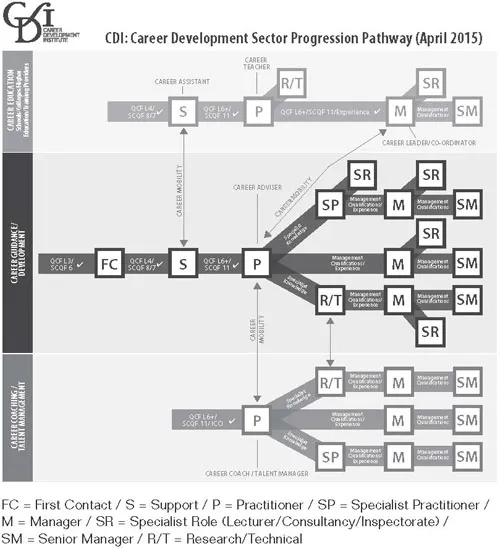
Figure 1.1: CDI Career Development Sector Progression Pathway
(See inside front cover for a colour version of this figure.) Reproduced with kind permission from the CDI.
All of these activities contribute to supporting the profession to upskill and evolve. The purpose of this book is to focus on supporting those who work in the career development sector to enhance their practice through engagement in continuous professional development (CPD). It aims to support practitioners in all roles, at any stage of their career and in any career development context to reflect on what they do and to explore a range of practical CPD activities.
CPD is not just about attending a training session or reading the occasional labour market information (LMI) briefing; it is about ensuring that practice develops to both keep pace with developments and to drive practice forward. We will explore the purpose of CPD more fully in Chapter 2.
Throughout the book we use the term career development. This we feel suitably encompasses the various constituencies within the sector, such as careers education, career guidance/coaching and career coaching/consultancy/talent management, and is also inclusive of the types of activities which take place throughout the sector.
Frameworks for supporting CPD
Over recent years there have been a number of developments that focus on supporting careers practitioners. There is not room here to explore them all in detail but we do refer to them in Chapter 8. Here we just want to draw your attention to three which we think are of particular interest.
There is much talk about competence – what do we mean by competence? This term is often used to describe the skills, knowledge and behaviours required to be effective in a role. It is often the case that competence is considered within the context of initial learning and training, but there is often little mentioned about CPD post qualification. Our view is that competence is a continuous ability to perform effectively in a role; as such it is not a one-off thing. You may have been found competent when you did your initial training, but that could have been years ago, since when you may have changed job, moved professional context or started to work with a new client group. As Mulvey (2004) suggests below, initial training is only the start of the journey!
For those who do qualify and engage in autonomous professional practice, the realisation dawns that qualifying is not the point of arrival, but the point of departure.
It is essential to be mindful when changing roles or responsibilities as to how competent you might feel within the new state you find yourself in.
Competence therefore needs to be kept in mind when investing in CPD; how will what you choose to do enhance your competence? We explore competence in more detail in Chapter 8. After all, you are either competent or not, and if not what do you need to do to become competent? The frameworks below can be useful in helping you to review your practice and consider your competence within the core activities. These frameworks have been developed recently and therefore represent the requirements in terms of current practice. These have been selected as they represent frameworks developed for the UK, Europe and internationally. It is useful to examine them all to assess their comparability. Below is a brief overview of each; there are a number of others that are referred to in Chapter 8.
National Occupational Standards: Career Development
The National Occupational Standards: Career Development (NOS: CD) were revised in 2014 to take account of how the work of the sector has evolved. The NOS: CD provide a framework that documents the key skills and knowledge that career development practitioners need to be able to demonstrate to be effective in their practice. The standards are multifunctional and can be used in a range of ways by employers and practitioners to support initial training and CPD. In the first instance, they provide a benchmark for practice. As such, practitioners can self-assess their professional practice in relation to each of the standards. Gaps in skill and knowledge can then be addressed and strategies put in place to address ...
Table of contents
- Cover
- Half Title
- Title
- Copyright
- Contents
- Figures & Tables
- About the authors
- Acknowledgements
- Foreword
- 1| Introduction
- 2| Continuous professional development in the career development sector
- 3| Being a professional in the career development sector
- 4| Reflecting on practice
- 5| Becoming a practitioner researcher
- 6| CPD for self-employed practitioners
- 7| The internet, social media and international CPD opportunities
- 8| National Occupational Standards and competence frameworks
- 9| A–Z of CPD and developing your own career
- 10| Moving on – what you are going to do next!
- Appendix 1 – Practitioner researcher project pro forma
- Appendix 2 – CPD action plan
- Index
- Further reflection pages
- Back Cover
Trusted by 375,005 students
Access to over 1.5 million titles for a fair monthly price.
Study more efficiently using our study tools.
Frequently asked questions
Yes, you can cancel anytime from the Subscription tab in your account settings on the Perlego website. Your subscription will stay active until the end of your current billing period. Learn how to cancel your subscription
No, books cannot be downloaded as external files, such as PDFs, for use outside of Perlego. However, you can download books within the Perlego app for offline reading on mobile or tablet. Learn how to download books offline
Perlego offers two plans: Essential and Complete
- Essential is ideal for learners and professionals who enjoy exploring a wide range of subjects. Access the Essential Library with 800,000+ trusted titles and best-sellers across business, personal growth, and the humanities. Includes unlimited reading time and Standard Read Aloud voice.
- Complete: Perfect for advanced learners and researchers needing full, unrestricted access. Unlock 1.5M+ books across hundreds of subjects, including academic and specialized titles. The Complete Plan also includes advanced features like Premium Read Aloud and Research Assistant.
We are an online textbook subscription service, where you can get access to an entire online library for less than the price of a single book per month. With over 1.5 million books across 990+ topics, we’ve got you covered! Learn about our mission
Look out for the read-aloud symbol on your next book to see if you can listen to it. The read-aloud tool reads text aloud for you, highlighting the text as it is being read. You can pause it, speed it up and slow it down. Learn more about Read Aloud
Yes! You can use the Perlego app on both iOS and Android devices to read anytime, anywhere — even offline. Perfect for commutes or when you’re on the go.
Please note we cannot support devices running on iOS 13 and Android 7 or earlier. Learn more about using the app
Please note we cannot support devices running on iOS 13 and Android 7 or earlier. Learn more about using the app
Yes, you can access CPD for the Career Development Professional by Siobhan Neary,Claire Johnson in PDF and/or ePUB format, as well as other popular books in Education & Counseling in Career Development. We have over 1.5 million books available in our catalogue for you to explore.