![]()
A Legend of the People
Inuinnaqtun version
edited by Margo Kadlun
A long time ago, according to Inuit legend, the people who lived across the North were giants, and they lived forever.
This is a story, initially, about those people. The story of Uvajuq (oova-yook) has been told for generations in the western Arctic, in part to explain the existence of three prominent hills rising out of a generally flat landscape surrounding Iqaluktuuttiaq, near the present location of the hamlet of Cambridge Bay. But as with many old Inuit stories, it has much deeper significance than just that.
The story is rooted in a time when people and animals lived in such harmony and unity that they could speak to each other. When it suited them, hunters could turn themselves into animals. Their mutual understanding was profound. For Inuit, this idyllic existence a long time ago came to an abrupt end.
Taimaniraaluk,
inuit huirungnaitillugit, inukpak nuliariik irnillak,
nunaqaqhimajut Kiillin’ngup tunun’ngani.
A long time ago,
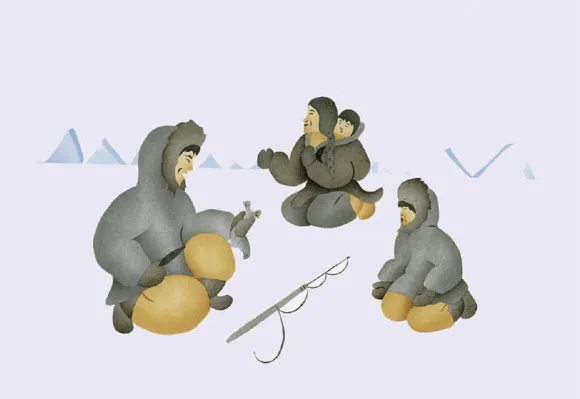
when people lived forever, there was a family of giants
who lived on the north side of Kiilliniq.
Tariuqhiujuktut,
angijut inuit, niqitualgit angijunik imarmiutanik:
arvinik, ugjunik, aivirniglu.
They were people of the sea,
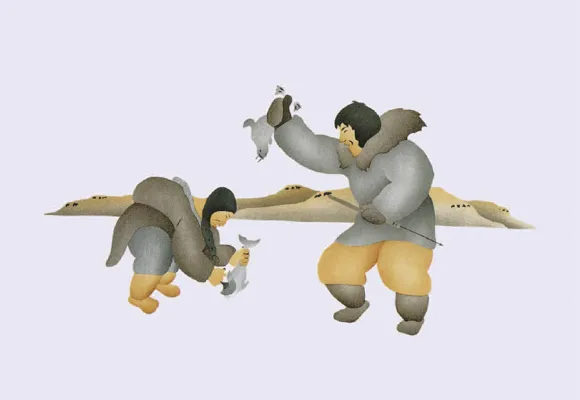
these giants, accustomed to eating large sea mammals:
bowhead whales, bearded seals and walrus.
Tujami, niqikhailliuqhutik
pihugumaliqqut hivuqqamut, nunap akiagut,
hivuliqtiqaqhutik Uvajurmik.
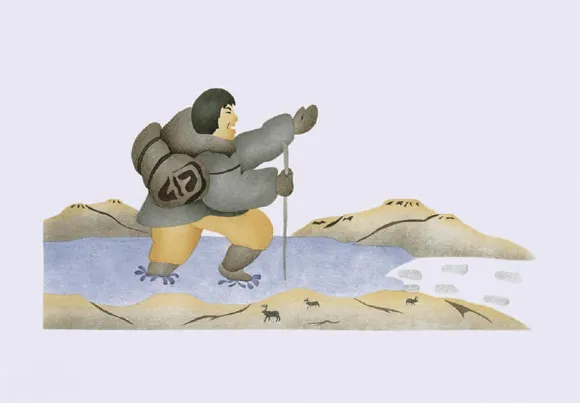
One summer, when food became scarce,
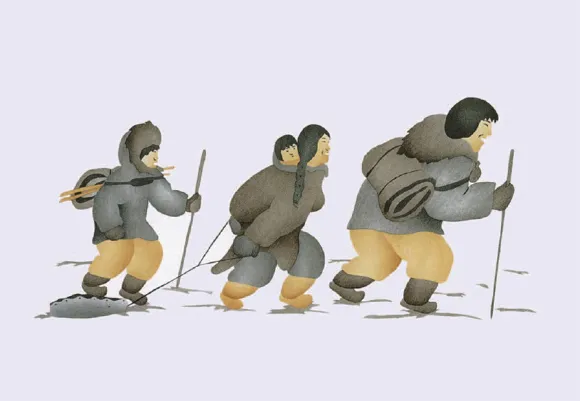
they decided to walk south, across the island,
led by a man named Uvajuq.
Inukpaugamik,
imakkuurniq ajunngitaan.
Nalukaphukhugit tattit angijuugaluit.
They were giants,
so crossing the water that lay in their path was easy.
They could simply wade through even the largest lakes.
Pihugaaqpakhutik,
kaaliqpallialiqqut,
niqinnarijamingnik nalvaalairamik.
They wandered,
getting hungrier and hungrier as they went,
for they could find no food that suited them.
Tuktunik takuvakkaluaqhutik,
kihimi, angijuugamik, tuktut mikigijait—avin’ngatut
mikitigijut—nirijaakhamingnik ihumagijuitait.
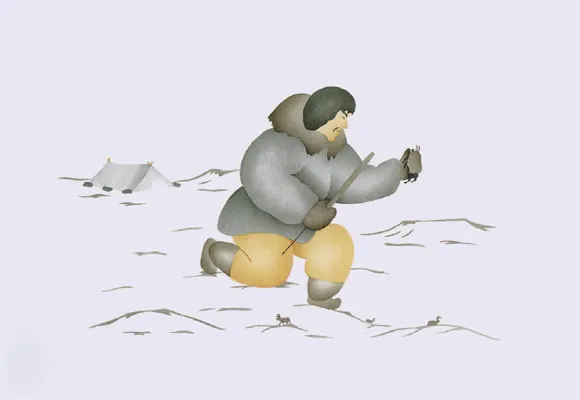
They saw caribou, of course, but to them,
as giants, the caribou appeared so small—like lemmings
to us today—that it never occurred to the giants
to eat the tiny caribou.
Pihugaaqpakhutik, niqailliuqhutik,
Amaaqtuq, arnalluaq,
hakuiqtuq hivumuuriaminik.
Eventually, as they wandered about from
place to place without food,
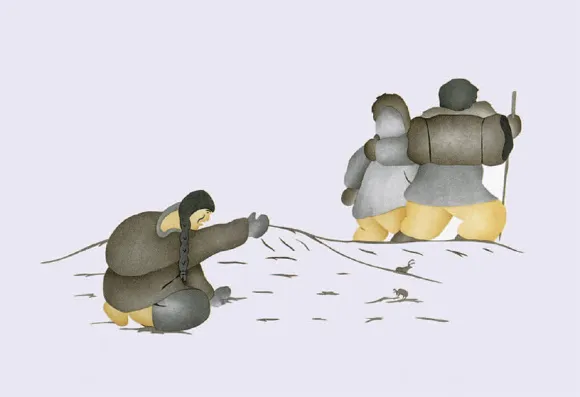
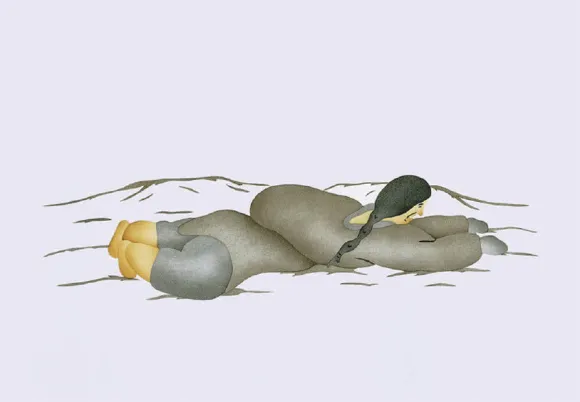
Amaaqtuq, the mother of the family,
became too weak to continue.
Kaangnirmit nautkutivuq.
She finally collapsed from hunger.
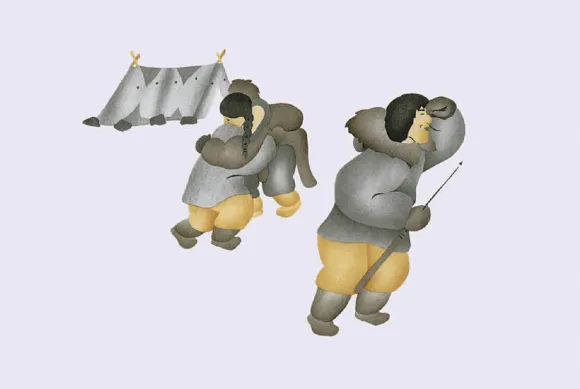
Angut, Uvajuq,
irninilu, pihukhimmaaqtuk.
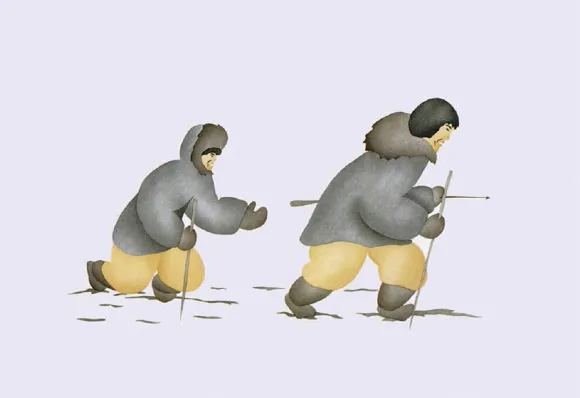
The father, Uvajuq,
and the son, went on a little farther.
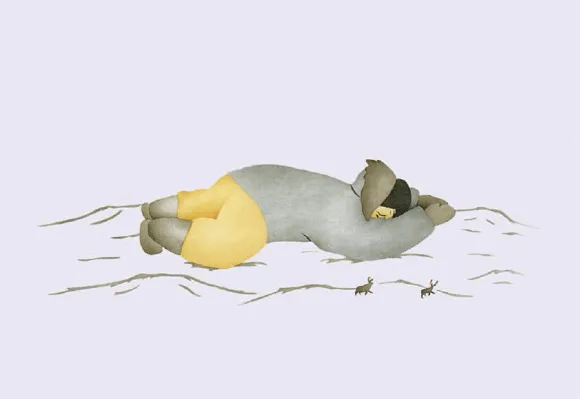
Irnia nautkutivuq
angut pihiqqaiqhuni pihukhimmaaqtillugu.
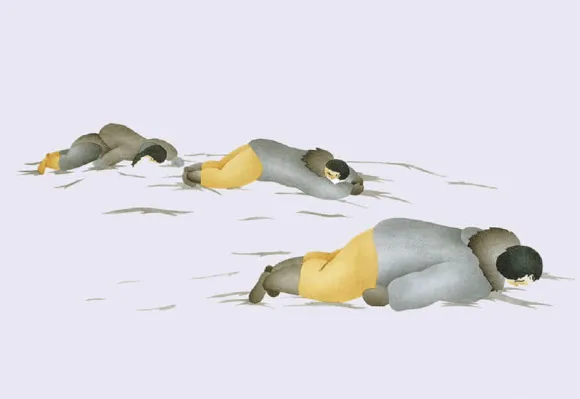
Then the son collapsed as the father struggled on.
Angullu nautkutivuq, nivrallaqhuni kiinaa
nunamunngaqhuni, niaqua hivuqqamun hanmipluni.
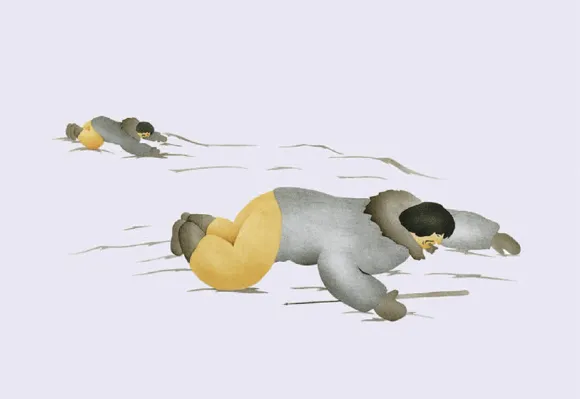
Finally the father also collapsed, falling face down
on the ground, head pointed to the south.
Tuquttuk nivrallarvimingni, aqiaruaramik.
They died where they lay, of starvation.
Qakunngurmat,
timait hauvut, nuna nauvalliapluni,
qaangillu ujaranikpalliavut, kingiktutuanguvut
naunaittut ungahiktumit takukhaujutuan tahapkua,
nuna manikkami. Qiniqhiattiaruvit, takuhunngujatit
tulimaangit naunaittut.
Over time,
their bodies were covered by soil and rocks,
and they remain evident today as the only
hills for miles around in the otherwise flat land.
If you look carefully, yo...