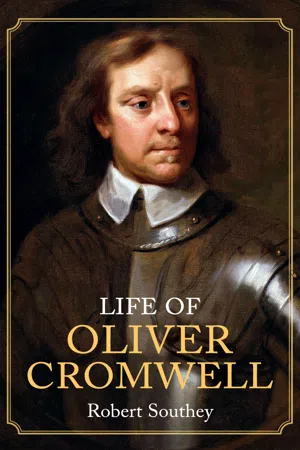
Why was Oliver Cromwell selected as one of the ten greatest Britons of all time in a BBC poll? And yet, why was his corpse dug up, hung in chains and beheaded? Read on.It's the case with every great man in history that we don't know how he became great. Steve Jobs. Churchill. Jesus. Muhammad. But how? What shaped their character? What paved the way for them to rise into such a position that we still read about them centuries after their death?This book answers all these questions about Oliver Cromwell. It's not just a recount of his education and rise to power. It's a dive into the most intricate details of his life. What traumas he endured during his childhood, his feelings about literature, his mistakes and regrets, it's all here.Cromwell is one of the most controversial figures in the history of the British Isles, considered a dictator by half of historians and a hero of liberty by the other half. This book shows you why, and lets you judge for yourself.Here's a brief description of Cromwell by the author: "Being a resolute man, and one whose purposes were straight forward, though he frequently proceeded by crooked ways, he, when he drew the sword, threw away the scabbard."
- 82 pages
- English
- ePUB (mobile friendly)
- Available on iOS & Android
eBook - ePub
Life of Oliver Cromwell
About this book
Information
Subtopic
Historical BiographiesIndex
HistoryPublished by Left of Brain Books

Copyright © 2021 Left of Brain Books
ISBN 978-1-396-32159-7
eBook Edition
All rights reserved. No part of this publication may be reproduced, distributed, or transmitted in any form or by any means, including photocopying, recording, or other electronic or mechanical methods, without the prior written permission of the publisher, except in the case of brief quotations embodied in critical reviews and certain other noncommercial uses permitted by copyright law. Left of Brain Books is a division of Left Of Brain Onboarding Pty Ltd.
Life of Cromwell.1
The pedigree of the Protector’s family commences about the middle of the eleventh century with Glothyan lord of Powys, who married Morveth the daughter and heiress of Edwyn ap Tydwell, lord of Cardigan;—a Welsh genealogist no doubt would be able to trace the lords of Cardigan and Powys up to Cadwallader and so on to Brennus and Belinus. William ap Yevan, the representative of the family in the fifteenth century, was in the service first of Jasper duke of Bedford, Henry the seventh’s uncle, afterward of that king himself. His son, Morgan Williams, married the sister of that Cromwell whose name is conspicuous in the history of the Reformation, and who, though not irreproachable for his share in the transactions of a portentous reign, is on the whole largely entitled to commiseration and respect. The eldest son of this marriage called himself Richard Cromwell, alias Williams, and as the former was the more popular and distinctive name, the alias, though long retained by the family in their deeds and wills, was dropped in ordinary use. This Richard was one of the six challengers who held a tournament in 1540 at Westminster against all comers. The justs were proclaimed in France, Flanders, Spain, and Scotland. The challengers entered the field richly accoutred, and their horses trapped in white velvet; the knights and gentlemen who rode before them were apparelled in velvet and white sarsnet, and their servants were all in white doublets, and “hosen out after the Burgonian fashion.”2 Sir Richard was knighted on the second day, and performed his part in the justs so well that the king cried out to him, “formerly thou wast my Dick, but hereafter thou shalt be my diamond;” and then dropping a diamond ring from his finger bade him take it, and ever after bear such a one in the fore gamb of the demy-lion in his crest. As a further proof of the royal favor, he and each of the challengers had a house and a hundred marks annually, to them and their heirs for ever, granted out of the property of the knights of Rhodes, the last prior of that religion dying at this time broken-hearted for the dissolution of his order.
Sir Richard Cromwell was one of those persons who were enriched by the spoils of the church. He was appointed one of the visiters of the religious houses, and received for bis reward so large a portion of the plunder, that the church lands which he had possessed in Huntingdonshire only, were let in Charles the Second’s reign for more than £30,000 a year; and besides these he had very great estates in the adjoining counties of Cambridge, Bedford, Rutland, and Northampton. The donors of estates to monasteries and churches usually inserted in their deeds of gift a solemn imprecation against all persons who should usurp the property so bequeathed, or convert it to other purposes than those for which it was consecrated. Though this proved no defence for the estates which had been piously disposed, it was long believed by the people that the property sacrilegiously obtained at the dissolution carried a curse with it; and, in a great majority of instances, the facts were such as to strengthen the opinion. Without consigning the rapacious courtiers of that age to the bottomless pit, “there to be tormemted for ever with Korah, Dathan, and Abiram, and with Judas Iscariot,” it may safely be said that no conscientious man would have taken property clogged with such an entail.
Henry, the eldest son and heir of Sir Richard, was knighted by Queen Elizabeth, who esteemed him highly, and honored him by sleeping at his seat, once the nunnery, at Hinchinbrook, on her return from visiting Cambridge. He was called the golden knight for his wealth and for his liberality, which was of a splendid kind; for, dividing his time between Hinchinbrook and Ramsey, whenever he returned to the latter place he used to throw large sums of money to the poor townsmen. The death of his second wife was one of the alleged crimes for which the witches of Warboys were accused and executed; the property of these poor wretches, amounting to 40l., was forfeited to Sir Henry as lord of the manor, and he gave it to the corporation of Huntingdon on condition that they should procure from Queen’s College, Cambridge, every year on lady-day, a doctor or bachelor of divinity to preach in that town against the sin of witchcraft. That condition was regularly fulfilled about fifty years ago: in what manner it is performed at present we know not. Robert, the second son of Sir Henry, was the father of Oliver, so named after his uncle, the head of the family. That uncle, Sir Oliver, was a magnificent personage, for whose expenses even the enormous property which he inherited proved inadequate.
Sir Henry left his younger sons estates of about 300l., a year each: those to which Robert Cromwell succeeded lay in and near the town of Huntingdon, having chiefly or wholly belonged to the Augustinian Monastery of St. Mary. The house in which he resided was either part of the hospital of St. John, or built upon the site and with materials from its ruins. He married Elizabeth, daughter of William Steward, of the city of Ely, a family which, it is not doubted, was allied to the royal house of Scotland. She was the widow of a Mr. Lynne, and is supposed to have brought him little other fortune than her jointure. They had ten children; Oliver was the second, and the only one of the three boys who lived to grow up. Mr. Cromwell was member for his own borough of Huntingdon in the parliament held in the 35th of Elizabeth [1592-3], and he was in the commission of the peace. This satisfied all his ambition: but, to provide for so large a family, he entered into a large brewing business; it was carried on by servants, and Mrs. Cromwell inspected their accounts, which rendered her better able to conduct the business for herself3 after her husband’s death in 1617. Oliver was born April 25, 1599. A nonjuror, who afterward purchased and inhabited the house, used, when he showed the room in which the protector was born, to observe that the devil was behind the door, alluding to a figure of Satan in the hangings. It is said, on the authority of the same person, who was curious in collecting what traditions remained concerning so eminent a man, that Oliver, when an infant, was in as much danger from a great monkey as Gulliver was at Brobdignag. At his grandfather’s house one of these mischievous creatures took him out of the cradle, carried him upon the leads of the house, to the dreadful alarm of the family (who made beds and blankets ready, in the forlorn hope of catching him), and at last brought him safely down. He was saved from drowning in his youth by Mr. Johnson, the curate of Cunnington.
Oliver was educated at the free grammar-school of his native town, by Dr. Beard,4 whose severity toward him is said to have been more than what was usual even in that age of barbarous school-disciple. He was a resolute, active boy, fond of engaging in hazardous exploits, and more capable of hard study than inclined to it. His ambition was of a different kind, and that peculiar kind discovered itself even in his youth. He is said to have displayed a more than common emotion in playing the part of Tactus who finds a royal robe and a crown, in the old comedy of Lingua. The comedy was certainly performed at the free-school of Huntingdon in his time, and if Oliver played the part, the scene in question is one which he must have remembered with singular feeling, whatever he may have felt in enacting it.
“Was ever man so fortunate as I,
To break his shins at such a stumbling-block!
Roses and bays pack hence! this crown and robe
My brows and body circles and invests.
How gallantly it fits me. Sure the slave
Measured my head that wrought this coronet.
They lie that say complexions can not change;
My blood’s ennobled, and I am transformed
Unto the sacred temper of a king.
Methinks I hear my noble parasites
Styling me Cæsar or great Alexander,
Licking my feet, and wondering where I got
This precious ointment. How my pace is mended!
How princely do I speak, how sharp I threaten!—
Peasants, I’ll curb your headstrong impudence,
And make you tremble when the lion roars,
Ye earth-bred worms!—
Poets will write whole volumes of this change”5
He himself is said often, in the height of his fortune, to have mentioned a gigantic figure which, when he was a boy, opened the curtains of his bed, and told him he should be the greatest person in the kingdom. Such a dream he may very probably have had; and nothing can be more likely than that he should seek to persuade himself it was a prophetic vision, when events seemed to place the fulfilment within his reach. But that his Uncle Steward told him it was traitorous to relate it, and that he was flogged for his relation by Dr. Beard, at his father’s particular desire, are additions to the story which are disproved by their absurdity; however loyal his parents, and however addicted to the use of the rod his master, they would no more have punished him at that time for such a fancy, than for dreaming that he was to become Grand Turk or Prester John. There is another tale concerning his childhood, which, as well as all these anecdotes, the living historian of the family treats as an absolute falsehood; that being at his uncle’s house at Hinchinbrook, when the royal family rested there on their way from Scotland, in 1604, he was brought to play with Prince Charles, then duke of York,6 quarrelled with him, beat him, and made his noise bleed profusely—which was remembered as a bad omen for the king when Cromwell began to distinguish himself in the civil wars. Mr. Noble relates this only as the tradition of the place, adding that Hinchinbrook was generally one of the resting-places of the royal family on the northern road. Such anecdotes relating to such a man, even though they may be of doubtful authenticity, are not unworthy of preservation. The fabulous history of every country is a part of its history, and ought not to be omitted by later and more enlightened historians; because it has been believed at one time, and while it was believed it influenced the imagination, and thereby, in some degree, the opinions and the character of the people. Biographical fables, on the other hand, are worthy of notice, because they show in what manner the celebrity of the personage, in whose honor or dishonor they have been invented, has acted upon his countrymen. Moreover, there is in the curiosity which we feel concerning the earliest actions of remarkable men, an interest akin to that which is attached to the source of a great river. There are many springs in this country more beautiful in themselves and in their accompaniments than the fountains of the Thames, or the Danube, or the Nile, but how inferior in kind and in degree is the feeling which they excite!
Before Cromwell had quite completed his seventeenth year, he was removed from the school at Huntingdon to Sydney Sussex College, Cambridge.7 Though his passion for athletic exercises still continued, so much so that he is said to have acquired the name of a royster in the university, it appears certain, that the short time which he passed there was not mispent, but that he made a respectable proficiency in his studies. He had not, however, been there more than a year when his father died, and his mother, to whose care he appears to have been left, removed him from college. It has been affirmed that he was placed at Lincoln’s Inn, but that instead of attending to the law he wasted his time “in a dissolute course of life, and good-fellowship and gaming.” His descendant denies this, because his name is not to be found in the records of Lincoln’s Inn to which sufficient disproof he adds, that “it is not likely a youth of eighteen or nineteen should in those days have been sent to an inn of court.” The unlikelihood is not apparent; there is no imaginable reason why he should have been represented as a student of law if he had never been so, and the probability is that he was entered at some other of the inns of court. Returning thence to reside upon his paternal property, he is said to have led a low and boisterous life; and for proof of this, a letter to his cousin, Mrs. St. John, is quoted, in which he says,—“You know what my manner of life hath been. Oh, I lived in and loved darkness, and hated the light; I was a chief, the chief of sinners. This is true; I hated godliness, yet God had mercy on me.” The present Mr. Oliver Cromwell argues that no such meaning is to be inferred from the words, but that such “it is conceived would be the language of any person of the present day, who, after professing Christianity in the common loose way in which it is commonly professed, and even preserving themselves free from the commission of all gross sins and immoral acts, should become a convert to the stricter doctrines and precepts of the Scriptures, as held by those who are deemed to be the evangelical or orthodox believers of these times.” Mr. Cromwell is right; the letter proves nothing, except that there is a good deal of the same canting now that there was then, cant indeed being a coin which always passes current. The language of an evangelical professor concerning his own sins and the sense of his own wickedness, is no more to be taken literally than that of an amorous sonnetteer who complains of flames and torments.
The course of Cromwell’s conduct, however, at this time was such as to offend his paternal uncle, Sir Oliver, and his maternal one, Sir Thomas Steward. The offence given to the former is said to have been by a beastly frolic, for which the master of Misrule very properly condemned him to the discipline of a horsepond. The story, from its very filthiness, is incredible: Bates, however, would not have related it unless he had believed it, and Oliver’s practical jests were sometimes dirty as well as coarse. The means by which he displeased Sir Thomas are less doubtful and of a blacker die:—wishing to get possession of his estate, he represented him as not able to govern it, and petitioned for a commission of lunacy against him, which was refused. Because Sir Thomas was reconciled to him afterward, and ultimately left him the estate, the present Mr. O. Cromwell denies the fact, saying, “This supposed attempt to deprive his uncle of his estate would have been so atrocious and unpardonable, that the reasonable conclusion must be, that this disposition in favor of Cromwell proves the falsehood of the story.” A better ground of defence would have been to maintain that the uncle was not in his sound senses, and to allege the bequest, after such provocation, in proof of it. The story is most certainly true; it is established by a speech of Archbishop Williams to the king concerning Cromwell, wherein he says, “Your majesty did him but justice in refusing his petition against Sir Thomas Steward of the isle of Ely; but he takes them all for his enemies that would not let him undo his best friend.” Mr. O. Cromwell has overlooked this evidence. But he is not the only modern biographer who has thought proper to contradict the facts which are recorded of an ancestor, because it is not agreeable to believe them. The probability is, that Cromwell, who was not naturally a wicked man, thought his petition well grounded.
Whatever may have been the follies and vices of his youth, it is certain that he had strength and resolution enough to shake them off. As soon as he came of age he married8 Elizabeth, daughter of Sir James Bourchier, of Felsted, in Essex, a woman whose irreproachable life might have protected her from obloquy and insult, if in the heat of party-spirit anything were held sacred. She brought him some fortune, and, in the year 1625, he was returned to King Charles’s first parliament for the borough of Huntingdon. There was no disaffection in his family either to the church or state; they had indeed enjoyed in a peculiar manner, the bounty as well as the favor of the crown. But Cromwell was not likely to behold the measures of the government with indifference or complacency; a man so capable of governing well perceived the errors which were committed; and the displeasure thus reasonably excited, was heightened by accidental and personal circumstances till it became a rooted disaffection. To this some of his family connexions must have contributed in no slight degree. Hampden was his first cousin; and St John, who was connected with the Cromwells by his first marriage, married for his second wife one who stood in the same degree of near relationship to him. They were unquestionably two of the ablest men in that distinguished age; and Hampden, who had sagacity enough to perceive the talents of his kinsman when they were not suspected by others, possessed a great influence over his mind; Cromwell “followed his advice while living, and revered his memory when dead.” These eminent men were both deadly enemies at heart to the establishe...
Table of contents
- Life of Cromwell.1
Trusted by 375,005 students
Access to over 1.5 million titles for a fair monthly price.
Study more efficiently using our study tools.
Frequently asked questions
Yes, you can cancel anytime from the Subscription tab in your account settings on the Perlego website. Your subscription will stay active until the end of your current billing period. Learn how to cancel your subscription
No, books cannot be downloaded as external files, such as PDFs, for use outside of Perlego. However, you can download books within the Perlego app for offline reading on mobile or tablet. Learn how to download books offline
Perlego offers two plans: Essential and Complete
- Essential is ideal for learners and professionals who enjoy exploring a wide range of subjects. Access the Essential Library with 800,000+ trusted titles and best-sellers across business, personal growth, and the humanities. Includes unlimited reading time and Standard Read Aloud voice.
- Complete: Perfect for advanced learners and researchers needing full, unrestricted access. Unlock 1.5M+ books across hundreds of subjects, including academic and specialized titles. The Complete Plan also includes advanced features like Premium Read Aloud and Research Assistant.
We are an online textbook subscription service, where you can get access to an entire online library for less than the price of a single book per month. With over 1.5 million books across 990+ topics, we’ve got you covered! Learn about our mission
Look out for the read-aloud symbol on your next book to see if you can listen to it. The read-aloud tool reads text aloud for you, highlighting the text as it is being read. You can pause it, speed it up and slow it down. Learn more about Read Aloud
Yes! You can use the Perlego app on both iOS and Android devices to read anytime, anywhere — even offline. Perfect for commutes or when you’re on the go.
Please note we cannot support devices running on iOS 13 and Android 7 or earlier. Learn more about using the app
Please note we cannot support devices running on iOS 13 and Android 7 or earlier. Learn more about using the app
Yes, you can access Life of Oliver Cromwell by Robert Southey in PDF and/or ePUB format, as well as other popular books in History & Historical Biographies. We have over 1.5 million books available in our catalogue for you to explore.