Have you ever wondered how it's possible to walk down a street, with your thoughts on what you're going to have for lunch? What's telling your legs to move while your mind is on other things? And how are you reading these words right now? The simple answer: it's your brain. Often a complex subject to tackle, this book has been written with the first-time learner in mind to guide the reader through the physiological basis of the brain-behaviour link, exploring such fascinating topics as sensation, memory and emotion.
This book has been designed to offer an easy and comprehensive read for students in need of an introductory text to the various faculties and functions of the brain and an explanation of how these are central to actively producing human behavior. Apt for undergraduate students studying biological psychology and neuroscience wanting to consolidate their understanding of the brain.
- 256 pages
- English
- ePUB (mobile friendly)
- Available on iOS & Android
eBook - ePub
Getting your head around the brain
About this book
Information
CHAPTER 1
Engage your brain
We all have a brain, and most of us use it to great effect. In fact, it no longer comes as any surprise to people that it is their brain which governs all that we do throughout our lives. Not only does it determine everything that we consciously want and think but it also keeps our insides ticking over through many mechanisms we are not even aware of. There are two main ways to examine our behaviour, one being through psychological enquiry which doesn’t even need to acknowledge the workings of the brain, e.g. “if this happens, how do we react?” The other direction of attack is through neuroscience, e.g. “how does the brain generate our behaviours?” Nowadays these fields interchange at will; however, every behaviour will have an underlying basis in the brain. It is the most enigmatic organ of the body as, to look at it, there is no indication about how it works and so for long periods in history, it was not given the praise it deserves for being the most important part of our existence.
In times long past, neuroscience and psychology were preceded by philosophy, which in literal terms translates from its original Greek into “the love of knowledge”. This is why the highest qualification in the land is a Ph.D (or Doctor of Philosophy) regardless of the field of study. The ancient Greek philosophers were in disagreement over the role of the 1.5 kg gelatinous bag of mostly water. Hippocrates (460–379 BCE) purported that the brain was the seat of intelligence and that it was involved in sensation. The father of modern medicine’s view did not come out of the blue; he was one of the first proponents of reasoning and observation in medical practice. Hippocrates had a more “humoral” (related to the body fluids) theory of health by which he meant the recognized body fluids of the time, i.e. the blood, phlegm, yellow bile and black bile, needed to be kept in balance for good health. Illness was thought to be caused when these fluids were out of balance and treatment of this would include bloodletting or purging of the body fluids. Three millennia previous to this, the ancient Egyptians also used a form of purging for diseases of the head. Called trepanation, it involved boring holes in the skull while the patient was still alive. We know this because in the skulls found in archaeological digs in whom trepanation has been carried out, there is evidence of healing. This procedure may have been carried out to relieve headaches or mental illness, often attributed at that time to the presence of trapped spirits in the head. A hole would be the obvious way to let them out. On the other hand, the ancient Egyptians didn’t rate the brain highly enough to bury it with the body, instead sucking it out through the nostrils prior to burial. They believed the seat of the soul (or the very essence of our existence) was in the heart and this view prevailed until the time of Hippocrates who, as we know, believed in the opposite.
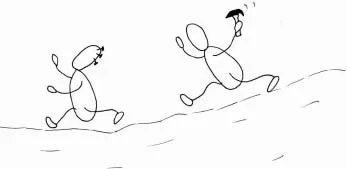
So it would seem that we have all been agreed about the brain’s role in our behaviour since around 400 BCE, right? Wrong. Not everybody agreed with Hippocrates, the most influential of which was Aristotle, born around five years before Hippocrates died. Aristotle (384–322 BCE) favoured the heart as being the place where our mind “lives” and like any good philosopher, he had arguments he thought proved it. Among these was the view that the brain was on the periphery, sitting as it does on a stalk on the top of the body, and so its function must be to cool the blood whereas the heart was placed at the centre of bodily function thereby heating up the blood. Aristotle also thought that the heart was essential to life, the brain not so much. Of course, now we know this is completely untrue as you can live for a finite period of time (albeit short) with a stopped heart but once your brain stops, you are legally dead. He also thought that the heart is affected by emotion and the brain is emotionless, unlike the current view that the brain is central to emotional processing and production. Further to this he thought that the heart is connected to the sense organs via the blood vessels but that the brain is not connected to the sense organs. Well, we now know we can’t sense anything without our brain and that the sensory connections are neural, not vascular. There is no doubt that Aristotle, student of Plato, teacher of Alexander the Great, was a fine thinker and indeed was the founder of one of the pillars of logic that still stands today, but the scientific grounding of these influential thoughts still left a bit to be desired. Sometimes knowledge is led down the garden path by supposition or personal belief; this was one such time.
Philosophy and early medicine, including investigations of the function of the brain, was a truly international affair. The Roman Empire had Aelius Galenous (130–200 CE), known as Galen, a Greek physician, writer and philosopher, who clearly followed the clinical observation tradition founded by Hippocrates. Galen was employed to treat gladiators after arena battles and as such witnessed some horrific injuries including those to the brain and spine. His impression of the effects of the damage he saw was no doubt influenced by his “hobby” of dissections of sheep, pig and monkey brains (Roman law prohibited dissection of human bodies.). Galen could have produced some “garden path” science of his own as his deductions were reportedly based on poking a freshly dissected brain with his finger; however, he came to the right conclusions, amazingly. The two main visible parts of the brain are the soft cerebrum, and the hard cerebellum, which is at the back of the brain and underneath the cerebrum. Galen deduced that the cerebral cortex is involved in sensation and perception as well as memory whilst the cerebellum is primarily involved in movement control. These views are restricted, but not essentially wrong, but I think they must have been based on Galen’s experience with gladiator injury and not just poking brains with his finger. If only he had stopped there, but he went on to establish a different garden path entirely. In his dissected brains, he found hollow areas called ventricles, which to him, fitted the humoral theory of Hippocrates to a T and so he purported that the fluid of the four humours flows from ventricle to ventricle via the nerves which he thought were hollow tubes, initiating movement and registering sensation.
This view was to last for nearly a millennium and a half. René Descartes (1596–1650) in fact was a great proponent of the ventricular view as he tried to explain the brain in terms of machines. This was around the time that inventors were coming up with ideas for hydraulically controlled machines. If fluid is forced out of the ventricles through the nerves then this could bring about movement as the muscles are “pumped up” so to speak. Think about that next time you are on a fairground ride. However, Descartes was more specific than Galen in that he placed the seat of the mind in the brain and linked the mind to the body. The interaction between the non-material mind and the physical body was still unclear at this time though with Descartes believing that the mind controls the brain through the pineal body, the structure of the brain through which the mind flows (although now we know that pineal damage doesn’t lead to a “loss of mind” but a rather more minor disturbance to your biological rhythms like your body not knowing the difference between night and day). And so, the mind–body problem was born leading quite naturally to the field of dualism, the philosophical position that behaviour is controlled by two entities. The test for the presence of a mind was twofold: the presence of language and reasoned action. Unfortunately, this pretty much discounted animals as being in possession of a mind (although Descartes himself by all accounts was devoted to his dog, Monsieur Grat) and also led to the gross mistreatment of patients in mental institutions, as if they were “out of their mind”, they could feel no pain etc. Nowadays it is accepted that our mind, or consciousness as it is now called, is brought about by the activity of our brain and is not a separate entity, a movement termed materialism, but its ethereal nature still causes neuroscientists problems in trying to define how it comes about.
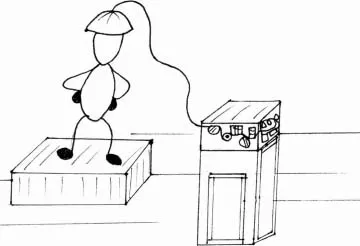
Within 200 years, scientists were less concerned by the ventricular humoral view of Hippocrates, Galen and Descartes and had dissected the brain to observe bumps or gyri on the brain’s surface as well as sulci or fissures, grey matter and white matter as well as the definition of lobes within which certain functions must lie (now called the frontal, parietal, temporal and occipital lobes). However, there was one more garden path yet to walk and discount. Just at the time scientists were beginning to attribute different functions to different areas of the brain, Franz Joseph Gall (1758–1828) started his pioneering work into the localization of function in the brain. Gall had a stepwise argument that went something like this. The brain is the organ of the mind. The mind is composed of multiple distinct, innate faculties. Because they are distinct, each faculty must have a separate seat or “organ” in the brain. The size of an organ, other things being equal, is a measure of its power. The shape of the brain is determined by the development of the various organs. And now, the pièce de résistance – are you ready? Here it comes, brace yourself. As the skull takes its shape from the brain, the surface of the skull can be read as an accurate index of psychological aptitudes and tendencies. Well, Gall was doing fine purporting the view that is the cornerstone of materialism, that all behaviour can be fully accounted for by brain function, the view that guides contemporary research, even without recourse to philosophy of the mind. But in his last point, Gall was proposing that we could tell what somebody was good at based on the lumps and bumps on their head. Originally called cranioscopy, it was later renamed as phrenology. Due to the lack of scientific proof, phenology was marginalized by the scientific community although it was popular amongst the talking classes with the presence of one of Lavery’s Electric Phrenonmeter in the country shows of the early 1900s being a real draw at least 75 years after the theory was put forward. You had to stand on a box and have a helmet type apparatus “read” your skull features and then it would tell you your strengths and weaknesses. A map was devised, through correlating numerous people’s skills with their skullscapes, showing what the different regions were for. Some of these skulls are still on show in the Rolletmuseam in Baden, Austria, Gall’s birthplace. According to this, I should be good at the accordion, duelling and imitation, all at the same time I should imagine. Suffice it to say, I am not good at any of these things, even in isolation. My skull is shaped the way it is simply because I was always bumping into things as a kid and it has no bearing on the function of the brain housed inside. Thankfully, in my case.
It was around this time of the late 1800s that Camillo Golgi (1843–1926) and Santiago Ramon y Cajal (1852–1934) used similar staining techniques to discover what the brain was made of. Neurons are translucent under the microscope and so the application of a stain shows up the different components of neurons and shows their structure. Golgi used a silver stain to show that it was composed of a large network of interconnected “tubes” but Cajal showed that in addition to this, nerve cells were in fact discrete entities and also that they became more complex in their structure with age. Golgi and Cajal were awarded a joint Nobel Prize for Medicine in 1906. But the two had fallen out over their differing views, Golgi believing that the nerve cells that he could see through the microscope acted like the blood vessels of the body whereas Cajal correctly saw them as separate entities with their own functions and not just “transit stations” in a network. The argument even bubbled over into their acceptance speeches for the Nobel Prize with one attacking the other’s views in their respective speeches. Well, it wasn’t the Peace Prize they won ... . In truth however, there would be no Cajal without Golgi’s methods and Cajal knew and acknowledged this saying that Golgi’s theories of the nervous system were based on his education and the prevailing views at the time whereas Cajal looked beyond this to see what was possible and not just what should be based on what was thought to be the present case.
The grouping together of these nerve cells or neurons as they are now known was shown by Korbinian Brodmann (1868–1918) in 1908 to be a clue to the localization of different functions. In fact, this classification of regions still survives use to this day. Simultaneous to these cellular discoveries, physicians and scientists were documenting patients with different forms of brain damage more rigorously. In this field called neuropsychology, inferences could be made about the function of the damaged regions based on what function was lost. If a patient was impaired in some way, say he couldn’t see, and he had damage to the back of his brain, then a neuropsychologist puts two and two together to determine that information from the eyes must be processed at the back of the brain. In 1861, Pierre Paul Broca (1824–1880) had a patient called Tan, so called because the only thing he could say was “TAN”. When Tan died, a post-mortem revealed that syphilis had damaged a specific part of his frontal lobe, forever to be attributed to speech production and indeed named Broca’s area. Later, Karl Kleist (1879–1960) compiled a comprehensive functional mapping of the cerebral cortex from the case notes of some 1600 head-wound casualties from the First World War which advanced our knowledge about the brain regions involved in certain functions. However, the problem with neuropsychology is twofold; you usually had to wait for a patient to die before you could attribute their behavioural change to a particular brain region and the brain regions damaged were often very large so it was hard to define small regions as having particular functions.
Although neuropsychology is still a valuable tool in our quest to understand the brain, we now have other methods at our disposal to understand how the normal, healthy human brain works. We can eavesdrop on brain waves using electroencephalography (EEG). Since Luigi Galvini (1737–1798) and his experiments on frog muscles, we have known that electricity is very important to muscle contraction whether or not the muscle is attached to a living body. In fact, this point got Galvini’s nephew, Giovanni Aldini, into trouble. He travelled all over Europe reanimating dead bodies with electricity and is reported to have inspired Mary Shelley to write Frankenstein two decades later. The most famous of his “performances” involved a rectal probe and the attempt to bring the recently hanged body of murderer (although the evidence was allegedly thin) George Forster back to life shocking the Royal College of Surgeons in London in 1802 with the spasmodic movements like kicking out and punching the air that the dead body produced. The London Times was worried and wrote, “It appeared to the uniformed part of the bystanders as if the wretched man was on the eve of being restored to life”. Unsurprisingly, such public displays were soon after outlawed. Undeterred, Aldini continued his experiments with live animals and found that he could excite the brains of oxen and went further to report electrical cures for a number of mental illnesses, his methods being a direct precursor to electroconvulsive therapy used as a last resort in mental illnesses which do not respond to other treatments today. His work was also the forbearer of cardiac shock treatment. Of course, we now know that the ner...
Table of contents
- Cover
- Title page
- Copyright
- Contents
- List of Figures
- Preface
- Acknowledgements
- Chapter 1. Engage your brain
- Chapter 2. The nitty gritty
- Chapter 3. What a sensation!
- Chapter 4. See what I mean?
- Chapter 5. Now hear this
- Chapter 6. Moving on
- Chapter 7. How do your neurons grow?
- Chapter 8. Oh DO behave!
- Chapter 9. Just sleep on it
- Chapter 10. Let’s talk about sex
- Chapter 11. Second that emotion
- Chapter 12. Memories are made of this
- Chapter 13. You’d better think
- Chapter 14. Put it all together ...
- Index
Trusted by 375,005 students
Access to over 1.5 million titles for a fair monthly price.
Study more efficiently using our study tools.
Frequently asked questions
Yes, you can cancel anytime from the Subscription tab in your account settings on the Perlego website. Your subscription will stay active until the end of your current billing period. Learn how to cancel your subscription
No, books cannot be downloaded as external files, such as PDFs, for use outside of Perlego. However, you can download books within the Perlego app for offline reading on mobile or tablet. Learn how to download books offline
Perlego offers two plans: Essential and Complete
- Essential is ideal for learners and professionals who enjoy exploring a wide range of subjects. Access the Essential Library with 800,000+ trusted titles and best-sellers across business, personal growth, and the humanities. Includes unlimited reading time and Standard Read Aloud voice.
- Complete: Perfect for advanced learners and researchers needing full, unrestricted access. Unlock 1.5M+ books across hundreds of subjects, including academic and specialized titles. The Complete Plan also includes advanced features like Premium Read Aloud and Research Assistant.
We are an online textbook subscription service, where you can get access to an entire online library for less than the price of a single book per month. With over 1.5 million books across 990+ topics, we’ve got you covered! Learn about our mission
Look out for the read-aloud symbol on your next book to see if you can listen to it. The read-aloud tool reads text aloud for you, highlighting the text as it is being read. You can pause it, speed it up and slow it down. Learn more about Read Aloud
Yes! You can use the Perlego app on both iOS and Android devices to read anytime, anywhere — even offline. Perfect for commutes or when you’re on the go.
Please note we cannot support devices running on iOS 13 and Android 7 or earlier. Learn more about using the app
Please note we cannot support devices running on iOS 13 and Android 7 or earlier. Learn more about using the app
Yes, you can access Getting your head around the brain by Amanda Ellison in PDF and/or ePUB format, as well as other popular books in Psychology & History & Theory in Psychology. We have over 1.5 million books available in our catalogue for you to explore.