Written specifically for engineering students, this handbook is packed with practical guidance on conducting projects and writing clear and coherent reports. It takes students step-by-step through the key stages in a project, from identifying the problem and analysing its causes to defining solution requirements and developing and implementing solutions. It also provides guidance on other important aspects of project work, such as communicating with industrial partners and presenting their report. Chapters feature a wealth of examples and top tips to help students apply concepts to their own projects. This will be an essential companion for engineering students of all disciplines who are undertaking a group or individual project or report.

- 222 pages
- English
- ePUB (mobile friendly)
- Available on iOS & Android
eBook - ePub
Doing Projects and Reports in Engineering
About this book
Information
CHAPTER
1
Projects in Engineering
In this chapter, you will learn:
1The purpose of project work in engineering education.
2That project work is among the most effective methods for learning both soft and hard skills.
3The types and characteristics of projects in engineering education.
4The two categories of problems for which engineering projects design solutions.
5The general step-by-step process in engineering projects.
Project work equips you with skills for practicing engineering in your work life after graduation. Time and again, research shows that the so-called “soft skills” are among the most important skills for engineers. Whether you thrive in your work life and provide value to your employer depends as much on your soft skills as your ability to conduct the right calculations correctly (Lippman et al. 2015, cited in Golinkoff and Hirsh-Pasek 2016).
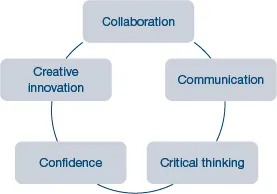
Figure 1.1 Five important soft skills for engineers
Project work is the most prevalent method for learning soft skills in engineering degrees. In particular, free, instructor independent projects facilitate effective learning. In these projects, students choose the problem and the methods. Success in free projects requires collaboration within your project group, the critical evaluation of methods and data, and the development of effective and often innovative solutions. These requirements all advance soft skills learning.
From time to time, students are critical of lecturers who are using project work as a learning method. Students often feel that lecturers are not really teaching them anything and they question the purpose of their project work. An experienced biology professor from the University of Wisconsin addressed this question at an engineering education conference in 2015. A student was unhappy with the professor’s use of project work. The student asked: “Why don’t you teach us biology? That’s your job, right?” The professor answered: “No, my job is to help you become biologists.” This dialogue demonstrates that the professor’s focus is not simply the biology discipline, but students’ ability to work as biologists after graduation.
Project work advances your ability to:
1Identify and understand a problem.
2Find and use theory and other relevant sources of expertise.
3Identify causes of problems and solution requirements.
4Design, specify, and evaluate solutions.
5Test and implement solutions.
In engineering courses, you, as students, often conduct project work in cooperation with industrial partners. Industrial partners function as project sponsors, provide the frame for the project’s problem, and (hopefully) use the solution you design. Examples of industrial partners are manufacturers, software developers, power plants, and building contractors.
Four types of project
Engineering disciplines usually involve four types of project, as shown in Table 1.1.
| Table 1.1 The four types of project | |
| Project type | Description |
| Projects confined to the boundaries of one course | Such projects facilitate deeper and more application-oriented learning than is possible with “from the blackboard” lecturing, in-class group exercises, and fictive desk assignments |
| Across-course “semester projects” | These projects apply theory and methods from several courses within one project, and can be either fixed assignments given by an instructor or open-ended projects that address a real-life industrial partner problem |
| Final projects, such as bachelor projects and master’s theses | These are the classic final projects conducted by groups of one to three students. At many universities, these projects are likely to concern a real-life industrial partner problem |
| Interdisciplinary projects | These projects involve students from several engineering fields, such as mechanical engineers, chemical engineers, and software engineers. These projects often concern entrepreneurship or innovation |
Characteristics of projects in engineering
The following list presents the characteristics of the typical independent project in engineering:
1Projects in engineering concern the use of theory and methods in real-life or close to real-life situations.
2Project groups design solutions to problems that are current and specific, and usually do not concern developing new-to-world knowledge that resolves unanswered questions.
3Problems in engineering projects are either purely technical in nature or a combination of technical and social, that is, involving changed human behavior.
4The problems that engineering projects solve are located with industrial partners and must be solved within the industrial partners’ specific context.
5The solution that the project group designs must be implementable with the industrial partner.
6The project is often conducted by project groups of two to six persons.
7The project has a minimum of two stakeholders (the university and the industrial partner). Therefore, the project has two sets of target groups, each with its own set of demands.
This list summarizes the characteristics of most typical independent projects, where you as students identify and define the problem and choose the methods for analysis and solution design.
In addition to these independent projects, engineering disciplines also use projects where the course instructor provides the problem and the methods. These projects could be entirely theoretical or perhaps use fictive situations simulating real-life problems. Examples are:
•the design of a fictive production system for an actual product
•the optimization of a chemical process that is located at the university for educational purposes
•the design of a building based on drawings and requirements included in a recent architectural competition.
Projects usually result in a project report and an oral examination. The report usually contains two end results: a conclusion that addresses the problem statement directly, and a set of recommendations for the industrial partner that summarize the project’s solution.
Engineering projects differ from projects and larger assignments within the humanities and social sciences. Projects within these disciplines create general knowledge for the world, while engineering projects design solutions to specific problems.
EXAMPLE
The (fictitious) company FOOD Measurement Systems develops, manufactures, and sells measurement instruments to food manufacturers. The company wants to develop a new instrument for clients in the pharmaceutical industry, and has engaged with a group of engineering students. The project’s problem statement concerns developing a version of and existing instrument for use by manufacturers of pharmaceuticals. The project will result in the design of a new version of the measurement instrument. The project group divides their project into two steps:
1An examination of all the requirements that the new customer group has for measurement instruments and an analysis of how these requirements can be met.
2A specific design for the new version of the instrument, including physical components, new software, and a user manual for instrument operation.
The project group collects data, including interviews with potential customers and a visit to a pharmaceutical factory where t...
Table of contents
- Cover
- Half Title
- Series Title
- Title Page
- Copyright
- Contents
- Acknowledgements
- Introduction
- Chapter 1 Projects in Engineering Projects in EngineeringProjects in Engineering
- PART 1 The Project Process
- PART 2 Collaboration, Supervision, and Stakeholders
- PART 3 The Project Report
- PART 4 The Project Exam
- PART 5 Technical Research: the Master of Science (M.Sc.) Project
- References
- Index
Trusted by 375,005 students
Access to over 1.5 million titles for a fair monthly price.
Study more efficiently using our study tools.
Frequently asked questions
Yes, you can cancel anytime from the Subscription tab in your account settings on the Perlego website. Your subscription will stay active until the end of your current billing period. Learn how to cancel your subscription
No, books cannot be downloaded as external files, such as PDFs, for use outside of Perlego. However, you can download books within the Perlego app for offline reading on mobile or tablet. Learn how to download books offline
Perlego offers two plans: Essential and Complete
- Essential is ideal for learners and professionals who enjoy exploring a wide range of subjects. Access the Essential Library with 800,000+ trusted titles and best-sellers across business, personal growth, and the humanities. Includes unlimited reading time and Standard Read Aloud voice.
- Complete: Perfect for advanced learners and researchers needing full, unrestricted access. Unlock 1.5M+ books across hundreds of subjects, including academic and specialized titles. The Complete Plan also includes advanced features like Premium Read Aloud and Research Assistant.
We are an online textbook subscription service, where you can get access to an entire online library for less than the price of a single book per month. With over 1.5 million books across 990+ topics, we’ve got you covered! Learn about our mission
Look out for the read-aloud symbol on your next book to see if you can listen to it. The read-aloud tool reads text aloud for you, highlighting the text as it is being read. You can pause it, speed it up and slow it down. Learn more about Read Aloud
Yes! You can use the Perlego app on both iOS and Android devices to read anytime, anywhere — even offline. Perfect for commutes or when you’re on the go.
Please note we cannot support devices running on iOS 13 and Android 7 or earlier. Learn more about using the app
Please note we cannot support devices running on iOS 13 and Android 7 or earlier. Learn more about using the app
Yes, you can access Doing Projects and Reports in Engineering by Samuel Brüning Larsen in PDF and/or ePUB format, as well as other popular books in Guías de estudio & Guías de estudio. We have over 1.5 million books available in our catalogue for you to explore.