This book is designed to give contemporary strategists and current military leaders a solid, common understanding of an ever complex and ever evolving reality driven and influenced by perceptions in any domain rather than a logic, linear, factual, and well defined conceptual framework.
As stressed in his preface to this book by Lieutenant General John T. Thomson, US Army, by "leveraging timeless classics by military theorists as well as historical examples and recent operations, it provides the foundation on "how to think" about today's geo-political security environment".
It is primarily meant to educate the mind of future leaders and commanders or, more accurately, to guide them in their self-education; and it is also addressed to Governments, Universities, Organizations and all those who keep the responsibility to educate future generations, our future leaders, to be prepared to participate intelligently in the strategy-making process of their Nations or systems.
In the post-modern environment, future leaders will battle for "perception dominance" in order to drive the course of future conflicts and confrontations where people, not systems or machinery, will define success.

eBook - ePub
THE ART OF WAR IN THE POST-MODERN ERA. The Battle of Perceptions
- English
- ePUB (mobile friendly)
- Available on iOS & Android
eBook - ePub
THE ART OF WAR IN THE POST-MODERN ERA. The Battle of Perceptions
About this book
Information
Subtopic
PolitikChapter 1 – War dimensions
“…in order to understand the true implications (…) to the world in which we live, and most certainly for understanding how the premises of war in all its wider definition have changed, one may better served in applying Thomas Khun’s theory of scientific revolutions”3
The origins
Warfare is undoubtedly a cardinal element of humanity throughout history. Whether for political reasons or more seductive and materialistic aspects (territories, exclusive access to natural resources, development of economy and trade, and so forth), war has been part of human history from the outset. Nonetheless, the ends, ways and means of warfare evolved according to the development and progress of humanity. This statement, that appears to be somewhat obvious, is not so if warfare is analysed through the dimensions involved throughout and to their vectors. It is nonetheless useful, at this stage and for the purpose of the analysis, to identify a common terminology. Nowadays, there is a wide use of the terms domains and dimensions. Even the most advanced military doctrine as well as many distinguished authors, often refer to those as synonyms. Given the scope, and bearing in mind Socrates’ views4, one should think of definitions, in order to approach the analysis according to a common set of definitions. To this end, in this analysis the term dimension will be used to identify the key tenets, the elementary particles of the war as a whole, namely the physical dimension, the cognitive dimension and the information dimension.
As for the domains, the term will be used to refer to the various macro systems or environments that include all aspects of our reality, such as the political, economic, security, information, etc.
Looking through this perspective the latter are ever changing, according to the evolution of mankind. In fact, through history, new domains were involved in what was, at the eve of human history, a secluded, in time and space, aspect of our lives.
As for the domains, the term will be used to refer to the various macro systems or environments that include all aspects of our reality, such as the political, economic, security, information, etc.
Looking through this perspective the latter are ever changing, according to the evolution of mankind. In fact, through history, new domains were involved in what was, at the eve of human history, a secluded, in time and space, aspect of our lives.
The physical dimension – time, space, forces
From ancient times and until the First World War, conflicts emerged and were fought through two geometric vectors, defining the battlefield, and one-time vector. Some can argue this can be referred as the “two dimensions” warfare. Nonetheless, having set the terminology, the physical dimension is the one where manoeuvre and combat operations take place. In ancient history, the battlefield resembled a chessboard where the two opposing parties developed their own actions to achieve their objectives. War was about expanding own territories, seizing key resources, forming new kingdoms and empires, creating control over the main lines of communications (land and sea) for trade.
Terrain and time, then, were the two critical factors, the roots of ancient warfare. The time vector was of utmost significance. Despite some rare examples, time took its toll to the ancient leaders and Commanders in a twofold manner. Firstly, to achieve decisive advantage, time was either urging for speedy advances and to surprise the enemy or to trade it in order to gain the right conditions to deliver decisive victory against the enemy. If for the first, Clausewitzian approach to time, the best example one can think of was the campaign of Alexander5 in Asia or to the expansion of the Mongolian Empire, the second pertains to the Sun Tzu approach and lies with the decisive campaign of the newly born Roman power, firstly against Pyrrus and, secondly, against Hannibal6. Moreover, the time to wage war was of utmost importance. In fact, the majority of open field battles required a good season, when daylight was longer, the territory allowed for large amounts of men and animals to be fed and sustained, and the lines of communication were not hampered by snow, mud and low temperatures. During the Middle Ages, instead, open field battles become an exception: “the state of belligerence was characterized by violence, plunders, pillages, sieges and sometimes open field battles. According to the various sources, 80% of the events were rather forays conducted by local warlords rather than all-out wars. No one, at that time, had the ability to recruit, train and sustain a whole Army for an entire season… the rivals often took shelter in the fortresses, which number rose dramatically during the tenth century to check the raids of Saracens, Vikings, Huns. At the time, a ruler to be had to pass through an innumerable series of sieges and attacks to fortifications. Structures that, in depth, protected the key areas of the various regions7. Henceforth, so-called, by some historians, “spring wars8”. In general, then, in the land battle, the doctrine of warfare was about the Commander himself and his ability to deliver a detailed plan, in time and space, to subordinates, who were then to report their actions and to change the plans accordingly. The favourable conditions for success were achieved through the application of superior force in time and space, through physical actions, in essence by physically overcoming the opponent. This, however, did not apply to the “sea chessboard”. In this case, leaders and Commanders gave freedom of initiative to subordinates who were away at sea for years and would have to be in a position to take decisions according to the unfolding circumstances. In essence, to exercise what today is called mission command. Captains were forced to assume decisions in total absence of orders. Every ship would also require technical expertise of engineers, signalmen, doctors, and a full complement of second tier leadership. During the First and the Second World Wars, when the air transformed what was a battlefield in a battlespace, even more challenges come through about command and control. Such few individuals were then empowered to turn the tide of the battle or even of the entire campaign.
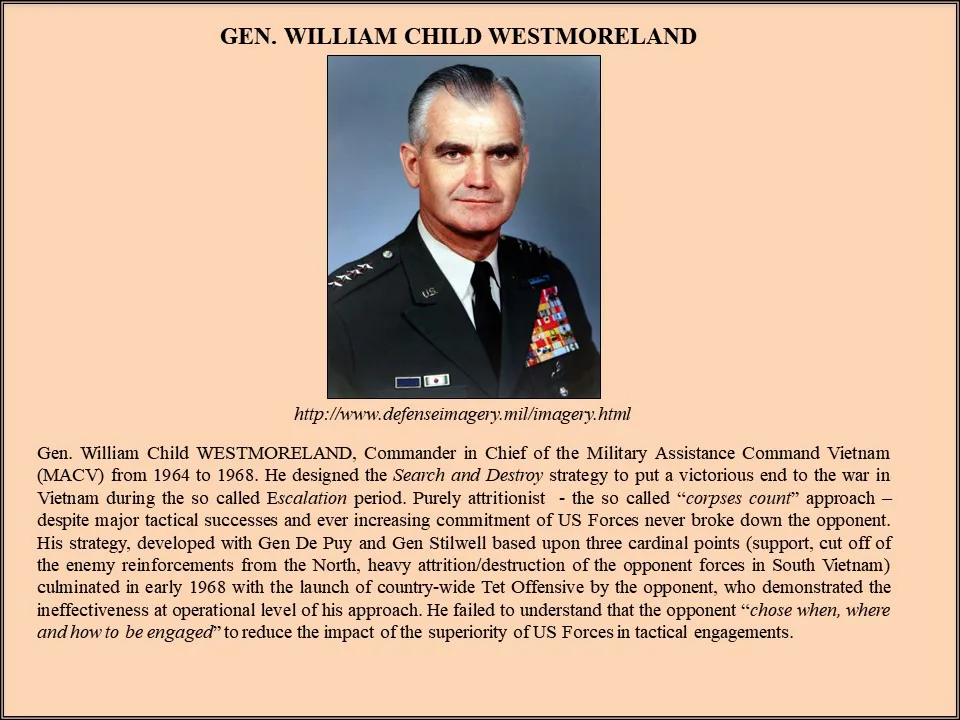
The third pillar of the physical dimension is about forces and equipment. This is where superior force and technology can play a decisive part in victory, although not in isolation. Technology changes heavily influenced the battles of the ancient times, and this because ground-breaking solutions and inventions provided a decisive superiority over the opponent. This was no more so in the modern era. The development of warfare followed the development of the human race. As for the progressively flattening curve of scientific development, superiority was exponential at some stages of history alone, when the result was based mostly on the have or do not have superior equipment available. Conversely, in the modern era, there are only some examples of victory brought by superior technology alone. In fact, trained forces and superior doctrine suited to the circumstances brought the glory of the Roman Empire, together with the equipment superiority over the opponents, but the overreliance on the latter also caused the defeat of previously invincible legions. Hence, superior technology is decisive when it can be applied. And this was not always the case even in modern history. The third wave (generation) warrior described by Alvin and Heidi Toffler9 would win over the first wave (generation) barbarian only if and when the former can apply its superior technology to the latter. Many examples in history spoke about setbacks suffered by technologically advanced forces opposed to primordial (from the technological point of view) opponents. In this respect, Professor Colin Gray, speaking of the outcomes of Desert Storm had to say that “if an adversary has no choice but to engage in a conventional manner, the overwhelming air power of the United States will defeat him well before land forces get into contact”. On the other hand, the US Forces in Vietnam, although having an overwhelming supremacy in terms of technology and equipment were never able to decisively defeat the Viet Cong. The so called “Westmoreland doctrine”10, based upon the overwhelming equipment and technology of the US forces never achieved the goal11. In essence, by having superior trained forces and equipment does not necessarily imply victory. Many other factors are nested into that. The very same principle of the application of physical force is questioned simply because is strictly confined in one dimension of war alone.
Terrain and time, then, were the two critical factors, the roots of ancient warfare. The time vector was of utmost significance. Despite some rare examples, time took its toll to the ancient leaders and Commanders in a twofold manner. Firstly, to achieve decisive advantage, time was either urging for speedy advances and to surprise the enemy or to trade it in order to gain the right conditions to deliver decisive victory against the enemy. If for the first, Clausewitzian approach to time, the best example one can think of was the campaign of Alexander5 in Asia or to the expansion of the Mongolian Empire, the second pertains to the Sun Tzu approach and lies with the decisive campaign of the newly born Roman power, firstly against Pyrrus and, secondly, against Hannibal6. Moreover, the time to wage war was of utmost importance. In fact, the majority of open field battles required a good season, when daylight was longer, the territory allowed for large amounts of men and animals to be fed and sustained, and the lines of communication were not hampered by snow, mud and low temperatures. During the Middle Ages, instead, open field battles become an exception: “the state of belligerence was characterized by violence, plunders, pillages, sieges and sometimes open field battles. According to the various sources, 80% of the events were rather forays conducted by local warlords rather than all-out wars. No one, at that time, had the ability to recruit, train and sustain a whole Army for an entire season… the rivals often took shelter in the fortresses, which number rose dramatically during the tenth century to check the raids of Saracens, Vikings, Huns. At the time, a ruler to be had to pass through an innumerable series of sieges and attacks to fortifications. Structures that, in depth, protected the key areas of the various regions7. Henceforth, so-called, by some historians, “spring wars8”. In general, then, in the land battle, the doctrine of warfare was about the Commander himself and his ability to deliver a detailed plan, in time and space, to subordinates, who were then to report their actions and to change the plans accordingly. The favourable conditions for success were achieved through the application of superior force in time and space, through physical actions, in essence by physically overcoming the opponent. This, however, did not apply to the “sea chessboard”. In this case, leaders and Commanders gave freedom of initiative to subordinates who were away at sea for years and would have to be in a position to take decisions according to the unfolding circumstances. In essence, to exercise what today is called mission command. Captains were forced to assume decisions in total absence of orders. Every ship would also require technical expertise of engineers, signalmen, doctors, and a full complement of second tier leadership. During the First and the Second World Wars, when the air transformed what was a battlefield in a battlespace, even more challenges come through about command and control. Such few individuals were then empowered to turn the tide of the battle or even of the entire campaign.
The third pillar of the physical dimension is about forces and equipment. This is where superior force and technology can play a decisive part in victory, although not in isolation. Technology changes heavily influenced the battles of the ancient times, and this because ground-breaking solutions and inventions provided a decisive superiority over the opponent. This was no more so in the modern era. The development of warfare followed the development of the human race. As for the progressively flattening curve of scientific development, superiority was exponential at some stages of history alone, when the result was based mostly on the have or do not have superior equipment available. Conversely, in the modern era, there are only some examples of victory brought by superior technology alone. In fact, trained forces and superior doctrine suited to the circumstances brought the glory of the Roman Empire, together with the equipment superiority over the opponents, but the overreliance on the latter also caused the defeat of previously invincible legions. Hence, superior technology is decisive when it can be applied. And this was not always the case even in modern history. The third wave (generation) warrior described by Alvin and Heidi Toffler9 would win over the first wave (generation) barbarian only if and when the former can apply its superior technology to the latter. Many examples in history spoke about setbacks suffered by technologically advanced forces opposed to primordial (from the technological point of view) opponents. In this respect, Professor Colin Gray, speaking of the outcomes of Desert Storm had to say that “if an adversary has no choice but to engage in a conventional manner, the overwhelming air power of the United States will defeat him well before land forces get into contact”. On the other hand, the US Forces in Vietnam, although having an overwhelming supremacy in terms of technology and equipment were never able to decisively defeat the Viet Cong. The so called “Westmoreland doctrine”10, based upon the overwhelming equipment and technology of the US forces never achieved the goal11. In essence, by having superior trained forces and equipment does not necessarily imply victory. Many other factors are nested into that. The very same principle of the application of physical force is questioned simply because is strictly confined in one dimension of war alone.
The cognitive dimension
One can widely recognize that the dichotomy whether war is an art, or a science lies well within the cognitive dimension. This is where intangible factors come into play. War, as Clausewitz had to say, is an essential part of human beings and human history. Hence by being so, the conduct of war and the very same approach to war stems directly from the historical, cultural heritage of a population, a party, a country, or group that wages it. Moreover, all leaders tend to transform their mind and perception of war in order to forge a collective consciousness within their own system that can endorse or, more, support completely their thoughts and perceptions.
On the contrary, a potential leader who will not be able to provide cognitive or perceptional evidence of the just cause will, inevitably, either fail to wage war or will lose support during the campaign. And this is a fundamental for those who approach the cognitive dimension, the inextricable link that stretches to the political domain. A country leader, or leaders as, essentially, the embodiment of a culture, could forge the perception of their subordinates and the population of a country, and by retaining the “monopoly of violence under any perspective”12 at political level they can drive their ends through the means of the perception of the just cause. This is also stemming from the ancient oriental thought. Confucius (孔子, kong zi) well before Sun Zi (孙子), clearly argues about the subordinate role of the military (武, wu) to politics (文, wen)13.
In this dimension, then, the potential adversary, more evidently in the recent past and current times, will always pursue the distortion or, worse, the destruction of the cognitive fundamentals on which the counterpart had find not only the casus belli but also the cohesive and collective support (the just cause) from which draw the values and beliefs to fight and win a war. In fact, whatever the nature might be, whatever the intensity and the duration of a conflict, the natural or inducted belief of the just cause would represent the strongest force multiplier upon which populations and armi...
On the contrary, a potential leader who will not be able to provide cognitive or perceptional evidence of the just cause will, inevitably, either fail to wage war or will lose support during the campaign. And this is a fundamental for those who approach the cognitive dimension, the inextricable link that stretches to the political domain. A country leader, or leaders as, essentially, the embodiment of a culture, could forge the perception of their subordinates and the population of a country, and by retaining the “monopoly of violence under any perspective”12 at political level they can drive their ends through the means of the perception of the just cause. This is also stemming from the ancient oriental thought. Confucius (孔子, kong zi) well before Sun Zi (孙子), clearly argues about the subordinate role of the military (武, wu) to politics (文, wen)13.
In this dimension, then, the potential adversary, more evidently in the recent past and current times, will always pursue the distortion or, worse, the destruction of the cognitive fundamentals on which the counterpart had find not only the casus belli but also the cohesive and collective support (the just cause) from which draw the values and beliefs to fight and win a war. In fact, whatever the nature might be, whatever the intensity and the duration of a conflict, the natural or inducted belief of the just cause would represent the strongest force multiplier upon which populations and armi...
Table of contents
- Cover
- Indice
- Frontespizio
- Copyright
- Preface
- Incipit
- Chapter 1 – War dimensions
- Chapter 2 – War and domains
- Chapter 3 – The current and future operating environment
- Chapter 4 – New principles for post-modern warfare?
- Chapter 5 –The opponent gets a vote
- Chapter 6 –The Centre of Gravity Analysis in a multidomain context
- Chapter 7 – Analysis of the Opponent Possible Courses of Action
- Chapter 8 - The Black Swan – The unpredictable
- Chapter 9 - Minds on the ground - The human Hyperdomain
- Conclusions
- BIBLIOGRAPHY
Trusted by 375,005 students
Access to over 1.5 million titles for a fair monthly price.
Study more efficiently using our study tools.
Frequently asked questions
Yes, you can cancel anytime from the Subscription tab in your account settings on the Perlego website. Your subscription will stay active until the end of your current billing period. Learn how to cancel your subscription
No, books cannot be downloaded as external files, such as PDFs, for use outside of Perlego. However, you can download books within the Perlego app for offline reading on mobile or tablet. Learn how to download books offline
Perlego offers two plans: Essential and Complete
- Essential is ideal for learners and professionals who enjoy exploring a wide range of subjects. Access the Essential Library with 800,000+ trusted titles and best-sellers across business, personal growth, and the humanities. Includes unlimited reading time and Standard Read Aloud voice.
- Complete: Perfect for advanced learners and researchers needing full, unrestricted access. Unlock 1.5M+ books across hundreds of subjects, including academic and specialized titles. The Complete Plan also includes advanced features like Premium Read Aloud and Research Assistant.
We are an online textbook subscription service, where you can get access to an entire online library for less than the price of a single book per month. With over 1.5 million books across 990+ topics, we’ve got you covered! Learn about our mission
Look out for the read-aloud symbol on your next book to see if you can listen to it. The read-aloud tool reads text aloud for you, highlighting the text as it is being read. You can pause it, speed it up and slow it down. Learn more about Read Aloud
Yes! You can use the Perlego app on both iOS and Android devices to read anytime, anywhere — even offline. Perfect for commutes or when you’re on the go.
Please note we cannot support devices running on iOS 13 and Android 7 or earlier. Learn more about using the app
Please note we cannot support devices running on iOS 13 and Android 7 or earlier. Learn more about using the app
Yes, you can access THE ART OF WAR IN THE POST-MODERN ERA. The Battle of Perceptions by Marco Cagnazzo,Fabiano Zinzone in PDF and/or ePUB format, as well as other popular books in Politik & Internationale Beziehungen & Politik. We have over 1.5 million books available in our catalogue for you to explore.