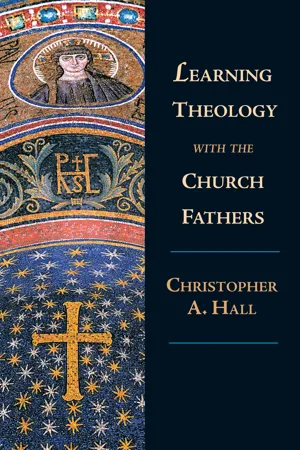
The early church fathers were great theologians--though they did not think of themselves as such. They were working pastors, involved in the daily life and leadership of their congregations. Yet they were wrestling with many of the great and formative questions of the Christian faith, such as the Trinity, the incarnation, the providence of God and the nature of the church. These beliefs were defined in the crucible of spiritual leadership, pastoral care and theological conflict, all set against the background of the great cultural movements and events of their day. For the church fathers, theology was a spiritual exercise woven into the texture of life.What would it be like to sit under the preaching and instruction of these great men, to look over their shoulders as they thought and wrote, or to hear them debate theological issues?Learning Theology with the Church Fathers offers us that experience. With the same insight and love of his subject that he brought to Reading Scripture with the Church Fathers, Christopher A. Hall opens the door on patristic theology. Focusing on the great questions, we view these issues in their settings and find greater appreciation for the foundations and architecture of our Christian faith.
- 308 pages
- English
- ePUB (mobile friendly)
- Available on iOS & Android
eBook - ePub
Learning Theology with the Church Fathers
About this book
Trusted by 375,005 students
Access to over 1.5 million titles for a fair monthly price.
Study more efficiently using our study tools.
Information
Topic
Theology & ReligionSubtopic
Christian Theology“This is true worship: when the mind of the worshipper presents itself
as an undefiled offering to God.”
LACTANTIUS
The Divine Institutes
“We should consider what is said—
not with what eloquence it is said. Nor should we look at how it tickles the ears.
Instead, we should look at the benefits it confers upon its hearers.”
ARNOBIUS
Against the Heathen
“Every place and every time in which we entertain the idea of God is in reality sacred.”
CLEMENT OF ALEXANDRIA
The Stromata, or Miscellanies
“Sound doctrine does not enter into a hard and disobedient heart.”
JUSTIN MARTYR
Fragments
ONE
PREPARING TO LEARN
THEOLOGY WITH THE
CHURCH FATHERS
Key Questions to Explore
The incarnation of the Word. The first five hundred years of the church’s life were a period of intense biblical and theological ferment, reflection and development. Think of the momentous events of the first century A.D. itself. The early Christian community was birthed with the firm conviction that the God revealed to Abraham, Moses and David had acted finally and completely on humanity’s behalf in Jesus Christ. In the incarnation of the divine Logos (Word), sent by the Father into the midst of this present evil age, the life of the age to come had been dramatically introduced and manifested.
“In the beginning was the Word,” John writes, “and the Word was with God and the Word was God” (Jn 1:1). How could this be? What strange kind of theological arithmetic was this? How could God be God and the Word be distinct from God and yet, simultaneously, also God? Exactly what Word was this? How was the Word related to God? To further complicate matters, John writes that this Word “became flesh and lived among us, and we have seen his glory, the glory as of a father’s only son, full of grace and truth” (Jn 1:14). In fact, this Son had become fully manifest in Jesus Christ, who as John puts it, “is close to the Father’s heart” and has “made him known” (Jn 1:18).
Breathtaking, mysterious and complicated statements all. Of course, John’s prologue to his Gospel is only the beginning of the story. The reader soon discovers that God has uniquely visited humanity in Christ. Here we have an incarnate God, one who comes to serve, suffer, die and rise again, conquering the awful reality of sin in the process. It is a wonderful story, at first glance seemingly simple, but increasingly complicated and troublesome the more one contemplates it. How was the early church to think through and resolve the many questions that would invariably rise, some almost immediately, others as the church reflected on the gospel narrative during the crucial formative years of its history?
The question of authority. We have, for example, the question of authority. Why were certain documents considered authoritative for the life and thought of the church? What was the source of this authority? What separates documents such as the four canonical Gospels from other texts that attempt to tell and interpret the meaning of Jesus’ life? Not only is the question of the Scripture’s own inherent authority highly significant, but so also is the issue of what one is to do when Christians read the text of Scripture and interpret it differently. How can one distinguish a correct interpretation of Scripture from an incorrect one? How did the early church handle this considerable problem?
The person and work of Christ. Or what of the person and work of Jesus himself? We have, for instance, the question of Jesus’ divinity. If Jesus was God incarnate, as New Testament writers appeared to insist, in what way was he God? Were there actually three gods: the Father, the Son and the Holy Spirit? Or was Jesus perhaps a lesser god, not on the same plane as the Father, but in some mysterious and ineffable manner divine nonetheless? Maybe there was only one God, but that single God possessed the marvelous ability to manifest himself in various forms or roles, occasionally as the Father and at other times as the Son or the Spirit. How was one to make sense of the complex biblical testimony regarding Jesus’ divinity?
And then we have the question of Jesus’ humanity. The Gospel narratives surely seemed to portray Jesus as a human being. He had a human body—or at least appeared to have one—and thus ate food, drank wine, was tired after a long day’s work, slept at night, spoke a human language those around him readily understood, possessed human emotions such as joy, sadness and fear, and finally experienced death, a reality only genuine biological life can undergo.
How could one make sense of Jesus’ humanity in light of his divinity? Could genuine divinity and humanity be joined together? What kind of union was this? Was such a union even possible? Perhaps Jesus possessed a human body controlled by a divine mind. Or maybe his body was not real after all. Then again, perhaps Jesus possessed a real body and a genuinely human mind but a divine will. To what extent was Jesus human after all? Perhaps he was more like an angel, a third type of personal, created being—part human, part divine.
And what did Jesus come to accomplish? Apostles such as Paul, Peter and John were absolutely insistent that Jesus’ life, death and resurrection had overcome sin and its destructive effects on humanity and God’s creation at large. In what way had God conquered sin in the lives of those people who believed in Jesus? Apostolic teaching indicated that Christ’s crucifixion and subsequent resurrection had broken the spine of sin. How? How did human faith and belief tap into the benefits of Christ’s death and resurrection? In what way was the exercise of faith related to God’s power? To human freedom? How were the glorious realities of Christ’s work and person communicated to those who believed in him?
The Holy Spirit. Perhaps the greatest surprise of all was the ascension of Christ back to heaven, just when all seemed to have been accomplished and fulfilled. Jesus left his small band of brothers and sisters behind at the very moment when they appeared to need his guidance the most. Why would he do such a thing? Clearly Christ’s departure surprised his early followers.
Luke records that, after the disciples had received extended postresurrection instruction from Jesus, they asked, “Lord, is this the time when you will restore the kingdom to Israel?” (Acts 1:6). Jesus’ response no doubt caught them off guard: “It is not for you to know the times or periods that the Father has set by his own authority. But you will receive power when the Holy Spirit has come upon you; and you will be my witnesses in Jerusalem, in all Judea and Samaria, and to the ends of the earth” (Acts 1:7-8). Whereas the early postresurrection Christian community thought the story had reached its conclusion, it was only just beginning. There was work to be done, a witness to be proclaimed, and those left behind would inaugurate that work and witness. Moreover, the early Christian generations would play a key role in witnessing to, incarnating and interpreting the story of Jesus’ life, death and resurrection. Though Christ was physically leaving, he promised the disciples that he would soon return to them through the Spirit, the Spirit who would empower them for ministry and form them into Christ’s body on earth, the church.
Again, layers of questions present themselves. Who is this Holy Spirit who will infill and energize the church? How is the Holy Spirit related to Christ and to the Father? Are Father, Son and Spirit simply different manifestations of one divine being, or is the Father distinct from the Son, and the Son from the Spirit? If these distinctions exist, exactly who is the Holy Spirit? What is the Spirit’s work and mission? And what of the witnessing community Jesus predicts the Spirit will form, infill, power and direct? How can the church, made up of sinful human beings, still be called by the apostle Paul Christ’s “body, the fullness of him who fills all in all” (Eph 1:23)? In short, what is the church?
As the early church pondered these questions, its thinking coalesced around central theological loci:
- The question of authority: To what should the church look for its guiding authority? What is the relation between Scripture and the apostolic tradition, and how do these two relate to one another in the formation of doctrine?
- The question of the Trinity: Is Christ genuinely divine? If so, how is the divinity of Christ to be understood in relationship to the Father and the Spirit?
- The question of the incarnation: What is the relationship between Christ’s deity and humanity? If Jesus was truly divine, was he also truly human? How can he simultaneously be both?
- The question of Christ’s work: How has Jesus’ ministry, death and resurrection overcome sin and introduced the life of the age to come into this present evil age?
- The question of humanity: What is a human being? What does the Scripture mean when it states that human beings have been created in the image of God? How and to what extent has sin affected and infected human nature?
- The question of the church: What is the church? How is the church related to Christ? What is the church’s task on earth? How does one enter the church? What are the church’s marks? How is the life of the church nourished and strengthened? What are the dangers the church can expect to encounter in its mission and ministry on earth?
- The question of the future: What will happen in the future? When will Christ return? What is the resurrection of the dead? What will occur at the last judgment?
How shall we work through these questions in this book? In the following pages I will attempt to act as a guide to the reflections of the church fathers—bishops, pastors and, occasionally, laypeople who ministered in the church from approximately A.D. 100 to 750. Readers familiar with my earlier book, Reading Scripture with the Church Fathers, will already be aware of why I think the church fathers are important and neglected to our own detriment and peril. Those unfamiliar with this earlier book will perhaps find a brief introduction to the fathers and a rationale for studying their exegesis and theological reflections to be helpful.1
A Brief Introduction to the Fathers
The idea of a “father in the faith” has a rich and fruitful background in the Bible and in the ancient world. Paul, for example, describes himself as a “father” to the members of the Corinthian congregation, distinguishing the role of a father from that of a mere guardian (1 Cor 4:15). The term father also occurred in rabbinic, Cynic and Pythagorean circles. Early Christian writers such as Clement of Rome, Irenaeus and Clement of Alexandria all employ the term. Irenaeus speaks, not only of the student as one “who has received the teaching from another’s mouth” as a son, but also of one’s instructor as a “father.”2 A father in the faith, then, is someone who is familiar with the teachings concerning the life and ministry of Jesus Christ and can be trusted to hand on faithfully and correctly the tradition that he himself has already received. Trustworthiness of character and rootedness in the gospel are nonnegotiables in the life of a father. There were also trusted mothers in the faith, but unfortunately we do not possess a large written corpus from their hands.3
The idea of preserving and faithfully passing on the apostolic teachings concerning the meaning of Jesus is clearly evident in the era of the trinitarian and christological controversies. Bishops who faithfully preserved and protected the conciliar decisions of key councils such as Nicaea (A.D. 325), Constantinople (381) and Chalcedon (451) received the title “father.” The church considered these Christian leaders worthy of special honor and regard for preserving orthodox teaching during times marked by severe testing and occasional persecution.
Vincent of Lerins describes the fathers of the church as people who “each in his own time and place” remained “in the unity of communion and the faith” and were “accepted as approved masters.” Vincent argues that “whatsoever these may be found to have held, with one mind and one consent… ought to be accounted the true and catholic doctrine of the Church, without any doubt or scruple.”4
In addition, four key criteria are often employed to determine whether a particular Christian teacher qualifies as a father of the church.
Antiquity. A father lived and ministered from roughly the close of the first century (ca. A.D. 96) to the time of John of Damascus (750).
Holiness of life. By holiness we do not mean perfection, as though the fathers were angels in human form. Most, as I have elsewhere written, were intensely human and struggled with the same shortcomings and temptations common to humanity.
The fathers exhibited a tremendous zeal for God and the Scriptures. And, often like us, their zeal manifested itself in both their strengths and weaknesses. They have much to teach us about reverence, awe, self-sacrifice, self-awareness and self-deception, worship, respect, prayer, study and meditation. Their theological contributions remain foundational for Christians in the Roman Catholic, Orthodox, Anglican and many Protestant communions…. Most often they wore their hearts and thoughts on their sleeves. At times they were impatient, short-tempered and narrow. Some had a very hard time listening to perspectives other than...
Table of contents
- Cover
- Title Page
- Dedication Page
- Contents
- Preface
- 1 Preparing to Learn Theology with the Church Fathers
- 2 Christ the Son, Begotten and Not Made
- 3 The Mystery and Wonder of the Trinity
- 4 Christ Divine and Human
- 5 On the Holy Spirit
- 6 Sin, Grace and the Human Condition
- 7 God’s Transcendent Providence
- 8 God’s Wise and Loving Providence
- 9 The Sacred Scriptures
- 10 One Holy, Apostolic Church
- 11 The Resurrection of the Body and the Life Everlasting
- Abbreviations
- Notes
- Index
- Scripture Index
- About the Author
- More Titles from InterVarsity Press
- Copyright Page
Frequently asked questions
Yes, you can cancel anytime from the Subscription tab in your account settings on the Perlego website. Your subscription will stay active until the end of your current billing period. Learn how to cancel your subscription
No, books cannot be downloaded as external files, such as PDFs, for use outside of Perlego. However, you can download books within the Perlego app for offline reading on mobile or tablet. Learn how to download books offline
We are an online textbook subscription service, where you can get access to an entire online library for less than the price of a single book per month. With over 1.5 million books across 990+ topics, we’ve got you covered! Learn about our mission
Look out for the read-aloud symbol on your next book to see if you can listen to it. The read-aloud tool reads text aloud for you, highlighting the text as it is being read. You can pause it, speed it up and slow it down. Learn more about Read Aloud
Yes! You can use the Perlego app on both iOS and Android devices to read anytime, anywhere — even offline. Perfect for commutes or when you’re on the go.
Please note we cannot support devices running on iOS 13 and Android 7 or earlier. Learn more about using the app
Please note we cannot support devices running on iOS 13 and Android 7 or earlier. Learn more about using the app
Yes, you can access Learning Theology with the Church Fathers by Christopher A. Hall in PDF and/or ePUB format, as well as other popular books in Theology & Religion & Christian Theology. We have over 1.5 million books available in our catalogue for you to explore.