Teacher wellbeing, or a lack of it, is a major concern for the teaching profession. Research shows that there is a recruitment and retention crisis with over a third of the school, FE and HE profession expecting to leave by 2020.
This is a practical guide that will help trainee teachers prepare for what is, undoubtedly, a demanding job. It supports new teachers to be aware of themselves and to understand the schools and teaching sector so they better anticipate pressures and find their own way forward. With solutions and strategies that can be taken into practice, this guide will help new and early career teachers establish that all-important work/life balance and avoid burn out.
- 120 pages
- English
- ePUB (mobile friendly)
- Available on iOS & Android
eBook - ePub
About this book
Information
1 WEllbeing Matters
Wellbeing matters
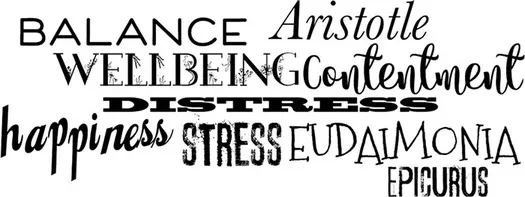
Wellbeing matters. It matters to us personally, socially and economically, and it matters to our communities and our nations. And it has always mattered. How to lead a good life, complete with a sense of wellbeing, has been the focus of philosophers and religions for millennia. While thinkers through the ages have sought to solve the wellbeing and happiness mysteries of their times, the quest for wellbeing will, perhaps, always be a feature of our lives. From Aristotle’s proposals about human flourishing, or eudemonic wellbeing, to much more recent research on living a good life (see, for example, the New Economics Foundation’s Five Ways to Wellbeing), wellbeing clearly matters.
Regardless of the findings of the giants that have gone before us, times change and we must find new ways of seeking balance that help us to thrive in the context in which we find ourselves. That is not to say that wisdom from the past isn’t useful for today. Far from it. But we do need to acknowledge the need to interpret, reinterpret and add to it, so that we can give to and gain from the life we have today.
Without a specific focus on wellbeing in our lives, can we live our best lives? Can we achieve what we are fully capable of without self-care? If what we know of wellbeing from thousands of years of thought is anything to go by, the answer to those questions is ‘no’.
Interestingly, wellbeing is now an increasingly important consideration of researchers in many fields. According to the European Social Survey wellbeing focus, ‘one of the key aims of a democratic government should be to promote the good life: a life which is flourishing, has meaning, and in which people feel happy. In short, a life of high well-being’. Yet the common experience for many is a government that focuses on economic growth ahead of wellbeing. It is no surprise that this does not necessarily lead to a nation awash with wellbeing and happiness.
Save it for later…
Take a look at the website for the European Social Survey wellbeing focus to find out more about why wellbeing matters and the role it is taking in the work of policymakers and researchers across Europe: www.esswellbeingmatters.org. These wellbeing pages summarise research into different aspects of wellbeing and their drivers, as well as explaining two key elements of wellbeing: being happy (the hedonic concept of wellbeing – espoused by Epicurus) and flourishing (the eudemonic concept of wellbeing – put forward by Aristotle).
Save it for later…
Wellbeing as a philosophical concept has a long history and what is presented here is the briefest of introductions. If you want to explore the best of what has been thought and said about wellbeing from a philosophical perspective, the Stanford Encyclopaedia of Philosophy entry on wellbeing is a good place to start, covering theories of wellbeing including hedonism, desire theories, objective list theories and more. Find it here: www.plato.stanford.edu/entries/well-being.
You can take your reading further with Aristotle’s Nicomachean Ethics. Find a copy in any good library or bookshop, or online here: www.classics.mit.edu/Aristotle/nicomachaen.html.
Defining wellbeing
Defining wellbeing can be challenging. There is no precise definition shared by all researchers in the field. It is usually taken to mean being in a comfortable, happy or healthy state. But that seems too simplistic for our purposes. When we are experiencing wellbeing, we are feeling good and functioning well. Further than that, though, it is clear that there is a balance to be had between different elements of wellbeing in our lives: biological wellbeing, psychological wellbeing, spiritual wellbeing, our wellbeing at work, and even, or perhaps especially, our social wellbeing – whether our finances are sufficient for our needs, whether we are socially connected with others, whether we feel we are stakeholders in our local communities.
The European Social Survey explains that wellbeing is a multidimensional concept (see www.esswellbeingmatters.org). It refers to:
- evaluative wellbeing – how we estimate our lives are going; how happy and satisfied we feel;
- emotional wellbeing – positive day to day feelings, happiness, enjoyment and a lack of depression and anxiety;
- functioning – autonomy, competence, engagement, meaning and purpose, self-esteem, optimism and resilience;
- vitality – sleeping well, feeling energised, able to face life;
- community wellbeing – how we feel about where we live, trust in others, feeling supported, experiencing neighbourliness;
- supportive relationships – feeling that there are people in our lives who support us, offer companionship, and with whom we can discuss intimate matters.
As individuals, we may have other ‘wellbeings’ that directly impact our lives. It is extremely helpful to appreciate how wellbeing can be categorised in this way. When we do this, it is perhaps more likely that we will be able to rationalise any challenges to our wellbeing that we may be facing. Instead of ‘life’ being stressful, we can identify more easily which aspect is causing us undue stress. The more specific we are when we reflect on what needs to change in our lives, the more likely we are to be able to make improvements.
Viewing wellbeing as a dynamic process can also be helpful. In Measuring Our Progress: The Power of Wellbeing (Abdallah et al., 2011), there is a dynamic model of wellbeing that shows the links between our personal resources (such as health, resilience, optimism and self-esteem), our external conditions (such as work and productivity, income stability and material conditions), our good functioning and the satisfaction of our needs (such as being autonomous, competent, connected to others, safe and secure), and our overall day to day good feelings (happiness, joy, contentment and satisfaction). Other writers and organisations such as Richard Docwra and Life Squared have also highlighted the interconnectedness of different aspects of our wellbeing. Where one dimension of wellbeing is suffering, other dimensions may follow. Where one dimension of wellbeing is strong, other areas that are suffering may be supported. We are complex, interconnected beings.
Writers such as Richard Docwra and Alain de Botton, among others, also go further in their analysis of wellbeing with their perception that modern life might actually be making us ill (see www.lifesquared.org.uk and www.alaindebotton.com). While many features of life today are highly positive – medical and technological advancements for example – the levels of anxiety and depression felt by many in society indicate that we are struggling. And our inability as a society to provide safe and effective treatment and care for those suffering from poor psychological health is testament to the fact that where we are right now needs urgent attention. Far too many people talk of desperately poor services at times of great crisis in their lives. Wellbeing matters.
Save it for later…
Life Squared ( www.lifesquared.org.uk) is a not for profit organisation helping people to live well. The website carries numerous publications on themes such as consumerism, surviving modern life, aging, giving, ethical living, ecological intelligence and much more. The publications are all evidence-informed and free to download. Try How to be Happy (www.lifesquared.org.uk/how-be-happy) for starters.
Jules Evans’ Politics of Wellbeing blog explores many dimensions of the concept of wellbeing and is well worth a browse. Find it here: www.philosophyforlife.org/category/politics-of-well-being.
Wellbeing matters . . . to teachers
Wellbeing matters, not just on a practical, societal level – when we are functioning well we are efficient and contributing to society to the best of our abilities – but also (and perhaps more importantly) on a personal level. Wellbeing, however defined by others, is a personal experience. You know when your wellbeing has taken a hit. You may not be able to identify precisely what the cause is, or how best to deal with it initially, but the experience remains entirely personal.
Teaching could be considered to be a unique profession in the demands made of its practitioners. While planning and preparation for teaching may be completed collaboratively, the actual process of teaching is often undertaken alone. For some this is an isolating experience, particularly if there are behaviour issues to deal with, or an expectation to adhere to behaviour control mechanisms that are ideologically at odds with a teacher’s way of working, or if other aspects of the job – expected pedagogy, for example, or assessment and feedback expectations – leave a teacher feeling overwhelmed and unsupported.
Yet the role of educating the next generation is vital in healthy societies and we need teachers to be nurtured in that role. After all, is it possible to safeguard the wellbeing of the young people we teach, if we cannot do that for ourselves? The job can be exhausting – both physically and emotionally draining – and yet also sustaining. It can fill us with the joy and satisfaction of seeing children learn and grow, and it can wipe us of energy and drive. It can bolster wellbeing and destroy it. We simply cannot have teachers working at the pace and depth that many work for the long term without there being devastating consequences for recruitment, retention and the health and wellbeing of the individuals involved.
Wellbeing matters.
Case study…
It was my first week in my first job as a qualified teacher. A colleague sat next to me in the staffroom and said ‘make sure you know how to say no’. I dismissed her comment in my head as a keen and enthusiastic new teacher. Why would I need to say no?! But I’ve since come to realise that she was telling me that my wellbeing matters and that I may need to equip myself with the language I need to negotiate tasks with my line manager. Saying yes to everything is a short-cut to burnout. Wellbeing is so often about removing stuff from workloads so that what’s left can be done more effectively, and without forcing a crisis of wellbeing on teachers who are ill-equipped to deal with the exhausting pressures placed upon them. We have to say no, so that the answer to the i...
Table of contents
- Cover
- Half Title
- Publisher Note
- Title Page
- Copyright Page
- Acknowledgements
- Contents
- The author
- Acknowledgements
- Introduction
- 1 WEllbeing Matters
- 2 All about stress
- 3 Stress and teaching
- 4 Making stress work for you
- 5 Asking for help
- 6 Strategies for every day
- 7 Anxiety
- 8 Transforming sleep
- 9 Maintaining balance
- Afterword
- Some reading
- Index
Trusted by 375,005 students
Access to over 1.5 million titles for a fair monthly price.
Study more efficiently using our study tools.
Frequently asked questions
Yes, you can cancel anytime from the Subscription tab in your account settings on the Perlego website. Your subscription will stay active until the end of your current billing period. Learn how to cancel your subscription
No, books cannot be downloaded as external files, such as PDFs, for use outside of Perlego. However, you can download books within the Perlego app for offline reading on mobile or tablet. Learn how to download books offline
Perlego offers two plans: Essential and Complete
- Essential is ideal for learners and professionals who enjoy exploring a wide range of subjects. Access the Essential Library with 800,000+ trusted titles and best-sellers across business, personal growth, and the humanities. Includes unlimited reading time and Standard Read Aloud voice.
- Complete: Perfect for advanced learners and researchers needing full, unrestricted access. Unlock 1.5M+ books across hundreds of subjects, including academic and specialized titles. The Complete Plan also includes advanced features like Premium Read Aloud and Research Assistant.
We are an online textbook subscription service, where you can get access to an entire online library for less than the price of a single book per month. With over 1.5 million books across 990+ topics, we’ve got you covered! Learn about our mission
Look out for the read-aloud symbol on your next book to see if you can listen to it. The read-aloud tool reads text aloud for you, highlighting the text as it is being read. You can pause it, speed it up and slow it down. Learn more about Read Aloud
Yes! You can use the Perlego app on both iOS and Android devices to read anytime, anywhere — even offline. Perfect for commutes or when you’re on the go.
Please note we cannot support devices running on iOS 13 and Android 7 or earlier. Learn more about using the app
Please note we cannot support devices running on iOS 13 and Android 7 or earlier. Learn more about using the app
Yes, you can access A Practical Guide to Teacher Wellbeing by Elizabeth Holmes in PDF and/or ePUB format, as well as other popular books in Education & Teacher Training. We have over 1.5 million books available in our catalogue for you to explore.