eBook - ePub
Livonia
About this book
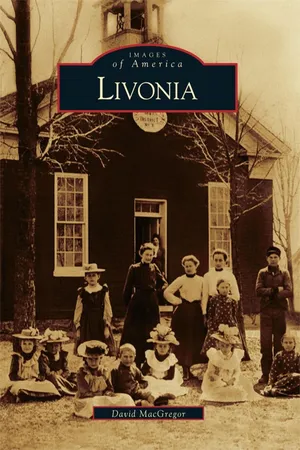
At the turn of the 20th century, the township of Livonia was largely a rural community populated with farms, dirt roads, and several cheese factories.
A few decades later, as the auto industry boomed in Detroit, white-collar workers sought places to raise their families outside the city, and Livonia changed seemingly overnight. What was once considered a backwater berg was suddenly seen with different eyes through the lens of the quintessential American suburban city, one in which urban and rural lifestyles converged and formed a new kind of community. This book celebrates Livonia's development from the 19th to 21st century, as it evolved from wilderness into a city that is routinely rated as one of the best places to raise a family in the United States.
Information
Eight
1950s

Livonia’s Charter Commission had the responsibility of writing the charter that would define the kind of city Livonia would become. By a vote of 2,970 to 1,490, Livonians approved the charter on May 23, 1950 and Livonia ceased being a township and officially became a city. Seated from left to right are Wilson W. “Eddie” Edgar, William W. Brashear, Carl J. Wagenschutz, Harry S. Wolfe, Daniel McKinney, and Raymond E. Grimm. Standing from left to right are Fred Weinert, Rudolph R. Kleinert, and Leo Nye.

Here are the first city officials who were elected on May 23, 1950. Seated from left to right are Carl J. Wagenschutz (treasurer), Jesse Ziegler (mayor), Nettie Carey (councilwoman), John W. Whitehead (councilman), and Leo Nye (justice of the peace). Standing from left to right are Harry S. Wolfe (council president), Wilson W. “Eddie” Edgar (councilman), Raymond E. Grimm (councilman), Harvey Jahn (councilman), William Taylor (councilman), Ray Owens (constable), and John Miller (constable).

In the same month that Livonia became a city, Elm School put on its annual May Festival. Pictured here are the second, third, and fourth grade students. On the right-hand side of the picture is a maypole, around which the children would twirl as part of the festival.
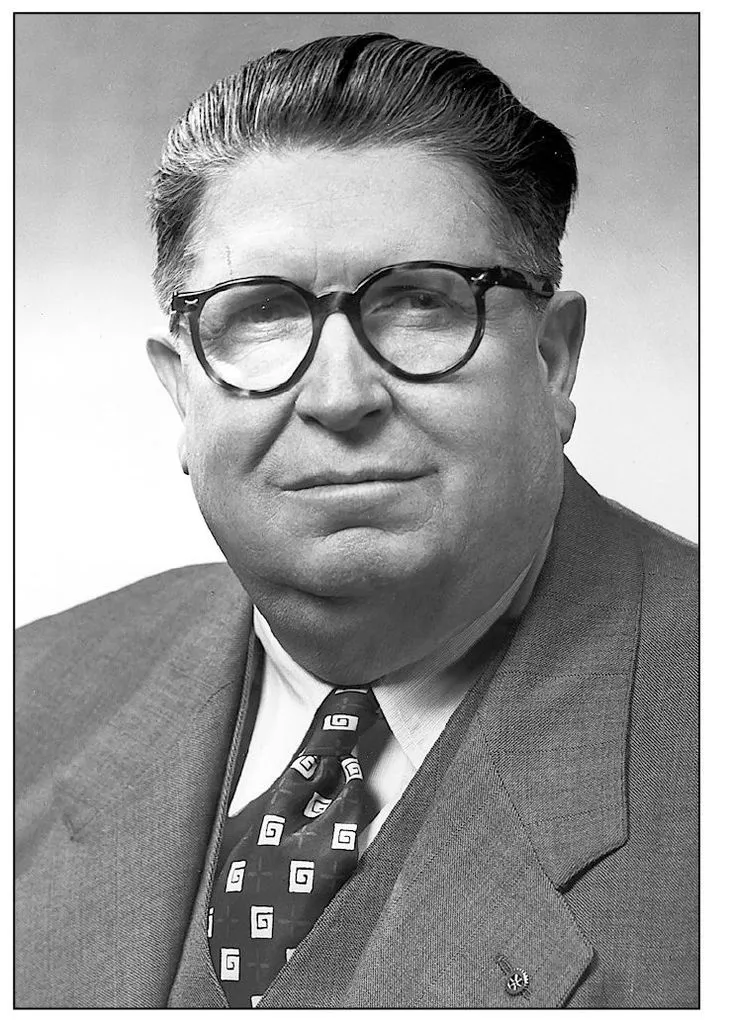
Jesse Ziegler (1894–1974) was Livonia’s first mayor, holding the office from 1950–1954. Prior to that, he was township supervisor for 28 years and he also served as Livonia’s postmaster. His father, Otto, owned a cheese factory that was located on Six Mile Road between Middlebelt and Merriman Roads. When he passed away at age 80, he had spent every one of those years as a Livonian.
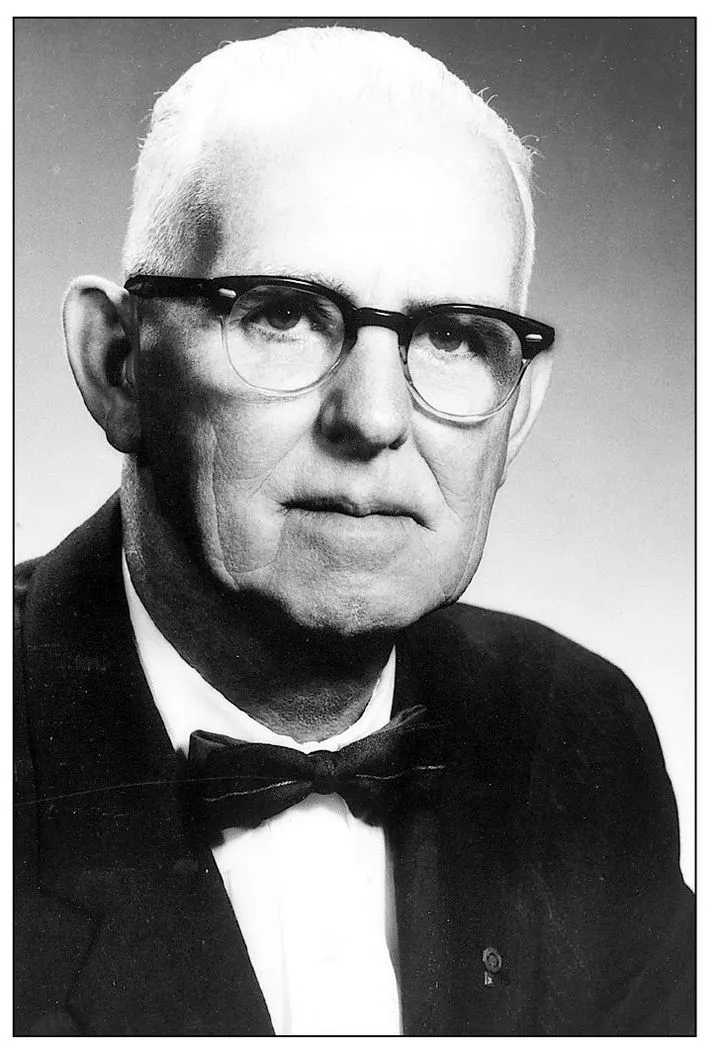
Elbert M. Hartom was Livonia’s mayor from 1954–1956. A chicken farmer and ex-Army officer, Hartom was a controversial figure remembered for his loyalty investigations of city employees and having hooded witnesses testifying in secret. His reign as mayor was brief, and Hartom and his wife eventually retired to Costa Rica.
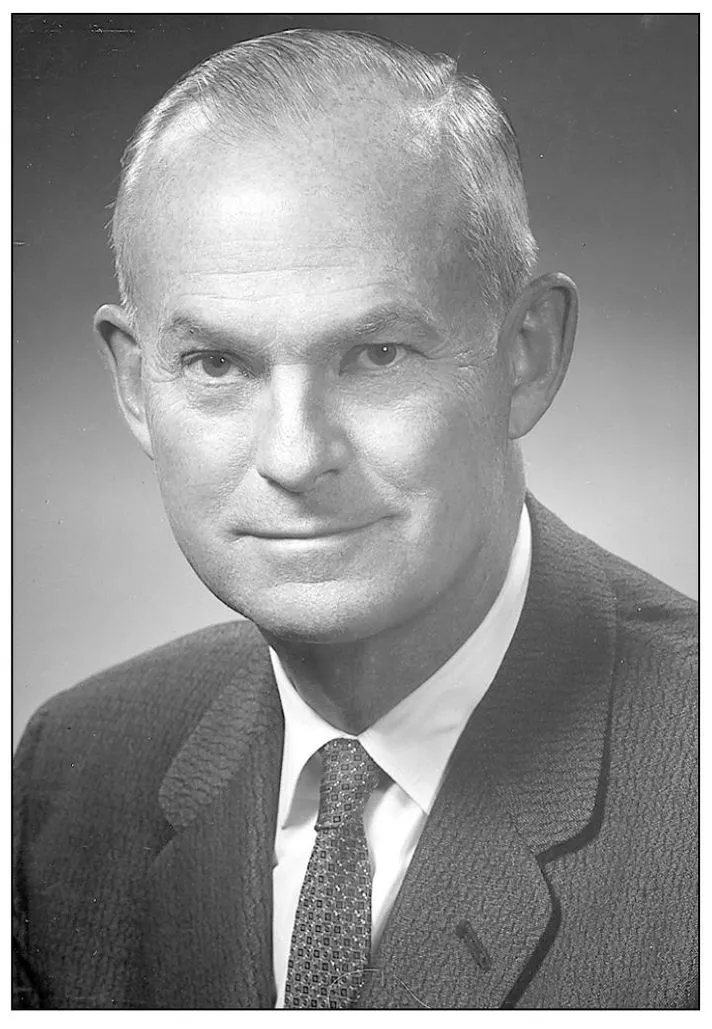
William W. Brashear was Livonia’s mayor from 1956–1962. Prior to that, he had been appointed as Livonia’s township attorney in 1949 and was a member of the Charter Commission; in fact, he was the man largely responsible for writing the charter. He served as an officer in the U.S. Navy during World War II and was also a special agent in the FBI during the war. Brashear was very pro-growth and it was during his administration that Wonderland Mall opened.

In large part, Livonia owes its existence as a city to the arrival of the Detroit Race Course, which opened on May 25, 1950. The mile-long track was built by the Michigan Racing Association at a cost of $5 million, but Livonia would only be able to take its share of the revenues if it became a city, which it did two days before the track opened. The result was that Livonia was able to keep its property taxes relatively low, enticing both businesses and homeowners to the community.

Programs gripped tightly, these fashionable women root on their favorites. Celebrities like Gordie Howe and Willie Shoemaker could also be spotted at DRC, which was the place to be in the Detroit metropolitan area during the 1950s. 90

The annual Post Parade that opened the racing season was considered one of th...
Table of contents
- Title Page
- Copyright Page
- Dedication
- Table of Contents
- ACKNOWLEDGMENT
- INTRODUCTION
- One - 1800–1850
- Two - 1850–1900
- Three - 1900s
- Four - 1910s
- Five - 1920s
- Six - 1930s
- Seven - 1940s
- Eight - 1950s
- Nine - 1960s
- Ten - 1970s AND BEYOND
Trusted by 375,005 students
Access to over 1.5 million titles for a fair monthly price.
Study more efficiently using our study tools.
Frequently asked questions
Yes, you can cancel anytime from the Subscription tab in your account settings on the Perlego website. Your subscription will stay active until the end of your current billing period. Learn how to cancel your subscription
No, books cannot be downloaded as external files, such as PDFs, for use outside of Perlego. However, you can download books within the Perlego app for offline reading on mobile or tablet. Learn how to download books offline
Perlego offers two plans: Essential and Complete
- Essential is ideal for learners and professionals who enjoy exploring a wide range of subjects. Access the Essential Library with 800,000+ trusted titles and best-sellers across business, personal growth, and the humanities. Includes unlimited reading time and Standard Read Aloud voice.
- Complete: Perfect for advanced learners and researchers needing full, unrestricted access. Unlock 1.5M+ books across hundreds of subjects, including academic and specialized titles. The Complete Plan also includes advanced features like Premium Read Aloud and Research Assistant.
We are an online textbook subscription service, where you can get access to an entire online library for less than the price of a single book per month. With over 1.5 million books across 990+ topics, we’ve got you covered! Learn about our mission
Look out for the read-aloud symbol on your next book to see if you can listen to it. The read-aloud tool reads text aloud for you, highlighting the text as it is being read. You can pause it, speed it up and slow it down. Learn more about Read Aloud
Yes! You can use the Perlego app on both iOS and Android devices to read anytime, anywhere — even offline. Perfect for commutes or when you’re on the go.
Please note we cannot support devices running on iOS 13 and Android 7 or earlier. Learn more about using the app
Please note we cannot support devices running on iOS 13 and Android 7 or earlier. Learn more about using the app
Yes, you can access Livonia by David MacGregor in PDF and/or ePUB format, as well as other popular books in History & North American History. We have over 1.5 million books available in our catalogue for you to explore.