- 128 pages
- English
- ePUB (mobile friendly)
- Available on iOS & Android
eBook - ePub
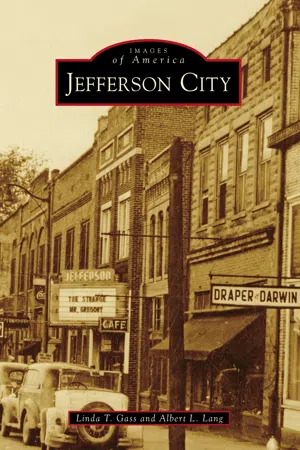
Jefferson City
About this book
In 1788, Adam and Elizabeth Peck followed the Holston River from Virginia into east Tennessee and settled in what would become Mossy Creek. Utilizing the waterway, the Pecks? gristmill thrived within a growing community. The outbreak of the Civil War brought the Battle of Mossy Creek on December 29, 1863. During the next century, zinc mining, the establishment of Mossy Creek Missionary Baptist Seminary (now Carson-Newman University), and the town?s inclusion as a stop on the new railroad ushered a steady flow of people to this picturesque region of promise. In 1901, Mossy Creek joined the Carsonville and Frame Addition communities to be incorporated as Jefferson City. The Tennessee Valley Authority began work in 1940 on nearby Cherokee Dam, generating both jobs and tourism.
Information
One
SETTLERS ON THE BANKS
FOUNDATIONS AND
HISTORICAL HAPPENINGS
HISTORICAL HAPPENINGS
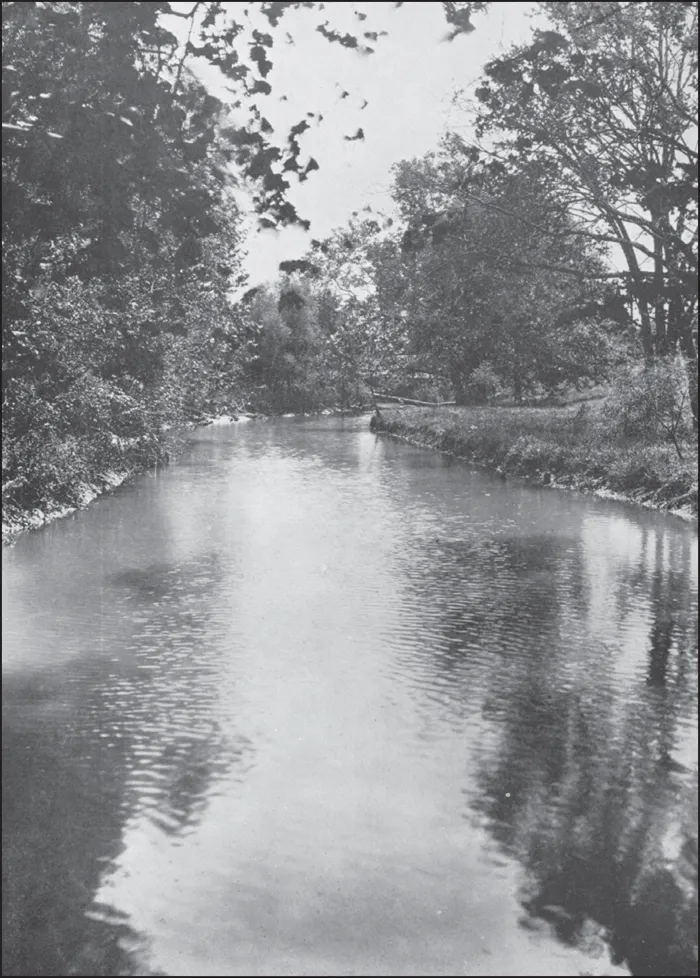
Once providing the name for what is now Jefferson City, Mossy Creek is a five-mile-long waterway that winds its way northeastward to meet the Holston River. From the time of the area’s earliest settlers, the creek provided a means of survival and growth. The Pecks used its waters for their gristmill in the 1780s, while Carson-Newman University had its beginnings on its east bank in 1851. Although it is reduced in size, its influence and heritage are still felt today.

Adam and Elizabeth Peck are credited with being the first settlers in this area, traveling from Virginia along the Holston River and arriving in 1788. They occupied a crude fort for protection and then eventually built a log cabin on a site located near what is now Cherokee Drive. Utilizing the waterpower of Mossy Creek, the Pecks’ gristmill thrived within what became a growing community. The gristmill was active until 1941. Adam became a member of the initial Tennessee Assembly, which drafted Tennessee’s constitution, served as one of Jefferson County’s justices of the peace, and was one of Knoxville’s founders. The Pecks are buried in the Old Methodist Cemetery, now part of Westview Cemetery. (Photograph by Charles Key.)

Adam Peck was born near Sharpsburg in Frederick County, Maryland, in 1757. Before moving to Virginia, Peck served in the Maryland Line during the Revolutionary War, where he became an ensign on January 12, 1781, under Capt. P. Lockhart. This marker was placed by the Daughters of the American Revolution in 1956. (Photograph by Charles Key.)

Adam Peck purchased additional property and received land grants for his role in the Revolutionary War. The total area owned by the Pecks amounted to around five square miles, much of which is now under Cherokee Lake. Members of the Peck family operated a mill on the site for 146 years until TVA bought the land and ordered it torn down in 1941. Pictured are the mill’s ruins in Mossy Creek. (Courtesy of Ernie Hedges.)

This early survey map was a diagram used as part of a legal deposition. It shows in detail the extent of Adam Peck’s mill operation, referred to as his “machine.” One of the original millstones was placed at Glenmore Mansion in 2008. (Courtesy of Jefferson County Archives.)

With the arrival of additional settlers who were mostly Methodist, Elizabeth Peck asked Adam to build a church where they could worship. The church was called Elizabeth’s Chapel and was completed in 1790. Elizabeth had taught one of their slaves, known as “Uncle John,” to read. He was selected to be the area’s first regular preacher and served both black and white parishioners, as well as those of other denominations. (Photograph by Charles Key.)

In 1842, British immigrant J. Gray Smith published A Brief Historical, Statistical and Descriptive Review of East Tennessee, United States of America Developing Its Immense Agricultural, Mining, and Manufacturing Advantages, with Remarks to Emigrants. Smith included this lithograph in his book, highlighting the region’s beauty, which was so attractive to the Pecks. (Courtesy of Map and Lithograph Collection, Special Collections, University of Tennessee, Knoxville—Libraries.)

Pres. George Washington appointed William Blount governor of the “Territory South of the River Ohio” in 1790. On June 11, 1792, Blount signed the ordinance creating Jefferson and Knox Counties out of Greene and Hawkins Counties. A proponent of statehood, Blount served as chairman for the Knoxville convention that drafted Tennessee’s constitution in 1796 and then as one of its first senators. (Courtesy of Tennessee State Library and Archives.)

While only five miles long, Mossy Creek’s power proved attractive to other entrepreneurs like Adam Peck. By 1836, an iron works, an ax handle factory, a wool-carding operation, and a cotton-spinning factory had all shared the creek’s banks. William Cox purchased land in 1796 and added his gristmill to the growing community around 1803. It was later known as Mill Springs Mill and was in use until the 1950s. It is the county’s only mill listed in the National Register of Historic Places.

Sometime around 1835, George Branner built a gristmill on Mossy Creek’s west bank. Over 30 years later, it had fallen into disrepair, but it was revived by Frank Jarnigan, who did an extensive restoration, including adding a second story. Later known as the Jefferson City Milling Company, it was locally referred to as the Old Mossy Creek Mill. It was operational until 1951 and destroyed by arsonists in the mid-1960s.

A family dressed up for an outing stopped to have their picture taken on Mossy Creek, with the falls for a backdrop. (Courtesy of Helen Jolley.)

Mossy Creek Missionary Baptist Seminary (now Carson-Newman University) opened its doors for its first session in September 1851 in the Mossy Creek Baptist Church building. By decade’s end, the school boasted an administration building and two dormitories. Enrollment was around 150 students, including 75 in the preparatory department. Four faculty taught all courses, and tuition ranged from $10 (preparatory) to $18 (senior).

This 1890s view of Mossy Creek shows the railroad, the R.M. Bales (later Moser) livery stable under construction, and the woolen mill in the background. (Courtesy of Nancy Dalton.)

This 1929 map gives a glimpse of the businesses locate...
Table of contents
- Cover Page
- Title Page
- Copyright Page
- Dedication
- Table of Contents
- Acknowledgments
- Introduction
- 1. Settlers on the Banks: Foundations and Historical Happenings
- 2. The Battle of Mossy Creek: Civil War Years
- 3. Pillars of the Community: Notable Citizens
- 4. Memory Lanes: Street Scenes
- 5. Service with a Smile: Businesses
- 6. Spiritual Foundations: Churches
- 7. Meeting a Community’s Needs: City Services
- 8. Architectural Jewels: Historic Homes
- 9. Teaching the Next Generation: Education
- 10. A Community at Play: Recreation
Trusted by 375,005 students
Access to over 1.5 million titles for a fair monthly price.
Study more efficiently using our study tools.
Frequently asked questions
Yes, you can cancel anytime from the Subscription tab in your account settings on the Perlego website. Your subscription will stay active until the end of your current billing period. Learn how to cancel your subscription
No, books cannot be downloaded as external files, such as PDFs, for use outside of Perlego. However, you can download books within the Perlego app for offline reading on mobile or tablet. Learn how to download books offline
Perlego offers two plans: Essential and Complete
- Essential is ideal for learners and professionals who enjoy exploring a wide range of subjects. Access the Essential Library with 800,000+ trusted titles and best-sellers across business, personal growth, and the humanities. Includes unlimited reading time and Standard Read Aloud voice.
- Complete: Perfect for advanced learners and researchers needing full, unrestricted access. Unlock 1.5M+ books across hundreds of subjects, including academic and specialized titles. The Complete Plan also includes advanced features like Premium Read Aloud and Research Assistant.
We are an online textbook subscription service, where you can get access to an entire online library for less than the price of a single book per month. With over 1.5 million books across 990+ topics, we’ve got you covered! Learn about our mission
Look out for the read-aloud symbol on your next book to see if you can listen to it. The read-aloud tool reads text aloud for you, highlighting the text as it is being read. You can pause it, speed it up and slow it down. Learn more about Read Aloud
Yes! You can use the Perlego app on both iOS and Android devices to read anytime, anywhere — even offline. Perfect for commutes or when you’re on the go.
Please note we cannot support devices running on iOS 13 and Android 7 or earlier. Learn more about using the app
Please note we cannot support devices running on iOS 13 and Android 7 or earlier. Learn more about using the app
Yes, you can access Jefferson City by Linda T. Gass,Albert L. Lang in PDF and/or ePUB format, as well as other popular books in History & North American History. We have over 1.5 million books available in our catalogue for you to explore.