- 128 pages
- English
- ePUB (mobile friendly)
- Available on iOS & Android
eBook - ePub
About this book
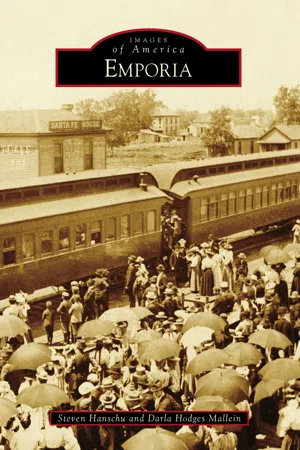
Established in February 1857, Emporia's founding fathers named their new business venture Emporia after a flourishing market center in Ancient Carthage. Located in the east-central part of Kansas, Emporia is known as the "Front Porch to the Flint Hills." William Allen White, publisher and editor of the Emporia Gazette, brought national attention to Emporia in the early 1900s. Known for his fiery political essays, White became an advisor to many US presidents, five of whom visited his home, Red Rocks. Emporia is home to Emporia State University, the state's first normal school, founded in 1863. Located on the university campus are the National Teachers Hall of Fame and the Memorial to Fallen Educators, honoring those who lost their lives teaching and working in America's schools. Honoring fallen heroes is a long-standing tradition in Emporia, as it is also the founding city of Veterans Day.
Information
One
THE FOUNDING YEARS
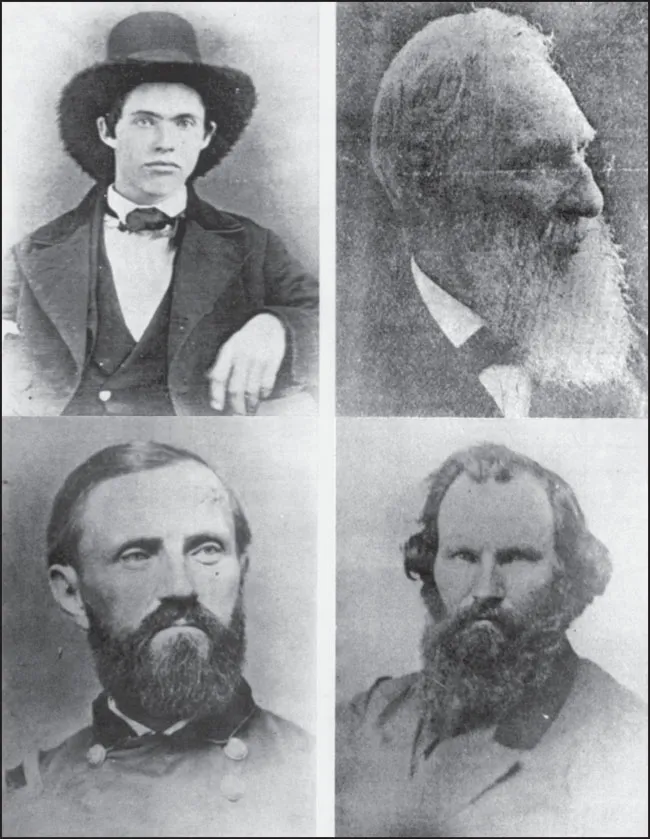
In the middle of winter in 1857, five men from Lawrence rode southeast on the prairie looking for the perfect spot to build a trade center. These men staked their claim on February 20 between two rivers called the Cottonwood and Neosho. They named the town Emporia after the great trade center in Carthage. At the top left is Preston B. Plumb, who was only a teenager and the only one who made Emporia home. At the top right is G.W. Brown, who took the lead in forming the town company. Pictured at bottom left is Gen. G.W. Deitzler, town company secretary. At bottom right is Lyman Allen, a Lawrence merchant. Not pictured is Columbus Hornsby, another Lawrence merchant.

This building was the home of Emporia’s first newspaper, the Kanzas News, founded in 1857 by Preston Plumb. Its first issue was printed on June 6, 1857. Early settlers credited the newspaper with saving the town because it gave citizens the confidence to stay and encouraged others to make their homes in Emporia. In 1859, Jacob Stotler took over the paper and changed its name to the Emporia News.
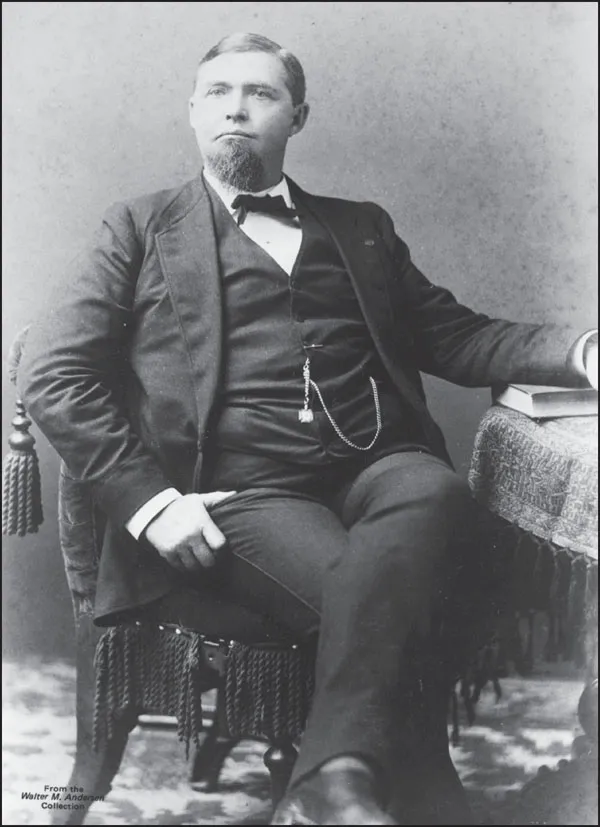
The Honorable Preston B. Plumb was one of the original town company members who founded Emporia in February 1857. He established Emporia’s first newspaper, the Kanzas News. Plumb’s career pursuits varied from newspaperman to lawyer to bank president to state representative and US senator. Plumb served in the US Senate from 1877 until his death on December 20, 1891. Plumb Hall on the Emporia State University (ESU) campus is named after him.

The second building constructed in Emporia was the town company’s hotel, the Emporia House (far right). Located on the southwest corner of Sixth Avenue and Commercial Street, the Emporia House was managed mostly by Nathaniel and Elizabeth Storrs from 1857 to its closing in 1869. The Storrses were popular landlords, well known for their great hospitality.
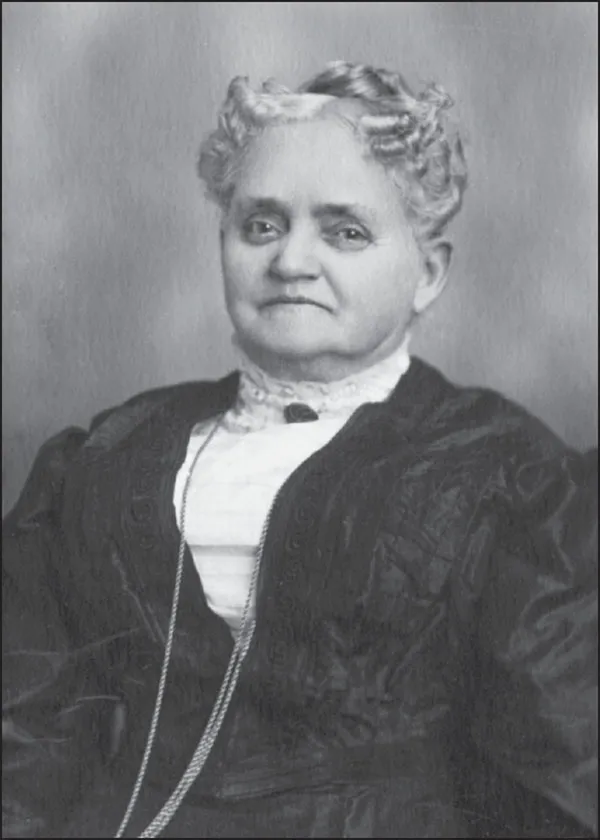
Elizabeth Storrs, Emporia’s first landlady, ran the town’s first hotel, the Emporia House. The hotel also served as a church, community center, and more. Storrs was very active in the town’s development. Her only daughter, Nellie, married G.W. Newman, who established Newman’s Dry Goods Company in the 500 block of Commercial Street.
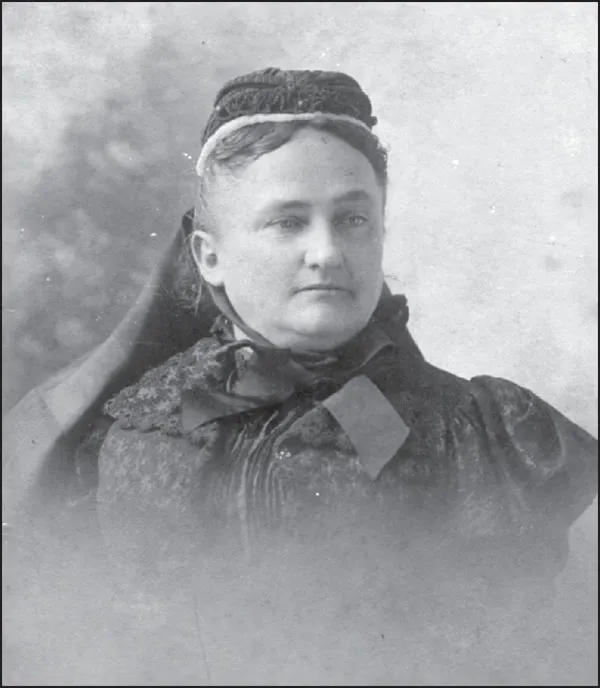
Caroline “Carrie” Plumb, wife of Preston B. Plumb, was one of the most influential women in Emporia. She was active in the Congregational Church for more than 50 years. She also participated in community affairs and donated the land on which Emporia’s Carnegie Library was built. In 1917, she set aside one room of her home for the surgical-dressing department of the Emporia Red Cross.

US senator Preston B. Plumb died unexpectedly from apoplexy on December 20, 1891. After memorial services in Washington, DC, and the state capital in Topeka, Plumb’s body was brought to his home at Sixth Avenue and Union Street on December 23. The next day, Dr. Richard Cordley, former pastor of Emporia’s Congregational Church, conducted a brief private service in the family home followed by a public service at the church. The cedar casket was surrounded by decorations that included an American flag, shield, and eagle, all festooned with black crepe. A photograph of Plumb was hung above the choir loft. Plumb was buried at Maplewood Ceremony with full military honors.

The original Preston B. Plumb house was built in the 1870s and served as the Plumbs’ home from 1880 to 1895, when Carrie Plumb built the house below around it as a memorial to her husband.

Located at 224 East Sixth Avenue, the Plumb home is an elaborate example of the Neocolonial style. It was quite the showplace in the social life of Emporia. On Carrie Plumb’s death, the house was inherited by her three daughters, who immediately offered the property to the National Young Women’s Christian Association as a home for working women. An additional gift of $20,000 was given by Plumb’s two sons for the purpose of moving the carriage house to the north end of the home, where it was attached to make dormitories.
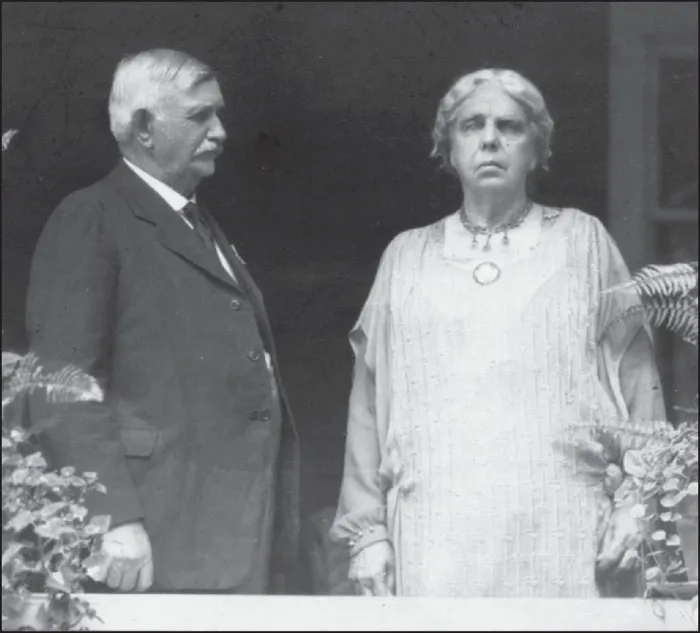
George Plumb, brother of Preston B. Plumb, and his wife, Ellen Cowles Plumb, were early Emporia pioneers. He was a soldier in the Civil War, rancher, railroad commissioner, state representative, and city finance commissioner. She was a member of the first class enrolled at the Kansas Normal School and was active in the Christian Science church and various clubs. The Plumbs celebrated 62 years of marriage in their home at 628 Exchange Street.

Ellen Plumb (far right) ran her book and stationery store from 1870 to 1907. Located at 523 Commercial Street, it was the third-oldest business on Commercial Street when she sold it in 1907. In addition to selling books and stationery, Plumb also sold photographs, picture frames, china, wallpaper, curtains, dolls, cheap toys, and even fireworks on the Fourth of July. Ellen was the sister of Preston and George Plumb.

Ellen Plumb (left) and Mary Jane Watson (right) were the first two graduates of the Kansas State Normal School in June 1867. Plumb later served as principal of the Model School (1868–1870) and treasurer of the alumni association (1880–1913). Watson also taught at the normal school but is best known for opening Emporia’s first subscription school in 1858 on the northwest corner of Sixth Avenue and Commercial Street.
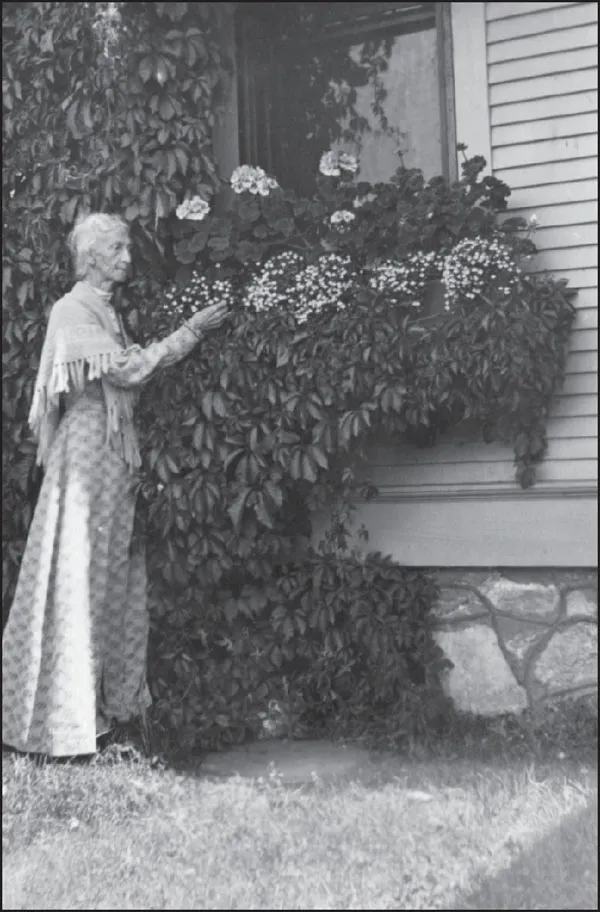
Anna Margaret (Watson) Randolph moved from Ohio to Emporia in 1858 with her parents. Her father, John Hampton Watson, served as 5th Judicial District judge from 1864 to 1872. She married Joseph Vance Randolph on December 22, 1859, and theirs was the first marriage on the town site of Emporia. Randolph was passionate about abolition, prohibition, and women’s suffrage. Her diary expressing her convictions of social issues inspired a local television production entitled Glad Spirit: Anna Watson Randolph.
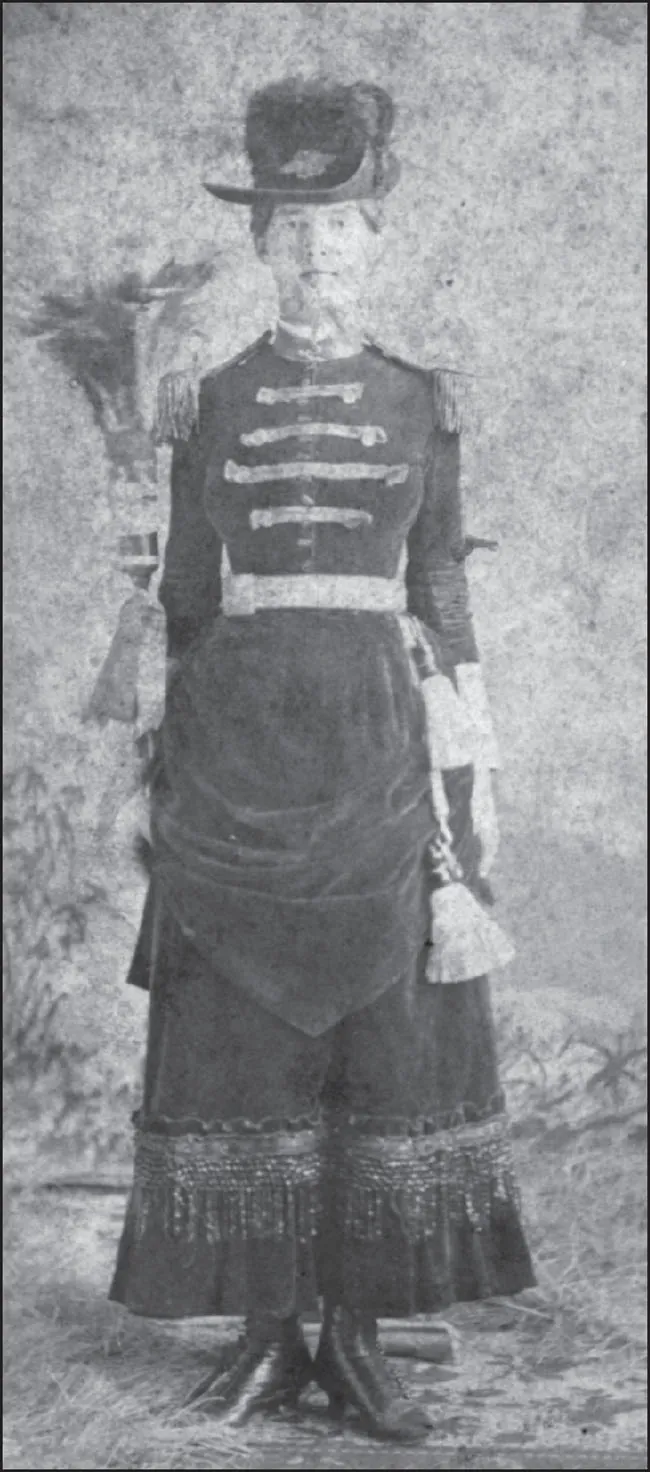
Fannie Randolph Vickery, daughter of Anna Watson Ran...
Table of contents
- Cover Page
- Title Page
- Copyright Page
- Dedication
- Table of Contents
- Acknowledgments
- Introduction
- 1. The Founding Years
- 2. Prosperous Years
- 3. Small Town America Comes of Age
- 4. City on the Move
- 5. A Great Place to Live
- Bibliography
Trusted by 375,005 students
Access to over 1.5 million titles for a fair monthly price.
Study more efficiently using our study tools.
Frequently asked questions
Yes, you can cancel anytime from the Subscription tab in your account settings on the Perlego website. Your subscription will stay active until the end of your current billing period. Learn how to cancel your subscription
No, books cannot be downloaded as external files, such as PDFs, for use outside of Perlego. However, you can download books within the Perlego app for offline reading on mobile or tablet. Learn how to download books offline
Perlego offers two plans: Essential and Complete
- Essential is ideal for learners and professionals who enjoy exploring a wide range of subjects. Access the Essential Library with 800,000+ trusted titles and best-sellers across business, personal growth, and the humanities. Includes unlimited reading time and Standard Read Aloud voice.
- Complete: Perfect for advanced learners and researchers needing full, unrestricted access. Unlock 1.5M+ books across hundreds of subjects, including academic and specialized titles. The Complete Plan also includes advanced features like Premium Read Aloud and Research Assistant.
We are an online textbook subscription service, where you can get access to an entire online library for less than the price of a single book per month. With over 1.5 million books across 990+ topics, we’ve got you covered! Learn about our mission
Look out for the read-aloud symbol on your next book to see if you can listen to it. The read-aloud tool reads text aloud for you, highlighting the text as it is being read. You can pause it, speed it up and slow it down. Learn more about Read Aloud
Yes! You can use the Perlego app on both iOS and Android devices to read anytime, anywhere — even offline. Perfect for commutes or when you’re on the go.
Please note we cannot support devices running on iOS 13 and Android 7 or earlier. Learn more about using the app
Please note we cannot support devices running on iOS 13 and Android 7 or earlier. Learn more about using the app
Yes, you can access Emporia by Steven F. Hanschu,Darla Hodges Mallein in PDF and/or ePUB format, as well as other popular books in History & North American History. We have over 1.5 million books available in our catalogue for you to explore.