- 128 pages
- English
- ePUB (mobile friendly)
- Available on iOS & Android
eBook - ePub
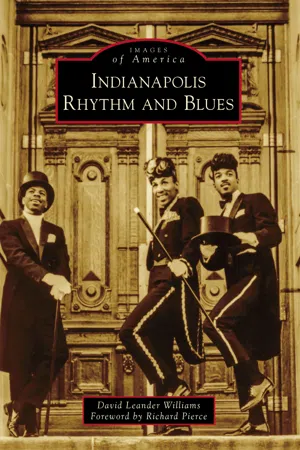
Indianapolis Rhythm and Blues
About this book
Indiana Avenue was traditionally the host to some of America's premier, world-renown entertainment icons in various genres. Along this winding, brightly lit thoroughfare were nightclubs, lounges, supper clubs, taverns, juke joints, and holes-in-the-wall that celebrated the best of the best in entertainment that America had to offer, from the 1920s on into the 1970s. On the bandstand at Denver Ferguson's Sunset Terrace Ballroom, the elegantly attired crooner Nat King Cole, in a sparkling blue silk suit, delivered his signature song "Mona Lisa." Nearby, B.B. King sang his 1973 down-home blues classic "To Know You is to Love You." At Tuffy Mitchell's Pink Poodle nightclub, "Moms" Mabley made the audience roar with laughter during her sidesplitting comedy routine. Indiana Avenue truly was the place to be for the best in entertainment.
Information
One
EARLY RHYTHM AND
BLUES PIONEERS
BLUES PIONEERS
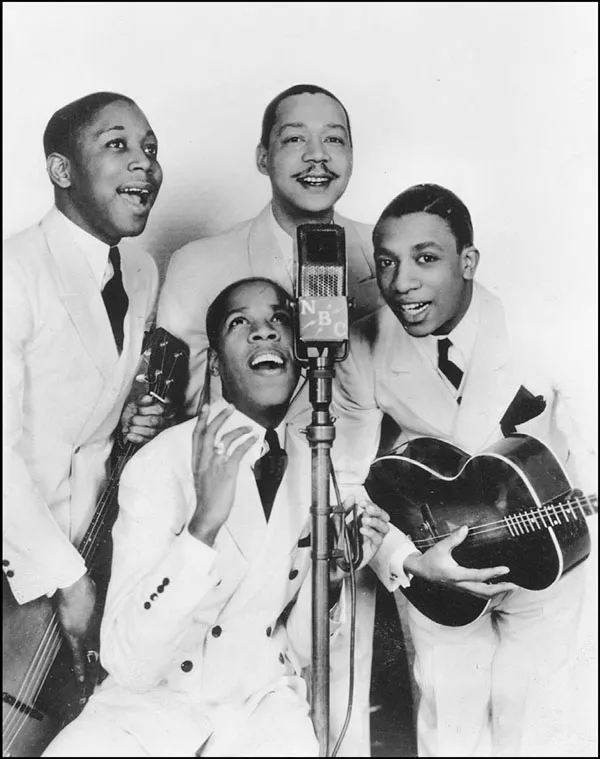
Before they could get booked into the clubs, some performers displayed their talents on the street, and the recently opened Walker Theatre was a great place to attract attention. On a warm spring day in 1928, three young dancing singers performed on Indiana Avenue in front of the Walker Theatre to the delight of pedestrians who deposited coins into their coffers. The youngsters were Leonard Reed, James “Mif” Campbell, and Orville “Hoppy” Jones. After gaining a little popularity with their sidewalk performances, they sought work in more permanent venues and named themselves the Peanut Boys. Many years later, after several personnel changes and the new name the Ink Spots, they acquired Baltimore native Bill Kenny and recorded their first million-selling record, “If I Didn’t Care.” The song, which was their biggest hit, sold a whopping 19 million copies. (Indiana Historical Society.)
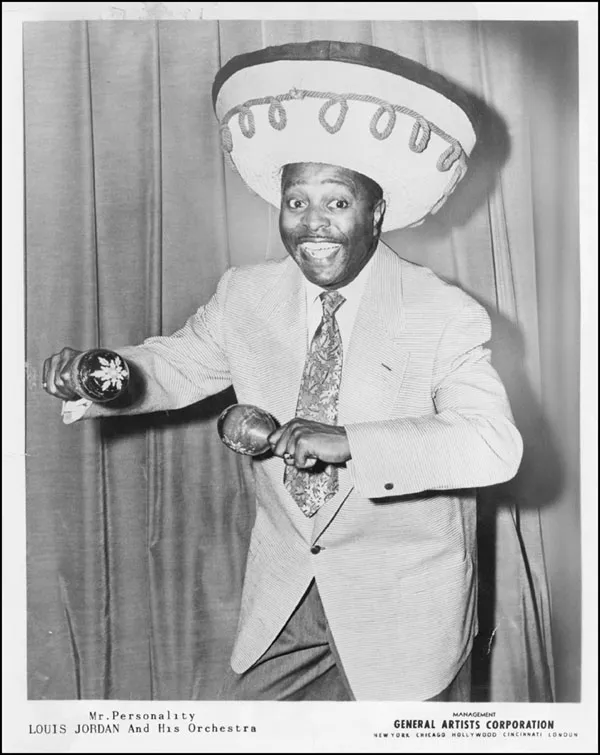
The mere mention of the names Louis Jordan and the Tympany Five sent seismic shockwaves that reverberated among revelers when he came to town. Lines formed hours before showtime and stretched blocks down Indiana Avenue. Jordan, one of the most popular African American musicians of the 20th century with his genre of boogie-woogie/jump blues, was given the zany appellation “King of the Jukebox.” Jordan’s tunes topped Billboard magazine’s rhythm-and-blues charts during the 1940s and 1950s. One of his most popular tunes, “Caldonia,” was the musical soundtrack for many comedic routines performed on stage in clubs during this era.
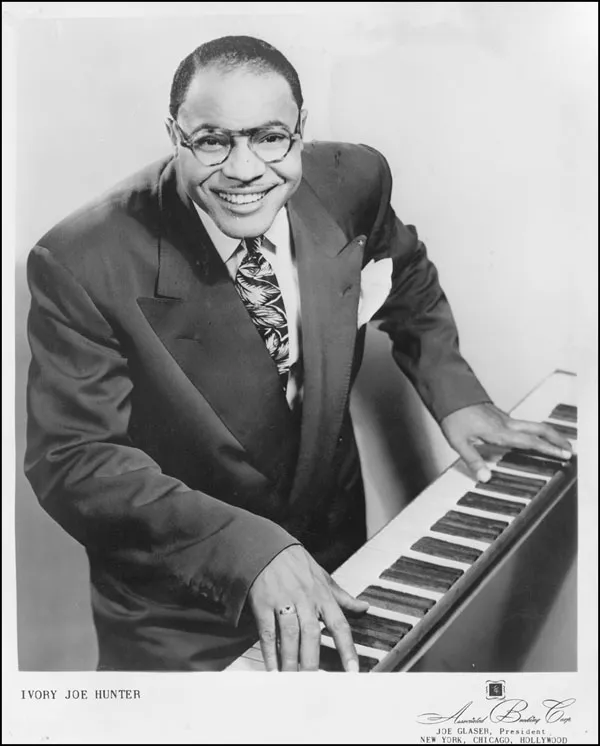
Ivory Joe Hunter was a mainstay at the Sunset Terrace Ballroom and the Walker Theatre during the early 1950s. This six-anda-half-foot, bespectacled, burly Texas-born entertainer was one of the original “honkers and shouters” who defined this period. His early tunes were “I Almost Lost My Mind” and “Since I Met You Baby.” He was called the “Baron of Boogie” and the “Happiest Man Alive” due to his warm smile and pleasant demeanor. Elvis Presley covered his tunes “I Will Be True” and “It’s Still There.” Pat Boone covered his mega-hit “Since I Met You Baby,” which climbed to the top of the charts. On Sunday, September 17, 1950, Hunter appeared at the Sunset Terrace Ballroom and sang his hit song “I Need You So.”
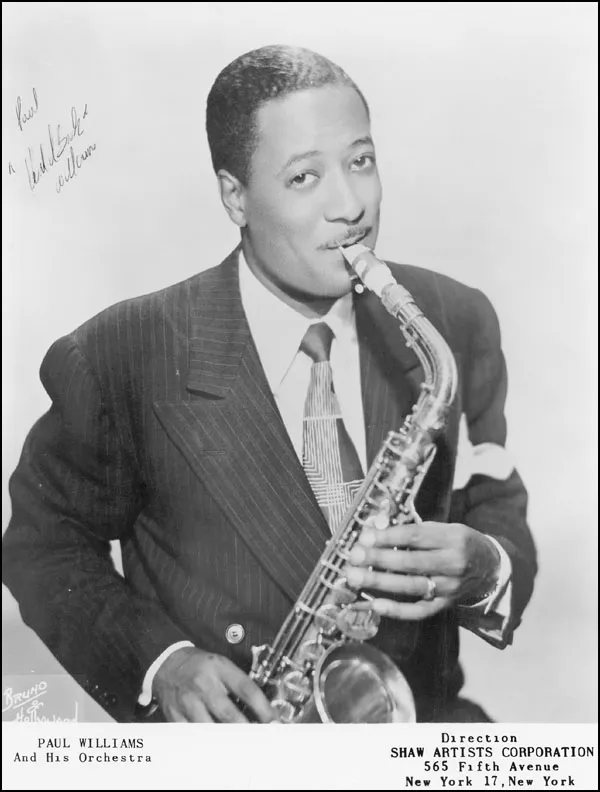
Lyrics from the rhythm-and-blues hit and dance-craze “The Huckle-Buck” boomed from loudspeakers up and down Indiana Avenue during the late 1940s. Written by saxophonist Paul “Huckle-Buck” Williams, this jump tune sent lively dancers to the fourth-floor casino of the Walker Theatre, where they jitter-bugged all evening long. White rhythm-and-blues singer Georgia Gibbs covered the song, but Williams’s version remained the most popular. Later, Williams took jazz pianist great Carl Perkins with his orchestra to Los Angeles, where Perkins joined the orchestra of song stylist Diana Washington.
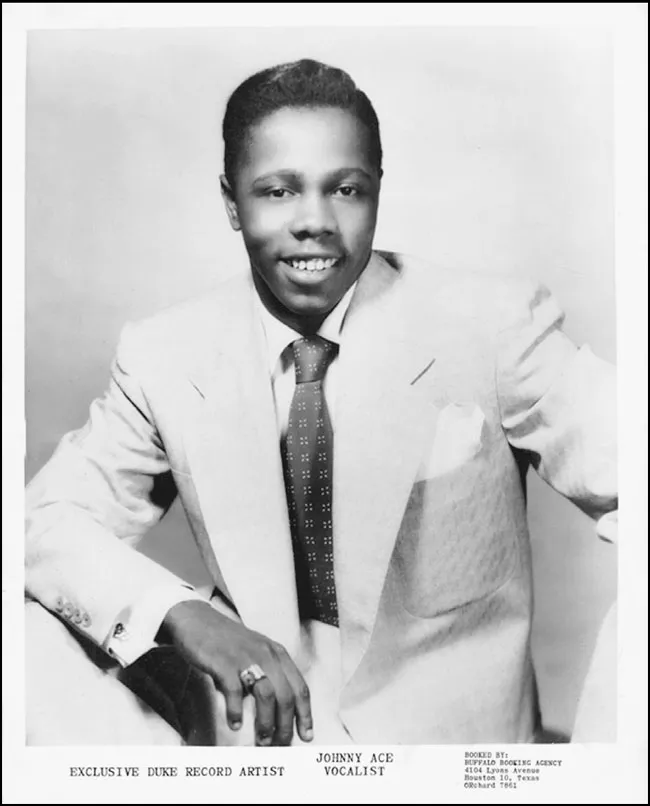
John Marshall Alexander Jr., known as Johnny Ace, was at the summit of the rhythm-and-blues world with his hits “Saving My Love For You,” “Cross My Heart,” and “The Clock” and toured the country to packed arenas. Rhythm-and-blues lovers were lined up on Indiana Avenue desperately waiting to see their star. On Sunday night, February 21, 1954, he appeared with “Big Mama” Thornton at the Sunset Terrace Ballroom. The world of rhythm and blues was turned upside down on Christmas Day 1954 in the City Auditorium of Houston, Texas, when Johnny Ace was allegedly killed by a self-inflicted gunshot wound to his head.
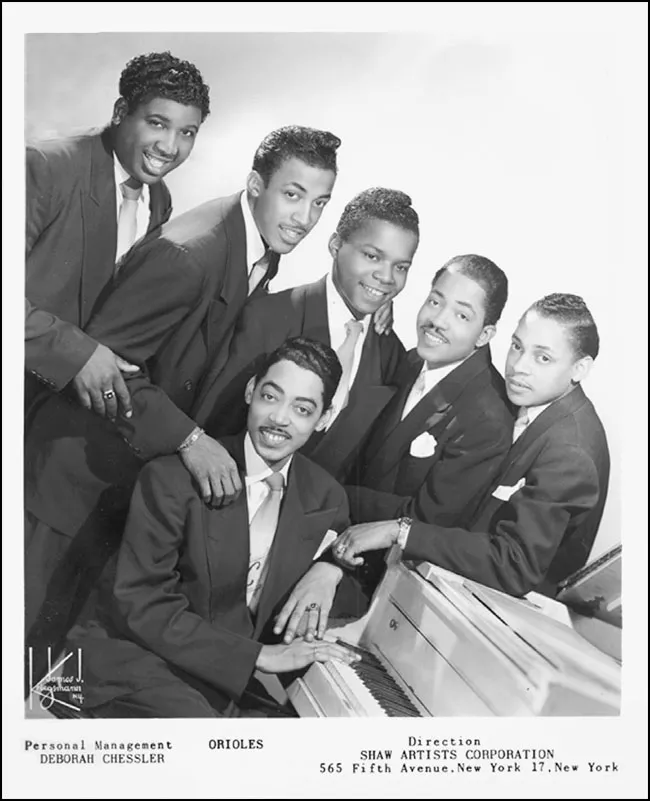
One of the first rhythm-and-blues groups on television, the Orioles appeared on NBC’s musical variety program The Eddie Condon Floor Show in March 1949. Their greatest hit, “Crying in the Chapel,” was released in 1953. Their success led other groups to adopt ornithological monikers. There were the Cardinals, Crows, Flamingos, Larks, Penguins, Ravens, and Wrens.
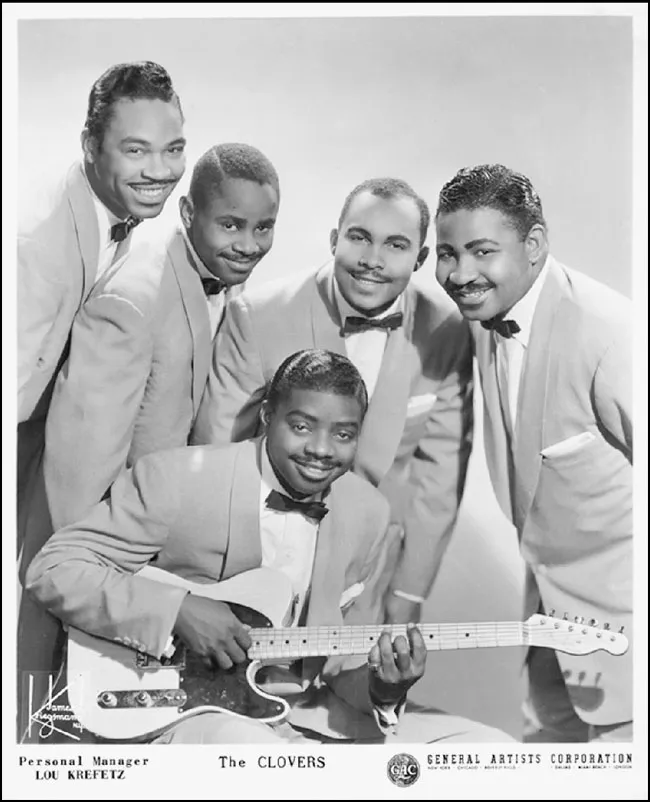
Among the earliest of the rhythm-and-blues groups, the Clovers appeared at the Sunset Terrace Ballroom.
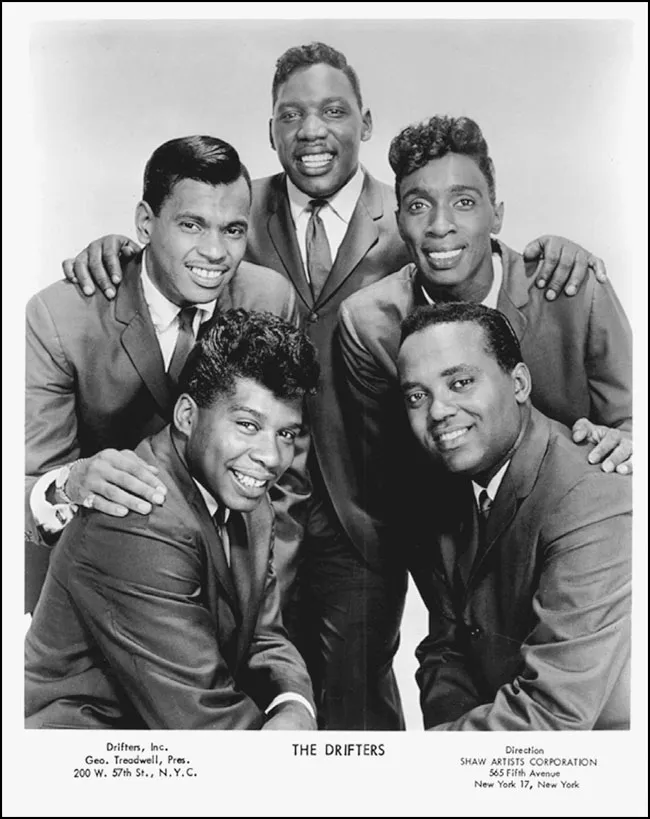
“There Goes My Baby,” sung by the Drifters, was the first rhythm-and-blues song backed by strings. The string arrangement was the work of Belford Hendricks of Evansville, Indiana. The Drifters appeared at the C.I.O. Century Hall in Muncie, Indiana, on Saturday, October 27, 1956.
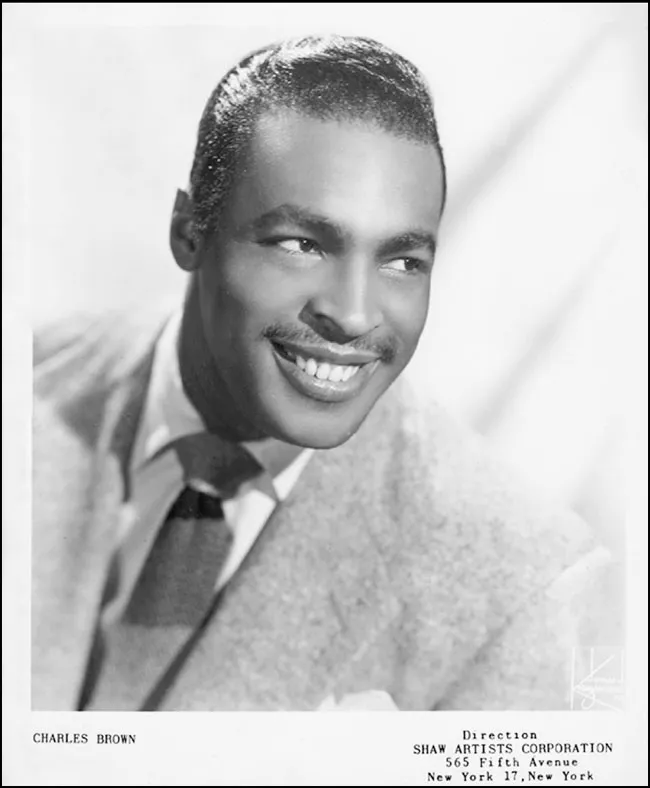
“Please Come Home for Christmas” was a major hit for Charles Brown and charted at No. 76 on the rhythm-and-blues charts in 1960. Brown appeared at the Sunset Terrace Ballroom on Sunday, September 10, 1960.
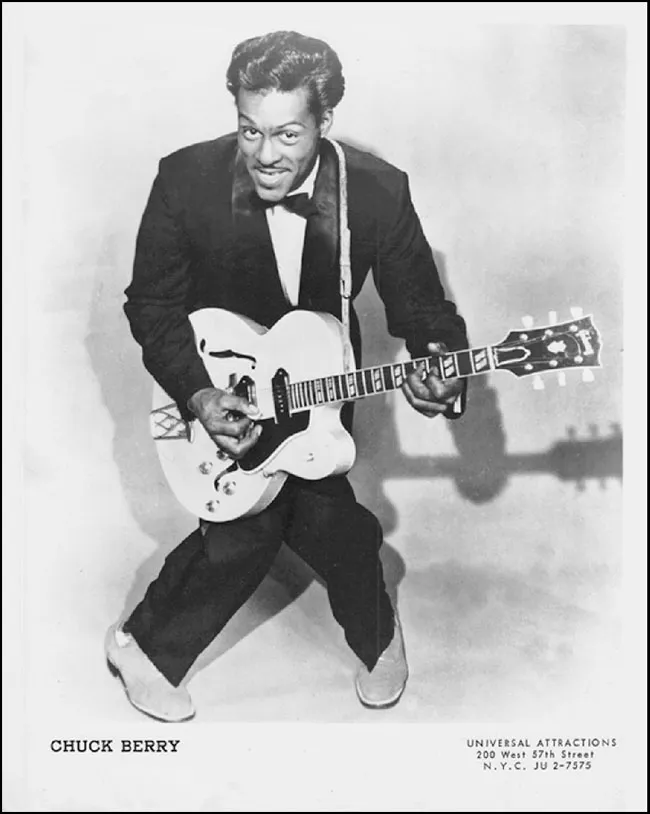
Although Hollywood crowned Elvis Presley as the “King of Rock and Roll” in the 1950s, many in the African American community were incensed. They opined that the origins of rock and roll began with the introduction of Chuck Berry on the American entertainment stage. Berry electrified the music lovers with his mega-hits “Maybellene” in 1955, “Roll Over Beethoven” in 1956, “Rock and Roll Music” in 1957, and “Johnnie B. Goode” in 1958. He was a member of the inaugural class of inductees in the Rock and Roll Hall of Fame in 1986.
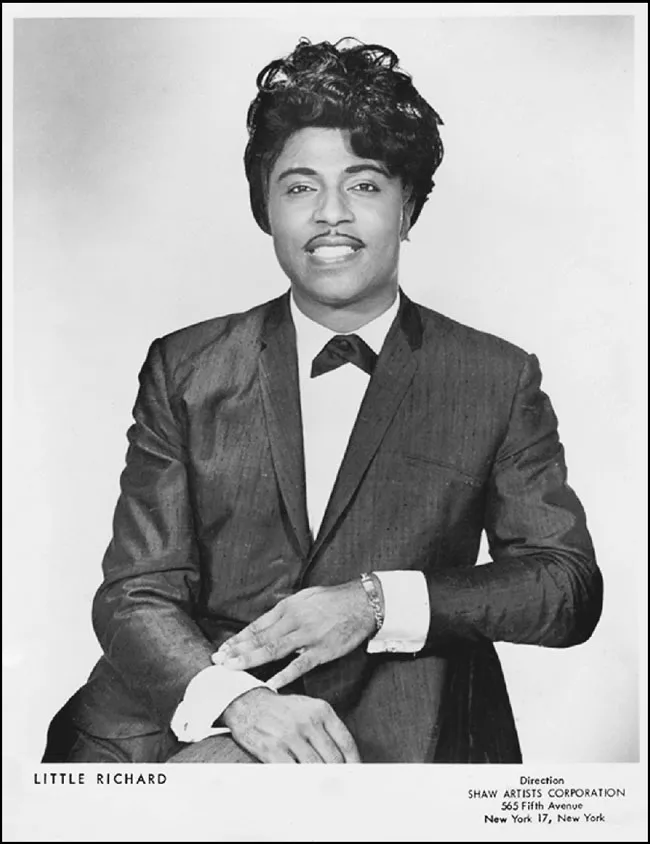
Richard Wayne Penniman, later known as “Little Richard,” was another pioneer in the birth and development of early rock and roll. He received national attention with his soaring falsetto rendition of “Tutti Frutti,” which climbed to No. 17 on the Billboard Hot 100 in 1955. Other subsequent hits like “Good Golly, Miss Molly” and “Long Tall Sally” further established him as one of rock and roll’s early great performers.
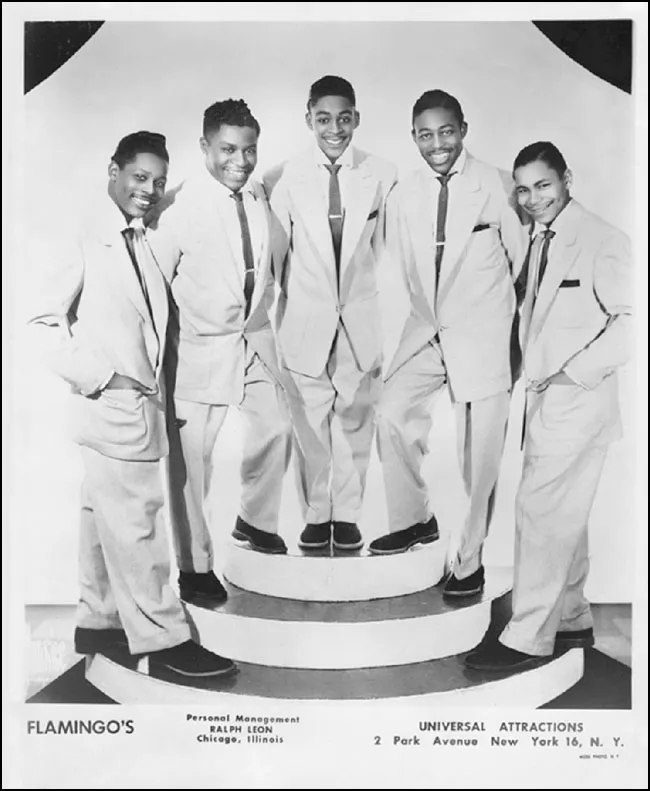
The Flamingos, Jacob and Ezekial Carey, bass and second tenor, respectively, with cousins Paul Wilson, baritone, and Johnny Carter, first tenor, met at a Hebrew Israelite temple in Chicago. After numerous personnel changes, in 1959, they released their mega-hit “I Only Have Eyes for You,” which was an instant million-selling record.
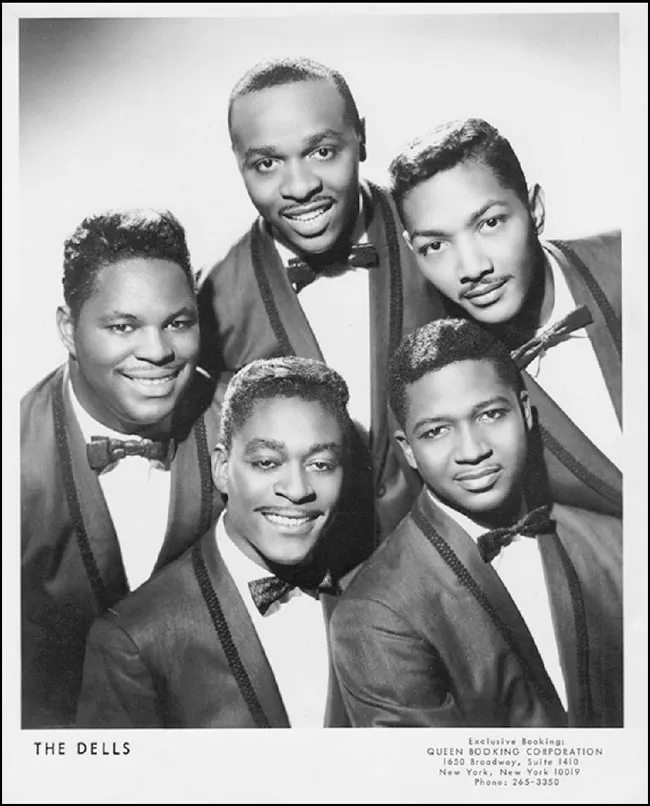
The Dells—Marvin Junior, Verne Allison, Johnny Funches, Chuck Barksdale, and Mickey and Lucious McGill—formed while attending Thornton High School near Chicago. In 1956, they released their chart-topping hit “Oh What a Night,” which sold millions of units. Johnny Carter, whose soaring falsetto popularized many of their hits, was one of a few individuals to be voted into the Rock and Roll Hall of Fame twice. He entered as a member of the Flamingos and the Dells.
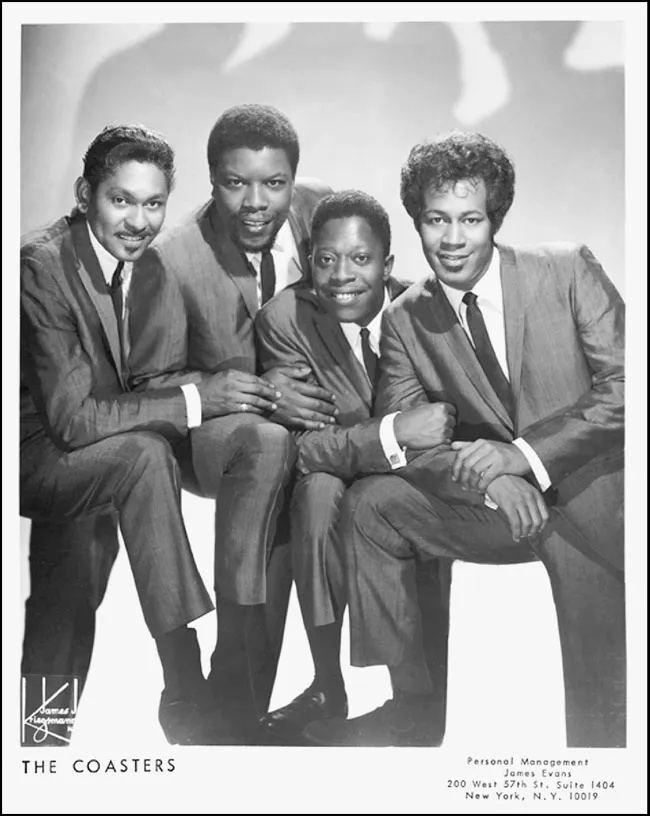
During the 1950s, the Coasters produced a number of hits that introduced comedic lyrics to rock and roll and gained worldwide popularity. Th...
Table of contents
- Cover Page
- Title Page
- Copyright Page
- Dedication
- Table of Contents
- Foreword
- Acknowledgments
- Introduction
- Early Rhythm and Blues Pioneers
- Rhythm and Blues Meets Indiana Avenue
- Music on Parade
- Performers around the Country
- About the Author
Trusted by 375,005 students
Access to over 1.5 million titles for a fair monthly price.
Study more efficiently using our study tools.
Frequently asked questions
Yes, you can cancel anytime from the Subscription tab in your account settings on the Perlego website. Your subscription will stay active until the end of your current billing period. Learn how to cancel your subscription
No, books cannot be downloaded as external files, such as PDFs, for use outside of Perlego. However, you can download books within the Perlego app for offline reading on mobile or tablet. Learn how to download books offline
Perlego offers two plans: Essential and Complete
- Essential is ideal for learners and professionals who enjoy exploring a wide range of subjects. Access the Essential Library with 800,000+ trusted titles and best-sellers across business, personal growth, and the humanities. Includes unlimited reading time and Standard Read Aloud voice.
- Complete: Perfect for advanced learners and researchers needing full, unrestricted access. Unlock 1.5M+ books across hundreds of subjects, including academic and specialized titles. The Complete Plan also includes advanced features like Premium Read Aloud and Research Assistant.
We are an online textbook subscription service, where you can get access to an entire online library for less than the price of a single book per month. With over 1.5 million books across 990+ topics, we’ve got you covered! Learn about our mission
Look out for the read-aloud symbol on your next book to see if you can listen to it. The read-aloud tool reads text aloud for you, highlighting the text as it is being read. You can pause it, speed it up and slow it down. Learn more about Read Aloud
Yes! You can use the Perlego app on both iOS and Android devices to read anytime, anywhere — even offline. Perfect for commutes or when you’re on the go.
Please note we cannot support devices running on iOS 13 and Android 7 or earlier. Learn more about using the app
Please note we cannot support devices running on iOS 13 and Android 7 or earlier. Learn more about using the app
Yes, you can access Indianapolis Rhythm and Blues by David Leander Williams in PDF and/or ePUB format, as well as other popular books in History & North American History. We have over 1.5 million books available in our catalogue for you to explore.