- 128 pages
- English
- ePUB (mobile friendly)
- Available on iOS & Android
eBook - ePub
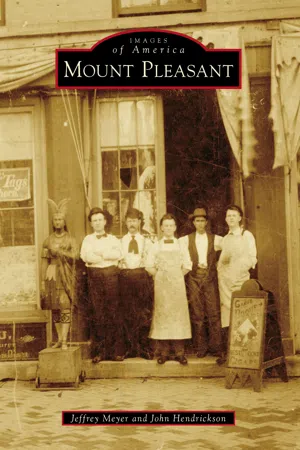
Mount Pleasant
About this book
From its earliest years, Mount Pleasant was known as the "Athens of Iowa": a small town with a big story and a center of learning and culture. Even during the town's pioneer era, the citizens of Mount Pleasant championed education, establishing numerous schools and a college. Progressive ideals, including abolitionism and women's education, took root. As the home of Sen. James Harlan, an important ally of Abraham Lincoln, the city emerged as a bastion of support for the president. During the hardship of the Civil War, the community took up a second cause, becoming the location of the state mental health asylum. The drive for the improvement of life only increased, bolstered by the city's numerous schools, churches, and most importantly a spirit of community.
Information
One
PEOPLE
They came to Mount Pleasant from New England, the Appalachian Mountains, and the Ohio Valley. Many even came from Ireland and Germany. Some may have claimed a long lineage from the Puritans, while others were first-generation immigrants born in Europe. Some came for a fresh start, others for new opportunity in the land beyond the Mississippi. These pioneers shaped and formed the land. The 1888 Portrait and Biographical Album of Henry County noted:
At the time of the first settlement, Iowa formed a portion of Michigan Territory. Two years afterward the Territory of Wisconsin was organized and it then became a part of Wisconsin. Two years later Iowa Territory was formed, and in 1846 it was admitted into the union of States. The first settlers of Henry County were thus citizens of Michigan, Wisconsin, and Iowa. Presley Saunders relates that he had one child born in Michigan Territory, one in Wisconsin Territory, one in the Territory of Iowa, and one in the State of Iowa, all being born on the same quarter-section of land.
The 1885 Census of Iowa recorded that one in ten of Mount Pleasant’s citizens was born in a foreign country. Germany, Ireland, and Sweden represented the greatest immigrant populations. The 1885 Census of Iowa also recorded that Mount Pleasant was home to 327 African American residents. Some southerners came to Iowa because they opposed slavery, and they wanted to live in this new, “free soil” state. The presence of a sizable number of skilled pioneers is evident in the town’s rapid civilization. Within a few decades, a proper city, complete with businesses, banks, churches, and schools, had sprouted from the springs that drew in the first pioneers.
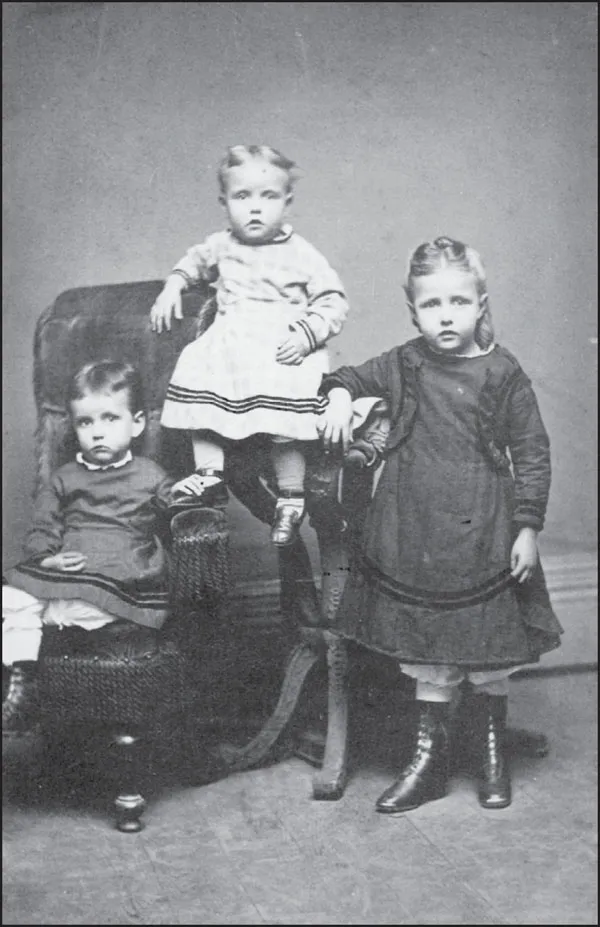
Leisenrings photography studio in Mount Pleasant was known for its excellent group portraits. It is easy to forget how many children would have been present in everyday life in previous centuries, with the families being so large. The technological changes that these children would experience in their lives were swift and dramatic, living as they did at the dawn of the electrical age. (MPPL.)
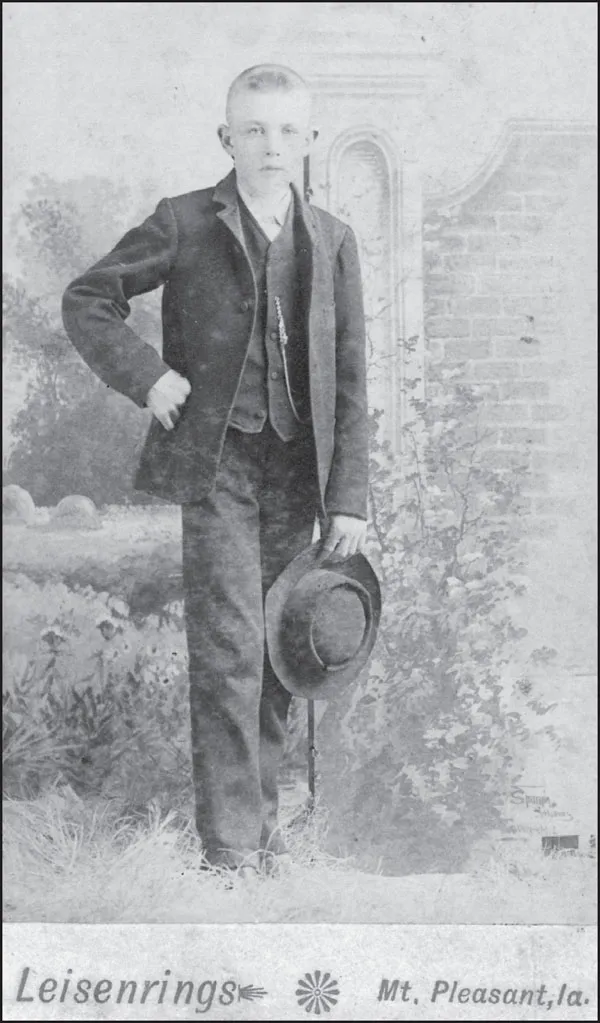
This young man poses for a picture at Mount Pleasant’s Leisenrings gallery in the late 19th century. Photographic techniques were refined during the 19th century, with the world’s first known surviving photograph taken in 1826 or 1827. It is possible that this young boy would grow to see the further enhancement of this new technology, including the development of motion pictures. (MPPL.)

The Pickard family lived in rural Henry County during the 19th century. Notice the fine shutters on the house, the well-kept fence, and the planted rows. The 1870 Combination Atlas Map of Henry County recorded that local country families like the Pickards had collectively gathered 141,393 bushels of corn, 24,115 bushels of oats, and 20,098 bushels of wheat. The 1870 Atlas also noted that Henry County had 8,811 sheep, 3,193 hogs, and 2,096 horned cattle. (MPPL.)
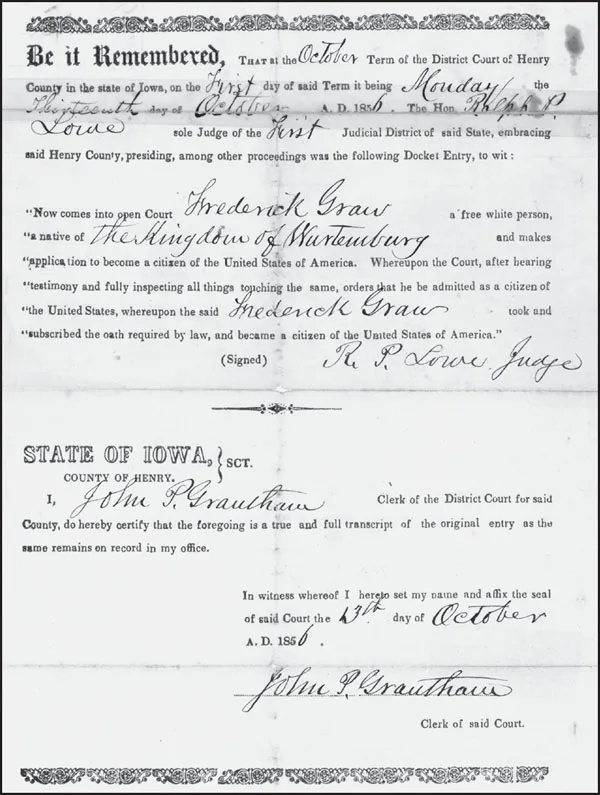
This citizenship document was composed for Frederick Grau, an immigrant from Germany. The paper reads, “Now comes into open Court Frederick Grau a free white person, a native of the Kingdom of Wurtemburg and makes application to become a citizen of the United States of America. Whereupon the Court, after hearing testimony and fully inspecting all things touching the same, orders that he be admitted as a citizen of the United States, whereupon the said Frederick Grau took and subscribed the oath required by law, and became a citizen of the United States of America.” This document was prepared at the Henry County Courthouse in 1856, which was located in the center of the square at that time. (MPPL.)
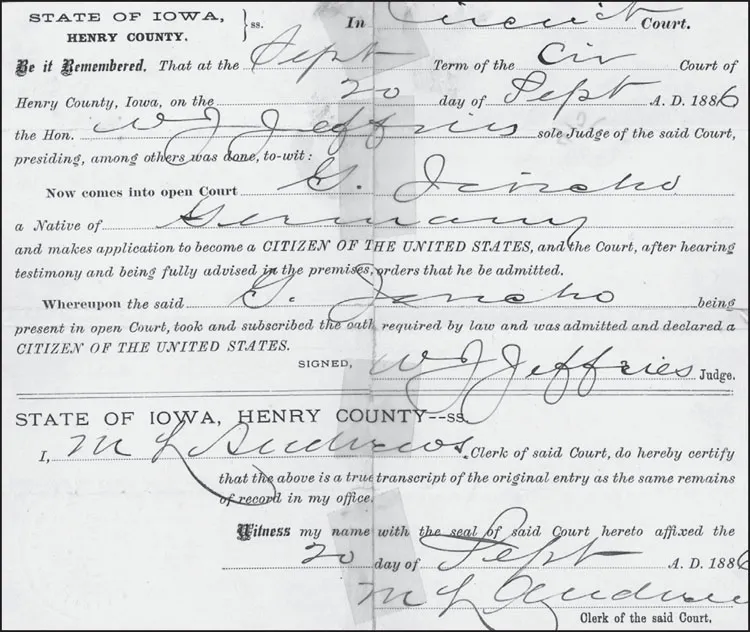
The citizenship papers for Gustaf Jericho were prepared on September 20, 1886, at the Henry County Courthouse. Jericho was a native of Germany and was admitted as an American citizen. (MPPL.)

Like many first generation immigrants, Gustaf Jericho must have missed his home and family in the old country. In 1895, he visited his native Germany. Jericho kept a log of the return voyage across the Atlantic, the route cutting across the great sea from Hamburg to New York. This log shows that the ship generally exceeded 300 miles each day. Having arrived in Germany, Jericho visited the Friedrich-Wilhelmstaedtisches Theater and the Zooligeschen Gartens in Berlin. (MPPL.)
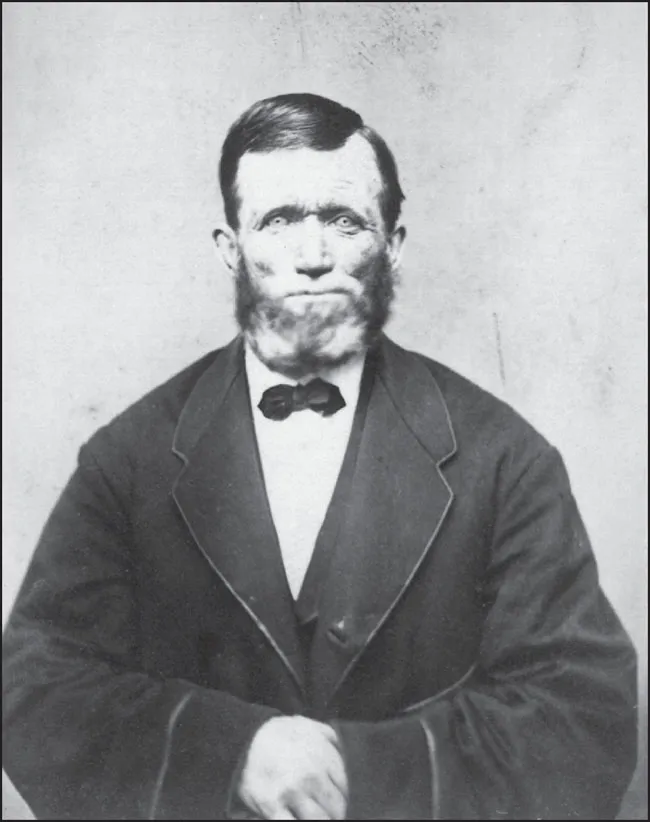
The Hover Brothers and Company was a very early photographic studio in Mount Pleasant, listed in the 1870 City Directory. This portrait shows the stoic pose of a gentleman in the mid-19th century. Hover Brothers provided many photographic services, their cards advertising “Old Pictures Copied and Colored true to life, in Oil, India Ink and water colors. Negatives Preserved.” (MPPL.)
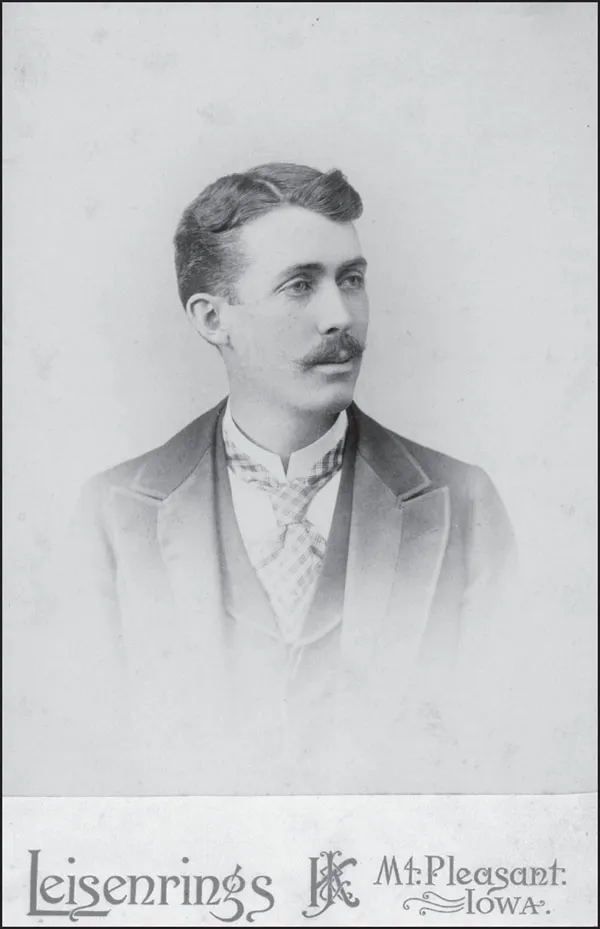
The Leisenrings photographic studio was located across from the Brazelton Hotel on North Main Street. Here, a young man poses for a portrait, exhibiting the dignified appearance of a gentleman of the 19th century. Notice the checkered tie and the parted hairstyle. (MPPL.)
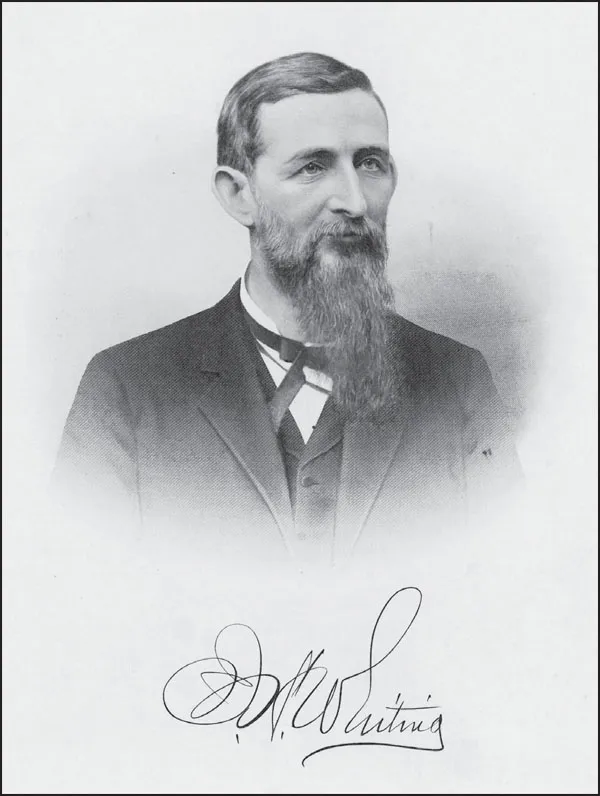
Timothy Whiting and his son John H. Whiting (pictured) were skilled bankers during Mount Pleasant’s formative years. In 1865, Timothy served as the president of the National State Bank, and John served as cashier. Timothy was known for his industry and punctuality. The National State Bank was located in the building currently occupied by Miss K’s Homemade Delectables at the intersection of Main and Monroe Streets. (MPPL.)
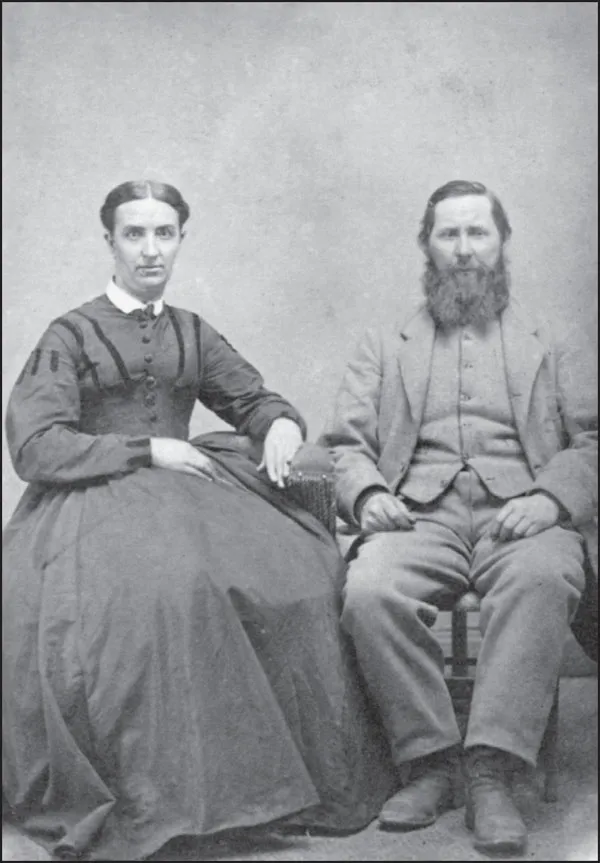
In the 19th century, Mount Pleasant residents lived in a city full of new, industrial commodities. The 1870 City Directory lists thirteen physicians and surgeons, nine insurance agents, four photographers, four sewing machine outlets, three hardware stores, two ice-cream saloons, one washing machine dealer, and a host of many other services and businesses. This photograph was taken at one of the local studios. (MPPL.)
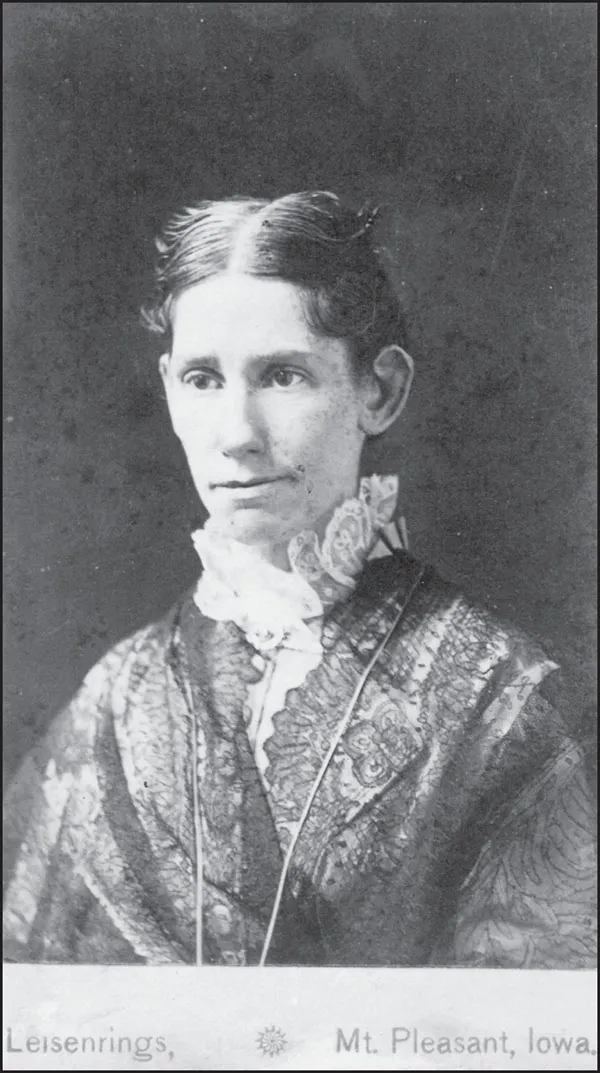
Mrs. Rommel was the wife of Alexander Rommel, the director of the Mount Pleasant Conservatory of Music. The music conservatory was an important cultural center in the late 19th and early 20th centuries. The 1893 City Directory noted that the town felt “confident that the advantages which are offered here for the study of violin and wind instruments, are superior to any thing within the state.” (Don Young Collection, HCHT.)
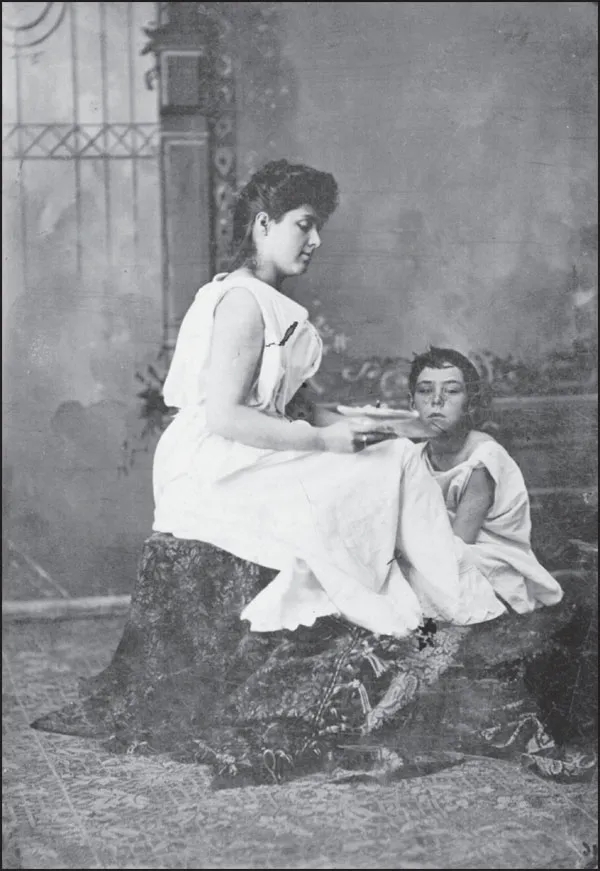
Mount Pleasant is home to acclaimed 19th century sculptor Harriet Ketchum. Ketchum graduated from Iowa Wesleyan and studied drawing and sculpture in Italy. She had the distinguished honor of developing sculptures for the Soldiers and Sailors monument in Des Moines in the 1890s. The pictured tintype shows a model for one of these sculptures. The children posing for the sculptures were also Mount Pleasant re...
Table of contents
- Cover Page
- Title Page
- Copyright Page
- Dedication
- Table of Contents
- Acknowledgments
- Introduction
- 1. People
- 2. Public School
- 3. Academies
- 4. The Library
- 5. Work
- 6. The Square
- 7. Churches
- 8. Asylum
- 9. Trials
- 10. Leisure
Trusted by 375,005 students
Access to over 1.5 million titles for a fair monthly price.
Study more efficiently using our study tools.
Frequently asked questions
Yes, you can cancel anytime from the Subscription tab in your account settings on the Perlego website. Your subscription will stay active until the end of your current billing period. Learn how to cancel your subscription
No, books cannot be downloaded as external files, such as PDFs, for use outside of Perlego. However, you can download books within the Perlego app for offline reading on mobile or tablet. Learn how to download books offline
Perlego offers two plans: Essential and Complete
- Essential is ideal for learners and professionals who enjoy exploring a wide range of subjects. Access the Essential Library with 800,000+ trusted titles and best-sellers across business, personal growth, and the humanities. Includes unlimited reading time and Standard Read Aloud voice.
- Complete: Perfect for advanced learners and researchers needing full, unrestricted access. Unlock 1.5M+ books across hundreds of subjects, including academic and specialized titles. The Complete Plan also includes advanced features like Premium Read Aloud and Research Assistant.
We are an online textbook subscription service, where you can get access to an entire online library for less than the price of a single book per month. With over 1.5 million books across 990+ topics, we’ve got you covered! Learn about our mission
Look out for the read-aloud symbol on your next book to see if you can listen to it. The read-aloud tool reads text aloud for you, highlighting the text as it is being read. You can pause it, speed it up and slow it down. Learn more about Read Aloud
Yes! You can use the Perlego app on both iOS and Android devices to read anytime, anywhere — even offline. Perfect for commutes or when you’re on the go.
Please note we cannot support devices running on iOS 13 and Android 7 or earlier. Learn more about using the app
Please note we cannot support devices running on iOS 13 and Android 7 or earlier. Learn more about using the app
Yes, you can access Mount Pleasant by Jeffrey Meyer,John Hendrickson in PDF and/or ePUB format, as well as other popular books in History & North American History. We have over 1.5 million books available in our catalogue for you to explore.