- 128 pages
- English
- ePUB (mobile friendly)
- Available on iOS & Android
eBook - ePub
Andalusia
About this book
Andalusia?s destiny was determined by the Conecuh River, when the 1841 ?Harrison Freshet? brought floods and mosquito fever to the original county seat of Montezuma, forcing the move to higher ground. The new site was named Andalusia, and the post office officially relocated in 1844. Like many small towns, Andalusia?s destiny could have once again been determined by an outside force?the economy. However, from timber to textiles, Andalusia has chosen to fight back against abandonment and vacancy and can now truly boast a unique and viable commercial downtown that continues to flourish while preserving its historic structures. Andalusia was awarded the 2013 Quality of Life Award by The Alabama Municipal Journal for purchasing the old Alabama Textile Mill (Alatex) in 2009 and for partnering with the chamber of commerce to create a new chamber office, welcome center, and national textile monument in tribute to the thousands who worked at the site and in textile mills all over the United States.
Information
One
GOVERNMENT
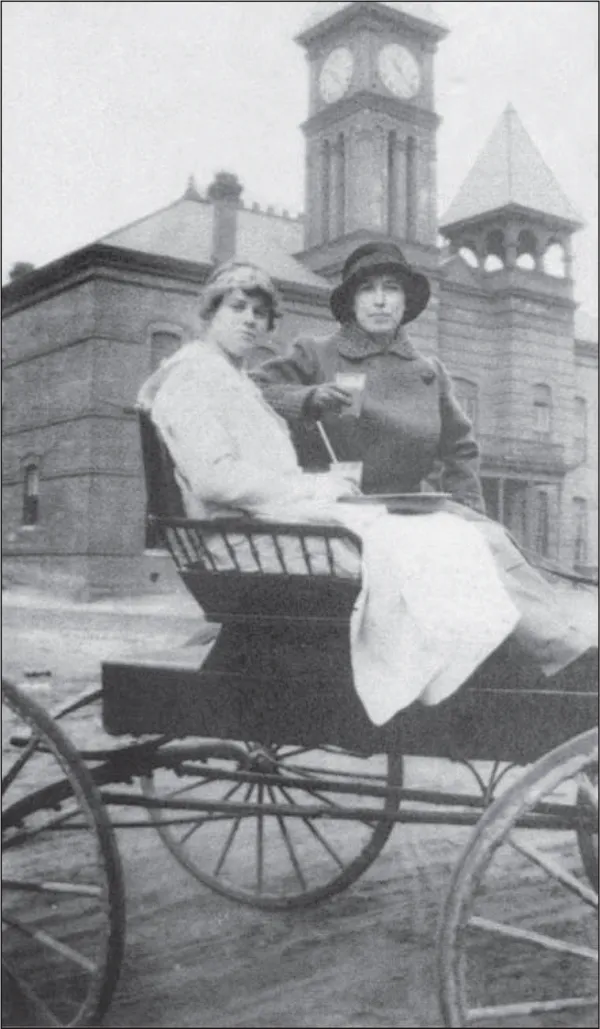
Leolive Benson (left) and Mildred Gantt are pictured in front of the 1895 courthouse in their horse and buggy. The courthouse, the third in Covington County’s short history, touted a clock and a bell. Residents and merchants depended on seeing the clock from a distance or hearing the bell toll to move about their daily routine. The courthouse stood in the middle of the public square and faced east. The bricks used in construction were made on-site, according to early records. Other materials were hauled from Searight, then the rail terminus.
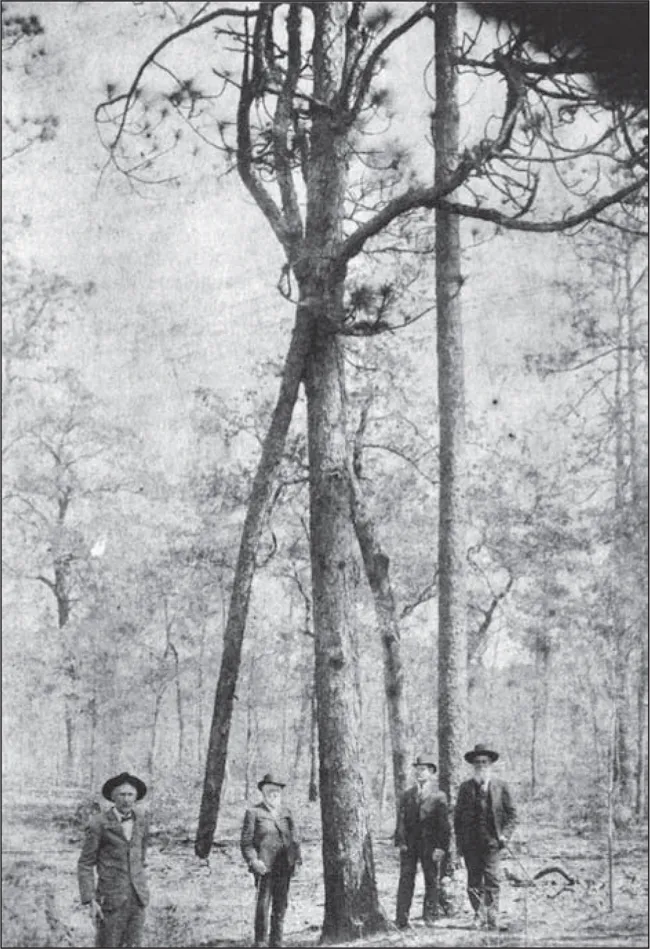
In 1821, more than 6,000 acres of land around Montezuma was purchased, most of it for $1.25 per acre. At Montezuma, there was a courthouse (Covington County’s first), saloon, hotel, livery stable, racetrack, docking facilities, and warehouses. This photograph of Montezuma was taken in 1901, long after the small community was moved to higher land.

Covington County’s frame courthouse was destroyed by fire in 1895. (The first courthouse had also been consumed by fire in 1878.) It was a beautiful white-painted structure, and on the ground floor a wide hall ran through the building both ways, cutting that floor up into four offices, one in each corner. The roof had no gables. The house in the background belonged to Becky Smith. She was a Dixon before she married.

The first brick courthouse was built in the middle of the court square. The contract for this building was signed in December 1895. The contractor was B.C. Williams of Hazlehurst, Georgia, and the architect was W. Chamberlin & Company of Knoxville, Tennessee. Judge Malachi Riley was judge of probate at the time of the contract. Work on the building was begun on August 1, 1896, and finished on April 1, 1897. The building had seven rooms on the first floor and four rooms on the second. Its courtroom proper was the largest and most convenient courtroom in the 12th Judicial Circuit. It was conceded to be, by far, the best courthouse south of Montgomery.

This is the Masonic service for laying the cornerstone of the Covington Courthouse seen in the previous image, which was completed in 1897. The steeple had a four-face clock, generally classified during those days as the “poor man’s pocket watch.” Four-faced tower clocks were sometimes the only way to tell time in a community. The clock could be seen from some distance away in all directions. The striking of the clock could be heard for a mile. This courthouse only stood 21 years before it was torn down in 1918. The bell was saved and is now placed in the front lawn of the present courthouse.

As the city of Andalusia and Covington County grew, long-term planning began to determine infrastructure needs, like paving. A debate waged on whether the current courthouse should live out its usefulness or whether a new one should be built before a paving project was implemented. The new courthouse won out and was constructed in 1916 at a cost of $135,000. The c. 1912 jail is visible behind it.

This view of the public square reveals (to the left of the square) P. Lewis Jewelers, Brown and Broughton Druggists, and the c. 1921 First National Bank building; (in the center) Kilpatrick and Mashburn Furniture and Hardware, the Bank of Andalusia, and S.D. Brooks; and (to the right) Tisdale Hardware. Originally, a Confederate monument was planned for the circle in the middle of the park square. The plaza was maintained by the garden clubs and is remembered by previous generations for its chinaberry trees.
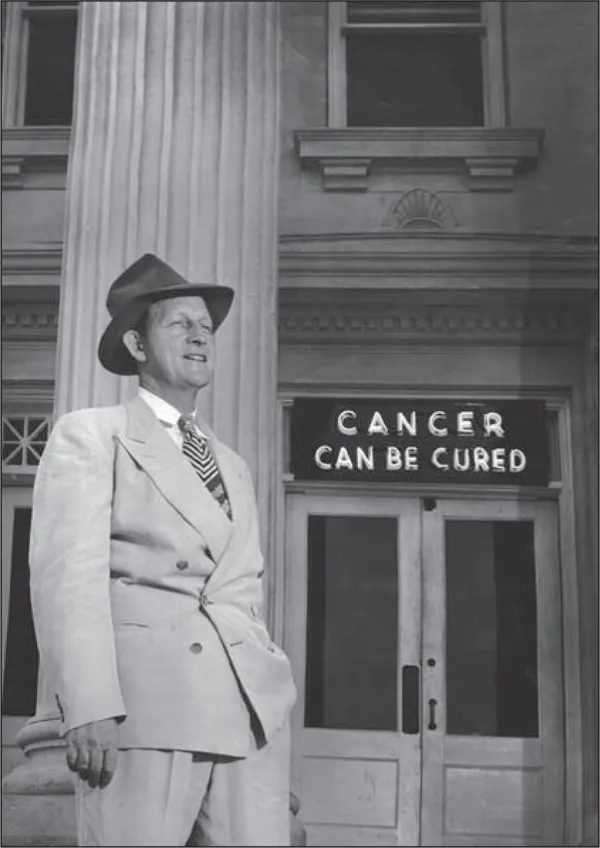
Attorney Ed Reid, who was struck with colon cancer in 1942, became the first person in the entire country to read the seven danger signs of cancer on the radio. Cancer was a dreaded word, a death sentence to most, and oftentimes doctors would not even tell their patients of the diagnosis. Reid was cured of cancer because of the early detection and prompt treatment. The American Cancer Society presented Reid with an award for his work and devotion to take his story nationwide.

Beautiful architectural details grace the inside of the courtrooms, including this one on the second floor pictured during a public meeting. A stonecutter formed many of the decorative features seen around the majestic building. The interior is centered on an octagonal atrium with floors of white marble and walls of gray marble. (Courtesy of Andalusia Public Library.)

This courthouse, shown here in early 1930s, was built on the north side of the square. Frank Lockwood of Montgomery was the architect, and Little and Clecker Company of Anniston was the builder. The “Old Jail” and the courthouse were listed in the National Register of Historic Places in 1989.
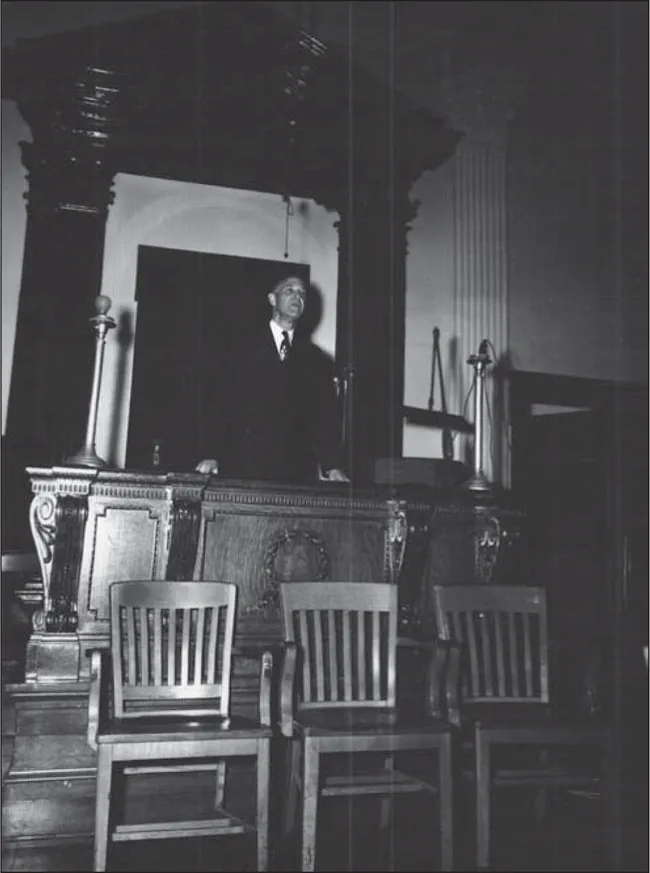
Sen. Lister Hill is speaking in one of the Andalusia courtrooms to residents of Covington County about the dangers of cancer in 1949. Covington County became known as the most cancer-conscious county in the state of Alabama due to the untiring efforts of attorney Ed Reid and the support of the Parnassus Club. (Courtesy of Andalusia Public Library.)

Under the progressive administration of Mayor John G. Scherf, who spent 16 years in office, city finances were stabilized, streets were paved and named, the Clean City Award was received more than once, industry was encouraged, the library grew, schools were labeled among the best, an airport and a new city cemetery were established, and new buildings like this city hall on Opp Avenue were dedicated. Today, the Andalusia Police Department is headquartered here. (Courtesy of the Scherf family and City of Andalusia.)
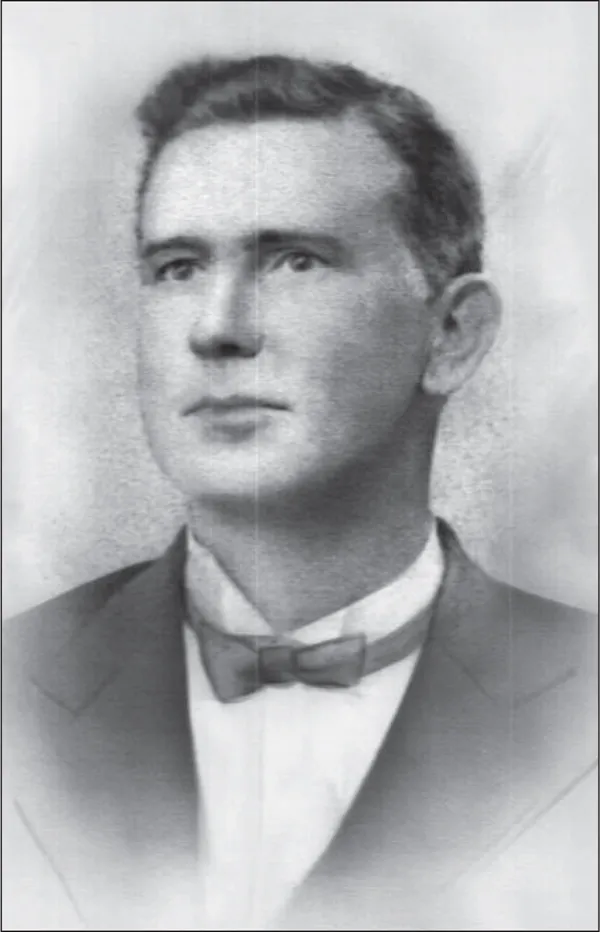
Mayors of Andalusia included B.H. Lewis (1884–1885), pictured; J.F. Thomas (1885–1888); Ed T. Albritton (1888–1899, first under incorporation); Henry Opp (1899–1906); T.E. Henderson (1906–1908); Z.D. Studstill (1908–1912); J.W. Shreve (1912–1912); A.R. Powell (1912–1914); S.H. Gillis (1914–1918); T.E. Henderson (1918–1924); J. Morgan Prestwood (1924–1927); J.F. Carson (1927–1932); J.G. Scherf (1932–1948); and T.B. Wilder (1948–1956). Note that Andalusia was incorporated twice. (Courtesy of Three Notch Museum.)
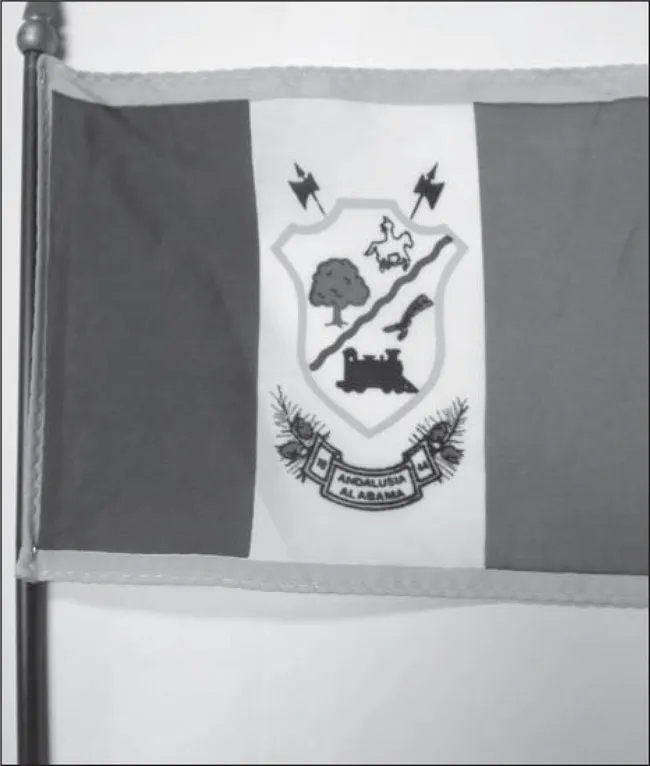
On the official Andalusia flag, blue represents the wat...
Table of contents
- Cover Page
- Title Page
- Copyright Page
- Dedication
- Table of Contents
- Acknowledgments
- Introduction
- 1. Government
- 2. Religion
- 3. Education
- 4. Hospitality and Leisure
- 5. Homes of Distinction
- 6. Transportation and the Flood of 1929
- 7. Industry and Commerce
- 8. “Absolutely Andalusia”
Trusted by 375,005 students
Access to over 1.5 million titles for a fair monthly price.
Study more efficiently using our study tools.
Frequently asked questions
Yes, you can cancel anytime from the Subscription tab in your account settings on the Perlego website. Your subscription will stay active until the end of your current billing period. Learn how to cancel your subscription
No, books cannot be downloaded as external files, such as PDFs, for use outside of Perlego. However, you can download books within the Perlego app for offline reading on mobile or tablet. Learn how to download books offline
Perlego offers two plans: Essential and Complete
- Essential is ideal for learners and professionals who enjoy exploring a wide range of subjects. Access the Essential Library with 800,000+ trusted titles and best-sellers across business, personal growth, and the humanities. Includes unlimited reading time and Standard Read Aloud voice.
- Complete: Perfect for advanced learners and researchers needing full, unrestricted access. Unlock 1.5M+ books across hundreds of subjects, including academic and specialized titles. The Complete Plan also includes advanced features like Premium Read Aloud and Research Assistant.
We are an online textbook subscription service, where you can get access to an entire online library for less than the price of a single book per month. With over 1.5 million books across 990+ topics, we’ve got you covered! Learn about our mission
Look out for the read-aloud symbol on your next book to see if you can listen to it. The read-aloud tool reads text aloud for you, highlighting the text as it is being read. You can pause it, speed it up and slow it down. Learn more about Read Aloud
Yes! You can use the Perlego app on both iOS and Android devices to read anytime, anywhere — even offline. Perfect for commutes or when you’re on the go.
Please note we cannot support devices running on iOS 13 and Android 7 or earlier. Learn more about using the app
Please note we cannot support devices running on iOS 13 and Android 7 or earlier. Learn more about using the app
Yes, you can access Andalusia by Kristy Shuford White in PDF and/or ePUB format, as well as other popular books in History & North American History. We have over 1.5 million books available in our catalogue for you to explore.