- 128 pages
- English
- ePUB (mobile friendly)
- Available on iOS & Android
eBook - ePub
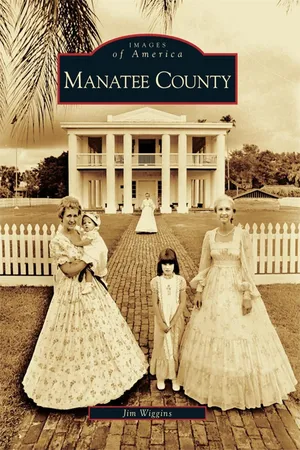
Manatee County
About this book
The area known as Manatee County opened for settlement at the close of the Second Seminole War in 1841.
This was due to Congress's passage of the Armed Occupation Act of 1842, which allowed settlers to claim 160 acres of land at a cost of $1.25 an acre if they were able to bear arms and live on the land for five years. It wasn't long before settlers appeared up and down the beautiful Manatee River, led by Josiah Gates and his family on the south side. Many of his friends had suffered losses with the collapse of the Union Bank in Tallahassee and were anxious to join him. The opulent shores on both sides of the river quickly enticed other settlers to make their claims, offering a cornucopia filled with some of Florida's best resources for growth and prosperity. This volume provides a pictorial account of those lives, which were caught in the struggle to carve out a niche against all odds in a place that faced epidemics of yellow fever, malaria, typhoid, and a third uprising of the Seminole Indians. In 1861, Florida seceded from the Union, which was followed by the Civil War with a Union victory in 1865 that brought an end to slavery and plantation ownership.
Information
Two
GROWTH ALONG THE RIVER
It was not unusual for early pioneers to have many children, so it was natural for the descendants of early pioneers to swell the population at a rapid pace. For example, Maj. George Patten and his wife, Mary, (who purchased the Gamble property in 1873) had 13 children at the time of their arrival in Manatee County. The S. S. Lamb family, founders of Palmetto, had 16 children, and many families boasted of similar numbers. There was also a steady stream of new arrivals. The large sugar plantations ceased to exist during and after the Civil War, and large parcels of land, such as Major Gamble’s 3,450 acres and Pinckney Craig’s 1,560 acres on the north side of the river and more than 1,000 acres owned by Joseph Braden on the south side of the Manatee River, were divided into smaller parcels and sold.
Basic needs were met with the establishment of businesses such as packinghouses, ice plants, grocery and hardware stores, drugstores, boat works, and the opening of boarding houses and hotels to meet the needs of locals and tourists alike. Fields were plowed and citrus trees planted. Cattle grazed openly on the land with no fences, and fishermen were hauling in fish by the truckloads. Everyone seemed to prosper. Wharves were built up and down the river as steamboats plied their way to places such as Tampa and New Orleans with bounties of citrus and produce being shipped to anxious buyers. Meanwhile a spiderweb of rails was being laid. Every crook and cranny within the borders of Manatee County was soon inhabited by families working to take advantage of the opportunities afforded.
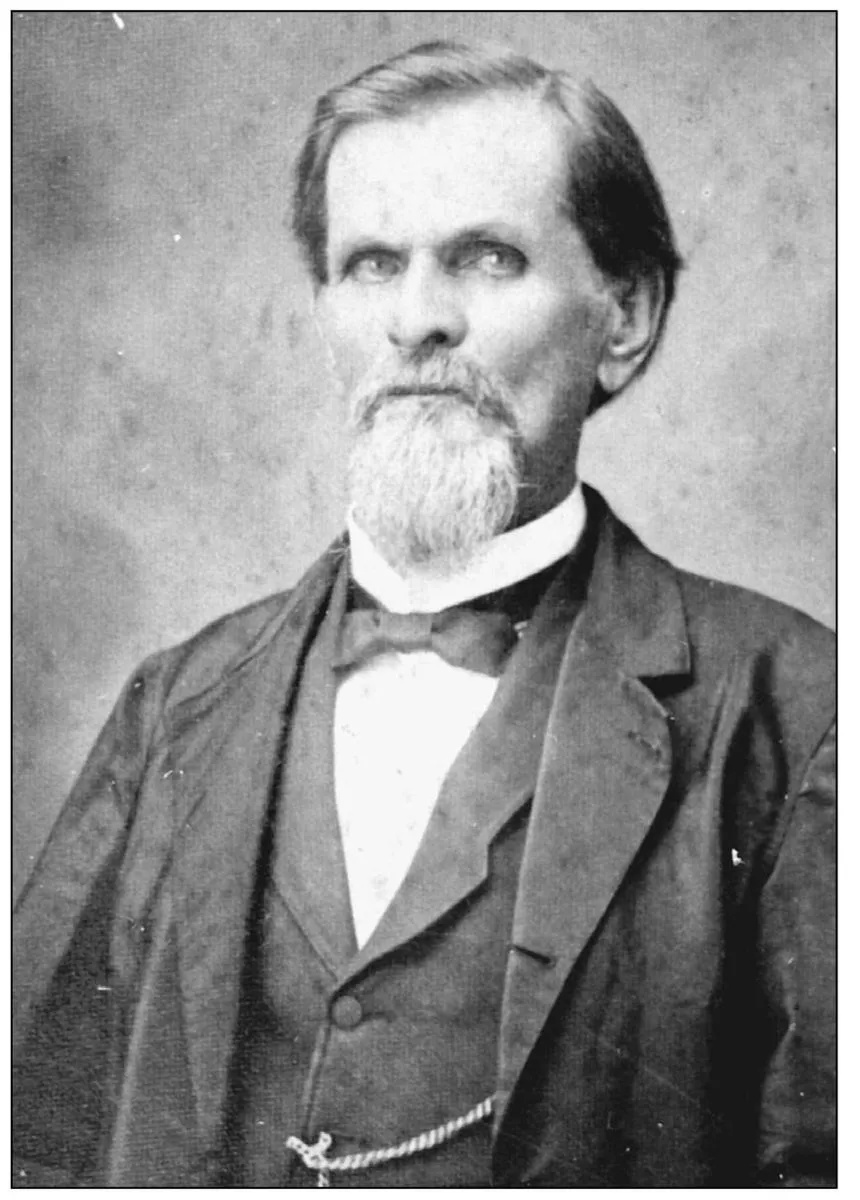
Capt. John William Curry was the son of pioneer Capt. John Curry, who came with his family to Manatee from the Bahamas in 1860 with his wife, Elizabeth, and two children. Captain Curry was appointed provision-master under Capt. John McKay of Tampa to keep Confederate troops supplied with beef during the Civil War. The Curry family became one of the largest and most influential families of Manatee County.

Men are waiting to load boxes aboard the steamboat Margaret at Joel Hendrix’s dock, which was located at the end of present-day Eighth Avenue in Palmetto. The boxes were likely filled with citrus, since Joel Hendrix had planted a grove that had reached maturity by the time this photograph was taken in 1895. Hendrix was Palmetto’s first postmaster, because the post office was at the dock until it moved to the home of J. W. and Mary Nettles.

Mary Nettles, wife of J. W. Nettles, stands at the fence in her front yard at her home in Palmetto. She built a building adjacent to her home that became the post office when it was moved from Joel Hendrix’s wharf in 1880. The building was later moved by the Palmetto Historical Commission and is part of the Palmetto Heritage Village. The village offers visitors a glimpse into Palmetto’s past.

Unidentified children play in the front yard of W. B. Thompson in Oneco. Thompson settled at Orange Ridge, bought part of the old J. M. Helm grove, and in the early 1890s raised citrus, potatoes, tobacco, and watermelons. He was a trustee of the Oneco School and opened a packinghouse in 1899. In 1906, he bought the Day family home in Bradenton and became a stockholder in the Bradenton Bank and Trust.

Wagon ruts on Main Street in Bradenton were common, but shell rock was added by the time this c. 1902 photograph was taken. People gather on the porch of the Gaar House Hotel (upstairs on right) as two mules pull a buggy down the middle of the street. A group of people (left) crowd together on the porch of the inn near Stanfield’s Drug Store.

This c. 1912 photograph shows the changes to Main Street in Bradenton. Automobiles are now parked on the shell paving of the street. Many wooden buildings have burned, and some buildings are now made of brick and have awnings to cope with the sun and rain. The long roof of the Man...
Table of contents
- Title Page
- Copyright Page
- Dedication
- Table of Contents
- ACKNOWLEDGMENTS
- INTRODUCTION
- One - IN THE BEGINNING
- Two - GROWTH ALONG THE RIVER
- Three - FARMING, FISHING, AND MAKING A LIVING
- Four - CHURCHES AND SCHOOLS
- Five - THINGS TO SEE AND PLACES TO BE
Trusted by 375,005 students
Access to over 1.5 million titles for a fair monthly price.
Study more efficiently using our study tools.
Frequently asked questions
Yes, you can cancel anytime from the Subscription tab in your account settings on the Perlego website. Your subscription will stay active until the end of your current billing period. Learn how to cancel your subscription
No, books cannot be downloaded as external files, such as PDFs, for use outside of Perlego. However, you can download books within the Perlego app for offline reading on mobile or tablet. Learn how to download books offline
Perlego offers two plans: Essential and Complete
- Essential is ideal for learners and professionals who enjoy exploring a wide range of subjects. Access the Essential Library with 800,000+ trusted titles and best-sellers across business, personal growth, and the humanities. Includes unlimited reading time and Standard Read Aloud voice.
- Complete: Perfect for advanced learners and researchers needing full, unrestricted access. Unlock 1.5M+ books across hundreds of subjects, including academic and specialized titles. The Complete Plan also includes advanced features like Premium Read Aloud and Research Assistant.
We are an online textbook subscription service, where you can get access to an entire online library for less than the price of a single book per month. With over 1.5 million books across 990+ topics, we’ve got you covered! Learn about our mission
Look out for the read-aloud symbol on your next book to see if you can listen to it. The read-aloud tool reads text aloud for you, highlighting the text as it is being read. You can pause it, speed it up and slow it down. Learn more about Read Aloud
Yes! You can use the Perlego app on both iOS and Android devices to read anytime, anywhere — even offline. Perfect for commutes or when you’re on the go.
Please note we cannot support devices running on iOS 13 and Android 7 or earlier. Learn more about using the app
Please note we cannot support devices running on iOS 13 and Android 7 or earlier. Learn more about using the app
Yes, you can access Manatee County by Jim Wiggins in PDF and/or ePUB format, as well as other popular books in History & North American History. We have over 1.5 million books available in our catalogue for you to explore.