The Napoleon in power in later years may have lacked the absolute genius and resolution that his earlier campaigns displayed; however, he was more than a match for his enemies on more than one occasion. Field-Marshal Wolseley's short biography of Wellington begins in 1812, following the travails of Napoleon as he and the few survivors of the La Grande Armée trudged back from the Russian snows. As Napoleon feverishly combs depots for recruits, and conscripts more men for his army, he takes the fight to the Allies in Germany. But outnumbered, and demanding the impossible from his generals and troops, he is heavily defeated by the Allied forces. Pushed back to the borders of France, Napoleon contrives his finest campaign since the early Italian campaigns that gained him his fame. However, the number of allied forces eventually pushed him back, forcing his abdication and banishment to Elba. In the final throw of the dice, Napoleon returns to France and, despite some of his finest manoeuvring, is finally defeated at the battle of Waterloo.
"An admirable monograph, by the new Commander-in-Chief of the Forces,…giving in a crisp resume the last half of the career of Napoleon, … Limited by space, there is yet a well-digested mass within these covers, clearly collated and tersely expressed…"-Theodore Aryault Dodge
- 114 pages
- English
- ePUB (mobile friendly)
- Available on iOS & Android
eBook - ePub
Decline And Fall Of Napoleon
About this book
Information
Subtopic
British HistoryIndex
HistoryTHE DECLINE AND FALL OF NAPOLEON.
CHAPTER I. — THE CAMPAIGN OF 1812.
THE expression, “Decline and Fall,” adopted as a title for these chapters, seems to imply an unquestioned falling off in Napoleon's brain-power as well as in his bodily vigour towards the end of his marvellous career. From many different sources we have irresistible evidence that upon several occasions during his later years he was subject to periodic attacks of a mysterious malady. Its nature has been variously described; but it was so much his interest and that of those around him to conceal the facts and disguise the symptoms that the world is still ignorant of what the disease really was. On three critical occasions, at least, he was affected by it during the four years of his life with which I propose to deal in these pages. It usually followed upon periods of enormous mental and physical exertion and generally during great exposure. It may, perhaps, be best defined as a sudden attack of lethargy or physical and moral prostration, sometimes accompanied by acute bodily pain. Its effects, as known to lookers-on, were, that at some critical moment of a battle his wonderful power of quick and correct decision seemed to desert him; so much so, that for the time being he almost abandoned the reins to chance.
Throughout his active life he always worked at very high pressure, and so overstrained the machinery of his mind and body that both deteriorated with more than ordinary rapidity. The sword as well as the scabbard showed unmistakable signs of wear-and-tear when they had been only a dozen years in constant use, and the sharp and startling contrast between the manner in which he gave effect to his great plans in his earlier and in his later campaigns is very remarkable.
The most abstemious of young officers had become in 1812 the pampered ruler of a court Oriental in its luxury and had already, at the age of forty-four, impaired his general health by indulgence in its dissipations. Even those who hate his memory will admit that his brain was almost superhuman in its grasp of subjects that interested him. Probably no other man has ever dealt so energetically for an equal number of years, and with such direct responsibility, with so great a variety of involved and complicated public questions of the first magnitude. But, during this process, his clear, nimble brain had suffered from exhausting anxieties and the unceasing work they entailed. His splendid constitution gradually yielded to the frequent exposure and constant fatigues, by night and day, which the peculiar nature of his position imposed upon him.
Beyond all doubt the Republican General Bonaparte who, “rushing down from the Apennines with the rapidity of a torrent,” overran Piedmont and Lombardy in 1796 was both mentally and bodily, to a large extent, a different man from the Emperor Napoleon who was defeated at Waterloo. Many careful students of this Colossus amongst men have been compelled—unwillingly perhaps—to admit that had the Corsican general who fought at Rivoli been in command of the French army when it crossed the Sambre in 1815 our “Iron Duke “would not have been allowed to add the “crowning mercy” of Waterloo to the list of his glorious achievements. Nay, more: had it been the Emperor of the “Hundred Days “who assumed command of the army of Italy in 1796 and not the young citizen Bonaparte one feels instinctively that all the brilliant operations of that year in the valleys of the Po the Mincio and the Adige would not have been what they were. Beaulieu and Wurmser might be still gratefully remembered by their countrymen, and whatever peace had been won its terms would not have been so favourable to France as those contained in the Treaty of Campo Formio. As the world flies onwards, with apparently increasing velocity, the sayings, doings, aspirations, even the villanies of this great history-maker are all the more closely studied. A year seldom passes without the publication of some new work about him in which his character, genius, and performances are examined from every side by every sort of thinker and writer; and the more we discover about him and the more we strive to measure his greatness, the vaster, the more infinitely immense, it seems to be. A superlatively bad man, dishonest and untruthful and whose career embraces some serious mistakes in national policy, whose public life ended in a disastrous defeat and who died in prison, is yet so great a man that his name fills more pages in the world's solemn history than that of any other mortal.
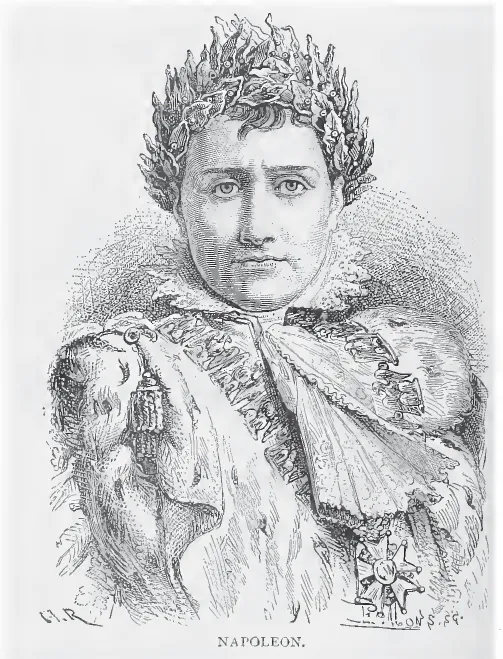
Everything connected with him is deeply interesting, not only to the military student but also to the philosopher and the statesman. No other mortal has been praised and blamed, deified by some and abused by others, as he has been. To men of action prone to worship the great history-makers of the world, he is the most remarkable and the greatest human being who has ever walked this earth; but, at the same time, to a large class of thinkers and philosophers his greatness is merely that of Belial, all “false and hollow.” Fashioned from his cradle to rule men and direct events for many years the civilised world rang with his name; and even when in prison nations shook with dread as they contemplated the possibility of his escape from the rock to which they had tied him. He is one of the few great figures in history whom the perspective of time does not cause to dwindle in size or diminish in importance.
Up to the year 1812 he had carried out no war in Europe under his own personal direction which had not been, in the long run, brilliantly successful. From that year onwards he entered upon none which did not end disastrously. By his invasion of Russia in 1812 he lost, almost entirely, the most magnificent army he had ever marshalled under his banners, returning in haste to Paris a solitary fugitive. As the result of his campaign in 1813 he had to lead back the remnants of a beaten army behind the shelter of his own frontier-fortresses. His brilliant operations of 1814 between that frontier and Paris ended in his forced abdication and his acceptance of the little island of Elba as his only dominion; and, having returned to France in 1815 he was hopelessly defeated at Waterloo and sent to spend the remainder of his days at St. Helena.
To what are we to attribute this change in the fortunes of him who had long been the “spoiled child of Victory”? Were his plans faulty or did he fail in their execution? Was the invasion of Russia less ably planned and the wants of his mighty host less carefully provided for than in his invasion of Austria by that wonderful march from Boulogne to Vienna which ended in Austerlitz? Surely not; for the more we study his voluminous correspondence of 1811-12, the more we are struck, not merely with the stupendous nature of the task he undertook when he crossed the Niemen, but with the careful provisions he made for overcoming the difficulties with which that mighty operation bristled. The general scheme was worked out with a splendour of conception and a mastery of detail which, I think, stands unrivalled in the history of the world. And yet the campaign of 1812 was an appalling failure. Nevertheless it is impossible for any careful student of his later campaigns to deny that again and again throughout them he displayed, often in a remarkable manner, his old brilliancy in strategical and tactical combinations and his former supremacy over events.
The invasion of Russia in 1812 was about the most stupendous undertaking upon which any man has ever ventured. But many are apt to treat it as if its only serious difficulties lay in the nature of the country to be overrun in its very severe winters and in its great distance from the French frontier. At any rate: these difficulties have been commonly recognised as the direct causes which led to Napoleon's failure; indeed so much is this the case that Russia seems to have enjoyed a long immunity from invasion because it was in the heart of Russia that Napoleon's first failure occurred. But there were causes other than the difficulties peculiar to military operations in Russia which made well-nigh impossible the task which he had set himself to do.
He did not really wish for a war with his old ally and personal friend, the Czar Alexander. The war was forced upon him as part of the “Continental system “he had designed for the purpose of destroying the commercial prosperity of England. It was, in fact, merely a very important episode in the life-and-death struggle with England upon which he had entered. The destruction of her maritime ascendency — her maritime tyranny he called it — was essential before he could hope for any realisation of the universal dominion he aspired to{1}. From the battle of Trafalgar, and more especially after the war with Austria in 1809, up to the invasion of Russia his whole energies were directed to effecting the complete exclusion of all British merchandise from every port in Europe. England was apparently the only serious obstacle to his ambition; and, as he had utterly failed in his combinations against her fleet, he now sought to ruin her by the destruction of her commerce.
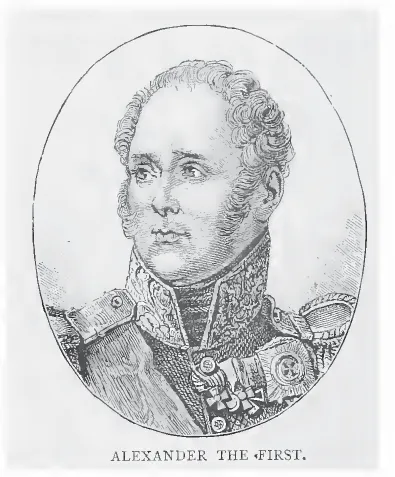
But her goods still poured into central Europe through Russian ports; and it consequently became a question whether he should declare war against the Czar or abandon his “Continental system“ as a failure. But his pride was involved in the latter alternative; and much as he disliked any breach in the alliance that had been hatched at Tilsit he elected for war. It has been well said, he made “a dispute about tariffs the ground for the greatest military expedition known to authentic history.” But the selection of alternatives he then made ended in his ruin not in that of England.
War with Russia, for a man in Napoleon's position, meant the invasion of that vast empire, and for it armies were required far beyond the power of France to supply from her own population. He was therefore obliged to depend upon the military forces of Austria, Prussia, and other doubtful allies. He was compelled to lead them through states of ancient military renown whose inhabitants, humbled to the dust in his previous wars, had become bitterly hostile to his armies by whom they had been so cruelly ill-treated. Indeed, his campaigns had begun to carry the conviction into every home throughout central Europe that, however terrible it might be to embark in a war against France it was necessary either to do so or to succumb from misery and starvation.
In his war against British merchandise he had so bullied and irritated European nations, great and small, that not only every Cabinet but almost every family longed for the despot's overthrow, and were prepared to make any sacrifice to that end. In France itself this spirit was alive and began to show itself, for the misery of its people had reached a climax. And yet, whilst England added about three hundred million sterling to her already large national debt during this war against Napoleon, France, under his rule, did not borrow a franc. But the conscription, rigorously enforced, was draining her life-blood, and of the conscripts intended for the “Grand Army“ in 1812 some 50,000 had proved so refractory that it was necessary to place them in islands from which they could not escape, until, having been manufactured into soldiers, they were marched off under escort to distant parts of the Empire.
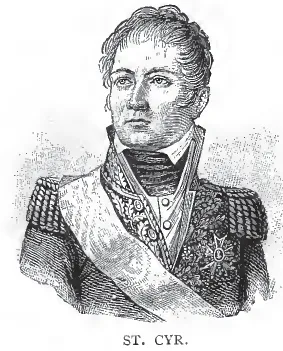
The Marshals, whom Napoleon had created and loaded with riches and honours, were sick of war and wanted to enjoy the result of their labours. They already dreaded his plans for this new and distant conquest. Although French garrisons held all the most important fortresses along the lines of communication between the Rhine and the Vistula, the difficulties of maintaining and protecting those communications were well-known to men like Grouchy, Desaix, St. Cyr, Vandamme, Ney, Davoust, Augereau, Murat, and the others whom he selected for commands in this gigantic enterprise. They were aware that although the new theatre of war was fertile it was practically without roads and devoid of those towns and villages—the usual centres of population—which enable armies on the march to obtain daily the food and transport they require.
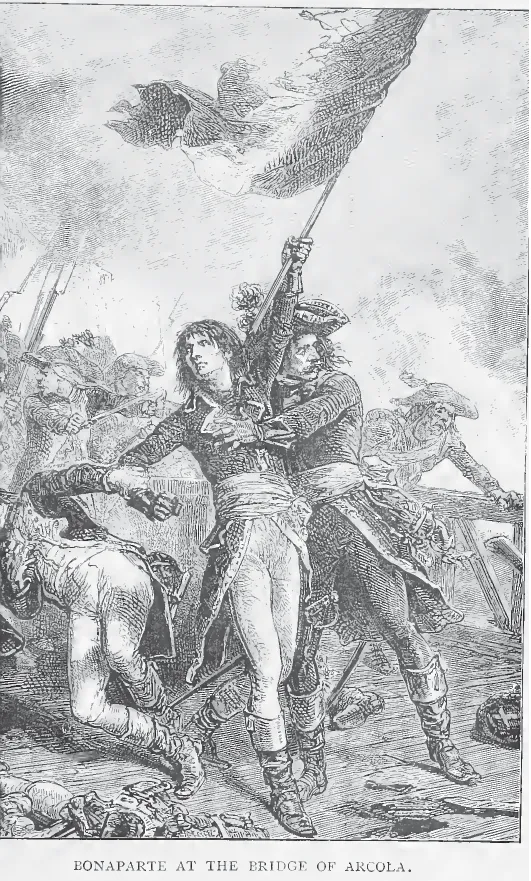
A startling contrast may well be drawn between the abject poverty of the gloomy young Corsican lieutenant, struggling to find food for himself and his brother on his slender pay, and the affluence and luxury of the French Emperor, with Marie Louise by his side, distributing large fortunes amongst his relatives and his newly-created peers. But any such pictures lack the dramatic incidents and stage-like trappings which cling round the contrast between Napoleon as the central figure at the Dresden pageant of May 1812 and as he appeared seven months afterwards, when he arrived at the gates of the Tuileries in a hackney coach by night, fresh from the horrors of his ghastly retreat. The astounding ups and downs in his career are almost as remarkable as his genius. Before the battle of Actium, it is said, that upon one afternoon there were fourteen kings in Antony's reception-room. But at Dresden, upon the occasion I refer to, Napoleon received the homage of nearly all the sovereigns and princes between the Pyrenees and the Carpathians. The Emperor of Austria, the Kings of Prussia and Saxony, the Viceroy of Italy, and many reigning dukes and margraves and ministers of European renown, were there to do him honour, and settle the strength of the various contingents they were to send for the invasion of Russia under his banner.
His published correspondence tells us how he surmounted the diplomatic difficulties he experienced at the outset; and it is an evidence of the skilful elaboration with which he worked out the complex scheme for utilising the resources of states whose rulers and people, he knew, longed for his overthrow. The arrangements he made for repressing with adequate and reliable forces all possible disaffection in his rear when he crossed into Russia are now before us, and those who study his letters must be struck with the care and foresight he bestowed upon the great but disastrous undertaking into which he was led by his pride and an overweening confidence in his “star.”
The “Grand Army,” which he collected on the Niemen for the invasion of Russia, numbered over half a million of men and consisted of eleven Army' Corps,—exclusive of the Old and Young Guard, of four splendid Corps of Cavalry, and of the Austrian contingent of 32,000 men: all included, it was about 600,000 strong, but of these, not more than one-third were French. He took with him over 1200 guns into the field.
To meet this imposing array of invaders the Czar had collected three armies having a total strength of about 215,000 men. There was also, in addition a fourth Russian army in the field of about 40,000 men, but it was engaged in operations on the Moldavian frontier of Turkey. Napoleon hoped it would there find ample employment and be unable to influence his operations in any way. These were small forces with which to defend “Holy Russia” against the hosts now arrayed against her under the most renowned captain of any age; but they were all Russians fired with the deepest enthusiasm, both religious and patriotic, and about to fight on their own soil in defence of everything that man holds most dear.
The French armies were all commanded by well-known generals of proved ability in the field. But the Czar was no great strategist himself, and his generals, unknown to fame as commanders, possessed no special skill in war or aptitude in the movement of troops. At the very outset they had been led into faulty dispositions, the result of false reports spread by Napoleon that he meant to occupy Volhynia. In consequence of these rumours they had scattered their troops over so wide a front that it would be impossible to concentrate them in time to meet any sudden blow from Napoleon. Divided councils the mutual jealousies of generals and uncertain and undigested projects still further tended to confuse and weaken the nature of the resistance they might offer.
Napoleon reached the Niemen at Kovno and crossed it on June 24th. He had long hesitated to take this final step, and would gladly have made peace on easy terms if only Alexander would close his ports to English goods. But at last his mind was made up, and he determined to invade Russia. The faulty distribution of the enemy's forces lent itself to an attack upon their centre. His plan was to force a way through it to Smolensk—then still commonly regarded as the bulwark of the empire—operating in the Polish province of Lithuania where he was sure to meet with many sympathisers.
His passage of the Niemen met with no resistance and the Russians fell back on Smolensk before his advancing troops. This policy of “retreat” was no carefully designed plan, as many have asserted, to lure the French on to their destruction in the roadless wilds of Russia. Under the circumstances the Russian commander could, in fact, do nothing else; for by skilful movements Napoleon with his central force had separated the Russian armies like a wedge well driven home, and he was too strong at all points for any force the Russians could then possibly bring against him. In thus falling back Alexander's generals hoped to concentrate at Smolensk to make a stand there. Public opinion, as far as it could be said to exist ...
Table of contents
- Title page
- TABLE OF CONTENTS
- INTRODUCTION.
- CHAPTER I. - THE CAMPAIGN OF 1812.
- CHAPTER II. - THE CAMPAIGN OF 1813.
- CHAPTER III. - THE CAMPAIGN OF 1814.
- CHAPTER IV. - THE CAMPAIGN OF 1814-continued.
- CHAPTER V. - THE HUNDRED DAYS. - THE BATTLE OF LIGNY.
- CHAPTER VI. - WATERLOO.
Trusted by 375,005 students
Access to over 1.5 million titles for a fair monthly price.
Study more efficiently using our study tools.
Frequently asked questions
Yes, you can cancel anytime from the Subscription tab in your account settings on the Perlego website. Your subscription will stay active until the end of your current billing period. Learn how to cancel your subscription
No, books cannot be downloaded as external files, such as PDFs, for use outside of Perlego. However, you can download books within the Perlego app for offline reading on mobile or tablet. Learn how to download books offline
Perlego offers two plans: Essential and Complete
- Essential is ideal for learners and professionals who enjoy exploring a wide range of subjects. Access the Essential Library with 800,000+ trusted titles and best-sellers across business, personal growth, and the humanities. Includes unlimited reading time and Standard Read Aloud voice.
- Complete: Perfect for advanced learners and researchers needing full, unrestricted access. Unlock 1.5M+ books across hundreds of subjects, including academic and specialized titles. The Complete Plan also includes advanced features like Premium Read Aloud and Research Assistant.
We are an online textbook subscription service, where you can get access to an entire online library for less than the price of a single book per month. With over 1.5 million books across 990+ topics, we’ve got you covered! Learn about our mission
Look out for the read-aloud symbol on your next book to see if you can listen to it. The read-aloud tool reads text aloud for you, highlighting the text as it is being read. You can pause it, speed it up and slow it down. Learn more about Read Aloud
Yes! You can use the Perlego app on both iOS and Android devices to read anytime, anywhere — even offline. Perfect for commutes or when you’re on the go.
Please note we cannot support devices running on iOS 13 and Android 7 or earlier. Learn more about using the app
Please note we cannot support devices running on iOS 13 and Android 7 or earlier. Learn more about using the app
Yes, you can access Decline And Fall Of Napoleon by Field Marshal Viscount Garnet Wolseley in PDF and/or ePUB format, as well as other popular books in History & British History. We have over 1.5 million books available in our catalogue for you to explore.