MEMOIR OF A FILM STAR IN THE TIME OF PASSING OF THE AMERICAN FRONTIER CULTURE
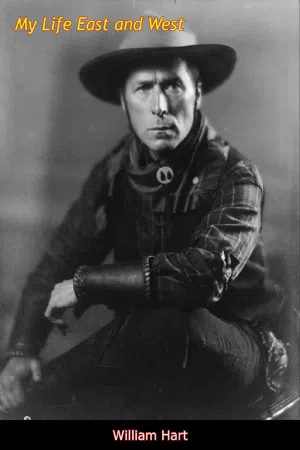
This is the autobiography of William Surrey Hart (1864-1946), an early twentieth century silent film actor, screenwriter, director, and producer. A unique personage in the film industry—Hart's boyhood years, besides affording tutoring in frontier values and the life of cowboys, also allowed him intimate contact with life and culture of Sioux Indians—Hart went on to become one of the first Western motion picture stars. A successful Shakespearian actor on Broadway, he appeared in Sidney Olcott's 1907 production of Ben Hur and, in 1914, he starred in his first feature, The Bargain. Hart was interested in making realistic Westerns and was noted for the authenticity of costumes and props in his films. Fascinated by the Old West, he acquired Billy the Kid's six-shooter and was a friend of both Wyatt Earp and Bat Masterson. From 1914 until 1926, Hart was the leading western actor for silent films. In 1925, he starred in his last film, "Tumbleweeds."
- 270 pages
- English
- ePUB (mobile friendly)
- Available on iOS & Android
eBook - ePub
My Life East and West
About this book
Trusted by 375,005 students
Access to over 1.5 million titles for a fair monthly price.
Study more efficiently using our study tools.
Information
Subtopic
Film & VideoCHAPTER I—WHITE GOLD
A black night on the Western prairie; a fear-crazed, unbroken colt lunging along a dimly marked trail; a ten-year-old boy, his only garment a nightgown, riding bareback, one hand tangled in the mane of a flying animal, the other clutching the rope of a hackamore; a frightened boy dragged from sleep and sent on a wild midnight ride seeking help to prevent a murder.
A black night pierced dimly and intermittently through a misty fog by street gas-lamps; a heavily loaded ice-wagon, its scale irons clanking dismally against its sides, lumbering over rough cobbled pavements; a man and a dozing boy of fourteen (the first and second hands) on the driver’s seat. The man jerks his lines and clucks to his team. An hour’s journey brings dawn and the man will be at the back of the wagon weighing ice and the boy climbing New York tenement stairways, with ice upon his back.
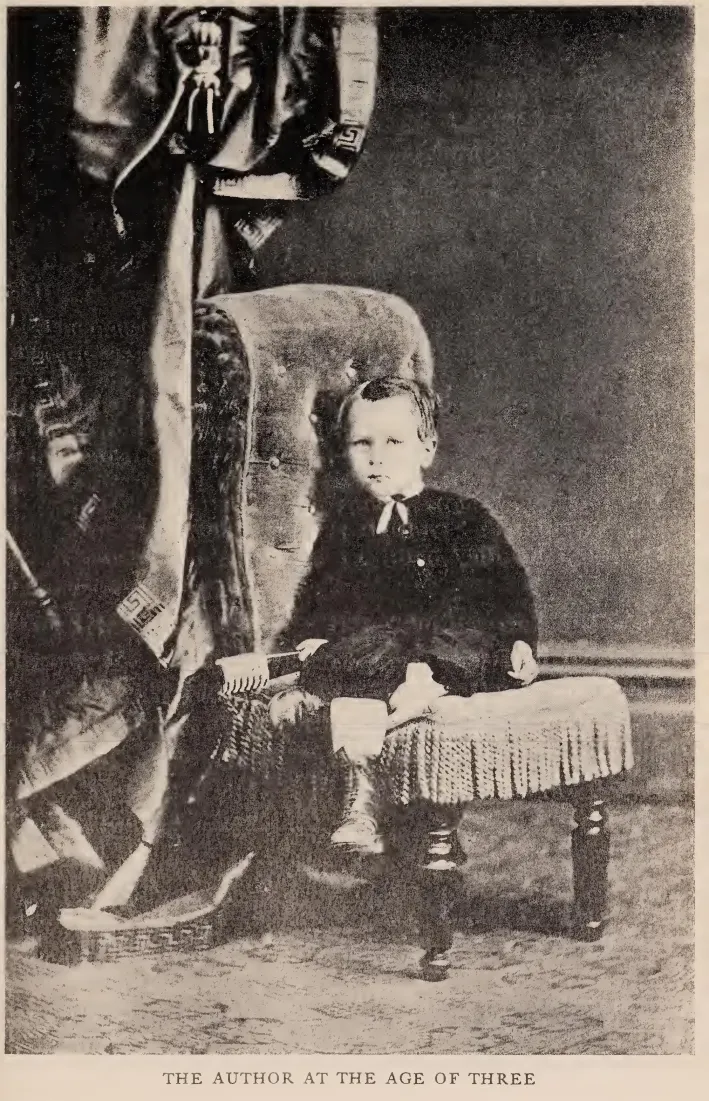
I WAS born at Newburgh, New York. My first recollection is of Oswego, Illinois. My father was a miller, and we lived near the flour mill on the Fox River. There were only two houses.
It was springtime. The ice had broken up and was cumbrously and slowly grinding its way down-river. The out-of-banks torrent was still raging, however, and here and there a large slab of ice would be picked up by the very force of the current and dashed hurtling through the air. The sawmill across the river had had no communication with our side since the ice had started to break. The sawyer and his helper needed supplies. My mother filled a clothes-basket with groceries and my father was going to make the trip across in a rowboat, and we all accompanied him to the shore to see him start.
He was to row for a full mile up the river on our side, and then make the dash across nearly half a mile of swirling, leaping flood.
Two foolish children and an iron-hearted, loving father! Nothing else could have done it—we outvoted our sweet, anxious mother and went with our father in the boat.
When we rounded the bend of land, a half-mile up-river, we waved gayly to our mother standing where we had left her, her hand tightly clutching the collar of the shepherd dog, Ring. Ring had begged to come along, but my father was afraid to have him in the boat.
My father reached his proper distance up-river and started across. How the current did drive us down-river! It hit us sideways; it seemed hardly no time at all until we were out—clear of the jutting land—and could see our mother again. And while our father was rowing, with sweeping, powerful strokes, we waved to her.
There was a commotion. Ring thought we were calling him. Our mother was trying desperately, but could not hold him. She hung onto him until she fell; he dragged her to the water’s edge; he broke away and plunged into the stream. He was a noble dog and a powerful swimmer. He actually made headway toward us so long as he kept inshore, but when he pointed out into the stream toward our boat, the current fairly threw him toward the milldam. It was certain death—a horrible death! But we did not know. We only knew we wanted our playmate and he was swimming after us in the river. Two children begged their father to get him. The father stopped rowing, and like a bullet the boat shot downstream—the dog was in the boat!
But, Lord God of Hosts! the man’s powerful arms could not make the boat gain one inch upstream. No! it was losing! It was losing—going stern first, foot by foot, yard by yard, nearer to destruction. We were slightly nearer our side of the river. My father could see our mother and hear her cries.
The men at the sawmill on the other side of the river were yelling useless, unheard instructions and cursing great oaths. My father rowed. He had lost hope. He knew we were going over, but he was going to die rowing.
The stern of the boat was at the break of water over the dam, and the dead noise of the falling water shut out all sound. Still my father pulled. And then the boat commenced to move sideways—not ahead—but sideways.
I was only a prattling baby boy playing with a shaggy wet dog in a boat; but could I use the brush—what a picture I could paint of a man at the oars in a boat rowing for the lives of his children! The man would not quit—the river had to go on. So the river pushed the rowing man aside. It pushed the boat sideways out of its path.
There was a mill-race at the river-bank. When the boat turned into it, its sides were crushed and broken by the force of the eddying waters. Two children were thrown onto the shore—an exhausted man was lying full length upon the ground, his head in the lap of a woman. The woman wore a white dress, all dotted with black spots.
I remember one night at dusk leaning against a fence and watching the drowned cattle go over the milldam in the freshet. I was playing robber; my fence became a robber’s cave. I went to sleep. My dear mother’s eyes would fill with tears even after I grew to manhood when she told of what was thought a useless search that lasted until the men’s lanterns blended into the morning light.
Then there was a night I was awakened and, sitting up in my trundle bed, saw my father looking intently out of the bedroom window, and heard him say in a low voice:
‘Tell me the truth. Rose. What do you see?’
My mother grabbed my father and said, ‘No! No! Nicholas! It isn’t that! Stay here. Don’t go—don’t go!’
Then I saw my father gently forcing my mother aside and hurriedly and stealthily disappear through the doorway.
In years later I learned that in passing through the living-room my father picked up a large carving-knife, stepped out into the road, and dropped behind an open buggy as it passed. Beside the man who was driving the stolen mill team sat another man with a rifle across his knees.
It was a full mile to the nearest farmhouse, yet my father remained in his position, one hand on the rear end of the buggy; and, when near the farmhouse, he jumped into the brush and gave the alarm. And, at that time, they hanged men in Illinois for horse-stealing.
And, at that time, too, my father was going blind!
In dressing flour-mill burrs there is used a mill pick, made of the finest tempered steel. While at work, a minute particle of this steel had entered my father’s eye. Inflammation grew rampant and spread to the other eye. My father was suspicious that there was a particle of steel in his eye; but all he knew was that a noted Chicago oculist had told him he had granulated eyelids and sore eyes. A short time before this, the owner of the mill had said to my father, ‘Nick, you had better quit, your eyesight is going, and you will have an accident and smash all the machinery in the mill.’
‘No!’ said my father; ‘the doctor says it is just a cold. My eyes are getting better every day. Look! See that tall tree over there just to the left of the center of that grove!’
‘Yes,’ said the owner; and then continued, ‘Why, Nick, that isn’t so bad. It is all I can do to see that tree myself.’
My father knew the forest was there and he knew there must be one tree that stood above the others. He was fighting for his family.
But that was months before. My father’s eyes grew worse and we moved on.
Montgomery, a few miles distant—another flour mill and a lone house, though not so far from the town. My father always had me or my sister walk to the mill with him and always held our hands and would not let us get away from him.
There was a little store on the way where they sold candy. I always stopped in front of the little store. And when I stopped, my father would know where we were and buy me a stick of candy. If he did not buy me a stick of candy, I would stand there and not go on....My father could not find his way alone to the mill.
It is strange! I was just searching my memory for any other unusual happenings to record of my life at Montgomery, and I had a plain, realistic feeling that seemed so natural...I am wondering...it was that I ask my mother. My mother has been dead for sixteen years.
Aurora, Illinois, was where we lived next. It had been necessary to move on again. We were still on the Fox River, but Aurora, then as now, was far ahead of its neighbor towns in population. We lived about half a mile from the flour mill, right near the C. B. & Q. Railroad tracks and depot.
It was a hard winter. After a few weeks my father’s eyesight became so bad that the mill people would not allow him to work any more. We were very poor. We hung up our stockings and Santa Claus brought my elder sister and myself—two pennies and a handful of raisins!
We were satisfied and very happy. But how well I can remember—and now understand—the drawn, pinched expressions of my father and mother! My mother had been crying—her eyes were all red. My father had not been crying, but his eyes were much redder than my mother’s.
What peculiar incidents stand out in recollections of early childhood!
The bridge that spanned the ice-jammed Fox River had iron railings. My sister and I, for some reason that could be known only to children, put our tongues on the iron railing, it was a long time ago, but the memory is still fresh, and I warn all little boys and girls never to try it. It took the entire police force of Aurora to get us loose. I was the smaller, so my sister suffered doubly—her lot was a badly lacerated tongue and a spanking, while I escaped the hand-demonstration. But I can almost feel the swollen tongue yet.
My father, when not at work in the mills, had always been at home. But now he was away, gone somewhere. My mother used to tell us to mind her and be good children, because our father was not there to take care of us, and then she would read letters and cry a little. And to show my appreciation of the situation, I would stick pins in my new baby sister to hear her cry, too.
I believe the Bible teaches that God has a special care of children. It must be so—so few fatalities, and all children are children.
I recall a picture that makes me involuntarily move my feet as though to step aside—a little boy, standing in the middle of a railroad track and that track but one of a network of tracks at a freight and passenger terminal of the C. B. & Q. Railroad.
A switch engine—rear end first—ponderously but silently bearing down on the boy, who stands transfixed, his fat little legs receiving from his child’s brain no impetus to move.
There is another human being transfixed, also. He is a switchman, standing on a step at the end of the huge monster on wheels that is coming. But the man’s brain is working—working and directed by Him who has that special care of children—for the man does not stir, not even a muscle. He looks at the child indifferently. The child is but one of many ordinary objects; but, when close upon him, the man makes a quick, tiger-like sweep of his arm and the boy is gathered up in the man’s arms. And the man says, ‘Christ!’
One day we all had to stay in the house while our mother washed our clothes. Oh! how happy my mother was! She would hug one of my sisters and kiss her and then run and pick me up and kiss me. Then drop me and run to my other sister and kiss her—until I didn’t know what was going to happen. She hugged my baby sister so much she was really rough with her.
When she was washing our clothes, she was laughing or crying all the time; but when she cried I knew she didn’t mean it, because she cried as if she were laughing. Then the next day she washed and scrubbed all of us and combed our hair, and cut pieces of an old apron and tied all my sister’s hair back and curled it with the poker.
And then, oh, dear! oh! dear!—and then, we all laughed and we all cried...Our father was home! He had come back to us! He was hugging and kissing us, too; and although his eyes were all wet, they were white, they were not red any more.
In a last desperate effort to save his sight, my father had written to one of the greatest oculists that ever lived, Dr. C. R. Agnew, of the Manhattan Eye and Ear Hospital, of New York City. He told him of his condition an...
Table of contents
- Title page
- TABLE OF CONTENTS
- ILLUSTRATIONS
- CHAPTER I-WHITE GOLD
- CHAPTER II-THE UNBROKEN WEST
- CHAPTER III-A BOY RIDER
- CHAPTER IV-THE BACKBONE OF THE SIOUX COUNTRY
- CHAPTER V-TWO FUGITIVES AND A CIRCUS
- CHAPTER VI-THE EAST
- CHAPTER VII-ATHLETICS AND ROUGH CORNERS
- CHAPTER VIII-THE YOUNG ACTOR
- CHAPTER IX-A STARRING SUCCESS WITHOUT CAPITAL
- CHAPTER X-JULIA ARTHUR AND BEN HUR
- CHAPTER XI-‘OUT, OUT, BRIEF CANDLE’
- CHAPTER XII-CHILDHOOD DAYS REBORN
- CHAPTER XIII-THE GREAT OPPORTUNITY-PICTURES
- CHAPTER XIV-THE BIG SALARY AND THE BREAK WITH TOM INCE
- CHAPTER XV-WAR WORK
- CHAPTER XVI-THE FORMING OF UNITED ARTISTS
- CHAPTER XVII-WILL ROGERS
- CHAPTER XVIII-‘IN THE BEAT OF THE LIVING SUN’
- CHAPTER XIX-‘TUMBLEWEEDS’
- CHAPTER XX-A LONG, LONG TRAIL
- REQUEST FROM THE PUBLISHER
Frequently asked questions
Yes, you can cancel anytime from the Subscription tab in your account settings on the Perlego website. Your subscription will stay active until the end of your current billing period. Learn how to cancel your subscription
No, books cannot be downloaded as external files, such as PDFs, for use outside of Perlego. However, you can download books within the Perlego app for offline reading on mobile or tablet. Learn how to download books offline
Perlego offers two plans: Essential and Complete
- Essential is ideal for learners and professionals who enjoy exploring a wide range of subjects. Access the Essential Library with 800,000+ trusted titles and best-sellers across business, personal growth, and the humanities. Includes unlimited reading time and Standard Read Aloud voice.
- Complete: Perfect for advanced learners and researchers needing full, unrestricted access. Unlock 1.5M+ books across hundreds of subjects, including academic and specialized titles. The Complete Plan also includes advanced features like Premium Read Aloud and Research Assistant.
We are an online textbook subscription service, where you can get access to an entire online library for less than the price of a single book per month. With over 1.5 million books across 990+ topics, we’ve got you covered! Learn about our mission
Look out for the read-aloud symbol on your next book to see if you can listen to it. The read-aloud tool reads text aloud for you, highlighting the text as it is being read. You can pause it, speed it up and slow it down. Learn more about Read Aloud
Yes! You can use the Perlego app on both iOS and Android devices to read anytime, anywhere — even offline. Perfect for commutes or when you’re on the go.
Please note we cannot support devices running on iOS 13 and Android 7 or earlier. Learn more about using the app
Please note we cannot support devices running on iOS 13 and Android 7 or earlier. Learn more about using the app
Yes, you can access My Life East and West by William Hart in PDF and/or ePUB format, as well as other popular books in Media & Performing Arts & Film & Video. We have over 1.5 million books available in our catalogue for you to explore.