Includes The Bombing Of Japan During World War II illustrations pack with 120 maps, plans, and photos
The calculations for bringing large-scale hostilities to an end and for establishing a favorable environment in which post-combat operations, including the occupation of the enemy's homeland, can take place involve high-level military officers in the analysis of a wide range of considerations, many of which fall well beyond what would be traditionally recognized as strictly military in nature.
In Unconditional Surrender Demobilization, and the Atomic Bomb, Dr. Michael Pearlman brings home this point through his shrewd assessment of the complex issues confronting U.S. officers as they debated the best course of action to follow in ending the war against Japan. Aside from the list of traditional concerns, such as the human cost of mounting an invasion of Japan, these officers had also to consider such intangibles as continued support for the war effort on the American home front.
Thanks to Pearlman's research, the reader comes away with a deeper understanding of why these officers made the recommendations they did to the president and why the president decided to drop the atomic bomb to end World War II.
![Unconditional Surrender, Demobilization and the Atomic Bomb [Illustrated Edition]](https://img.perlego.com/book-covers/3019703/9781786259431_300_450.webp)
eBook - ePub
Unconditional Surrender, Demobilization and the Atomic Bomb [Illustrated Edition]
- 167 pages
- English
- ePUB (mobile friendly)
- Available on iOS & Android
eBook - ePub
Unconditional Surrender, Demobilization and the Atomic Bomb [Illustrated Edition]
About this book
Information
Subtopic
European HistoryIndex
HistoryREQUEST FROM THE PUBLISHER

Thank you so much for reading our book, we hope you really enjoyed it.
As you probably know, many people look at the reviews before they decide to purchase a book.
If you liked the book, could you please take a minute to leave a review with your feedback?
60 seconds is all I’m asking for, and it would mean the world to us.
Thank you so much,
Pickle Partners Publishing
The Bombing of Japan during World War II
The Doolittle Raid
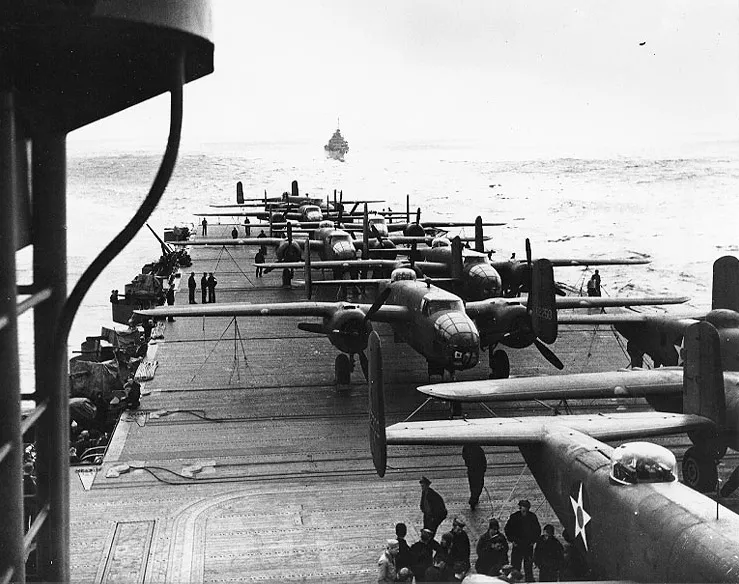
Figure 1 - North American B-25 Mitchell medium bombers on the flight deck of USS Hornet (CV-8), while en route to Japan on April 1942

Figure 2 4- A U.S. Army Air Force North American B-25B Mitchell shortly before launching from the aircraft carrier USS Hornet (CV-8) on 18 April 1942
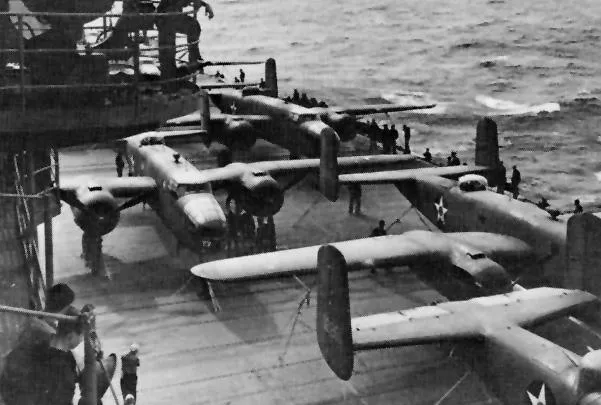
Figure 3 - B-25 Mitchell bombers onboard the USS Hornet (CV-8) aircraft carrier during the Doolittle Raid operation; April 18, 1942
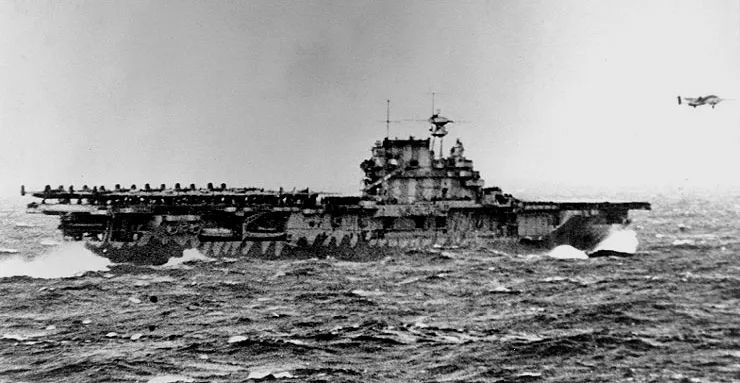
Figure 4 - The U.S. Navy aircraft carrier USS Hornet launches a B-25 during the Doolittle Raid

Figure 5 - “Take off from the deck of the USS HORNET of an Army B-25 on its way to take part in first U.S. air raid on Japan. Doolittle Raid, April 1942.”
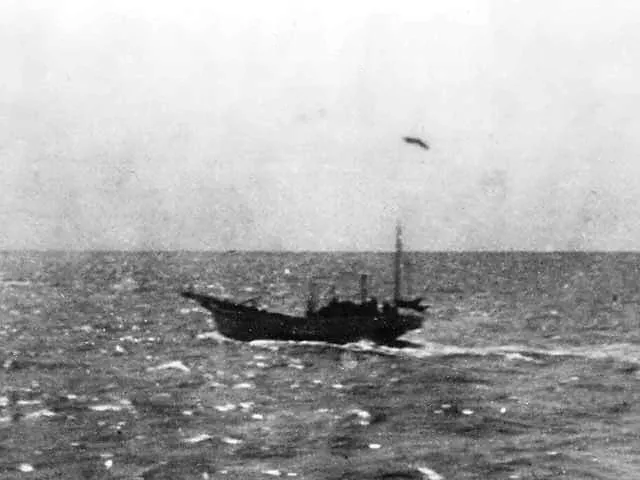
Figure 6 - Japanese fishing boat which was sunk by Major General Doolittles raiders while enroute to Tokyo for the raid on April 18, 1942
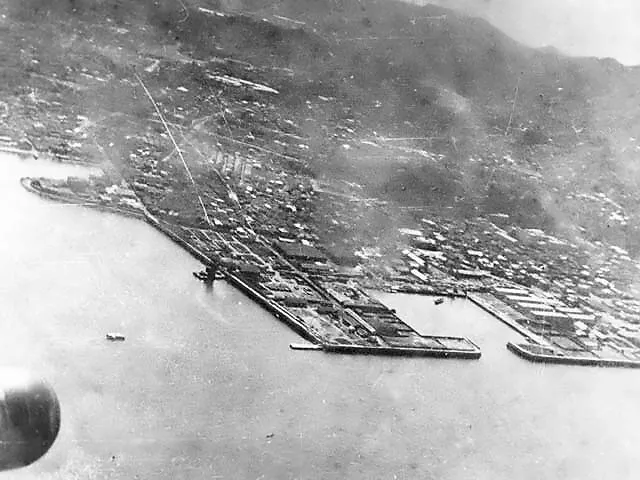
Figure 7 - Major General James Doolittle’s raid on Tokyo. Yokosuka Japan Naval base taken from B-25, April 18, 1942
The American Effort
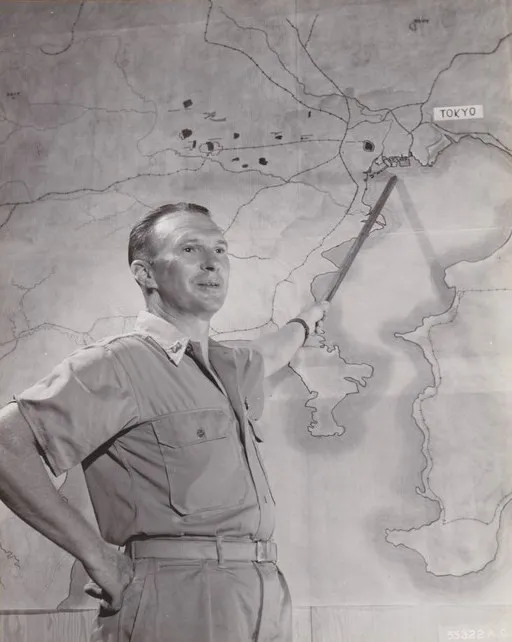
Figure 8 - Brigadier General Haywood S. Hansell posing with a map of the Tokyo region during November 1944
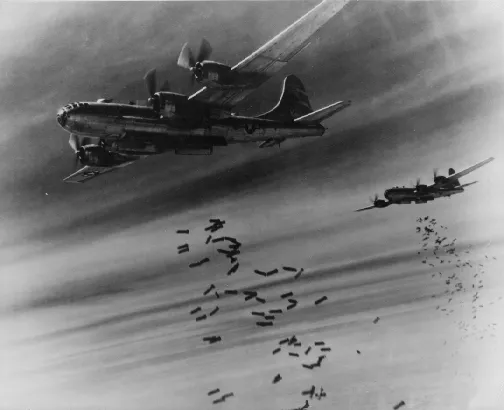
Figure 9 - 13-B-29 Bomber bombarding Tokyo
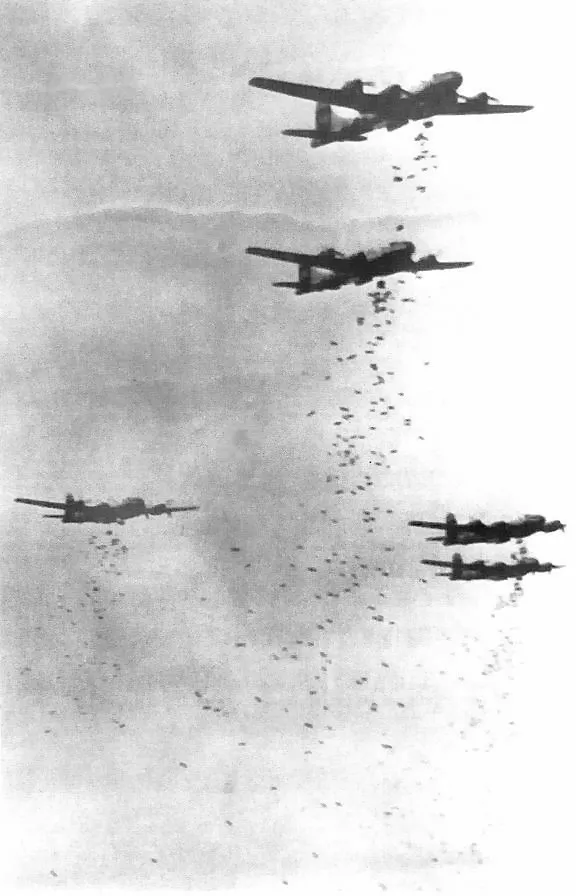
Figure 10 - B-29s dropping bombs over Japan

Figure 11 - Boeing B-29 over Osaka on June 1, 1945

Figure 12 - The “Tinian Joint Chiefs”: Captain William S. Parsons (left), Rear Admiral William R. Purnell (center), and Brigadier General Thomas F. Farrell (right)

Figure 13 - A B-29 falls in flames after a direct hit by an anti-aircraft shell over Japan
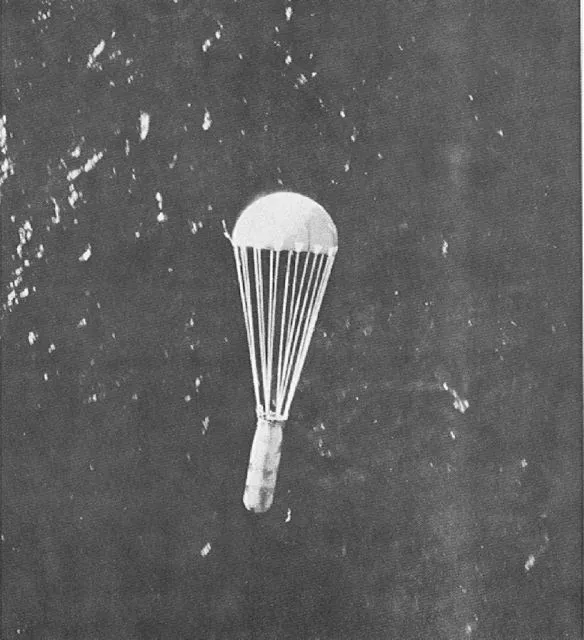
Figure 14 - A sea mine being dropped from a B-29

Figure 15 - US Navy aircraft dropping bombs on Hakodate during July 1945

Figure 16 - A P-51 Mustang taking off from Iwo Jima
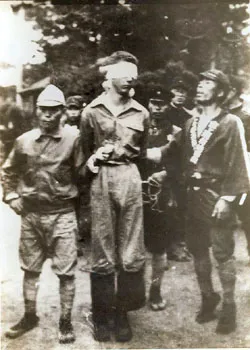
Figure 17 - A survivor of B-29 crew (Capt. Gordon Jordan's crew) that crashed in Niigata on July 19, 1945 is led from a village hall after being captured and tortured by local Japanese citizens.
The Effects In Japan
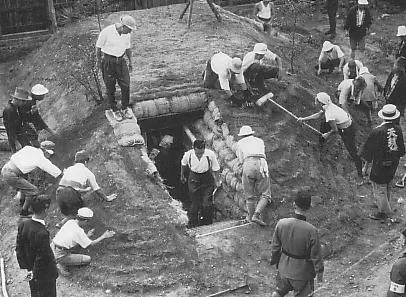
Fig...
Table of contents
- Title page
- TABLE OF CONTENTS
- FOREWORD
- UNCONDITIONAL SURRENDER, DEMOBILIZATION AND THE ATOMIC BOMB
- THE AUTHOR
- REQUEST FROM THE PUBLISHER
Trusted by 375,005 students
Access to over 1.5 million titles for a fair monthly price.
Study more efficiently using our study tools.
Frequently asked questions
Yes, you can cancel anytime from the Subscription tab in your account settings on the Perlego website. Your subscription will stay active until the end of your current billing period. Learn how to cancel your subscription
No, books cannot be downloaded as external files, such as PDFs, for use outside of Perlego. However, you can download books within the Perlego app for offline reading on mobile or tablet. Learn how to download books offline
Perlego offers two plans: Essential and Complete
- Essential is ideal for learners and professionals who enjoy exploring a wide range of subjects. Access the Essential Library with 800,000+ trusted titles and best-sellers across business, personal growth, and the humanities. Includes unlimited reading time and Standard Read Aloud voice.
- Complete: Perfect for advanced learners and researchers needing full, unrestricted access. Unlock 1.5M+ books across hundreds of subjects, including academic and specialized titles. The Complete Plan also includes advanced features like Premium Read Aloud and Research Assistant.
We are an online textbook subscription service, where you can get access to an entire online library for less than the price of a single book per month. With over 1.5 million books across 990+ topics, we’ve got you covered! Learn about our mission
Look out for the read-aloud symbol on your next book to see if you can listen to it. The read-aloud tool reads text aloud for you, highlighting the text as it is being read. You can pause it, speed it up and slow it down. Learn more about Read Aloud
Yes! You can use the Perlego app on both iOS and Android devices to read anytime, anywhere — even offline. Perfect for commutes or when you’re on the go.
Please note we cannot support devices running on iOS 13 and Android 7 or earlier. Learn more about using the app
Please note we cannot support devices running on iOS 13 and Android 7 or earlier. Learn more about using the app
Yes, you can access Unconditional Surrender, Demobilization and the Atomic Bomb [Illustrated Edition] by Dr. Michael D. Pearlman in PDF and/or ePUB format, as well as other popular books in History & European History. We have over 1.5 million books available in our catalogue for you to explore.