In this book, originally published in 1877, late lieutenant William Henry Cope recounts the trials and tribulations of the Rifle Brigade (The Prince Consort's Own) in which he served. An infantry rifle regiment of the British Army that was formed in Jan. 1800 as the "Experimental Corps of Riflemen" to provide sharpshooters, scouts and skirmishers (soon renamed the "Rifle Corps"). In 1816, at the end of the Napoleonic Wars, they were again renamed, this time as the "Rifle Brigade". The unit was distinguished by its use of green uniforms as standard in place of the traditional redcoat, as well as being armed with the first British-made rifle accepted by the British Army, in place of smoothbore muskets. Cope carries his narrative on through the Crimean War, the Indian Mutiny and postings to the far-flung corners of the British Empire to 1870.
Richly illustrated throughout with maps and plans.
"A WISH had long been entertained and often expressed by Riflemen, both by those serving in the Regiment and by those who had formerly served in it, that a detailed record of its services should be compiled...
"To some readers some of the facts and anecdotes I have here recorded may appear trifling and unworthy of mention. But it must be borne in mind that I write for Riflemen, at the desire of Riflemen, and to preserve the memory of the deeds of Riflemen. By them I am sure nothing will be considered trivial, nothing out of place in a history of the Regiment, which records the valour, the acts, the sufferings or even preserves an anecdote of any (of whatever rank) of the members of that brotherhood."-The Author
eBook - ePub
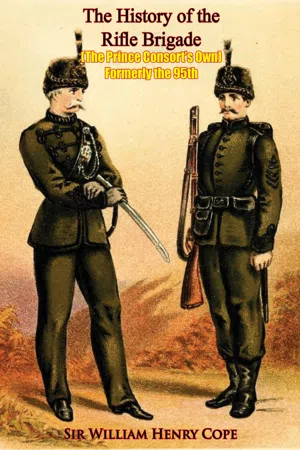
The History of the Rifle Brigade (The Prince Consort's Own) Formerly the 95th
- 460 pages
- English
- ePUB (mobile friendly)
- Available on iOS & Android
eBook - ePub
The History of the Rifle Brigade (The Prince Consort's Own) Formerly the 95th
About this book
Information
Subtopic
British HistoryIndex
HistoryTHE RIFLE BRIGADE.
CHAPTER I.
Formation of an Experimental Corps of Riflemen—Expedition to Ferrol—Re-formation of the Rifle Corps—First list of officers—Account of Lieut.-Colonel the Hon. W. Stewart—Standing orders—First Expedition to Copenhagen—Nelson's testimony—He gives a medal to the Riflemen—The Rifle Corps numbered 95—Camp at Shorncliffe under Sir John Moore—Formation of the 2nd Battalion—Account of Lieut.-Colonel Wade—Sidney Beckwith's magnanimity—Expedition to Germany—Attack on Monte Video—Attack on Buenos Ayres—Second Expedition to Denmark —Battle of Kioge—Three companies proceed to Sweden—Arrival of Riflemen in Portugal—Affair at Obidos—Battle of Roleia—Battle of Vimiera—Both Battalions in Spain—Meeting of the Riflemen at the Trianon—Retreat—General Craufurd's stern discipline-2nd Battalion embarks at Vigo—Fight at Cacabelos—Tom Plunkett shoots a French General—Battle of Coruña—Embarkation of 1st Battalion—Casualties—Arrival in England—Death of Colonel Manningham
TOWARDS the close of, the last century Colonel Coote Manningham and Lieutenant-Colonel the Honourable William Stewart addressed a representation to the Government, pointing out the importance of having a corps furnished with arms of precision, and the advantage of training such a corps in the special duties of Riflemen. It would have been interesting to preserve the text of this document; but I regret that it does not now exist. Every search has been made in the records of the War Department, by the kindness of Mr. Denham Robinson, of the War Office, but, I regret to say, without success; and it has been suggested that it may probably have been transferred to the Small Arms Department, and may have perished with the records of that office in the fire at the Tower of London in 1841.
However, in consequence of the suggestions it contained, the following Circular was issued to the commanding officers of fourteen regiments of infantry:—
CIRCULAR.
HORSE GUARDS: January 17, 1800. Addressed to Officers Commanding the 2nd Battalion Royals, the 21st, 23rd, 25th, 27th, 29th, 49th, 55th, 69th, 71st, 72nd, 79th, 85th, and 92nd Regiments.
Sir,—I have the honour to inform you that it is His Royal Highness the Commander-in-Chief’s{12} intention to form a corps of detachments from the different regiments of the line for the purpose of its being instructed in the use of the rifle, and in the system of exercise adopted by soldiers so armed. It is His Royal Highness’s pleasure that you shall select from the regiment under your command 2 sergeants, 2 corporals, and 30 private men for this duty, all of them being such men as appear most capable of receiving the above instructions, and most competent to the performance of the duty of Riflemen, These non-commissioned officers and privates are not to be considered as being drafted from their regiments, but merely as detached for the purpose above recited; they will continue to be borne on the strength of their regiments, and will be clothed by their respective colonels.
His Royal Highness desires you will recommend I captain, I lieutenant, and I ensign of the regiment under your command, who volunteer to serve in this corps of Riflemen, in order that His Royal Highness may select from the officers recommended from the regiments which furnish their quota on this occasion a sufficient number of officers for the Rifle Corps. These officers are to be considered as detached on duty from their respective regiments, and will share in all the promotion that occurs in them during their absence.
Eight drummers will be required to act as bugle-horns, and I request you will acquaint me, for the information of His Royal Highness, whether you have any in the—Regiment qualified to act as such, or of a capacity to be easily instructed.
I have, &c.
HARRY CALVERT.
A. G.
Thus we see that the Regiment was formed as a corps d’élite; and as regards the officers there was a double selection, eight of each rank of company officers being selected from the fourteen originally recommended.
The detachments so selected assembled at Horsham, in Sussex, in March 1800, and their first parade as ‘An Experimental Corps of Riflemen’ took place there on April 1 in that year; Lieutenant-Colonel the Honourable William Stewart being apparently in command.
The following is the Return of the state and strength of the Corps on this its first formation

The Corps being now formed marched to a camp of exercise at Swinley in Windsor Forest in May, and proceeded actively with their training as Riflemen. They are mentioned with great approbation by Mr. W. H. Fremantle in a letter, dated July 15, 1800, to the Marquis of Buckingham, as being ‘good, and much more useful’ than some other regiments then in that camp.{13} The camp broke up at the end of July, and at the request of Lieutenant-Colonel Stewart three companies of the corps (Captains Travers’,{14} Hamilton’s, and Gardner’s) were ordered to embark, under his command, with the expedition against the north coast of Spain, under Lieutenant-General Sir James Pulteney, Bart., and Admiral Sir John Borlase Warren, K.B.
The expedition arrived before the harbour of Ferrol on August 25, and immediately commenced its disembarkation. This was effected without opposition in a small bay near Cape Prioriño; but on the troops proceeding to occupy a ridge of hills adjoining the bay, the Rifle Corps, which covered the advance, just as they gained the summit fell in with a party of the enemy which they drove back. In this skirmish Lieutenant-Colonel Stewart was dangerously wounded through the body. On the next morning, at daybreak, the position was attacked by a considerable body of the enemy, who were repulsed with much loss, and the English troops remained in complete possession of the heights. But in this action Captains Travers and Hamilton, and Lieutenant Edmonston, attached to the Rifle Corps, and eight rank and file were wounded. Sir James Pulteney being, however, of opinion that Ferrol could not be taken, or the ground he occupied be held, re-embarked the troops.{15} It was subsequently stated in the House of Lords that at the very moment he did so the proper officer was on his way with the keys of the place, to surrender it. And Mr. Ford affirms that ‘had the expedition sailed boldly up to the Ferrol, the Gallicians were only waiting to surrender, being, as usual, absolutely without means of defence.’ He attributes the failure to the combined indecision of the leaders.{16}
Of this, the first affair in which the Regiment was engaged, it may be observed that it has the high honour of having shed its first blood before its actual embodiment, and while it consisted only of detachments experimentally assembled for instruction. It was the only corps engaged on the day of disembarkation, and (with the exception of one officer of the 52nd) the only officers wounded were attached to it. August 25, the day on which it was first engaged, was the date of the commissions of its first officers when it was formally embodied.
The expedition then proceeded to Malta; and an order was issued by the Commander-in-Chief for all officers and men of the Rifle Corps, whose regiments formed part of the expedition, to rejoin them, and for those whose regiments were not so employed to be attached to corps serving with the expedition.
Lieutenant-Colonel Stewart, Captain Travers, and Lieutenant Edmonston returned to England.
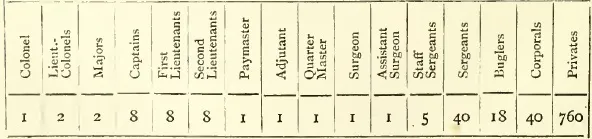
The Rifle Corps was immediately reformed, principally from detachments of Fencible regiments serving in Ireland, and I presume also, on the return of the expedition, from the men originally selected as Riflemen. These detachments began to assemble at Blatchington in Sussex, near Lewes, about the end of August, and continued to join during the autumn. The whole of the officers who had been attached to the experimental corps were appointed to it; their commissions being ante-dated, as I have observed, to August 25, the anniversary of which has been since observed as the foundation-day of the Regiment. A second lieutenant-colonel and two majors were appointed, and some others were added to complete the Corps to eight companies, with a captain and two subalterns to each. The establishment was, therefore, on December 25, returned as follows:
The officers on its formation were:
Colonel.—COOTE MANNINGHAM.
Lieutenant-Colonels.—THE HONOURABLE WILLIAM STEWART.
—ALEXANDER HOUSTON.
Majors.—GEORGE CALLANDER
—HAMLET WADE.
Captains.—
—ROBERT TRAVERS.
—THOMAS SIDNEY BECKWITH.
—CORNELIUS CUYLER.
—TIMOTHY HAMILTON.
—THOMAS CHRISTOPHER GARDNER.
—ALEXANDER STEWART.
—HENRY SHEPHERD.
Captain-Lieutenant.—ALEXANDER D. CAMERON.
First Lieutenants.—BLOIS LYNCH.
—JOHN ROSS.
—J. A. GRANT.
—EDWARD BEDWELL LAW.
—JOHN STUART.
—HENRY POWELL.
—PETER O’HARE.
—WILLIAM COTTER.
—THOMAS STIRLING EDMONSTON.
—JOHN CAMERON.
—ROBERT DUNCAN.
—DOUGLAS.
—ALEXANDER CLARKE.
—L. H. BENNET.
—NIEL CAMPBELL.
Second Lieutenants.—HENRY GOODE.
—PATRICK TURNER.
—JAMES MACDONALD.
—SAMUEL MITCHEL.
—THOMAS BRERETON.
—GEORGE ELDER.
—LOFTUS GRAY.
—JAMES PENDERGAST
—JOHN JENKINS.
—JOHN BURTON.
Paymaster.—JAMES INNES.
Adjutant—J. A. GRANT.
Quarter Master.—
DONALD MACKAY.
The Regiment, as it has existed since, and as it has won lasting renown in so many fields, as ‘a Corps of Riflemen,’ ‘the Rifle Corps,’{17} the 95th,’ and the ‘Rifle Brigade,’ was then and thus organised under Lieutenant-Colonel Stewart. For though Manningham was the colonel, and justly shares the honour of its formation, he seems seldom to have been present with it; for he was equerry to George III., and often at Court.
William Stewart was the fourth son of John, seventh Earl of Galloway, and at the early age of thirteen was appointed Ensign in the 42nd Regiment; but subsequently served in the 22nd and 67th, and with the former had seen service at the capture of the French West India Islands in 1793. We have seen that it was owing to Manningham’s and his suggestions that the Rifle Corps was formed; and after its embodiment he also addressed a long letter to the Adjutant-General on the discipline and internal economy of such a corps. His recommendations (which were adopted) were: that it should first be formed of volunteers from infantry battalions which best could spare them, and by men from the undrafted part of the Irish militia; and he added the (rather singular) opinion that Irishmen were preferable for Riflemen, as ‘perhaps from being less spoiled and more hardy than British soldiers, better calculated for light troops.’{18}
He now set himself vigorously to organise and discipline the Corps thus formed at his suggestions. The standing orders of the Regiment, which, though issued of course in ...
Table of contents
- Title page
- TABLE OF CONTENTS
- DEDICATION
- PREFACE.
- LIST OF PLATES.
- CHAPTER I.
- CHAPTER II.
- CHAPTER III.
- CHAPTER IV.
- CHAPTER V.
- CHAPTER VI.
- CHAPTER VII.
- CHAPTER VIII.
- CHAPTER IX.
- CHAPTER X.
- CHAPTER XI.
- CHAPTER XII.
- CHAPTER XIII.
- CHAPTER XIV.
- CHAPTER XV.
- APPENDIX I. - Succession of Colonels-in-Chief and Colonels-Commandant
- APPENDIX II. - On the Armament of the Regiment
- APPENDIX III. - Actions And Casualties Of The Regiment.
- APPENDIX IV. - Names Of Officers And Other Riflemen Who Have Obtained Special Marks Of Distinction For Services In The Field.
- REQUEST FROM THE PUBLISHER
Trusted by 375,005 students
Access to over 1.5 million titles for a fair monthly price.
Study more efficiently using our study tools.
Frequently asked questions
Yes, you can cancel anytime from the Subscription tab in your account settings on the Perlego website. Your subscription will stay active until the end of your current billing period. Learn how to cancel your subscription
No, books cannot be downloaded as external files, such as PDFs, for use outside of Perlego. However, you can download books within the Perlego app for offline reading on mobile or tablet. Learn how to download books offline
We are an online textbook subscription service, where you can get access to an entire online library for less than the price of a single book per month. With over 1.5 million books across 990+ topics, we’ve got you covered! Learn about our mission
Look out for the read-aloud symbol on your next book to see if you can listen to it. The read-aloud tool reads text aloud for you, highlighting the text as it is being read. You can pause it, speed it up and slow it down. Learn more about Read Aloud
Yes! You can use the Perlego app on both iOS and Android devices to read anytime, anywhere — even offline. Perfect for commutes or when you’re on the go.
Please note we cannot support devices running on iOS 13 and Android 7 or earlier. Learn more about using the app
Please note we cannot support devices running on iOS 13 and Android 7 or earlier. Learn more about using the app
Yes, you can access The History of the Rifle Brigade (The Prince Consort's Own) Formerly the 95th by Sir William Henry Cope in PDF and/or ePUB format, as well as other popular books in History & British History. We have over 1.5 million books available in our catalogue for you to explore.