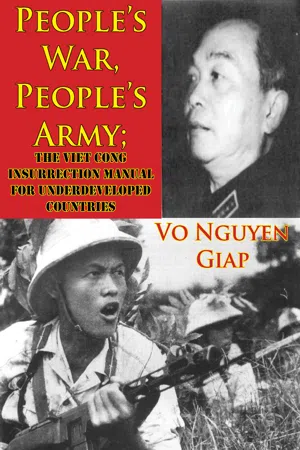
eBook - ePub
People's War, People's Army; The Viet Cong Insurrection Manual For Underdeveloped Countries
- 149 pages
- English
- ePUB (mobile friendly)
- Available on iOS & Android
eBook - ePub
People's War, People's Army; The Viet Cong Insurrection Manual For Underdeveloped Countries
About this book
"Vo Nguyen Giap, Southeast Asia's most successful Communist general, Minister of Defense and Commander in Chief of North Vietnam's army, shares with Premier Khrushchev a conviction that the future holds many "just wars of national liberation." This volume stresses the climate of Asia, Africa, and Latin American, torn today by anti-colonial, economic, and political upheavals. It is General Giap's purpose in this book, originally published in 1962, to guide these struggles to the desired "socialist" victory. The speeches and essays that comprise this key document provide not only the tactical doctrine for effective insurgency operations, but also the political guidelines for enlisting the people in the insurgents' side."-Print ed.
Information
Subtopic
Military & Maritime HistoryIndex
HistoryPEOPLE’S WAR PEOPLE’S ARMY
By General VO NGUYEN GIAP
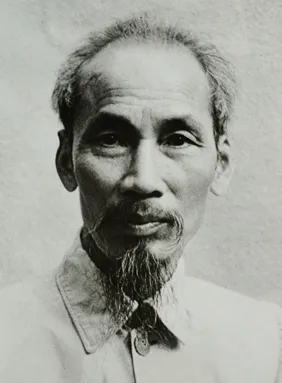
HO CHI MINH
President of the Democratic Republic of Viet Nam.
PUBLISHER’S NOTE
We are very pleased to publish the English translation of a series of articles by General Vo Nguyen Giap, member of the Political Bureau of the Central Committee of the Viet Nam Workers’ Party, Vice-Premier and Minister for National Defence of the Democratic Republic of Viet Nam, Commander-in-Chief of the Viet Nam People’s Army.
In these articles, the author introduces the liberation war waged by the Vietnamese people, the features of that war, and deals with the reasons for victory : mobilisation of the entire people, setting up of a people’s army, merging of all patriotic organisations and people into a united national front, clear-sighted leadership of the Party of the working class. It lays particular stress on the problem of organisation and direction of the revolutionary armed forces of Viet Nam. In a word, it is the combination of experiences gained by the Vietnamese people in the course of a long struggle against colonialism, for national independence, struggle which ended in 1954 with the brilliant Dien Bien Phu victory and the signing of the Geneva Agreements.
Publication of this book is most timely.
It is true that since the end of World War II, the maps of Asia, Africa and Latin America have been subject to radical changes, other countries will soon be independent and colonialism is unquestionably doomed to collapse. It is no less true that great obstacles still stand in the way of the peoples struggling for their liberation. The Algerian war has just entered its seventh year. The so-called “U.N. action” in the Congo has turned out to be an imperialist plot against Lumumba’s motherland. Cuba is subject to daily provocations by the U.S.A. Half of Viet Nam’s territory is still under the heel of a new type colonialism “made in U.S.A.”
We hope that all our friends who, like us, are still suffering from imperialist designs and threats will find in the “People’s War, People’s Army” what we ourselves have found: further reasons for confidence and hope.
FOREIGN LANGUAGES PUBLISHING HOUSE
THE VIETNAMESE PEOPLE’S WAR OF LIBERATION AGAINST THE FRENCH IMPERIALISTS AND THE AMERICAN INTERVENTIONISTS (1945-1954)
I — A FEW HISTORICAL AND GEOGRAPHICAL CONSIDERATIONS
Viet Nam is one of the oldest countries in South-east Asia.
Stretching like an immense S along the edge of the Pacific, it includes Bac Bo or North Viet Nam which, with the Red River delta, is a region rich in agricultural and industrial possibilities, Nam Bo or South Viet Nam, a vast alluvial plain furrowed by the arms of the Mekong and especially favourable to agriculture, and Trung Bo or Central Viet Nam, a long, narrow belt of land joining them. To describe the shape of their country, the Vietnamese like to recall an image familiar to them: that of a shoulder pole carrying a basket of paddy at each end.
Viet Nam extends over nearly 330,000 square kilometres on which lives a population of approximately 30 million inhabitants. During its many thousands of years old history, the Vietnamese people have always been able to maintain an heroic tradition of struggle against foreign aggression. During the 13th century in particular, they succeeded in thwarting attempts at invasion by the Mongols who had extended their domination over the whole of feudal China.
From the middle of the 19th century, the French imperialists began undertaking the conquest of the country.
Despite resistance lasting dozens of years, Viet Nam was progressively reduced to the state of a colony, thereafter to be integrated in `French Indo-China’ with Cambodia and Laos. But from the first day of French aggression, the national liberation movement of the Vietnamese people unceasingly developed. The repression which attempted to stifle this movement only stirred it up the more; so much so, that after the First World War, it began to take on a powerful mass character and had already won over wide circles of the intellectual and petty bourgeois levels, while penetrating deeply into the peasant masses as well as into the working class which was then beginning to form. The year 1930 saw another step forward with the founding of the Indochinese Communist Party, now the Viet Nam Workers’ Party which took upon itself the mission of leading the national democratic revolution of the Vietnamese people against the imperialists and the feudal landlord class.
Just after the launching of the Second World War in 1939, France was occupied by the Nazis, while Viet Nam was progressively becoming a colony of the Japanese fascists. The Party was able in good time to appreciate the situation created by this new development. Estimating that a new cycle of war and revolution had begun, it set as a task for the whole nation the widening of the anti-imperialist national united front, the preparation of armed insurrection and the overthrow of the French and Japanese imperialists in order to reconquer national independence. The Viet Nam Doc Lap Dong Minh (League for the Independence of Viet Nam, abbreviated to Viet Minh) was founded and drew in all patriotic classes and social strata. Guerilla warfare was launched in the High Region of Bac Bo. A free zone was formed.
In August 1945, the capitulation of the Japanese forces before the Soviet Army and the Allied forces, put an end to the world war. The defeat of the German and Nippon fascists was the beginning of a great weakening of the capitalist system. After the great victory of the Soviet Union, many people’s democracies saw the light of day. The socialist system was no longer confined within the frontiers of a single country. A new historic era was beginning in the world.
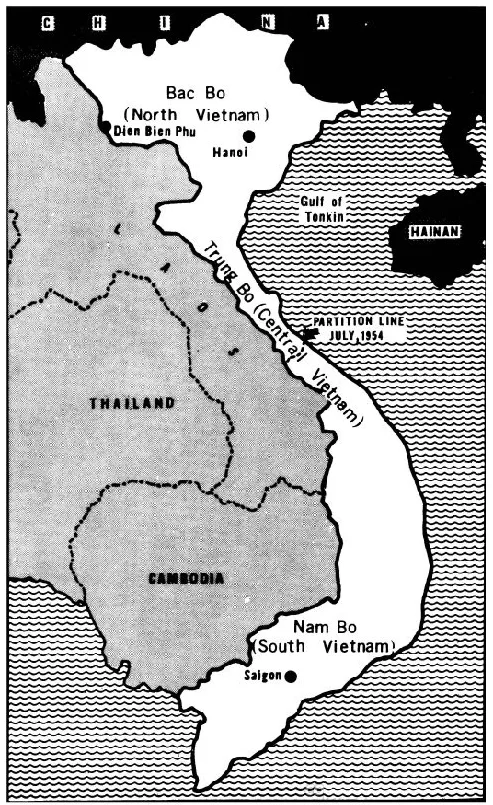
In view of these changes, in Viet Nam, the Indochinese Communist Party and the Viet Minh called the whole Vietnamese nation to general insurrection. Everywhere, the people rose in a body. Demonstrations and displays of force followed each other uninterruptedly. In August, the Revolution broke out, neutralising the bewildered Nippon troops, overthrowing the pro-Japanese feudal authorities, and installing people’s power in Hanoi and throughout the country, in the towns as well as in the countryside, in Bac Bo as well as in Nam Bo. In Hanoi, the capital, in September 2nd, the provisional government was formed around President Ho Chi Minh; it presented itself to the nation, proclaimed the independence of Viet Nam, and called on the nation to unite, to hold itself in readiness to defend the country and to oppose all attempts at imperialist aggression. The Democratic Republic of Viet Nam was born, the first people’s democracy in South-east Asia.
But the imperialists intended to nip the republican regime in the bud and once again transform Viet Nam into a colony. Three weeks had hardly gone by when, on September 23rd, 1945, the French Expeditionary Corps opened fire in Saigon. The whole Vietnamese nation then rose to resist foreign aggression. From that day, began a war of national liberation which was to be carried on for nine years at the cost of unprecedented heroism and amidst unimaginable difficulties, to end by the shining victory of our people and the crushing defeat of the aggressive imperialists at Dien Bien Phu.
But at a time when, in the amazing enthusiasm aroused by the August Revolution, the Vietnamese people were closing their ranks around the provisional government, a new factor intervened which was to make the political situation more difficult and more complex. According to the terms of an agreement between the Allies, in order to receive the Japanese surrender, the Chinese Kuomintang forces entered in a body in the part of Viet Nam situated north of the 16th parallel, while the British forces landed in the South. The Chiang Kai-shek troop took advantage of the opportunity to pillage the population and sack the country, while using every means to help the most reactionary elements among the Vietnamese bourgeois and landlords—the members of the Viet Nam Quoc Dan Dang (the Vietnamese Kuomintang) and the pro-Japanese Phuc Quoc (Vietnamese National Restoration Party)—to stir up trouble throughout the country. After occupying the five frontier provinces, they provoked incidents even in the capital, and feverishly prepared to overthrow people’s power. In the South, the British actively exerted themselves to hasten the return of the French imperialists. Never before had there been so many foreign troops on the soil of Viet Nam. But never before either, had the Vietnamese people been so determined to rise up in combat to defend their country.
These are the broad outlines of the historical and geographical conditions indispensable to an understanding of the unfolding of the war of national liberation of the Vietnamese people.
II — SUMMARY OF THE PROGRESS OF THE WAR OF NATIONAL LIBERATION
At the outset of the war, the French imperialists’ scheme was to rely upon the British troops to reconquer Nam Bo and afterwards to use it as a springboard for preparing their return to the North. They had shamefully capitulated before the Japanese fascists, but after the ending of the world war, they considered the resumption of their place at the head of their former colony as an indisputable right. They refused to admit that in the meantime the situation had radically changed.
In September 1945, French colonial troops armed by the British and soon strengthened by the French Expeditionary Corps under the command of General Leclerc, launched aggression in Saigon, with the direct support of the British army. The population of Nam Bo immediately rose up to fight. In view of the extreme weakness of its forces at the beginning, people’s power had to withdraw to the countryside after waging heroic street fights in Saigon and in the large towns. Almost the whole of the towns and important lines of communication in Nam Bo and the South of Trung Bo gradually fell into the hands of the adversary.
The colonialists thought they were on the point of achieving the reconquest of Nam Bo, and General Leclerc declared that occupation and pacification would be completed in ten weeks. But events took quite a different turn. Confident of the support of the whole country, the southern population continued the fight. In all the campaigns in Nam Bo the guerilla forces were going from strength to strength, their bases were being consolidated and extended, and people’s power was maintained and strengthened during the nine years of the Resistance, until the reestablishment of peace.
Knowing that the invasion of Nam Bo was only the prelude to a plan of aggression by the French imperialists, our Party guided the whole nation toward preparing a long-term resistance. In order to assemble all the forces against French imperialism, the Party advocated uniting all the elements that could be united, neutralising all those that could be neutralised, and widening the National United Front by the formation of the Lien Viet (Viet Nam People’s Front) urgently organising general elections with universal suffrage in order to form the first National Assembly of the Democratic Republic of Viet Nam responsible for passing the Constitution and forming a widely representative resistance government grouping the most diverse elements including even those of the Viet Nam Quoc Dan Dang (the Vietnamese Kuomintang). At that time, we avoided all incidents with the Chiang Kai-shek troops.
The problem then before the French Expeditionary Corps was to know whether it would be easy for them to return to North Viet Nam by force. It was certainly not so, because our forces were more powerful there than in the South. For its part, our Government intended doing everything in its power to preserve peace so as to enable the newly created people’s power to consolidate itself and to rebuild the country devastated by long years of war. It was thus that negotiations which ended in the Preliminary Agreement of March 6th, 1946, took place between the French colonialists and our Government. According to the terms of this convention, limited contingents of French troops were allowed to station in a certain number of localities in North Viet Nam in order to co-operate with the Vietnamese troops in taking over from the repatriated Chiang Kai-shek forces. In exchange, the French Government recognised Viet Nam as a free state, having its own government, its own national assembly, its own army and finances, and promised to withdraw its troops from Viet Nam within the space of five years. The political status of Nam Bo was to be decided by a referendum.
Relations between the Democratic Republic of Viet Nam and France were then at a crossroads. Would there be a move towards consolidation of peace or a resumption of hostilities? The colonialists considered the Preliminary Agreement as a provisional expedient enabling them to introduce part of their troops into the North of Viet Nam, a delaying stratagem for preparing the war they intended to continue. Therefore, the talks at the Dalat Conference led to no result and those at the Fontainebleau Conference resulted only in the signing of an unstable modus vivendi. During the whole of this time, the colonialists partisans of war were steadily pursuing their tactics of local encroachments. Instead of observing the armistice, they continued their mopping-up operations in Nam Bo, and set up a local puppet government there; in Bac Bo they increased provocations and attacked a certain number of provinces, pillaging and massacring the population of the Hongai mining area, and everywhere creating an atmosphere of tension preparatory to attacks by force.
Loyal to its policy of peace and independence, our Government vainly endeavoured to settle conflicts in a friendly manner, many times appealing to the French Government then presided over by the S.F.I.O. (Socialist Party) to change their policy in order to avoid a war detrimental to both sides. At the same time we busied ourselves with strengthening our rear with a view to resistance. We obtained good results in intensifying production. We paid much attention to strengthening national defence. The liquidating of the reactionaries of the Viet Nam Quoc Dan Dang was crowned with success and we were able to liberate all the areas which had fallen into their hands.
In November 1946, the situation worsened. The colonialists by a coup de force in Haiphong seized the town. After engaging in street fights, our troops withdrew to the suburbs. In December, the colonialists provoked tension in Hanoi, massacred civilians, seized a number of public offices, sent an ultimatum demanding the disarming of our self-defence groups and the right to ensure order in the town, and finally provoked armed conflict. Obstinately the colonialists chose war, which led to their ruin.
On December 19th, resistance broke out throughout the country. The next day, in the name of the Party and of the Government, President Ho Chi Minh called on the whole people to rise up to exterminate the enemy and save the country, to fight to the last drop of blood, and whatever the cost, to refuse re-enslavement.
At the time when hostilities became generalised throughout the country, what was the balance of forces? From the point of view of material, the enemy was stronger than us. Our troops were thus ordered to fight the enemy wherever they were garrisoned so as to weaken them and prevent them spreading out too rapidly, and thereafter, when conditions became unfavourable to us, to make the bulk of our forces fall back towards our rear in order to keep our forces intact with a view to a long-term resistance. The most glorious and most remarkable combats took place in Hanoi, where our troops succeeded in firmly holding a huge sector for two months before withdrawing from the capital unhurt.
The whole Vietnamese people remained indissolubly united in a fight to the death in those days when the country was in danger. Replying to the appeal by the Party, they resolutely chose the path of Freedom and Independence. The central government, having withdrawn to bases in the mountainous region of Viet Bac, military zones —soon united in interzones —were formed, and the power of local authorities was strengthened for mobilising the whole people and organising the resistance. Our government continued appealing to the French government not to persist in their error and to reopen peaceful negotiations. But the latter under the pretext ‘of negotiation demanded the disarming of our troops. We replied to the colonialists’ obstinacy by intensifying the resistance.
In fact, the French High Command began regrouping forces to prepare a fairly big lightning offensive in the hope of ending the war. In October 1947, they launched a big campaign against our principal base, Viet Bac, in order to annihilate the nerve centre of the resistance and destroy our regular forces. But this large-scale operation ended in a crushing defeat. The forces of the Expeditionary Corps suffered heavy losses without succeeding in causing anxiety to our leading organisations or impairing our regular units. It was a blow to the enemy’s strategy of a lightning war and a rapid solution. Our people were all the more determined to persevere along the path of a long-term resistance.
From 1948, realising that the war was prolonging itself, the enemy changed their strategy. They used the main part of their forces for “pacification” and for consolidating the already occupied areas, in Nam Bo especially, applying the principle: fight Vietnamese with Vietnamese, feed war with war. They set up a puppet central government, actively organised supplementary local units, and indulged in economic pillage. They g...
Table of contents
- Title page
- TABLE OF CONTENTS
- FOREWORD By ROGER HILSMAN
- VO NGUYEN GIAP-MAN AND MYTH By BERNARD B. FALL
- PEOPLE’S WAR PEOPLE’S ARMY
- APPENDIX
Trusted by 375,005 students
Access to over 1.5 million titles for a fair monthly price.
Study more efficiently using our study tools.
Frequently asked questions
Yes, you can cancel anytime from the Subscription tab in your account settings on the Perlego website. Your subscription will stay active until the end of your current billing period. Learn how to cancel your subscription
No, books cannot be downloaded as external files, such as PDFs, for use outside of Perlego. However, you can download books within the Perlego app for offline reading on mobile or tablet. Learn how to download books offline
Perlego offers two plans: Essential and Complete
- Essential is ideal for learners and professionals who enjoy exploring a wide range of subjects. Access the Essential Library with 800,000+ trusted titles and best-sellers across business, personal growth, and the humanities. Includes unlimited reading time and Standard Read Aloud voice.
- Complete: Perfect for advanced learners and researchers needing full, unrestricted access. Unlock 1.5M+ books across hundreds of subjects, including academic and specialized titles. The Complete Plan also includes advanced features like Premium Read Aloud and Research Assistant.
We are an online textbook subscription service, where you can get access to an entire online library for less than the price of a single book per month. With over 1.5 million books across 990+ topics, we’ve got you covered! Learn about our mission
Look out for the read-aloud symbol on your next book to see if you can listen to it. The read-aloud tool reads text aloud for you, highlighting the text as it is being read. You can pause it, speed it up and slow it down. Learn more about Read Aloud
Yes! You can use the Perlego app on both iOS and Android devices to read anytime, anywhere — even offline. Perfect for commutes or when you’re on the go.
Please note we cannot support devices running on iOS 13 and Android 7 or earlier. Learn more about using the app
Please note we cannot support devices running on iOS 13 and Android 7 or earlier. Learn more about using the app
Yes, you can access People's War, People's Army; The Viet Cong Insurrection Manual For Underdeveloped Countries by Vo Nguyen Giap in PDF and/or ePUB format, as well as other popular books in History & Military & Maritime History. We have over 1.5 million books available in our catalogue for you to explore.