Includes 32 Illustrations and 6 maps.
BLÜCHER is chiefly known to English readers as the man who came to Wellington's aid at Waterloo. The object of the present volume is to show that he had a separate existence of his own and performed other great deeds in the cause that are equally deserving of praise. Strange that he has never been made the subject of an English biography and that of his German lives none have been translated into English! The present work cannot pretend altogether to fill the gap, as the plan of the series, if I have understood it rightly, is to treat the movement as fully as the man.
I shall feel a certain satisfaction if I can succeed in establishing Blücher in his rightful position, as the peer of Wellington in all that concerns the overthrow of Napoleon. "You forget Wellington's Spanish campaigns," I shall be told. "You in turn forget," I shall answer, "that Blücher was the one progressive, inspiring element among the leaders of the allied armies from the year 1813 on." Without Blücher's decision to cross the Elbe at Wartenburg there would have been no battle of Leipzig; without his cutting loose from Schwarzenberg in March, 1814, there would have been no closing in of the allies on Paris; without his brave endurance at Ligny in spite of the non-arrival of the promised reinforcements, Wellington would have been overwhelmed at Quatre-Bras and there would have been no Waterloo.
- 217 pages
- English
- ePUB (mobile friendly)
- Available on iOS & Android
eBook - ePub
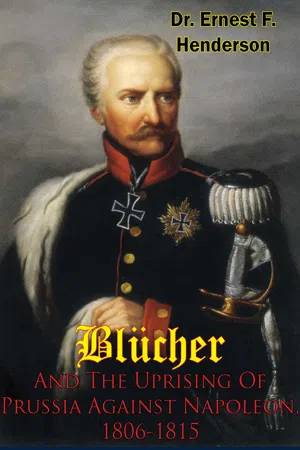
Blücher And The Uprising Of Prussia Against Napoleon, 1806-1815
About this book
Information
Subtopic
British HistoryIndex
HistoryBLÜCHER
CHAPTER I — PRUSSIA’S DOWNFALL
Birth and Early Training of Blücher—His Service under Frederick the Great—His Expulsion from the Army—His Reinstatement—He is Made Governor of Münster—His Indignation against the French in 1805—The Declaration of War against Napoleon—The Battles of Jena and Auerstädt—Blücher’s Brave Retreat to Lübeck—The Surrender of the Fortresses—Napoleon in Berlin—The Bitter Hatred of Napoleon—Prussia’s Lost Provinces.
THE history of Blücher is inseparably bound up with one cause: the liberation of Germany by the overthrow of Napoleon’s colossal power. The limits of our narrative, accordingly, are the years 1806 and 1815, in the first of which Napoleon won the battle of Jena over the Prussians; while in the last-named year Blücher brought about the decision at Waterloo.
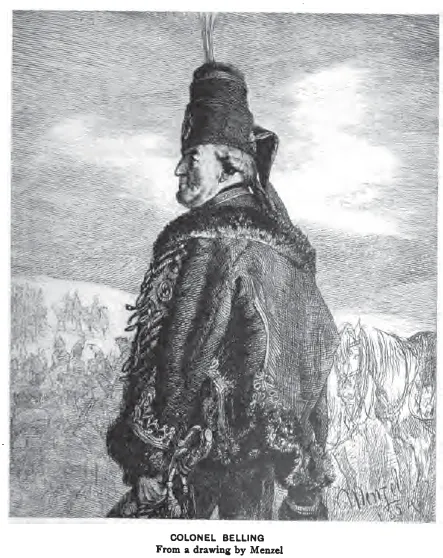
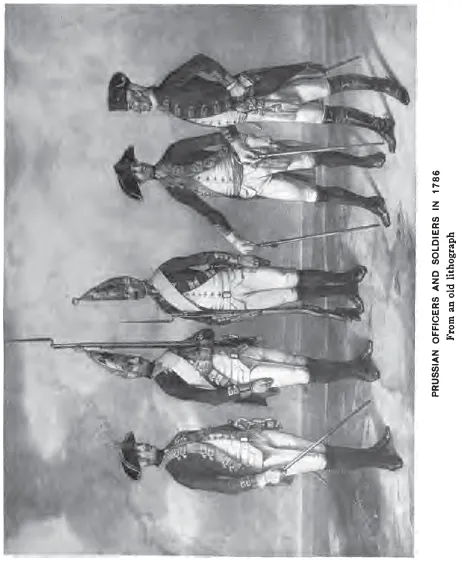
Descended from noble ancestors, more than one of whom had followed arms as his profession, Blücher was born in December, 1742. It was the year which saw the end of Frederick the Great’s first war with Maria Theresa. Blücher’s father was of the branch of the family that had taken up its abode in Mecklenburg. He was scantily endowed with wealth but had sufficient influence to obtain for his six sons positions in almost as many different armies. Gebhard Leberecht von Blücher, the subject of our present study, began his military career in the Swedish service at the age of sixteen, Sweden being at the moment one of Frederick the Great’s many enemies in the Seven Years’ War. Blücher’s connection with the Swedish army, however, terminated very suddenly; for he was captured in a skirmish, brought before the Prussian Colonel Belling, made a very favourable impression on that fiery officer, and, apparently without the least struggle of conscience, allowed himself to be given a post in Belling’s own regiment. Blücher always, in later life, spoke of the episode with amusement and declared that the thought of it refreshed him whenever he was sad. Belling proved a good friend to Blücher and exerted a strong influence over him. He helped the boy to procure the equipment necessary to a young hussar officer of that day—the fur-lined cloak, the gleaming sabre, the lace and fringes. He seems to have taught him, further, his own strange mixture of piety and ferocity; for Belling would pray for his delinquent officers, would fall on his knees before every engagement, and would ride to battle with a hymn on his lips. But war he must have, and he was quoted as uttering the following prayer: “Thou seest, dear Heavenly Father, the sad plight of thy servant Belling. Grant him soon a nice little war that he may better his condition and continue to praise Thy name, Amen.”
The final campaigns of the Seven Years’ War were so defensive in their nature that Blücher had no opportunity greatly to distinguish himself, although he rapidly rose to the rank of first lieutenant. In the years that followed on the Peace of Hubertsburg he was stationed in various small garrison towns where we hear of him chiefly in connection with various matters that too often, even to-day, occupy the idle moments of gay young officers: drinking-bouts, duels, love affairs, and gambling. This would be scarcely worth mentioning but for the fact that even here he showed some of the characteristics that were to stand him in such good stead in later life. We ‘involuntarily think of the campaign in France or of the battle of Ligny when we read that losing a game never ruffled his calmness: “He did not know the worth of money, “ writes a contemporary, “losing it at play did not in the least affect his merry humour.”
Blücher—he was then captain—saw active service again at the time when Frederick the Great was scheming to partition Poland, Prussian troops under one pretext or another being massed on the border of the doomed territory and even advanced into the interior. It was not open, honest warfare. The embittered inhabitants killed Prussians whenever they could do so undetected; and Blücher, for his part, here as throughout his whole military career, insisted on an eye for an eye and a tooth for a tooth. He went further in one case than his superiors approved and with consequences to himself that were to be very serious. It was a matter, practically, of torturing, in the hope of extorting a confession, a priest who was suspected of crime. But Frederick the Great’s policy at that special moment was to conciliate the Poles and make them consider him their benefactor.
Having been reported for misconduct Blücher was passed over at the next promotion and a first lieutenant, von Jägersfeld, given the place that he coveted; which so angered Blücher that he sent in his resignation to the King. The latter expressed his bad opinion of the whole regiment, and Blücher was cashiered and told that he might “go to the devil!”
A request for an investigation into the whole affair having been refused, Blücher, although passionately devoted to the military career saw himself debarred, apparently forever, from pursuing it, and was obliged at the age of almost thirty to seek another occupation. But a man with will and determination can succeed in very opposite pursuits. Blücher became a farmer. He married the daughter of Herr von Mehling, a landed proprietor of East Prussia, and received such valuable advice and aid from his father-in-law that, beginning in a small way with rented farms he was soon able to purchase his own estate in Pomerania.
Frederick the Great’s anger against Blücher did not continue long, for we find him subsidising from a public fund, to the extent of ten thousand thalers, the improvement of the Gross Radow estate. But the King honestly considered that Blücher did not possess the qualities of which good officers are made. Again and again Blücher applied for reinstatement in the army; he wrote to Frederick that it was not a matter of pecuniary advantage “but a most fiery longing to consecrate the best years of his life to His Majesty’s service.” The old King was obdurate and remained obdurate to the time of his death, in 1786. It was many months later before Frederick William II. was moved by Blücher’s pleadings to atone for what the latter considered a great injustice.
For sixteen years Blücher had now lived the life of a country gentleman; he was forty-five years old, and had been playing no inconsiderable part in the social and public life around him. One sees how strong was the vocation that made him eager to change this life of ease for one of strenuous effort.
The atonement made by Frederick William II. was very complete. Blücher was reinstated in his own former regiment and was given the same rank that he would naturally have held had he continued all the while in active service. It must have given him particular satisfaction now to find himself once more higher in rank than that same von Jägersfeld whose promotion had caused the original trouble.
Save for the bloodless campaign of 1787 in Holland Blücher saw no active service until the coalition wars against the French Revolution. In the meantime his duties were often of a most sordid and trivial kind. It was later counted among the great abuses in the Prussian army that the head of a regiment or of a squadron was obliged to eke out his salary by mixing in matters of a purely commercial nature: to provide shirts, collars, hair-ribbons, and shoes for his men and reap what profit he could from the transaction; to draw emolument, too, from the cleaning of weapons and repairing of uniforms, from the fodder and physic of the horses, from the hiring of recruits and the granting of leave of absence to the soldiers. Another age was to invent the word “graft” for such dealings; as yet they were perfectly and openly permissible.
In 1793, Blücher was ordered to join with his squadron of which he was now colonel, the forces of Duke Ferdinand of Brunswick. He took part in a number of sieges and skirmishes which, though not of great importance in themselves afforded excellent training to the future opponent of Napoleon. In May, 1794, he achieved what he himself called the “goal of his desires,” being advanced to the rank of major-general. He was already gaining a reputation for boldness and was likened to the famous General Ziethen of Frederick the Great’s army. He was praised for the swiftness of his decisions, the energy of his actions, his indefatigability. We are told by a contemporary that “from drilling his squadron, which was quartered at a distance, he would proceed to a hare hunt or a gay dinner and that same night, perhaps, to a surprise attack on the enemy, or to the laying of an ambush for the next morning. Having temporarily silenced the enemy he would enjoy himself at Frankfort gambling or going’ to the theatre.” The games Blücher played were, some of them, forbidden by law; and we have it on good authority that he “indulged in them to a truly immoderate degree.” What Blücher really craved was excitement; and, when, later, he was afforded a sufficiency of that in the Napoleonic wars we find him able altogether to renounce his gambling for many months at a time.
Fate meanwhile had in store for him occupations other than military. The Peace of Basel, concluded in 1795, banned Prussia behind a line of demarcation and the result for her was ten years of ignominious neutrality and inactivity, during which Napoleon was allowed to act as though all the rest of Germany belonged to him. Three times during this period he vented his wrath on Austria, chastising her each time more severely and forcing her, at Campo Formio, at Lunéville, and at Pressburg, to cede more and more territory. With the consent both of Prussia and of Austria he annexed to France the possessions of German princes on the left bank of the Rhine, promising indemnity, indeed, but at Germany’s expense! This well-known transaction forms one of the most sordid pages in history. Prussia—it was in 1802—graciously accepted a slice of the German bishopric of Minster which was five times as great in extent as her own lost portion of Cleves. The inhabitants were bitterly opposed to the change.
Blücher, since 1795, had been in command of a part of the so-called army of observation designed to protect Prussia’s neutrality. To him, now, was entrusted the task of occupying the new province. On August 3, 1802, he marched in with his troops and took possession of the city of Münster. At the same time Baron Stein was made president of the organisation commission; and the two men, who in the larger affairs of Prussia were destined to bear the same relation of political reformer and military executive, lived together under one roof.
Blücher’s position as head of the armed force in a land where the Prussians were regarded as usurpers —as a matter of fact the diet of Ratisbon had thrown a shimmer of legality over the transaction—was a difficult one; but he acquitted himself of his task with great skill and success, exerting authority here and pacifying there, until after six months the so-called estates joined with the ecclesiastical authorities in asking the Prussian King to make Blücher their governor on the ground of his knowledge of local affairs, his honesty and uprightness, his amiability and charitableness, his cleverness and penetration, and his ability to keep the peace between soldiers and civilians. As Blücher never again occupied such a position—the request of course was granted —it is interesting to have this testimony as to his good qualities, and it may serve to correct the impression that he was nothing but a dashing soldier.
He was now head of the armed forces not only of Westphalia and East Friesland but also of Prussian Cleves. It was a good vantage ground from which to observe the designs of the French, which filled him with the greatest alarm. When the French General Mortier, in 1803, occupied Hanover, Blücher was so outraged that he hastened to Berlin only to find to his great astonishment that Mortier’s move was looked upon with indifference. Blücher himself declared later: “All the misfortunes of Germany and of the Prussian monarchy are traceable to this event at the moment so insignificant.”
Eager to embroil Prussia with England, Napoleon offered to cede to her Hanover; and the Prussian court weakly accepted the proposal and allied itself with France even after the troops of the latter power had deliberately violated Prussian territory. While the matter was pending, war was so imminent that the order to mobilise the Westphalian troops had actually been issued, and Blücher had declared that the moment of meeting the French as enemies would be the happiest of his life.
Prussia had sold her soul for Hanover and, as a direct result, became involved in a war with England which caused great harm to her own commerce. One can imagine the general rage and indignation, now, when it was learned that, after all, Napoleon contemplated restoring Hanover to England. Beside himself with indignation, Blücher in July, 1806, took it upon himself to write to Frederick William:
France means honestly by no power, least of all by your royal Majesty, who forms the sole remaining obstacle to her policy of conquest and subjugation in Germany.... All faithful subjects of your royal Majesty, all true Prussians, and especially the army, have felt and still feel the indignity of these French proceedings; and all wish soon, right soon, to avenge with blood the nation’s injured honour. Whoever represents France’s conduct to your royal Majesty in any other light, whoever advises your royal Majesty to continue making concessions, and remaining at peace with this nation is either very indolent, very short sighted, or else has been bought with French gold.
Here we find Blücher urging and counselling the very war that was to be the beginning of all Prussia’s troubles. Was he entirely in the wrong? Not at all. His advice was for war instantly and not for war a month or two later.
Each day gained in declaring war against France [he wrote], is of the greatest advantage to your royal Majesty; for from hour to hour the French emperor strengthens his prestige, his influence, his usurped power, improves the organisation of his army, procures more tributary kings and princes, by means of oppression extorts new resources. One successful battle and allies, money and supplies, are ours from every corner of Europe.
Boyen wrote in his memoirs: “If Cato once had his unvarying formula for the destruction of Carthage just so the expression ‘We must fight France’ had become a praiseworthy habit with old Blücher.”
In August the King mobilised his troops, but in a half-hearted way. He never could boldly face a situation. He wrote now to Blücher, who would have to...
Table of contents
- Title page
- TABLE OF CONTENTS
- DEDICATION
- PREFACE
- ILLUSTRATIONS
- MAPS
- CHAPTER I - PRUSSIA’S DOWNFALL
- CHAPTER II - PRUSSIA’S REGENERATION
- CHAPTER III - AUSTRIA’S STRUGGLE FOR LIBERTY
- CHAPTER IV - BEFORE AND AFTER THE RUSSIAN CAMPAIGN
- CHAPTER V - THE SPRING CAMPAIGN OF 1813
- CHAPTER VI - ON THE KATZBACH AND AT WARTENBURG
- CHAPTER VII - THE BATTLE OF LEIPZIG
- CHAPTER VIII - THE BEGINNING OF THE CAMPAIGN OF 1814 IN FRANCE
- CHAPTER IX - NAPOLEON’S FIRST OVERTHROW
- CHAPTER X - THE RENEWAL OF THE WAR
- CHAPTER XI - THE BATTLES OF LIGNY AND WATERLOO
- APPENDIX - FOLK-SONGS OF THE PERIOD
Trusted by 375,005 students
Access to over 1.5 million titles for a fair monthly price.
Study more efficiently using our study tools.
Frequently asked questions
Yes, you can cancel anytime from the Subscription tab in your account settings on the Perlego website. Your subscription will stay active until the end of your current billing period. Learn how to cancel your subscription
No, books cannot be downloaded as external files, such as PDFs, for use outside of Perlego. However, you can download books within the Perlego app for offline reading on mobile or tablet. Learn how to download books offline
Perlego offers two plans: Essential and Complete
- Essential is ideal for learners and professionals who enjoy exploring a wide range of subjects. Access the Essential Library with 800,000+ trusted titles and best-sellers across business, personal growth, and the humanities. Includes unlimited reading time and Standard Read Aloud voice.
- Complete: Perfect for advanced learners and researchers needing full, unrestricted access. Unlock 1.5M+ books across hundreds of subjects, including academic and specialized titles. The Complete Plan also includes advanced features like Premium Read Aloud and Research Assistant.
We are an online textbook subscription service, where you can get access to an entire online library for less than the price of a single book per month. With over 1.5 million books across 990+ topics, we’ve got you covered! Learn about our mission
Look out for the read-aloud symbol on your next book to see if you can listen to it. The read-aloud tool reads text aloud for you, highlighting the text as it is being read. You can pause it, speed it up and slow it down. Learn more about Read Aloud
Yes! You can use the Perlego app on both iOS and Android devices to read anytime, anywhere — even offline. Perfect for commutes or when you’re on the go.
Please note we cannot support devices running on iOS 13 and Android 7 or earlier. Learn more about using the app
Please note we cannot support devices running on iOS 13 and Android 7 or earlier. Learn more about using the app
Yes, you can access Blücher And The Uprising Of Prussia Against Napoleon, 1806-1815 by Dr. Ernest F. Henderson in PDF and/or ePUB format, as well as other popular books in History & British History. We have over 1.5 million books available in our catalogue for you to explore.