Comanche, first published in 1935 and beautifully illustrated by the book's author Barron Brown, is an account of the U.S. Army horse "Comanche," who survived General George Armstrong Custer's detachment of the United States 7th Cavalry at the Battle of the Little Bighorn in 1876.
"Comanche" was bought by the U.S. Army in 1868 in St. Louis, Missouri and sent to Fort Leavenworth, Kansas. He was captured in a wild horse roundup on April 3, 1868. Captain Myles Keogh of the 7th Cavalry liked the 15 hands (60 inches, 152 cm) gelding and bought him for his personal mount, to be ridden only in battle.
In 1868, while the army was fighting the Comanche in Kansas, the horse was wounded in the hindquarters by an arrow but continued to carry Keogh in the fight. He named the horse "Comanche" to honor his bravery. "Comanche" was wounded many more times but always exhibited the same toughness.
It was on June 25, 1876 that Captain Keogh rode "Comanche" at the Battle of the Little Bighorn, led by Lt. Col. George Armstrong Custer, in which their entire detachment was killed. U.S. soldiers found "Comanche," badly wounded, two days after the battle. After being transported to Fort Lincoln, he was slowly nursed back to health. After a lengthy convalescence, "Comanche" was retired.
In June 1879, "Comanche" was brought to Fort Meade by the Seventh Regiment, where he was kept like a prince until 1887. He was taken to Fort Riley, Kansas. As an honor, he was made "Second Commanding Officer" of the 7th Cavalry.
"Comanche" died of colic on November 7, 1891, believed to be 29 years old at the time. He is one of only three horses in U.S. history to be given a military funeral with full military honors, the others were "Black Jack" and "Sergeant Reckless." His remains were sent to the University of Kansas and preserved, where the taxidermy mount can still be seen today in the university's Natural History Museum.
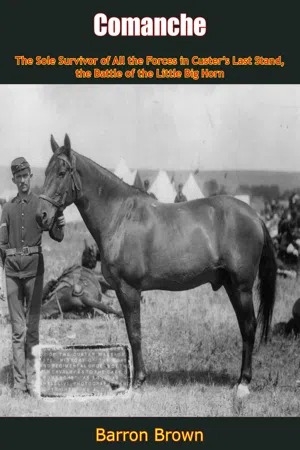
eBook - ePub
Comanche
The Sole Survivor of All the Forces in Custer's Last Stand, the Battle of the Little Big Horn
- 68 pages
- English
- ePUB (mobile friendly)
- Available on iOS & Android
eBook - ePub
Comanche
The Sole Survivor of All the Forces in Custer's Last Stand, the Battle of the Little Big Horn
About this book
Information
Subtopic
Social Science BiographiesIndex
Social SciencesDOCUMENTATION
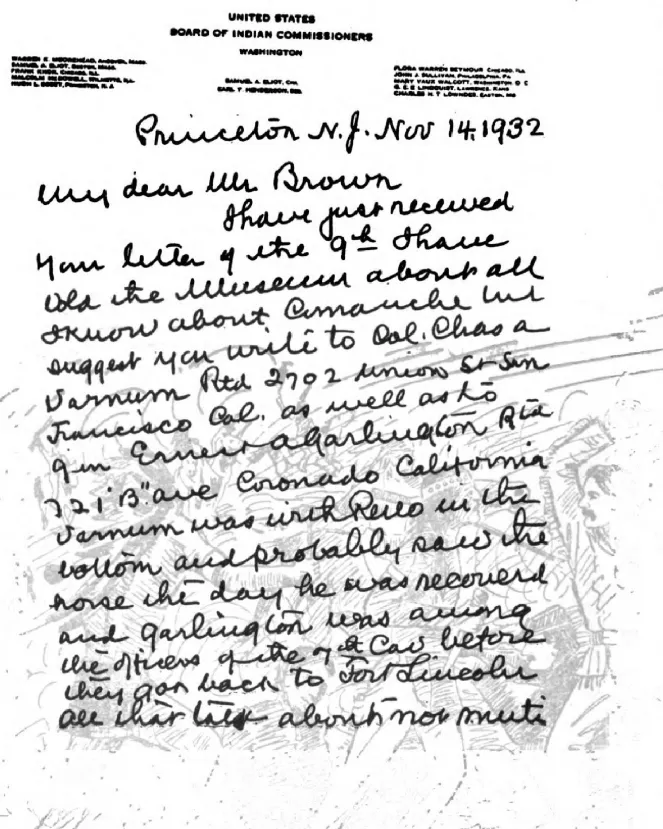
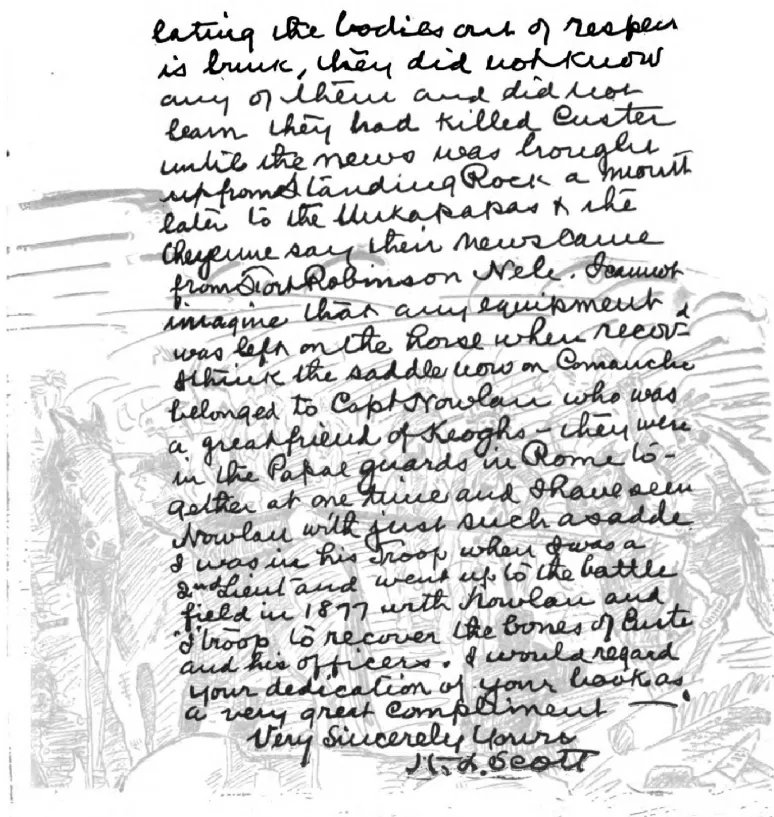
In view of the numerous and differing tales about Comanche and Custer’s battle, even now after more than half a century, the author has thought it would be of interest to add some documentation consisting of letters and other data not available to the public in libraries of the country. Most of what follows can be found in Dyche Museum of the University of Kansas. Some of the documents are, of course, the personal property of the author.
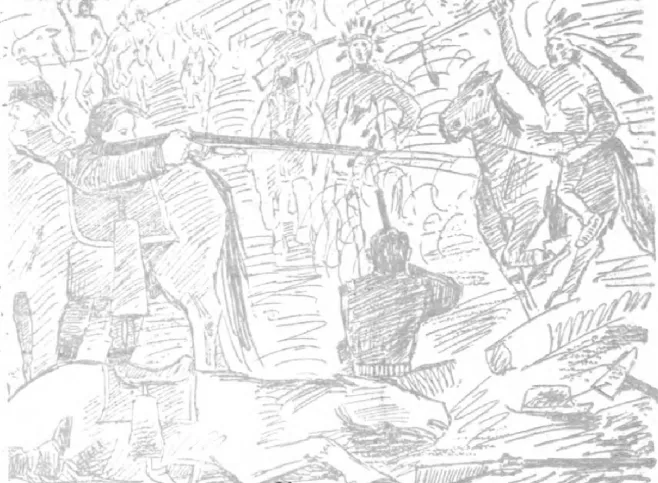
H. L. Scott, Letter
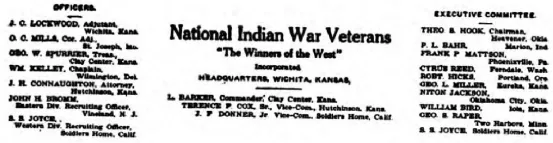
John C. Lockwood, Letter
Wichita, Kansas,
October 1, 1923
Mr. C. D. Bunker,
Kansas University,
Lawrence, Kansas.
Dear Sir:
I am enclosing a brief, but true, history of the horse, Comanche, that you have in the Museum of the Kansas University.
The first part of the history I got direct from Capt. M. W. Keogh, who rode the horse all the time it was in the service after the horse was captured on the Staked Plains in Texas in 1867. Capt. Keogh’s horse, the one he was riding, got killed in the fight with the band of Comanche Indians that Gen. Custer had followed for some time, and captured them at the edge of the plains. The Indians had a goodly number of horses, and the horses of the command that had been put out of service in the several days of running fight with the Indians, were replaced out of the horses captured from the Indians. Capt. Keogh selected the one you now have at the K. U. Museum. The horse was six years of age when captured, and that was the way the horse got the name of Comanche.
All horses that were captured from the Indians were branded with the Government brand U.S. In Gen, Custer’s campaign against the Black Kettle Band in 1868 in the Battle of the Washita, Nov. 26, 1868, Comanche got an arrow wound in the right hip. The arrow head was cut out and the wound soon healed. Captain Keogh rode the horse all the time from 1867 through Kansas, Indian Territory, and Texas, up to 1871. The Cavalry was ordered to Kentucky where it remained until 1872 when it was ordered to the North-West. I joined the regiment at Yankton, Dakota Territory, in the spring of 1873, and was with them almost continually until 1878. I was riding a horse that I had captured on the Mussle Shell River in 1871 and often rode with Capt. Keogh and compared the two horses.
There were many horses in the 7th Cavalry that could out-run Comanche for a short distance, but when it came to a long hard march without any forage, there is where he proved to be the best horse in the Regiment. While the regiment Was in Kentucky most all the officers procured fine Kentucky Thoroughbreds, as each officer was allowed to have one private owned horse, and there were some very fine horses, if they were given the proper care, and some very fast for single races but for a hard campaign, Comanche had them all skinned.
Under another heading is the account of the horse which you are at liberty to place beside the statement of Lieutenant Fuller. His statement is mostly true, but it is all second hand, while mine is from personal bearing on the battlefield and myself and a private named James Severs (better known as Crazy Jim) of “M” troop, 7th Cavalry, carried water in our hats for she horse when it was found among the dead men and horses on the 27th of June, 1876, about 50 hours after the fall of Gen. Custer and his entire command.
Comanche was lying in a bunch of dead men and horses, unable to get up until he was lifted, and when we saw that there were no bones injured that all the wounds were flesh wounds and that he was just weakened from loss of blood, we tried to save his life, as he was the only thing alive that went in the charge of Gen. Custer on the Sioux Indian Camp on the Little Big Horn River on the 25th day of June, 1876.
Sincerely yours,
John C. Lockwood
Late of “M” Troop, 7th U.S. Cavalry, 235 N. Washington Avenue,
Wichita, Kansas.

Ezra B. Fuller, Letter
Fort Leavenworth, Kansas,
February 4, 1923
To the
City Editor Daily Journal-World,
Lawrence, Kansas.
Dear Sir:
Hastily replying to your letter of yesterday, I take pleasure in furnishing the following information regarding the horse Comanche and the many inaccuracies in the enclosed clipping from the Kansas City Star, containing a reprint From the Minneapolis Journal.
I saw the article in the Star, preserved the clipping for a time with the view of making some comments on it for that paper but finally turned it over to Mr. Shindler who writes more or less for the papers, who was also familiar with the truth regarding this horse, and who promised to make reply as to the many inaccuracies.
Comanche was a government horse that was ridden by Captain Myles W. Keogh, Troop “I”, Seventh Cavalry This horse was the only living thing found on the Custer battle field and had bee...
Table of contents
- Title page
- TABLE OF CONTENTS
- DEDICATION
- ILLUSTRATIONS
- FOREWORD
- A BRIEF NARRATIVE OF CUSTER’S LAST BATTLE, JUNE 25, 1876
- DESCRIPTION AND EARLY HISTORY OF COMANCHE WHOSE MASTER, CAPTAIN MYLES W. KEOGH, WAS KILLED WITH CUSTER.
- COMANCHE AT THE BATTLE OF THE LITTLE BIG HORN. SOLE SURVIVOR OF CUSTER’S COMMAND. FOUND BY RESCUING TROOPS
- MILES KEOGH’S HORSE BY JOHN HAY
- COMANCHE AFTER THE BATTLE. IN RETIREMENT. HONORED BY AN ARMY ORDER.
- DOCUMENTATION
- REQUEST FROM THE PUBLISHER
Trusted by 375,005 students
Access to over 1.5 million titles for a fair monthly price.
Study more efficiently using our study tools.
Frequently asked questions
Yes, you can cancel anytime from the Subscription tab in your account settings on the Perlego website. Your subscription will stay active until the end of your current billing period. Learn how to cancel your subscription
No, books cannot be downloaded as external files, such as PDFs, for use outside of Perlego. However, you can download books within the Perlego app for offline reading on mobile or tablet. Learn how to download books offline
Perlego offers two plans: Essential and Complete
- Essential is ideal for learners and professionals who enjoy exploring a wide range of subjects. Access the Essential Library with 800,000+ trusted titles and best-sellers across business, personal growth, and the humanities. Includes unlimited reading time and Standard Read Aloud voice.
- Complete: Perfect for advanced learners and researchers needing full, unrestricted access. Unlock 1.5M+ books across hundreds of subjects, including academic and specialized titles. The Complete Plan also includes advanced features like Premium Read Aloud and Research Assistant.
We are an online textbook subscription service, where you can get access to an entire online library for less than the price of a single book per month. With over 1.5 million books across 990+ topics, we’ve got you covered! Learn about our mission
Look out for the read-aloud symbol on your next book to see if you can listen to it. The read-aloud tool reads text aloud for you, highlighting the text as it is being read. You can pause it, speed it up and slow it down. Learn more about Read Aloud
Yes! You can use the Perlego app on both iOS and Android devices to read anytime, anywhere — even offline. Perfect for commutes or when you’re on the go.
Please note we cannot support devices running on iOS 13 and Android 7 or earlier. Learn more about using the app
Please note we cannot support devices running on iOS 13 and Android 7 or earlier. Learn more about using the app
Yes, you can access Comanche by Barron Brown in PDF and/or ePUB format, as well as other popular books in Social Sciences & Social Science Biographies. We have over 1.5 million books available in our catalogue for you to explore.