In this book Stephanie Hedges draws on more than 20 years as a practicing veterinary nurse and her training as a Certificated Clinical Animal Behaviourist (CCAB). She provides a quick reference and practically relevant canine behaviour resource to meet both the specific needs of the veterinary nurse or technician and the needs of the wider general practice team. The new edition has been completely revised and updated to include: - New sections on canine emotions, the role of play, and how the canine senses affect a dog's perception of their world and their communication with others - A discussion of the relevance and limitations of breed in our understanding of dog behaviour - Updated and expanded behavioural first aid advice including factors to consider when assessing risk - A new chapter on the practice role in addressing fear of visiting the practice and veterinary interventions - A focus on the emotional welfare of dogs throughout Further topics include application of the 'trigger stacking' principle to reduce stress and aggression in practice, approaches to minimising restraint when handling, advice for puppy owners to prevent future problems, tips for running successful puppy socialization classes, and strategies for managing or addressing unwanted behaviour. Practical Canine Behaviour continues to provide an essential practical resource for the general veterinary practice team, dog trainers, groomers, dog walkers, rescue centre staff, kennel owners and all those who love and care for dogs.
- 264 pages
- English
- ePUB (mobile friendly)
- Available on iOS & Android
eBook - ePub
About this book
Information
Part 1
Understanding Natural Dog Behaviour
Introduction
When an animal is physically ill or injured, its suffering is obvious and the need for veterinary treatment unquestioned. Problem behaviour can have an equally negative impact on an animal’s welfare. Many unwanted behaviours are driven by the dog’s attempts to alleviate distressing emotional states such as stress, fear, anxiety, frustration or conflict. Others may arise due to neglect or a failure to fulfil an animal’s core needs. Some unwanted behaviours, such as chewing in puppies or jumping up to greet people face to face, are normal and so on their own is not a sign of distress. However, it may be annoying, distressing or even dangerous for the owner, and so lead to a breakdown in the dog–owner relationship. It is also common for all kinds of unwanted behaviour to be attributed to wilfulness, disobedience or traits such as being ‘dominant’ or ‘aggressive’. This can then lead to, at best, loss of owner affection and interaction, or, in more extreme cases, social isolation, physical punishment, (possibly repeated) rehoming, abandonment or even euthanasia (Box 1.1). As such, understanding, preventing and managing or changing unwanted behaviour is as important to a dog’s wellbeing as caring for his physical health.
Box 1.1. Frequency of rehoming and euthanasia of dogs due to problem behaviour.
• In a study of 5095 deceased dogs, 4% had been euthanized on behavioural grounds at a median age of 4.2 years old (O’Neill et al., 2013).
• Undesirable behaviour is the most common reason for euthanasia in dogs under 3 years of age (Boyd et al., 2018).
• Behavioural problems were the most common reason for relinquishment of a dog to a leading behaviour charity in the UK (Diesel et al., 2010).
• Over 50% of dogs returned to rescue charities are returned due to a behavioural problem (Mondelli et al., 2004; Diesel et al., 2010; Hawes et al., 2020).
• Dogs euthanized by rescue shelters are predominantly destroyed on behavioural grounds (Bollen and Horowitz, 2008).
1 Domestication of the Dog
© Stephanie Hedges 2021. Practical Canine Behaviour: For Veterinary Nurses and Technicians, 2nd edn (ed. S. Hedges)
DOI: 10.1079/9781789246810.0001
Domestication is the process by which a wild species is brought under human control and changed in some way to suit human needs. Typical changes include making the species easier to handle, breed or care for, making them more attractive to us or more productive, such as hens that lay more eggs or cows that produce more milk, or adapting them so they can work for us, such as animals used in transport. In the case of the domestic dog (Canis lupus familiaris), domestication has also resulted in an ability to interact and communicate with people at a level of complexity not seen in any other species. To understand why that is, we first need to understand how the dog evolved.
From Wolf to Dog
Although still the subject of much debate, the general consensus is that the ancestor of the domestic dog was the grey wolf. It is thought that wolves and people may have started to tolerate living alongside each other as long at 35,000 years ago. Their early interactions were probably limited to learning to understand each other’s behaviour and ways of communicating to avoid conflict, and maybe to sharing resources such as a kill. However, as resources became scarce during the last Ice Age, those wolves better adapted to living in close proximity to people – and perhaps those people better adapted to living in closer proximity to wolves – would have flourished. Those that did would then have formed subpopulations and interbred. As a result, by the time the Ice Age ended around 12,000 years ago, the behaviour of those wolves living closer to people was likely to have changed sufficiently for people to both want and be able to control their breeding, and for the wolves to start to resemble what we now know as a dog.
Changes Resulting from Domestication
Although dogs and wolves share many traits and are still able to interbreed, the process of domestication has led to far-reaching changes to the anatomy, physiology and behaviour of the dog when compared with the wolf.
Anatomy and physiology
Genes are often linked, meaning that when one gene is inherited or expressed, others are inherited or expressed with it. It is thought that the first physical changes to appear in the transition from wolf to dog may have arisen as a by-product of increased tameness and willingness to live close to or cooperate with people. This theory is supported by a controlled breeding programme in which silver foxes bred for tameness also started to show changes to coat colour, ear and tail shape (Trut et al., 2009). As these changes emerged, our ancestors then probably favoured those individuals that showed physical or behavioural traits they found useful or attractive, resulting in further intensification of these traits and the eventual evolution of the breeds we see today.
To the hunter-gatherer and early farmer, the most desirable traits were likely to have been enhanced hunting or guarding ability, willingness to cooperate with people, being able to survive on a varied diet and breeding freely. As a result, dogs evolved to show physical traits that made them better hunters and guarders (Figs 1.1 and 1.2), to thrive on an omnivorous diet, and to reach sexual maturity earlier and have larger litters than wolves.
As human lifestyles then gradually changed, so did what we wanted from our dogs. We also became increasingly aware of how to consciously select for preferred traits. This led to more refined changes, such as the floppy ears of scent hounds and the smaller size of dogs intended to hunt underground. We also started to select for purely aesthetic changes to appearance, such as those that enhance our ability to communicate with dogs or that instinctively encouraged us to care for them, reflecting their modern-day role as a companion (Figs 1.3 and 1.4).
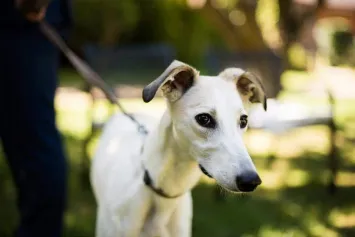
Fig. 1.1. Sight hounds have evolved as supreme hunters. Their head shape and eye position heighten their ability to locate and focus on prey, and they have light frames and long legs making them very fast. Photograph courtesy of Laura Wyllie Dog Training.
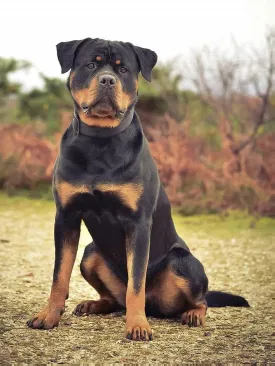
Fig. 1.2. Large, powerful and intimidating dogs would have been valued for protecting livestock and the homestead, and have evolved into modern-day mastiff and other guarding breeds. Photograph courtesy of Laura Wyllie Dog Training.
Behaviour
Alongside changes to the physical appearance of dogs, people also started to make increasingly refined changes to their behaviour. The original intention behind these was most likely to have been to further enhance the work they did for us, such as modifying hunting behaviour so they would track, herd or flush prey without killing it. However, these changes also require enhanced cooperation with people so we can tell them when to flush and where to herd. As a result, dogs have evolved to communicate, interact and eventually solicit care from us in a way not only not seen in wolves but not seen in any other domesticated species (Fig. 1.5). A few examples of this, taken from a large and continually evolving body of work, are given in Box 1.2.
Exactly how, when and why these traits evolved is still being studied and debated. However, what is not disputed is that the unique mutualistic behavioural and emotional relationship dogs and people share shows how far dogs have evolved from their ancestor, the wolf, and so how important it is that we no longer look at the behaviour of the wolf when trying to understand our dogs. Doing so would be the same as using chimpanzee behaviour to explain that of human beings. The species may be related, but they are no longer the same.

Table of contents
- Cover
- Half-title Page
- Title Page
- Copyright
- Contents
- List of Boxes
- List of Figures
- List of Tables
- About the Author
- Preface
- Acknowledgements
- Part 1: Understanding Natural Dog Behaviour
- Part 2: Understanding Problem Behaviour
- Part 3: Low-stress Handling of Dogs in the Practice
- Part 4: Preventing Unwanted Behaviour
- Part 5: Addressing Problem Behaviour
- Appendix: Introducing basic puppy cues
- Index
- Backcover
Trusted by 375,005 students
Access to over 1.5 million titles for a fair monthly price.
Study more efficiently using our study tools.
Frequently asked questions
Yes, you can cancel anytime from the Subscription tab in your account settings on the Perlego website. Your subscription will stay active until the end of your current billing period. Learn how to cancel your subscription
No, books cannot be downloaded as external files, such as PDFs, for use outside of Perlego. However, you can download books within the Perlego app for offline reading on mobile or tablet. Learn how to download books offline
Perlego offers two plans: Essential and Complete
- Essential is ideal for learners and professionals who enjoy exploring a wide range of subjects. Access the Essential Library with 800,000+ trusted titles and best-sellers across business, personal growth, and the humanities. Includes unlimited reading time and Standard Read Aloud voice.
- Complete: Perfect for advanced learners and researchers needing full, unrestricted access. Unlock 1.5M+ books across hundreds of subjects, including academic and specialized titles. The Complete Plan also includes advanced features like Premium Read Aloud and Research Assistant.
We are an online textbook subscription service, where you can get access to an entire online library for less than the price of a single book per month. With over 1.5 million books across 990+ topics, we’ve got you covered! Learn about our mission
Look out for the read-aloud symbol on your next book to see if you can listen to it. The read-aloud tool reads text aloud for you, highlighting the text as it is being read. You can pause it, speed it up and slow it down. Learn more about Read Aloud
Yes! You can use the Perlego app on both iOS and Android devices to read anytime, anywhere — even offline. Perfect for commutes or when you’re on the go.
Please note we cannot support devices running on iOS 13 and Android 7 or earlier. Learn more about using the app
Please note we cannot support devices running on iOS 13 and Android 7 or earlier. Learn more about using the app
Yes, you can access Practical Canine Behaviour by Stephanie Hedges in PDF and/or ePUB format, as well as other popular books in Medicine & Veterinary Medicine. We have over 1.5 million books available in our catalogue for you to explore.