From Capitalism To Socialism Toward Communism a.k.a. Globalism
eBook - ePub
Available until 23 Dec |Learn more

From Capitalism To Socialism Toward Communism a.k.a. Globalism

Three Generations of a Chinese Family Moving Forward in Chaos Over One Hundred Years

  1. 360 pages
  2. English
  3. ePUB (mobile friendly)
  4. Available on iOS & Android
eBook - ePub
Available until 23 Dec |Learn more

From Capitalism To Socialism Toward Communism a.k.a. Globalism

Three Generations of a Chinese Family Moving Forward in Chaos Over One Hundred Years

About this book

For Helen's family, the 1920s were turbulent but full of hope. A revolution overthrew the Qing Dynasty. China entered the "Golden Age of Capitalism." Helen's uncle founded a bank when he and Helen's father were in their thirties. They worked hard and expanded the business. After fifteen years, it became one of China's largest private banks...

Helen and her siblings received a Western education in their teenage years. She met her love, George, while studying in the wartime college. George and his brothers pursued the idea of "industry saving China." They studied science and technology in the U.S. and returned to China... After 1949, they suffered abuse in various "movements."...

When Mao's Cultural Revolution began in 1966, Helen's children were in high school. They witnessed chaos and violence. The Communists sent them to remote farms... At first, the reforms in China inspired Helen's children. They went overseas in the 1980s and tried to do their part to change China. Yet China remained a country ruled by the Communists...

Maggie Zheng is the third-generation member of the family described in this memoir. In 1991, she graduated from the UW-Madison with a PhD in science. Maggie was born in 1949. That was the same year the Communists took over mainland China. When she grew up, Maggie witnessed social changes in China. The Communists sent her to work on farms for nine years after high school. Maggie graduated from college after Mao died. Coming to the U.S. in the 1980s, she studied and worked here. Maggie went to Shanghai to set up a production facility for repairing gas turbine blades in 2004. She came back to the United States in 2019.

Reviewed by Linda, a former Dartmouth College composition consultant (ABT)

... I believe yours is a very important book for young people in particular, as they need to read more stories like yours about families who actually lived history.... I think your book should definitely gain readership and impress many...

Reviewed by Jack, an Amazon reader

Many books on China either read like a scroll of ideological bullet points or a hitchhiker's guide to scenic sights and hidden wonders. This book affords the reader no such luxury and immediately rolls into the life of a family that is easily relatable surviving China's most tumultuous years....as the author's family moves back and forth between China and the U.S. through the decades, the book became an excellent reflection of the cross-cultural experience, with observations that can only be made from a perspective that can house the contradictory roles of native and foreigner at the same time. This was particularly evident in the later chapters.

Reviewed by Jitendra, a NetGalley reviewer

Before reading this book, I never knew that China was once a capitalist state, which was eventually taken over by the Communists in 1949. In addition, what tactics the CCP (Chinese Communist Party) used -... The book talks a lot about Shanghai. Shanghai was a city where people from various countries could freely come and do business before the 1940s.... I also found that Shanghai accommodated around 25K JEWs who were persecuted in Europe, and, from Shanghai, they moved to Palestine, US and other safe places...

Reviewed by Linda, a former Dartmouth College composition consultant (ABT)

Reviewed by Linda, a former Dartmouth College composition consultant (ABT)

... I believe yours is a very important book for young people in particular, as they need to read more stories like yours about families who actually lived history.... I think your book should definitely gain readership and impress many...

Reviewed by Jack, an Amazon reader

Many books on China either read like a scroll of ideological bullet points or a hitchhiker's guide to scenic sights and hidden wonders. This book affords the reader no such luxury and immediately rolls into the life of a family that is easily relatable surviving China's most tumultuous years....as the author's family moves back and forth between China and the U.S. through the decades, the book became an excellent reflection of the cross-cultural experience, with observations that can only be made from a perspective that can house the contradictory roles of native and foreigner at the same time. This was particularly evident in the later chapters.

Reviewed by Jitendra, a NetGalley reviewer

Before reading this book, I never knew that China was once a capitalist state, which was eventually taken over by the Communists in 1949. In addition, what tactics the CCP (Chinese Communist Party) used -... The book talks a lot about Shanghai. Shanghai was a city where people from various countries could freely come and do business before the 1940s.... I also found that Shanghai accommodated around 25K JEWs who were persecuted in Europe, and, from Shanghai, they moved to Palestine, US and other safe places...

Frequently asked questions

Yes, you can cancel anytime from the Subscription tab in your account settings on the Perlego website. Your subscription will stay active until the end of your current billing period. Learn how to cancel your subscription.
At the moment all of our mobile-responsive ePub books are available to download via the app. Most of our PDFs are also available to download and we're working on making the final remaining ones downloadable now. Learn more here.
Perlego offers two plans: Essential and Complete
  • Essential is ideal for learners and professionals who enjoy exploring a wide range of subjects. Access the Essential Library with 800,000+ trusted titles and best-sellers across business, personal growth, and the humanities. Includes unlimited reading time and Standard Read Aloud voice.
  • Complete: Perfect for advanced learners and researchers needing full, unrestricted access. Unlock 1.4M+ books across hundreds of subjects, including academic and specialized titles. The Complete Plan also includes advanced features like Premium Read Aloud and Research Assistant.
Both plans are available with monthly, semester, or annual billing cycles.
We are an online textbook subscription service, where you can get access to an entire online library for less than the price of a single book per month. With over 1 million books across 1000+ topics, we’ve got you covered! Learn more here.
Look out for the read-aloud symbol on your next book to see if you can listen to it. The read-aloud tool reads text aloud for you, highlighting the text as it is being read. You can pause it, speed it up and slow it down. Learn more here.
Yes! You can use the Perlego app on both iOS or Android devices to read anytime, anywhere — even offline. Perfect for commutes or when you’re on the go.
Please note we cannot support devices running on iOS 13 and Android 7 or earlier. Learn more about using the app.
Yes, you can access From Capitalism To Socialism Toward Communism a.k.a. Globalism by Maggie Zheng in PDF and/or ePUB format, as well as other popular books in Politics & International Relations & Communism, Post-Communism & Socialism. We have over one million books available in our catalogue for you to explore.


To my parents, Helen and George.


Introduction
For Helen’s family, the 1920s were turbulent but full of hope. A revolution overthrew the Qing Dynasty. China entered the “Golden Age of Capitalism.” Helen’s uncle founded a bank when he and Helen’s father were in their thirties. They worked and expanded the business. After fifteen years, it became one of China’s largest private banks. While the banking business was booming, the Japanese invaded China. It interrupted the bank’s development. Helen’s father died.
Helen and her siblings received Western education in their teenage years. She met her love, George, while studying in the wartime college. George and his brothers pursued the idea of “industry saving China.” They studied science and technology in the US and returned to China. The reality shattered those young people’s good wishes. After 1949, they suffered abuse in various “movements.” Their ties to the US became a problem. The Communists sent Helen’s brothers to jail and labor camps. The inhuman treatment took their lives.
When Mao’s Cultural Revolution began, Helen’s children were in high school. They witnessed chaos and violence. The Communists sent them to remote farms. One of Helen’s daughters died there. At first, the reforms in China inspired Helen’s children. They went overseas in the 1980s and tried to do their part to change China. Yet China had been a country ruled by the Communists. The wealth gap grew year after year. People could lose their properties at any time. In their every day’s life, they faced frustrations and helplessness. Nevertheless, the Communists had ambitions to take over the entire world.
This memoir involves many historical and current events. It describes how the Communists seized control and managed the country. The author records urban life evolutions in China. The Russian refugees’ experience in Shanghai is one of them. This book also records the development of Chinese energy industry in recent years.
Part 1
(1920–1945)
1
Helen’s Father and His Family
When Helen’s father was twenty-two years old, the Qing Dynasty ended. It was 1912, a few years after he came back from Japan. Helen’s father was a sturdy but loving family man. He believed in gender equality and education. He told young Helen that he would treat girls the same as boys. Later he sent all his three girls and two boys to college when they grew up. He named his two sons Min and Hsien. In Chinese, that meant democracy and constitution.
Helen’s mother had bonded feet. Bonding women’s feet was a tradition inherited from the Ming Dynasty. In the Ming Dynasty, emperors were Han ethnicity. The Qing Dynasty’s Manchuria emperor demanded that Han men braid their hair. Since the emperor would kill those who did not comply, men had to keep long hair. The Qing asked Han women to loosen bonded feet, but it did not follow up. So Han women continued bonding feet for three hundred more years. Someone said Han women used silence against the Manchurian ruling.
Helen’s father and mother lived in northern Kiangsu Province. They were from two neighboring villages. A matchmaker to arrange marriage was a tradition at the time. So did Helen’s father and mother. Both families were traditional scholars. Helen’s mother learned how to read and write at home. When Helen was born, woman schooling had not been in China for long. Only in a few cities could one find schools for young girls. So Helen and her two sisters were homeschooled by their mother.
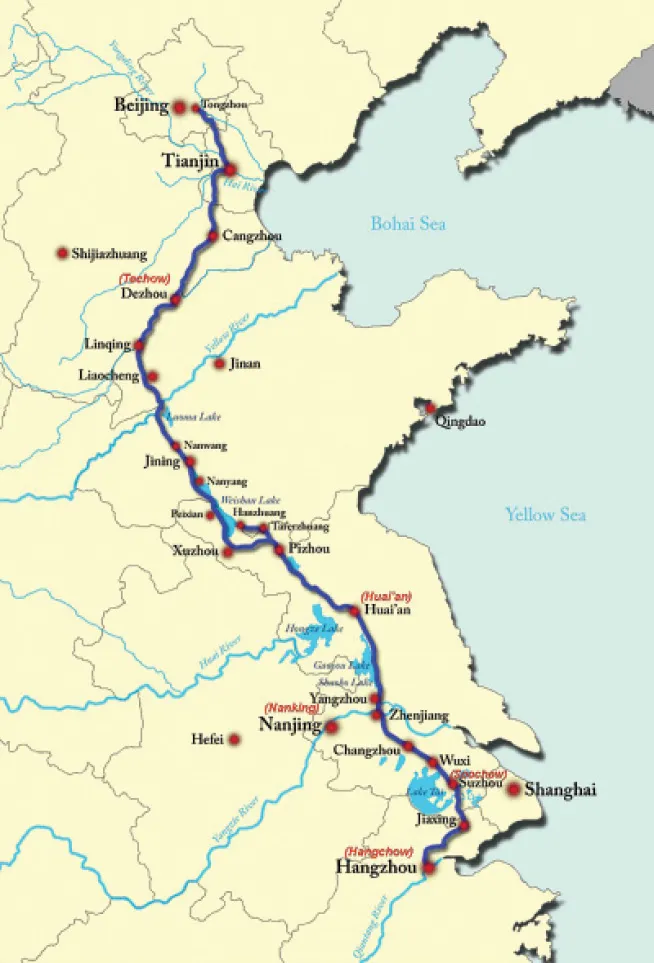
Helen’s great-grandfather moved here with his wife and two sons. They escaped from the hot war zone of Soochow, southern Kiangsu Province. It was the Grand Canal that provided the escape route by boat. The Grand Canal was a man-made river. The Sui Emperor dug it more than thirteen hundred years earlier. The emperor used it to transport food and textile from south to north.
It was the Second Opium War, a chaotic time. The Qing fought Britain and France, joined by the United States and Russia. The Qing lost. Britain and France were not happy with the slow progress of the door opening. In the First Opium War, they defeated the Qing Dynasty and signed treaties. The treaties demanded the Qing to open China’s door for the opium trade.
China’s economy was number one in the world before the two Opium Wars in the 1840s and 1860s. Manchurian rulers feared Han from the uprising. So they suppressed industrial seedlings initiated during the Ming Dynasty. Trade activities of handicraft products generated the most wealth. In the meantime, the industrial revolution was booming in Europe. The Qing’s swords could not beat West’s guns. That led to two defeats of the Opium Wars in the nineteenth century. In the Second Opium War, foreign troops looted tea, gold, silver, and jewelry. They burned the Old Summer Palace, destroying countless antiquities and treasures.
Losing the war, the Qing signed the second treaty. Shanghai, Tientsin, and Hankou were among the five treaty ports. Besides, the Qing agreed on the cession of Hong Kong Island. The indemnity payment made the Qing exploit the Han people further. It forced them to live on the edge of starvation. The Taiping Heaven Kingdom formed with such a background. Established in Kwangsi, the Taiping troops swept southern China. Its territory included most southern Kiangsu Province. Nanking, 190-mile north of Shanghai, was the capital of the rebellion.
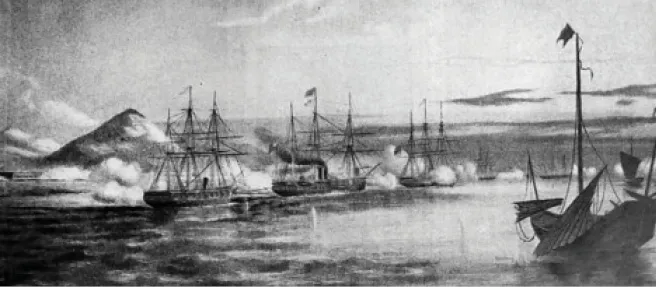
After the war, the Qing allowed foreign battleship to sail along the Yangtze River. Those ships could run upstream from Shanghai to reach Hankou. It became a problem as Taiping troops occupied land around the downstream area. British and French troops joined forces with the Qing to fight the Taiping troops. Millions of residents died as a casualty of the war. The rebellion killed French General Auguste-Léopold Protet near Shanghai. Britain and France retaliated. Residents’ killing multiplied to hundreds of thousands in each battle.
British and French soldiers handed over the captures to the Qing troops. Most of them were residents sympathizing with Taiping troops. Qing soldiers beheaded the captures, cutting them into pieces live. Elderlies and infants were among the dead. They raped girls and women and then killed them. Many women committed suicide out of fear. Some locals died of fighting against Taiping troops invading their hometown. Millions of residents in southern Kiangsu escaped. The population of south Kiangsu was reduced more than half. The northern Kiangsu population increased one-fifth.
The Soochow area had abundant water and fertile soil. People who lived there worked hard from dawn until night. The two Opium Wars brought the social and economic crisis to this land. It continued to accumulate and reached a high peak. Besides, drought, flood, and insect pests came year after year. It shook and destroyed people’s daily lives. People living in turmoil were desperate and sought a way of survival. That was why Helen’s great-grandpa gave up their home and land going north. Some Westerners called this period the beginning of China’s modern era.
Modern course of Grand Canal of China (drawing from Wiki by Lan Kiu)
Britain warships sailing on the Yangtze River in Nanking after the Second Opium War (photo from gettyimages.com)
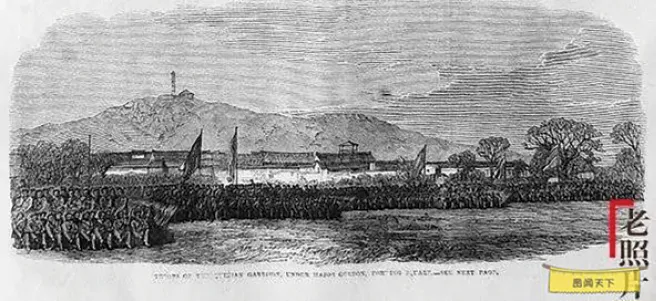
British soldiers were at a training camp near Soochow in 1863 (photo from twtx.17ditu.com)
Uncle’s Golden City Bank, Concessions in Hankou City
2
At the beginning of the 1900s, many young people went to Japan to study. Helen’s father was one of them. They wanted to change China’s future. Helen’s father studied economics in Japan. He joined the United League of China (ULC). Established in Tokyo in 1905, ULC was one of the revolutionary groups. Its network covered many communities in China and around the world. ULC launched several uprisings to overthrow the Qing, along with other groups. They succeeded. After that, ULC reorganized, becoming Kuomintang (KMT). In Chinese, KMT meant the Party for People. Sun Yat-sen, leader of KMT, established the Republic of China (ROC) in 1912. After a brief warlord ruling in the north, the ROC unified the country.
Helen’s father returned from Japan in 1910 and married when he was twenty. He worked as a division manager at the Transportation Bank. It was a bank operated by the ROC in Wuhu City, Anhwei Province. In 1920, he moved to Hankou City, Hupeh Province, to take up a new position. Both Wuhu and Hankou sat on the bank of the Yangtze River. Helen’s family took the Yangtze River ferry from Wuhu to Hankou. At that time, Helen had yet to have a baby shower. Her mother later told Helen that she had to hold her little body. Sitting by the ship’s window, Helen’s mother watched the riverbanks moving back. The boat sailed west along the Yangtze River.
China’s industrial and commercial activities multiplied in the 1910s. The river shipping business prospered. By 1920, there were twenty-five domestic ships with an average tonnage of two thousand tons. These ships carried goods and people sailing on the Yangtze River. After the Second Opium War, there were many foreign vessels on the river. But World War I changed their focus. These alien ships withdrew from China’s river-transport business.
The banking industry in Wuhu and Hankou boomed during that period. Warlords established salt-tax collection offices in these two cities. After the Qing fell, they fought the ROC. The war cost money. The salt tax was to repay loans from foreign banks. Britain, the US, Japan, Germany, Russia, Belgium, and France all had banks there. They came in the late Qing after the First Opium War. Foreign banks had a diverse business profile. Currency exchange, credit, deposits, and banknote issuance were among them.
Helen’s father worked for a new bank in Hankou. It was Golden City Bank. Golden City Bank was a private bank. Helen’s father had a first cousin; Helen called him Uncle. He was one of the two founders of...

Table of contents

  1. Maggie Zheng