Dagli organismi unicellulari invisibili a occhio nudo alle caverne preistoriche, dalle famiglie via via organizzate in clan e poi in tribù ai primi insediamenti stanziali, dai feudi alle piccole patrie, dagli Stati nazionali agli imperi e da questi ai global players quali l'OCSE, l'evoluzione della specie umana è stata assai più lineare di quanto l'opinione pubblica solitamente ritenga e assai meno lineare di quanto gli storici più pigri descrivono nei loro manuali. Il modello evolutivo è quello di un'inarrestabile ascesa dall'infinitamente piccolo all'infinitamente grande, laddove oggi la specie umana è in cerca di nuovi pianeti da rendere abitabili in un incessante processo di espansione. Evoluzione ed espansione sono potentemente connessi: ciò che non si espande si contrae e implode. Che le cose possano restare come sono è una trappola tutta umana tesa da chi vuole il controllo attraverso l'isolamento e l'immobilismo su un dato contesto: le dittature di ogni fede e colore. Conoscere l'evoluzione e osservare le relativamente poche forme di conoscenza che evolvono, mentre innumerevoli altre si dissolvono, è un atto decisivo per la specie umana nell'acquisire consapevolezza della propria funzione nell'universo. Le scienze politiche e sociali, in quanto scienze sistemiche della complessità, giocano un ruolo decisivo sulla scala dei sistemi sociali della società, affinché essi siano allineati ai processi evolutivi complessi e turbolenti – visti dal sociale ma tutto sommato piuttosto lineari se osservati sistemicamente dal macro e con abilità retrospettiva.
eBook - PDF
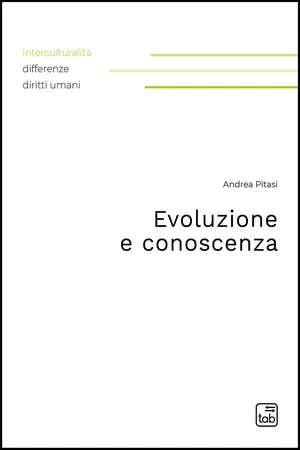
Evoluzione e conoscenza
About this book
Information
Topic
Scienze socialiSubtopic
SociologiaTable of contents
- Copertina
- Interculturalità, differenze, diritti umani
- Frontespizio
- Colophon
- Indice
- Preambolo
- Prima parte. Prolegomeni epistemologici
- Seconda parte. Prolegomeni euristici
- Epilogo
- Bibliografia
- La collana
- Credits
Trusted by 375,005 students
Access to over 1.5 million titles for a fair monthly price.
Study more efficiently using our study tools.
Frequently asked questions
Yes, you can cancel anytime from the Subscription tab in your account settings on the Perlego website. Your subscription will stay active until the end of your current billing period. Learn how to cancel your subscription
No, books cannot be downloaded as external files, such as PDFs, for use outside of Perlego. However, you can download books within the Perlego app for offline reading on mobile or tablet. Learn how to download books offline
Perlego offers two plans: Essential and Complete
- Essential is ideal for learners and professionals who enjoy exploring a wide range of subjects. Access the Essential Library with 800,000+ trusted titles and best-sellers across business, personal growth, and the humanities. Includes unlimited reading time and Standard Read Aloud voice.
- Complete: Perfect for advanced learners and researchers needing full, unrestricted access. Unlock 1.5M+ books across hundreds of subjects, including academic and specialized titles. The Complete Plan also includes advanced features like Premium Read Aloud and Research Assistant.
We are an online textbook subscription service, where you can get access to an entire online library for less than the price of a single book per month. With over 1.5 million books across 990+ topics, we’ve got you covered! Learn about our mission
Look out for the read-aloud symbol on your next book to see if you can listen to it. The read-aloud tool reads text aloud for you, highlighting the text as it is being read. You can pause it, speed it up and slow it down. Learn more about Read Aloud
Yes! You can use the Perlego app on both iOS and Android devices to read anytime, anywhere — even offline. Perfect for commutes or when you’re on the go.
Please note we cannot support devices running on iOS 13 and Android 7 or earlier. Learn more about using the app
Please note we cannot support devices running on iOS 13 and Android 7 or earlier. Learn more about using the app
Yes, you can access Evoluzione e conoscenza by Andrea Pitasi in PDF and/or ePUB format, as well as other popular books in Scienze sociali & Sociologia. We have over 1.5 million books available in our catalogue for you to explore.