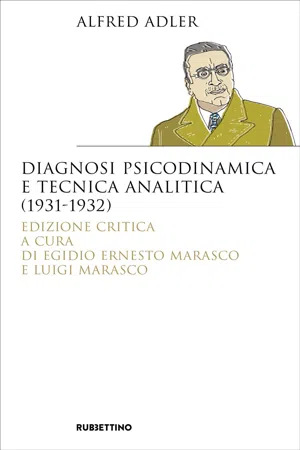
Alfred Adler ha scritto solo nel 1928 l'unica opera espressamente dedicata alla sua tecnica analitica e poi, in due conferenze, ha presentato le peculiarità del suo metodo: ai medici di Londra, nel 1931, ha illustrato la tecnica diagnostica, e agli psichiatri di New York, nel 1932, ha fatto il punto su alcuni aspetti tecnici del suo trattamento. Dopo l'incredibile successo di Conoscenza dell'uomo, presentato negli USA come manuale di autoanalisi, e il successo delle sue conferenze rivolte al grande pubblico, era infatti necessario limitare il pericolo di banalizzare il suo metodo analitico e bisognava riproporre con determinazione la centralità dell'analisi, che sola consente di formulare diagnosi specifiche e di effettuare una terapia. Per fare tutto ciò non ci si può semplicemente attenere alle istruzioni dei manuali, ma ci si deve necessariamente formare con una propria analisi personale e didattica. Anche oggi è indispensabile riproporre criticamente questi due lavori per evitare semplificazioni e banalizzazioni del metodo analitico adleriano.
eBook - ePub
Diagnosi psicodinamica e tecnica analitica (1931-1932)
- English
- ePUB (mobile friendly)
- Available on iOS & Android
eBook - ePub
Diagnosi psicodinamica e tecnica analitica (1931-1932)
About this book
Information
Subtopic
History & Theory in PsychologyIndex
PsychologyTable of contents
- Cover
- Sinossi
- Indicazione di collana
- Frontespizio
- Colophon
- Pedagogia e psicologia
- Il Caso della signora A. La diagnosi psicodinamica (1931)
- Introduzione dei curatori
- Presentazione del caso, della dottoressa Hilda Weber
- Alfred Adler
- Il caso della signora A.
- Poscritto, di Hilda Weber
- La tecnica del trattamento (1932). Linee guida per psichiatri e psicoterapeuti
- Introduzione dei curatori
- Prefazione di Alfred Adler
- Postfazione dei curatori: Adler dopo Adler
- Bibliografia
Trusted by 375,005 students
Access to over 1.5 million titles for a fair monthly price.
Study more efficiently using our study tools.
Frequently asked questions
Yes, you can cancel anytime from the Subscription tab in your account settings on the Perlego website. Your subscription will stay active until the end of your current billing period. Learn how to cancel your subscription
No, books cannot be downloaded as external files, such as PDFs, for use outside of Perlego. However, you can download books within the Perlego app for offline reading on mobile or tablet. Learn how to download books offline
Perlego offers two plans: Essential and Complete
- Essential is ideal for learners and professionals who enjoy exploring a wide range of subjects. Access the Essential Library with 800,000+ trusted titles and best-sellers across business, personal growth, and the humanities. Includes unlimited reading time and Standard Read Aloud voice.
- Complete: Perfect for advanced learners and researchers needing full, unrestricted access. Unlock 1.5M+ books across hundreds of subjects, including academic and specialized titles. The Complete Plan also includes advanced features like Premium Read Aloud and Research Assistant.
We are an online textbook subscription service, where you can get access to an entire online library for less than the price of a single book per month. With over 1.5 million books across 990+ topics, we’ve got you covered! Learn about our mission
Look out for the read-aloud symbol on your next book to see if you can listen to it. The read-aloud tool reads text aloud for you, highlighting the text as it is being read. You can pause it, speed it up and slow it down. Learn more about Read Aloud
Yes! You can use the Perlego app on both iOS and Android devices to read anytime, anywhere — even offline. Perfect for commutes or when you’re on the go.
Please note we cannot support devices running on iOS 13 and Android 7 or earlier. Learn more about using the app
Please note we cannot support devices running on iOS 13 and Android 7 or earlier. Learn more about using the app
Yes, you can access Diagnosi psicodinamica e tecnica analitica (1931-1932) by Alfred Adler, Egidio Ernesto Marasco, Luigi Marasco, Egidio Ernesto Marasco in PDF and/or ePUB format, as well as other popular books in Psychology & History & Theory in Psychology. We have over 1.5 million books available in our catalogue for you to explore.