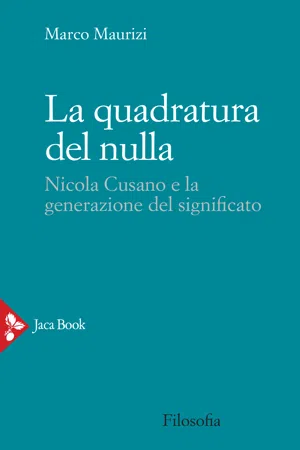
Non è forse un caso che tempi inquieti, tempi di cambiamento come il nostro, possano trovare conforto nelle pagine di Nicola Cusano, un pensatore di «passaggio» tra Medioevo e Modernità, enigmatico e affascinante, che sembra sfidare i secoli, le interpretazioni e le ideologie. Questo libro dimostra l'attualità del suo pensiero, evidenziandone la ricchezza e l'originalità rispetto alle sfide teoriche di oggi. Dal confronto con Hegel a quello con la recente svolta «speculativa» e «realista» della filosofia contemporanea, i capitoli di questo libro cercano di mostrare all'opera il pensiero di Cusano, lasciando emergere la sua capacità di spiazzare costantemente il lettore e metterne in questione i presupposti impliciti ma anche di valorizzarne la prospettiva singolarissima, perfino la stessa deriva nella ricerca di senso che tutti ci coinvolge. La tesi che guida questa lettura è che, come insegna Cusano, se la verità non ci appartiene, noi le apparteniamo senz'altro. Nessuno, neanche chi la nega, può sottrarsi a questa appartenenza. Nessuno, neanche chi la afferma, può eccederla e farla propria. Cusano sembra suggerire che è nel sottile spazio tra questi due eccessi che si collocano tanto il rigore, quanto la responsabilità del pensiero e, con essi, il compito, il destino e il futuro, se ve n'è uno, della filosofia.
- English
- ePUB (mobile friendly)
- Available on iOS & Android
eBook - ePub
La quadratura del nulla. Nicola Cusano e la generazione del significato
About this book
Information
Topic
PhilosophySubtopic
Philosophy History & TheoryTable of contents
- Copertina
- Frontespizio
- Copyright
- Indice
- Introduzione: Non-altro che cusano
- Capitolo primo: Dialettica e coincidenza degli opposti
- Capitolo secondo: La mente: sintesi, conoscenza, autoconoscenza
- Capitolo terzo: Del pensare in comune
- Capitolo quarto: La vita che si sa
- Capitolo quinto: Un sapere della genesi
- Conclusione: La speculazione materiale
- Dal catalogo
Trusted by 375,005 students
Access to over 1.5 million titles for a fair monthly price.
Study more efficiently using our study tools.
Frequently asked questions
Yes, you can cancel anytime from the Subscription tab in your account settings on the Perlego website. Your subscription will stay active until the end of your current billing period. Learn how to cancel your subscription
No, books cannot be downloaded as external files, such as PDFs, for use outside of Perlego. However, you can download books within the Perlego app for offline reading on mobile or tablet. Learn how to download books offline
Perlego offers two plans: Essential and Complete
- Essential is ideal for learners and professionals who enjoy exploring a wide range of subjects. Access the Essential Library with 800,000+ trusted titles and best-sellers across business, personal growth, and the humanities. Includes unlimited reading time and Standard Read Aloud voice.
- Complete: Perfect for advanced learners and researchers needing full, unrestricted access. Unlock 1.5M+ books across hundreds of subjects, including academic and specialized titles. The Complete Plan also includes advanced features like Premium Read Aloud and Research Assistant.
We are an online textbook subscription service, where you can get access to an entire online library for less than the price of a single book per month. With over 1.5 million books across 990+ topics, we’ve got you covered! Learn about our mission
Look out for the read-aloud symbol on your next book to see if you can listen to it. The read-aloud tool reads text aloud for you, highlighting the text as it is being read. You can pause it, speed it up and slow it down. Learn more about Read Aloud
Yes! You can use the Perlego app on both iOS and Android devices to read anytime, anywhere — even offline. Perfect for commutes or when you’re on the go.
Please note we cannot support devices running on iOS 13 and Android 7 or earlier. Learn more about using the app
Please note we cannot support devices running on iOS 13 and Android 7 or earlier. Learn more about using the app
Yes, you can access La quadratura del nulla. Nicola Cusano e la generazione del significato by Marco Maurizi in PDF and/or ePUB format, as well as other popular books in Philosophy & Philosophy History & Theory. We have over 1.5 million books available in our catalogue for you to explore.