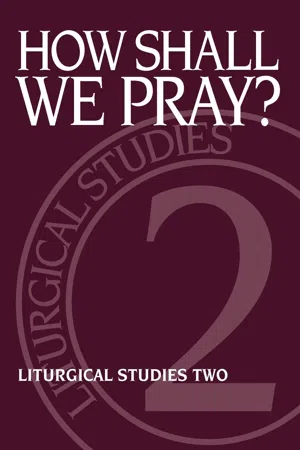
A significant collection of articles on expanding our language about God, compiled by Ruth A. Meyers for the Standing Liturgical Commission. Topics discussed include: theological, biblical, and historical perspectives on Supplemental Liturgical Materials; biblical origins of inclusive language; historical and theological perspectives on expanding liturgical language; and gender and trinitarian language.
A Theological Consultation on Language and Liturgy
The development of “inclusive language” materials for the regular worship of the church has raised significant theological issues: for example, the trinitarian nature of God, particularly the naming of the first and second persons of the triune God; the relationship between the eternal Christ and the historical, incarnate Jesus; the nature of sin; and the use of metaphor in theological language and liturgical prayer. These issues have been discussed throughout the process of the development and experimental use of new texts. But the proposed texts themselves have been the context for discussion, and often this conversation has occurred under the press of the triennial schedule of General Conventions and related publication deadlines. In 1993 the Standing Liturgical Commission sought to move away from the immediate urgency of creating new or revised supplemental liturgical materials, and address the theological and methodological issues posed by this endeavor.
The SLC worked to bring together scholars from various perspectives—liturgical studies, historical theology, systematic theology, biblical studies, and church history—with bishops, parish clergy, and laity. The resulting consultation, held at Seabury-Western Theological Seminary on September 9-11, 1993, included Episcopalian scholars from around the country, several of the Seabury-Western faculty, a few parish clergy and laity, and one bishop. The group prayed with the Supplemental Liturgical Materials throughout the three-day consultation and had several opportunities to reflect on their experience of prayer. The lay women from St. Luke’s Episcopal Church, Evanston, Illinois, had worshipped with supplemental materials over a long period of time at their home parish, and they raised important concerns growing out of their experience with the texts.
The discussion of theological issues was built around three panel discussions. Each of the visiting scholars had prepared and circulated a position paper in advance of the consultation, and these papers were the basis for each discussion. Panelists responded to questions from a moderator and debated the issues among themselves, following which there was opportunity for both small and large group discussion. The materials in the following section include both the position papers and some of the dialogue from the consultation.
Participants in the Consultation
• The Rev. Dr. Paula S. Datsko Barker, Assistant Professor of Historical Theology, Seabury-Western Theological Seminary
• The Rev. Sr. Jean Campbell, Order of St. Helena, Vice Chair, Standing Liturgical Commission; member of the Consultation planning team; Chair of the Supplemental Liturgical Materials Committee
• Ms. Linda Cummings, Communicant, St. Luke’s Episcopal Church, Evanston, Illinois
• Dr. Robert Finster, Director of Music, Seabury-Western Theological Seminary
• The Rt. Rev. Frank T. Griswold, Bishop of Chicago; Chair, Standing Liturgical Commission
• Dr. Carolyn Groves, Senior Lecturer, Theology Department, Loyola University, Chicago; Communicant, St. Luke’s Episcopal Church, Evanston, Illinois
• The Rev. Ralph N. McMichael, Jr., Instructor in Liturgics, Nashotah House Theological Seminary, Nashotah, Wisconsin
• The Rev. Dr. Ruth A. Meyers, Diocesan Liturgist, Diocese of Western Michigan; Associate Faculty member, Ecumenical Theological Center, Detroit, Michigan
• The Rev. Canon Leonel L. Mitchell, Professor of Liturgics, Seabury-Western Theological Seminary; member of the Standing Liturgical Commission; member of the Consultation planning team
• The Rev. Juan M. C. Oliver, doctoral student, Graduate Theological Union, Berkeley, California; Chair of the Standing Liturgical Commission Subcommittee on Inculturation of the Liturgy
• Ms. Lilian (Flower) Ross, Professor of Christian Ministry, Seabury-Western Theological Seminary
• The Rev. Joseph Russell, Canon to the Ordinary for Education and Program, Diocese of Ohio; member of the Standing Liturgical Commission; member of the Consultation planning team; member of the Supplemental Liturgical Materials Committee
• Mr. Newland F. Smith, Librarian and Associate Professor, Seabury-Western Theological Seminary
• The Rev. Dr. Taylor Stevenson, Professor of Philosophical Theology, Seabury-Western Theological Seminary
• The Rev. Dr. Patricia Wilson-Kastner, Rector, St. Ann and the Holy Trinity Episcopal Church, Brooklyn, New York
• The Rev. Dr. Charles Winters, Professor of Christian Ministry, Seabury-Western Theological Seminary
• The Rev. Dr. Ellen K. Wondra, Assistant Professor of Theological Studies, Colgate Rochester Divinity School/Bexley Hall/Crozer Theological Seminary, Rochester, New York
• The Rev. Dr. J. Robert Wright, Professor of Church History, The General Theological Seminary, New York, New York
Two members of the Consultation planning team were unable to attend the Consultation itself:
• The Rev. Dr. James Griffiss, Editor, Anglican Theological Review; (retired) Professor of Systematic and Philosophical Theology, Nashotah House Theological Seminary, Nashotah, Wisconsin
• The Rev. Joy Rogers, D.Min., Curate, St. Luke’s Episcopal Church, Evanston, Illinois
Session One: Focus Questions
The Standing Liturgical Commission wants to explore the vast store of ancient liturgical prayer with a view of being able to bring forth images both new and old for the enrichment and enhancement of our present day liturgical life. In our search for new images and languages have we fully explored or honored the tradition of the church? How can we reclaim the ancient and often unfamiliar expressions of orthodox faithfulness that come out of the tradition of the church? Put another way, what does the tradition already offer that we may be overlooking?
What are appropriate ways in which biblical metaphors, images and descriptions of God can be put in the service of our liturgical prayer? In what ways is it appropriate to use diverse images of God in our liturgical prayer?
Translating the Tradition
J. RobertWright
Of the four sets of questions that were posed in advance for this consultation, I have chosen to write upon the second: “How can we reclaim the ancient and often unfamiliar expressions of orthodox faithfulness that come out of the traditions of the church? Put another way, what does the tradition already offer that we may be overlooking?” Although the second set of questions was the only set that did not directly propose a discussion of God-language, I chose it because I have had some immediate experience in the human-language area. I suspected that many would focus upon language about God, as proposed in the other three sets of questions, but I offer this essay in the broader framework of the second set of questions and trust that it may at least enliven the consideration of other questions and possibly suggest some pointers for the way forward.
My recent major publication experience has been in editing and translating over four hundred fifty selections from Greek and Latin sources of the early church to serve as supplementary readings for the Daily Office of our Prayer Book calendar and liturgical year: Readings for the Daily Office from the Early Church (New York: Church Hymnal Corporation, 1991). Most of these already existed in English translations that were done decades or even centuries ago, but as I began to select them I soon realized that they were not adequate for our modern standards of linguistic inclusivity, and I could see that fresh translations were needed, at least for this purpose. I did not do very much with the God-language except to soften it, because I do not think the church as a whole wants much of that sort of change, at least not yet, and because the texts I was dealing with were actually not too bad on that score. The exclusive human-language was, in fact, much more jarring. But what I did do with the God-language was to soften it. Thus, for example, original sentences like: God is great, he is good, he is loving, he is kind, he is merciful, etc., I retranslated as: God is great, God is good, God is loving, etc. And original sentences like: the Father knows us, the Father sees us, the Father loves us, the Father protects us, etc., became: the Father knows us and sees us, loves us and protects us, etc. Thus, I softened the God-language, but I did not change the trinitarian persons. I am sure some of our other essays will be discussing this question, but my efforts were, and my remarks will now be, within the broader context that is delineated by the second set of questions: “What does the tradition already offer that we may be overlooking?”
In this light, the thesis as well as the conclusion of my paper will be to assert that the ancient common tradition of the first fifteen hundred Christian years offers us a great amount of valuable writing that can be recovered in a linguistically inclusive idiom precisely because it was written originally in Greek or Latin which, as regards human-language, are much more gender-neutral than is the case with our native English tongue. Another way to put my thesis, then, is to say that with the introduction of the English language tradition of the church, for which we as Anglicans bear a particular responsibility, there has regrettably been an increasing specificity and exclusivity of gender, both in original English composition and also in English translations of Greek and Latin sources. This has narrowed the scope of the original gender-free languages of Greek and Latin, and made the English renditions, and the resultant thought-patterns in those who use and pray our native tongue, a much more constricted and masculine-sounding universe of discourse than was ever the case in the original tongues that characterized the great period of the church before the rise of the English vernacular. And it is this highly gender-specific English vernacular that has so directly shaped our own more recent, and more narrow, Prayer Book tradition of the last four hundred fifty years. This is my thesis.
So what problems was I faced with, and how did I solve them? Most of the solutions I adopted can already be found in the principles of translators’ license over the centuries, although they had been seldom used. Thus, Greek and Latin translated narrowly as “man” or “men” often became for me, depending upon the context, “one” or “they/them” or “we/us” or “humanity /humankind/ the human race.” I often repeated a noun antecedent in substitution for a following pronoun that was gender-specific. And I used plural inclusive pronouns to refer to any antecedent noun in the collective singular; for example, in Bernard of Clairvaux’s sermon on the feast of St. Andrew, I read close to the NRSV of Matthew 16:24: “If any wish to be my followers, let them deny themselves and take up their cross and follow me.” And generally, in my retranslations for human beings, brethren became friends or beloved, craftsman became artist, steersman became pilot, seaman sailor, patrimony wealth or inheritance, freeman the free, schoolmaster schoolteacher, manhood adulthood or maturity, forefathers ancestors, madmen lunatics, and mortal men mere mortals.
Now some examples. In “The Word of God did not abandon men” of an earlier translation of Athanasius’ On the Incarnation, the Greek τ
ν ἀνθϱώπων γένος became “the human race.” Another: what was earlier translated as “How can a man hope for what he sees?” from Cyprian’s On the Value of Patience 13:15, the Latin Quod enim videt quis, quid sperat? ultimately depending upon the Greek ὄ γὰϱ βλέπει τίς ἐλπίζει of Romans 8:24, became “How can we hope for what is seen?” The famous passages in Irenaeus, Against Heresies 3-4, “God is man’s glory” and “The glory of God is a living man, and the life of man is the vision of God” (Gloria enim hominis Deus and Gloria enim Dei vivens homo, vita autem hominis visio Dei) became “God is the glory of humanity” and “The glory of God is living humanity and the life of humanity is the vision of God.” From Augustine’s sermon 185, conventionally translated “He who glories, let him glory not in himself but in the Lord” (Qui gloriatur, non in se, sed in domino gloriatur), I rendered “Let those who glory, glory not in themselves but in the Lord.” And for Paul, an apostle “not from man, nor by any man,” as found in Augustine’s commentary on Galatians 1:1 (οὐϰ ἀπ’ ἀνθϱώπων οὐδὲ δἰ ἀνθϱώπου),\since it was Scripture that was being quoted, I settled with the NRSV’s “sent neither by human commission nor from human authorities.” Harder to call was my decision for Cyprian On the Lord’s Prayer, where I read “to name ourselves children of God” (rather than “sons of God”), “even as Christ is Son of God,” thus gaining human inclusivity for the first half of the phrase but surrendering the parallel between us as sons of God and Christ as Son of God. And Hilary of Poitiers On the Trinity quoting John 6:54-55, classically rendered in English as “He who eats my flesh and drinks my blood,” I turned as “You who eat my flesh and drink my blood,” even though the subject of the Greek text of John is third person singular. Such a shift from masculine third person singular to inclusive second person plural is not unknown in the history of English translating, but neither has it been very common in the past because the tendency of the English language in such cases, unlike the Greek, is toward exclusivity. The NRSV reads this “Those who . . .”, which would have been another possibility.
Augustine’s comment on I John 3:16, “As Christ laid down his life for us, so we too ought to lay down our lives for our brothers,” his Latin reading pro fratribus and the New Testament Greek being ὑπὲϱ τ
ν ἀδελφ
ν, became “for our sisters and brothers” in my translation, although I could have also accepted the NRSV “for one another.” More difficult, though, was the same problem in a direct quotation from the Lord in Irenaeus, Against Heresies 4, “When you offer your gift at the altar and remember that your brother holds something against you,” the Greek of Matthew 5:24 for brother reading ἀδελφóς. To salvage this I opted for “your brother” followed by “[or sister]” in square brackets; the NRS...
Table of contents
Cover
Title
Copyright
Contents
Preface
Introduction
I. Supplemental Liturgical Materials: Theological, Biblical, and Historical Perspectives
II. A Theological Consultation on Language and Liturgy
Trusted by 375,005 students
Access to over 1.5 million titles for a fair monthly price.
Study more efficiently using our study tools.
Frequently asked questions
Yes, you can cancel anytime from the Subscription tab in your account settings on the Perlego website. Your subscription will stay active until the end of your current billing period. Learn how to cancel your subscription
No, books cannot be downloaded as external files, such as PDFs, for use outside of Perlego. However, you can download books within the Perlego app for offline reading on mobile or tablet. Learn how to download books offline
Perlego offers two plans: Essential and Complete
Essential is ideal for learners and professionals who enjoy exploring a wide range of subjects. Access the Essential Library with 800,000+ trusted titles and best-sellers across business, personal growth, and the humanities. Includes unlimited reading time and Standard Read Aloud voice.
Complete: Perfect for advanced learners and researchers needing full, unrestricted access. Unlock 1.5M+ books across hundreds of subjects, including academic and specialized titles. The Complete Plan also includes advanced features like Premium Read Aloud and Research Assistant.
Both plans are available with monthly, semester, or annual billing cycles.
We are an online textbook subscription service, where you can get access to an entire online library for less than the price of a single book per month. With over 1.5 million books across 990+ topics, we’ve got you covered! Learn about our mission
Look out for the read-aloud symbol on your next book to see if you can listen to it. The read-aloud tool reads text aloud for you, highlighting the text as it is being read. You can pause it, speed it up and slow it down. Learn more about Read Aloud
Yes! You can use the Perlego app on both iOS and Android devices to read anytime, anywhere — even offline. Perfect for commutes or when you’re on the go. Please note we cannot support devices running on iOS 13 and Android 7 or earlier. Learn more about using the app
Yes, you can access How Shall We Pray? by Ruth A. Meyers in PDF and/or ePUB format, as well as other popular books in Theology & Religion & Christian Denominations. We have over 1.5 million books available in our catalogue for you to explore.