![]()
SEVEN
PRODUCTION DESIGNER
THE RAINBOW THIEF
INSPECTOR MORSE
SOLDIER SOLDIER
THE DOOMSDAY GUN
CLOSING NUMBERS
MONSIGNOR RENARD
COMMAND APPROVED
The Rainbow Thief
The Rainbow Thief (1990) was shot at Shepperton and on location in Poland. It starred Peter O’Toole and Omar Sharif, who had worked together on Lawrence of Arabia, as well as Christopher Lee. The story was about a petty crook in search of the fabled pot of gold at the end of the rainbow, hoping to cash in by befriending the heir to a huge fortune.
Sketch of the breakaway tank sequence for The Rainbow Thief.
Again I was working with set dresser Peter Young. The main set was a sewer in France which had to be flooded. The whole set was built in a tank on one of the stages at Shepperton, where Peter O’Toole’s character had his home. The set had to flood to about 5ft deep. We couldn’t flood the whole set so we built his home with dam doors so that we could control the water levels.
The director was Alejandro Jodorowsky, who had a really interesting background. We had a little difficulty with language but it all worked out in the end.
Inspector Morse
This popular television series in the 1990s starred John Thaw as Chief Inspector Morse and Kevin Whately as Detective Sergeant Lewis. I was production designer for seven series and it was quite a challenging job. Particularly time consuming was looking after Morse’s car, a Jaguar Mark 2, which featured heavily in the series. It wasn’t initially in very good order, so in one scene when John Thaw was in the vehicle and went to wind down the window, the handle came off in his hand and the window fell right down.
That was only the start of so many things going wrong! In one episode, called ‘Masonic Mysteries’, the car had to have the masonic symbol scratched onto the bodywork, without actually damaging the vehicle itself. Luckily I had a young assistant called Stephen Scott who set to work making the symbol by cutting out sticky Fablon strips that could be easily removed without any damage.
As the shooting continued, the leather seating started to look a little tired, so the producer David Lascelles asked if we could have it renovated after shooting had finished. I found a Jaguar restoration specialist who was advertising his services in a motoring magazine, so I took the car to him and he started working on it. About two months later David asked how the work was going on the car but, to be quite honest, I’d almost forgotten about it because I was working on another film at the time. When I went to see the restorer to check on progress, the car was in pieces scattered around his workshop – wings, bonnet, doors and so on. However, he assured me that the car would be ready for delivery in two weeks and, true to his word, it came back looking like new with all the interior completely refurbished.
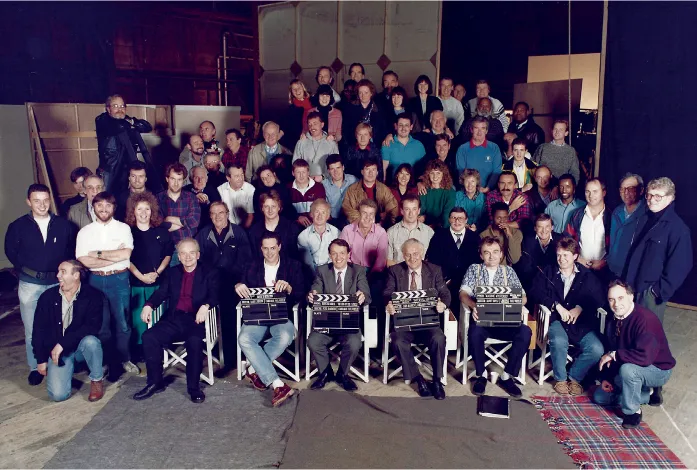
Inspector Morse cast and crew.
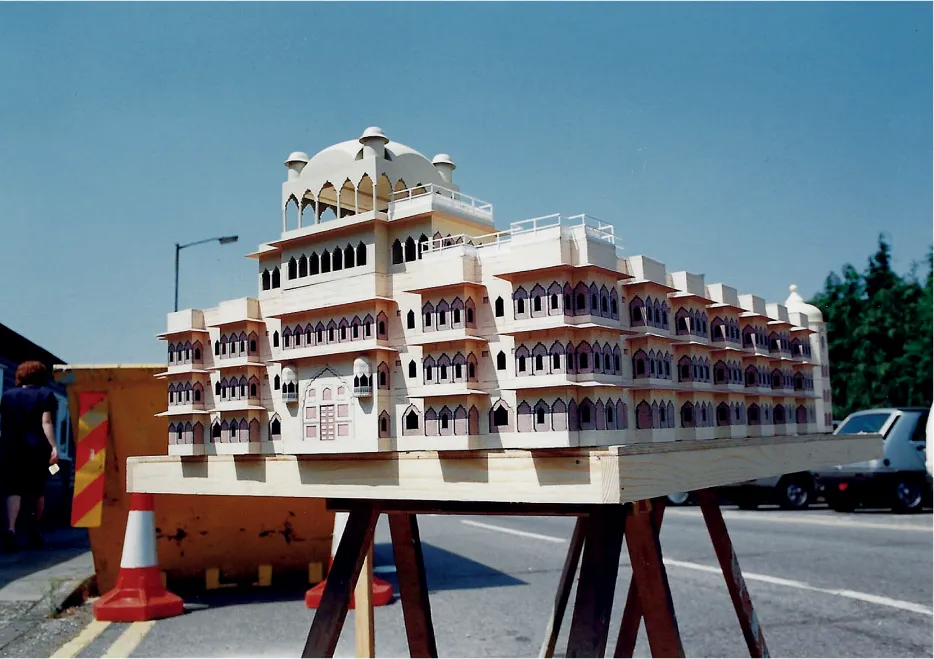
A miniature used in Inspector Morse.
During the series we had the help of a very good police advisor, which was welcome as the art department had to fabricate all the warrant cards and official documents. As it happened the advisor had just retired and lived very close to me, which was very handy.
In one sequence the interior of Morse’s apartment had to catch fire. I suggested that we should build a set at Pinewood, which we successfully set on fire, and it saved a lot of time.
Soldier Soldier
I was production designer on the television series Soldier Soldier, which first aired in 1991. On the very first episode there was a scene where two soldiers had a fight in a rubbish dump. There was meant to be a pile of ‘live’ rubbish, which meant household waste, but I didn’t much like the idea of this! The pile had to be very high, about 20ft, so I designed a pyramid structure that was dressed with black plastic bags not filled with household waste. Lucy Gannon was the writer and originator of the series. She had previously been a nurse and it was her first job, so she was a bit bothered about us having to do this, saying that she wouldn’t have written that scene if she had known it would cause any difficulty. I tried to put her mind at rest and said that it was my job to solve the problems so she should write whatever was in her mind to make the story work.
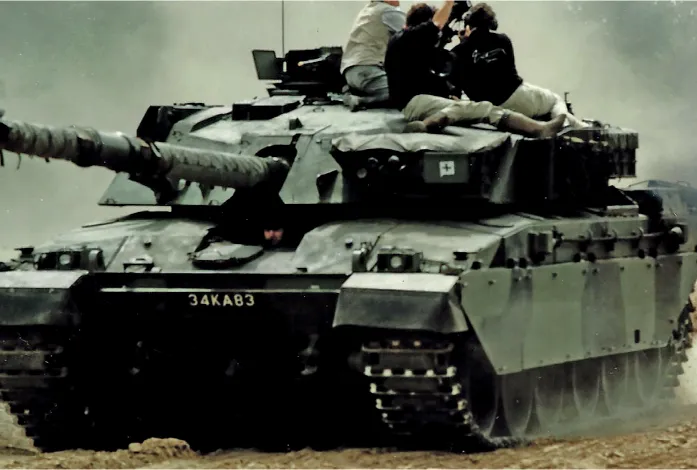
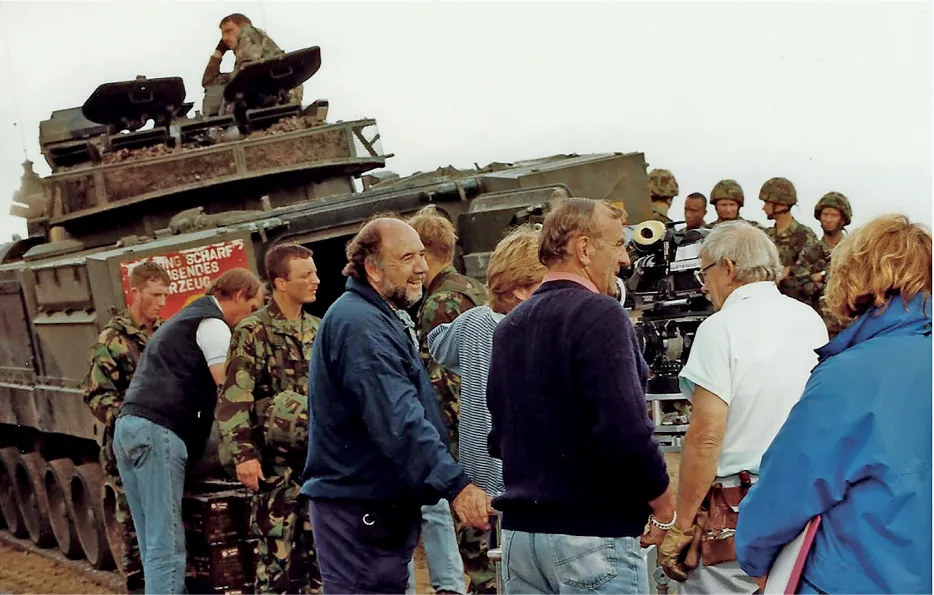
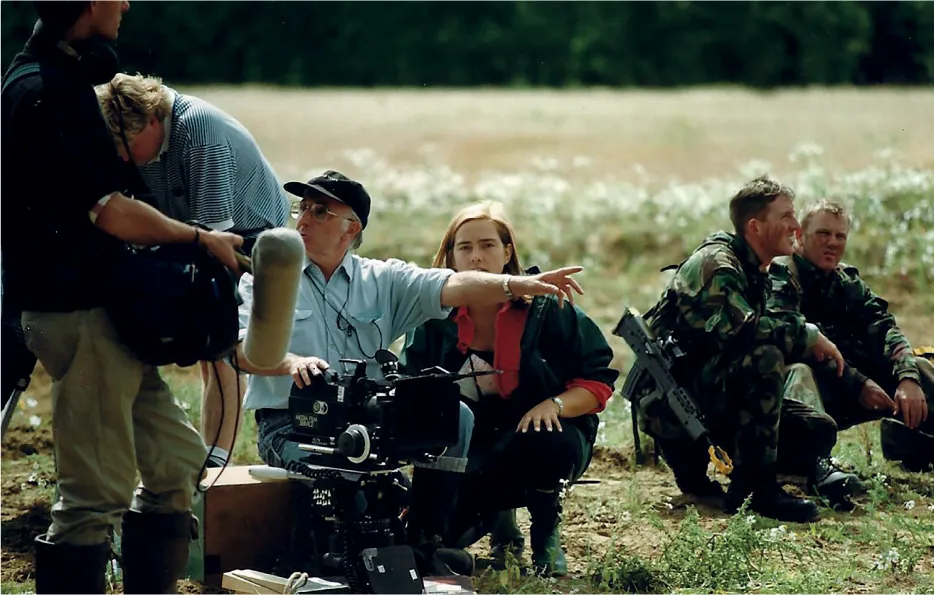
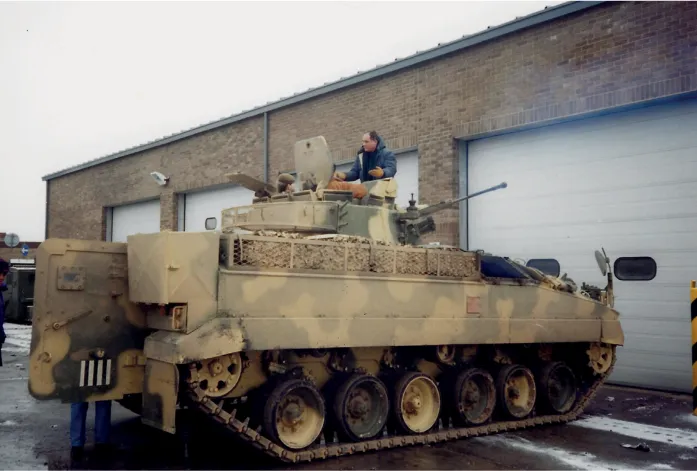
On location in Germany there was a sequence in which there was an exercise using tanks, at least six Warriors and four Centurions, with the troops debussing (leaving the tanks). Robson Green, Jerome Flynn and Gary Love were travelling in a Warrior when it had to go out of control and turn upside down. A real tank would be too heavy (about 30–40 tons) but we did acquire a stripped-out tank, which made it a lot lighter, probably about 15 tons.
The camera crew on a Warrior tank.
Camera crew and cast in Germany ready for action.
The camera crew with director of photography Alec Mills.
Me checking out the tank!
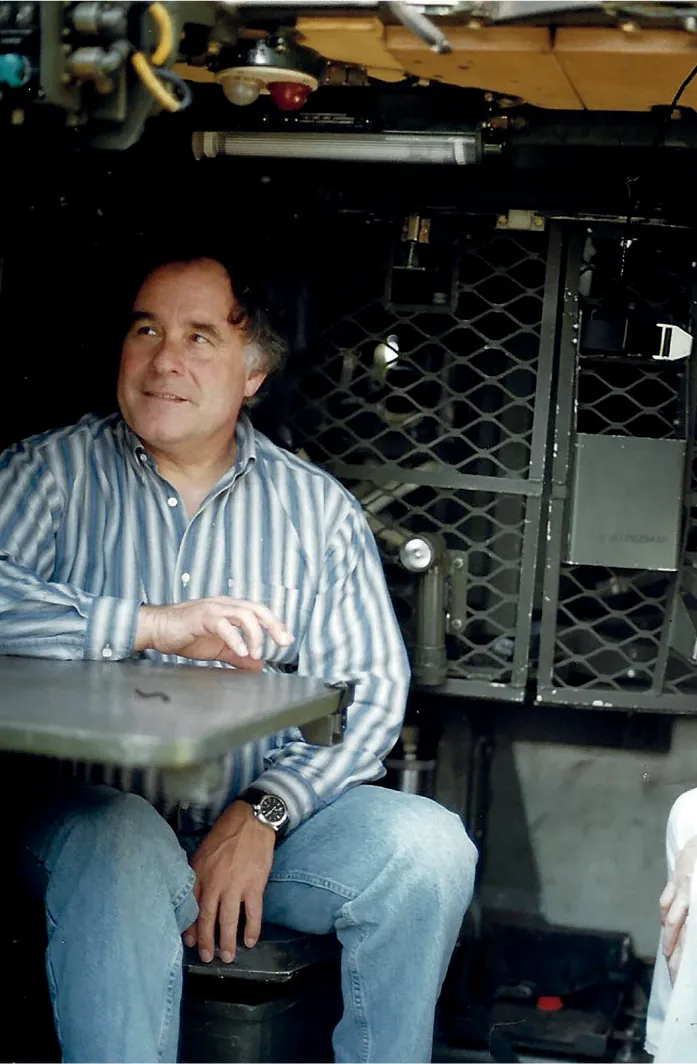
Checked the outside, now for the interior!
The tank had to be pushed down an embankment into the river and turned upside down. Having been stripped out and therefore not having any means of propulsion, it had to be pushed by another tank, all organised by technical special effects supervisor Ian Wingrove. There was a problem, however, as we had to do all of this on army property because the roadways had to be substantial enough to carry the weight of the tanks. There wasn’t a river in sight, just a small field at the bottom of the bank. We made our own ‘river’ by digging a hole in the field and putting a very large black pond liner at the bottom, filling it with water and dressing the edges with reeds and other vegetation. It was a night shot and worked out extremely well.
We had to build the interior of the upside-down Warrior as a breakaway set hanging over a water tank. ‘Breakaway’ means destroyable scenery or props; in this case it means that the wall of the military tank could be removed to allow camera access. The set was rigged so that the tank could be lowered into the water for the interior shots. It worked very well and it did look dramatic.
The director who had planned this sequence left suddenly at the eleventh hour. I was fully aware of what was planned so when the new director arrived from London, obviously without much idea of what was going on, he asked me to help. I went through the plan with the major who was helping us and it all turned out OK. We had good fun that day! This is a prime example of not only understanding your job but also needing to know how it interacts with others.
Another set was a mock-up of a guard house which we built within the barracks. The structure was made in the UK, then shipped out and erected on site. It looked so good when it was finished that the soldiers thought we’d built them a new guard house.
On location in Hong Kong, I needed a set decorator to join me. My first choice was Peter Young but he couldn’t fly out for a few months so he recommended Malcolm Stone. I’d never worked with Malcolm before so I was a bit unsure but Peter had already put him on the plane, so I guessed he must be OK!
When Malcolm landed after the long flight, he was obviously hot and tired, but he had a meeting with us straight away. We all had our fingers crossed that it was going to work out. I needn’t have worried as the first set he dressed, a very feminine bedroom, was really good. Everyone was impressed and breathed a sigh of relief. Malcolm and I have been friends ever since and we’ve worked together on many other films.
While I was in Hong Kong I had the privilege of being taken for a trip on a Royal Navy landing craft to check it out for an episode. It was much bigger than I’d imagined and was capable of carrying 400 troops or two Warrior tanks. Each craft had its identification number painted on the hull. Down the centre of the craft was a painted yellow line that the skipper would use as a steering guide as his cockpit was at the rear. He asked if I would like to have a go at steering. ‘Oh, yes please,’ I said. He told me to keep the guideline on any landmark and to keep the craft straight. Much easier said than done! I presumed it was like steering any other boat, starboard to the right and port to the left. My problem was the yellow line wouldn’t stay in line with the landmark. When it went off course, I would spin the wheel to left or right to get back on course, but it was very slow in responding so when my yellow line was in line with the target, it would keep on turning! The skipper wryly asked if I liked zigzagging. He told me to take a look behind me, where the wake was making a very distinct and, I think, quite pretty, pattern. It was a brilliant experience, but I doubt if I’ll ever be asked to join the fleet!
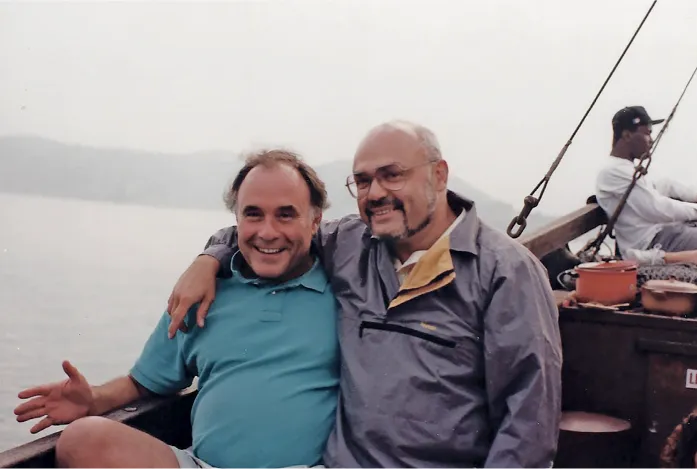
On location in Hong Kong with set dresser Malcolm Stone.
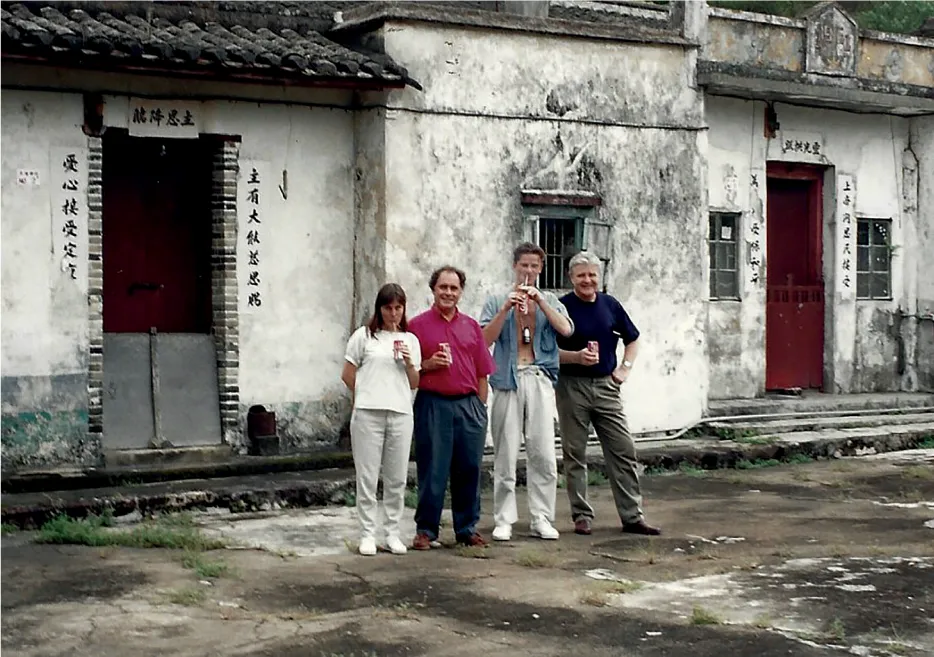
On location in Hong Kong, left to right: production manager Ann Tricklebank, me, director Nick Hamm and producer Chris Kelly.
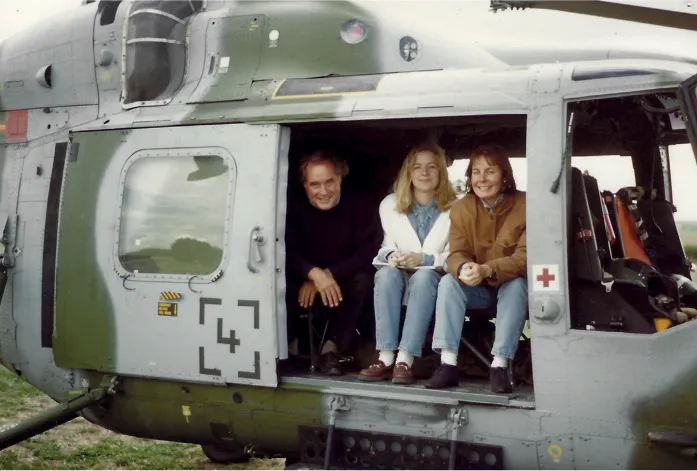
Me with Ann Tricklebank and Sharon Houleghan, off on a recce!
The production manager, Ann Tricklebank, had organised a landing craft for the day of the shoot so she a...