This latest title from the Nature Cures stable provides a comprehensive guide to the foods richest in the nutrients required for healing and boosting the immune system. At some time during their lifetime, everyone suffers an injury or infection of some kind and many are not aware that there are numerous natural foods that can help the body improve its defences, attack its enemies more effectively and heal faster. Some of these should be consumed internally and some should be used externally, and there are some that can be used in both ways – Recovery from Injury, Surgery and Infection, backed up by historic and current research findings, explains the properties of these foods, what is most effective in specific situations (including STDs – the most visited section of the naturecures.co.uk website), and how best to consume them.
- 264 pages
- English
- ePUB (mobile friendly)
- Available on iOS & Android
eBook - ePub
About this book
Trusted by 375,005 students
Access to over 1.5 million titles for a fair monthly price.
Study more efficiently using our study tools.
Information
Topic
Medicine17
Part I
Antimicrobial and healing edible plants
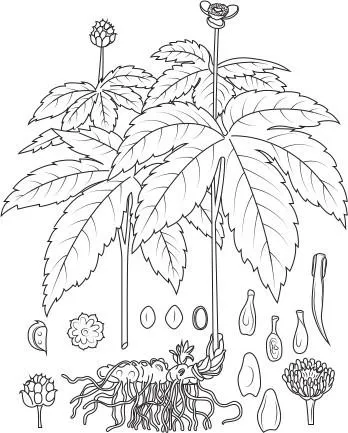
Goldenseal (Hydrastis canadensis) – see page 7818
19
Plants are constantly attacked by pathogenic bacteria and other microbes such as fungi, parasites, viruses and yeasts; because they have no immune system, as such, they have evolved to produce effective antimicrobial compounds. Some parts of plants that are most vulnerable, or need to resist rot for long periods of time, such as the bark, roots and seeds, are especially full of some very potent antimicrobials.
When an individual is injured or undergoes surgery it is very easy for bacteria and other infectious agents to enter the body as the protective layer of skin has been broken. Equally, when someone’s immune system is not working as it should, infections can overcome the body’s natural defences. Adding natural antibiotics to the diet can help to avoid infection and assist the body to naturally fight off any that already exist. Try drinking three cups of tea daily made from any of the herbs and spices listed on page 20 and make dishes such as chilli, curries, omelettes, rice dishes, salads and soups adding herbs and spices from the list.
How to prepare medicinal plants
Unless otherwise stated, the roots of the plants listed on pages 30 to 134 should be washed, chopped and simmered for 15 to 20 minutes then strained and the liquid drunk as a tea. Seeds can be ground and added to hot water or meals. Leaves should be washed, chopped and steeped in hot water for 10-15 minutes, then also strained and consumed as a tea. The tea can be gently reheated or drunk cold with ice. In general, unless otherwise mentioned, three cups per day will be sufficient during recovery from injury or infections.
A teaspoon of pure honey can be added for antimicrobial and healing action and taste, and the addition of freshly squeezed lemon juice can help to provide even more powerful action against infections; however, always add it when the tea has cooled a little to avoid destroying the vitamin content.20
Cloves have powerful antibacterial properties and three can be added, when the tea is still hot, to three cups of tea per day. The following spices are very effective antibiotics and should be sprinkled daily onto meals and soups and/or added to herbal teas.
Common spices with powerful antibiotic properties

Store any herbal antibiotic liquid in a refrigerator and drink the same day, although it is best to make it fresh each time. Always try to obtain organically produced herbs, spices and natural whole foods as this will ensure that the mineral content of the soil was managed naturally and not artificially fertilised and that the crops were not sprayed with pesticides and other chemicals that may also compromise the intestinal bacteria.
Many natural antibiotics are common plants that can be grown very easily and organically in the garden at home or in containers and pots on a balcony, patio or roof garden (see the Nature Cures Pocketbook, Grow Your Own Health Garden) and some can also thrive on a sunny windowsill indoors throughout the year and will also help to purify the air in the home (see Air-purifying Houseplants).
Many of the most nutritious and antimicrobial plants are now considered ‘weeds’ and are dug up and discarded or 21sprayed with toxic herbicides – a great loss as well as a threat to biodiversity.
Many of the plants that have antibacterial properties also possess antifungal and antiviral abilities, as they have developed these to protect the plant itself against all comers; when consumed therefore they will have a similar effect within or upon the human body. Often, taking extracts of specific compounds will not work as well as consuming the whole plant as the co-factors that make the antibacterial properties work are numerous and co-exist within the plant but are not yet fully understood by scientists.
Teas made from these natural antibiotic plants can also be used to clean surfaces in the home as an alternative, without the powerful chemicals that exist in most commercial cleaning products. This is important when anyone has an infection as it lessens the toxic overload on the body. Microbe...
Table of contents
- Title Page
- Contents
- About the Author
- INTRODUCTION
- Part I: ANTIMICROBIAL AND HEALING EDIBLE PLANTS
- Part II: NUTRIENTS TO AID RECOVERY
- References
- Further reading
- Index
- Also in the Nature Cures series
- Copyright
Frequently asked questions
Yes, you can cancel anytime from the Subscription tab in your account settings on the Perlego website. Your subscription will stay active until the end of your current billing period. Learn how to cancel your subscription
No, books cannot be downloaded as external files, such as PDFs, for use outside of Perlego. However, you can download books within the Perlego app for offline reading on mobile or tablet. Learn how to download books offline
Perlego offers two plans: Essential and Complete
- Essential is ideal for learners and professionals who enjoy exploring a wide range of subjects. Access the Essential Library with 800,000+ trusted titles and best-sellers across business, personal growth, and the humanities. Includes unlimited reading time and Standard Read Aloud voice.
- Complete: Perfect for advanced learners and researchers needing full, unrestricted access. Unlock 1.5M+ books across hundreds of subjects, including academic and specialized titles. The Complete Plan also includes advanced features like Premium Read Aloud and Research Assistant.
We are an online textbook subscription service, where you can get access to an entire online library for less than the price of a single book per month. With over 1.5 million books across 990+ topics, we’ve got you covered! Learn about our mission
Look out for the read-aloud symbol on your next book to see if you can listen to it. The read-aloud tool reads text aloud for you, highlighting the text as it is being read. You can pause it, speed it up and slow it down. Learn more about Read Aloud
Yes! You can use the Perlego app on both iOS and Android devices to read anytime, anywhere — even offline. Perfect for commutes or when you’re on the go.
Please note we cannot support devices running on iOS 13 and Android 7 or earlier. Learn more about using the app
Please note we cannot support devices running on iOS 13 and Android 7 or earlier. Learn more about using the app
Yes, you can access Recovery from Injury, Surgery and Infection by Nat Hawes in PDF and/or ePUB format, as well as other popular books in Medicine & Alternative & Complementary Medicine. We have over 1.5 million books available in our catalogue for you to explore.