Ready your school counseling program for the kids who need it the most!
For many students, elementary school is a time of tough transitions. When a student struggles in class, has difficulty making friends, experiences a life-changing event or crisis, or faces other challenges, your support is essential. Finding the right intervention for each identified student can be the key to that child's future success.
In this companion book to The Use of Data in School Counseling and Hatching Results for Elementary School Counseling, Trish Hatch, Ashley Kruger, Nicole Pablo and Whitney Triplett offer a systematic, evidence-based approach to creating and implementing high-quality interventions within a Multi-Tiered System of Support (MTSS). This hands-on guide features:
• Thorough exploration and explanation of Tier 2 and Tier 3 activities
• Guidelines for progress monitoring and collaboration with teachers and family
• Templates for developing lesson plans and action plans
• Web-based resources, including downloadable templates and a discussion guide
• Personal stories and vignettes from practicing school counselors and teachers of the year
Every student deserves a quality education in a positive, healthy, safe environment. When you provide targeted, data-driven interventions for students in need, you make that possible for them—and improve school life for their classmates and teachers as well.

eBook - ePub
Hatching Tier Two and Three Interventions in Your Elementary School Counseling Program
- 376 pages
- English
- ePUB (mobile friendly)
- Available on iOS & Android
eBook - ePub
Hatching Tier Two and Three Interventions in Your Elementary School Counseling Program
About this book
Information
1 Multi-Tiered, Multi-Domain System of Supports A Framework for Tier 2
This text is designed to guide elementary (K–8) school counselors in developing, implementing, and evaluating Tier 2 and Tier 3 interventions. As we begin, it will be helpful to provide an overall contextual framework regarding the Multi-Tiered System of Supports (MTSS) and introduce the new Multi-Tiered, Multi-Domain System of Supports (MTMDSS), which aligns with the role of the school counselor at any grade level and the American School Counselor Association (ASCA) National Model (ASCA, 2012).
An Introduction to MTSS in Education
The Multi-Tiered System of Supports (MTSS) is a comprehensive framework that addresses the academic and behavioral needs of all students within the educational system (Cowan, Vaillancourt, Rossen, & Pollitt, 2013; Hawken, Vincent, & Schumann, 2008). Research shows that schools benefit from multiple, evidence-based interventions of varying intensity to meet the range of behavioral, social/emotional, and academic needs of all students (Anderson & Borgmeier, 2010). MTSS is an outgrowth of RTI and encompasses PBIS.
RTI and PBIS
Response to Intervention (RTI) is a framework for a multi-tiered approach to supporting students’ learning needs through early identification and intervention. It calls for quality classroom instruction for all students (Tier 1), targeted interventions for some students (Tier 2), and intensive interventions for those students who require additional support (Tier 3) (Positive Behavioral Interventions & Supports, 2019; RTI Action Network, n.d.). Although it emerged after the No Child Left Behind Act (2002) to promote equity in special education referrals and to reduce unnecessary referrals for special education (Fuchs & Fuchs, 2006; Gersten & Dimino, 2006), it quickly became apparent that RTI was an efficient and effective mechanism for ensuring that all students receive supports according to their tiered level of need. Originally designed to support the academic instruction of students, it later expanded to include behavioral instruction and supports for students as well (Stormont, Reinke, & Herman, 2010). Like RTI, MTSS facilitates effective universal implementation, which focuses on core academic and differentiated interventions to support the academic success of all students.
The purpose of PBIS is to improve social, emotional, and academic outcomes for students by implementing effective, equitable, and efficient systems of support in schools (www.pbis.org). PBIS is designed to reinforce appropriate behavior and prevent inappropriate behavior by teaching core principles and providing systematically applied interventions based on identified need. PBIS promotes systems change to ensure consistency, schoolwide activities, and core curriculum instruction for students on behavior expectations. Like PBIS, MTSS is a problem-solving model that employs a continuum of positive, proactive, multi-tiered behavioral interventions (Kennelly & Monrad, 2007). See Figure 1.1 for illustrations of the RTI and PBIS models.
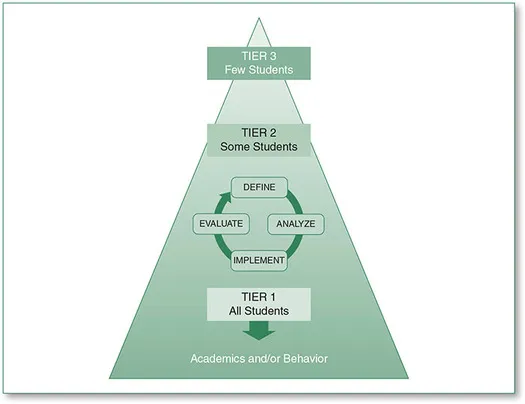
Combining RTI and PBIS, MTSS is a tiered systems approach of increasingly intensive interventions. Within the MTSS framework utilized in general education programs (see Figure 1.2), MTSS Tier 1 is the foundation for both academic and behavioral systems of support. Tier 1 contains universal support and core instruction that all students receive from their classroom teacher. For example, all students receive multiplication tables in the third grade. Similarly, all students participate in universal instruction on appropriate playground behavior delivered throughout the school. Preventative in nature, Tier 1 programs and activities are implemented with the entire student population. Typically, general education teachers proactively differentiate (modify or adapt) their instructional practices to support students’ specialized needs, providing a more challenging or more supportive learning environment as necessary.
Tier 2 within MTSS is composed of supplemental interventions, in addition to Tier 1 core instruction, for students identified (through the use of data identifiers or indicators) as needing additional supports, such as small group practices and skill building. Teachers and others collaborate to determine the data-driven identifiers that will serve as the mechanism for the students to receive a Tier 2–level intervention (e.g., scoring less than proficient on a benchmark assessment). Tier 3 addresses students with the highest level of need, providing supports of a greater intensity, specifically tailored to meet the needs of individual students (Illinois State Board of Education, 2010).
Figure 1.1 Traditional Tiered Educational Models: RTI and PBIS
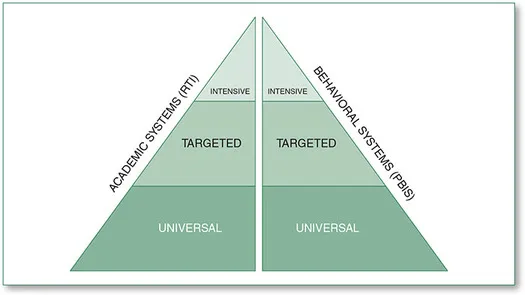
Figure 1.2 Traditional Tiered Educational Models: MTSS
Students who are not responsive to the Tier 1 supports may receive a Tier 2 intervention. These students continue to receive the Tier 1 intervention, but more structure and assistance is provided to assist them in meeting schoolwide expectations. Students receiving Tier 2 supports typically exhibit behavior that is not dangerous to themselves or others, but is disruptive to their learning or the learning of their peers. Tier 2 interventions are implemented similarly across groups of students who exhibit similar behavior problems and are therefore likely to benefit from the same type of intervention. For example, students who exhibit deficits in social competence (e.g., conflict resolution skills) might participate in a skills group, in which all students in the group receive the same level and intensity of instruction, as well as similar feedback on their behavior (Anderson & Borgmeier, 2010).
Introduction to MTSS and School Counseling
In recent years, the field of school counseling has aligned its work with RTI, PBIS, and most recently MTSS. As scholars have noted, school counselors are integral to the RTI process within a school building, participating and collaborating with the RTI team to implement appropriate supports for students at all tiers (Goodman-Scott, Doyle, & Brott, 2014; Ockerman, Mason, & Feiker-Hollenbeck, 2012; Ryan, Kaffenberger, & Carroll, 2011; Ziomek-Daigle, Goodman-Scott, Cavin, & Donohue, 2016). As active members, of the RTI teams, counselors provide interventions through the use of data, progress, monitoring and delivery of services and interventions (Ockerman et al., 2012; Ziomek-Daigle et al., 2016).
Goodman-Scott, Betters-Bubon, and Donohue (2019) aligned the three-tiered model approach to prevention and intervention activities within the PBIS model with school counseling, recommending school counseling activities be organized by listing a variety of delivery components within the counseling program with the three-tiered model approach of PBIS—for example, core curriculum and individual student planning as part of the 80% Tier 1 portion of PBIS ensuring counselors are providing both direct and indirect services (Goodman-Scott et al., 2014; Shepard, Shahidullah, & Carlson, 2013).
Similar to the PBIS approach, school counselors are encouraged to spend 80% of their time with students in Tier 1 providing core curriculum and individual student planning. In Tier 2 (approximately 15%), responsive services are aligned, which includes small group counseling, consultation, and collaboration. In Tier 3, which is reserved for 5% of the population, the authors identify referrals to other providers, consultation, and collaboration. School counselors are unique in the process, serving as leaders, advocates, and change agents collaborating in the school on data-driven frameworks, decision-making models, program evaluation, and progress monitoring.
MTSS and School Counseling
As RTI and PBIS frameworks have combined to comprise the new innovation of MTSS, counselor educators in the school counseling field have collaborated to align comprehensive school counseling program models to MTSS (Sink, 2016). Calling on counselors to be leaders, implementers, facilitators, and supporters of MTSS, in this work, Ziomek-Daigle et al. (2016) describe the overlap between the two frameworks (RTI and PBIS), calling attention to the specific overlaps of data, evidence-based practices, collaboration, advocacy, cultural responsiveness, and systemic change. Most recently, Goodman-Scott et al. (2019) have released a new and comprehensive text titled A School Counselor’s Guide to Multi-Tiered Systems of Support, in which they provide school counselors with extensive information and practical resources. Written by national experts in the field and providing practical resources for strengthening a comprehensive school counseling program (CSCP) through the alignment with MTSS across three tiers of support, and with a strong research and theoretical base, this text is designed to improve CSCPs, particularly through MTSS alignment.
Connecting MTSS to School Counseling Domains: MTMDSS
While much has been written discussing the school counselor’s role within the MTSS framework, this text describes the new model being proposed, which focuses on a more inclusive framework for applying the concept of MTSS to the school counselor’s “deliver” component for all three domains within the ASCA National Model (2019a). While MTSS is focused on two areas (academic and behavioral), school counselors focus on three domains: (1) academic, (2) college/career, and (3) social/emotional development. To align with the work of the school counselor, the Multi-Tiered, Multi-Domain System of Supports (MTMDSS) (see Figure 1.3) was designed to align with MTSS as a decision-making framework that utilizes evidence-based practices in core instruction and assessments to address the universal and targeted data-driven intervention needs of all students in all school counseling domains. (We also include college in the career domain.) Note that for purposes of this text, from this point forward, we refer to the three school counseling domains of academic, college/career, and social/emotional development.
School counseling programs are an integral part of the total educational program for student success. The entire school community is invested in student academic achievement, college and career readiness, and social/emotional well-being. Schoolwide proactive, preventative, and data-driven intervention services and activities belong to the entire school. Therefore, it is recommended that schools add the third domain (college and career readiness) to their MTSS program and create a comprehensive, schoolwide Multi-Tiered, Multi-Domain System of Supports (MTMDSS).
Multi-Tiered, Multi-Domain System of Supports (MTMDSS)
The MTMDSS is a framework (see Figure 1.3) designed specifically for school counseling programs to organize a continuum of core activities, instruction, and interventions to meet students’ needs with the goals of (1) ensuring that all students receive developmentally appropriate core instruction in all three ...
Table of contents
- Cover
- Half Title
- Acknowledgements
- Title Page
- Copyright Page
- Contents
- Foreword
- Acknowledgments
- About the Authors
- Introduction
- 1 Multi-Tiered, Multi-Domain System of Supports A Framework for Tier 2
- 2 Using Data to Drive Tier 2 Interventions
- 3 Determining the Appropriate Tier 2 Interventions
- 4 Franchising Tier 2 Interventions
- 5 Planning for Small Groups
- 6 Selecting and Developing Small Group Curriculum
- 7 Facilitating Small Groups What Works and What Doesn’t
- 8 Assessments and Progress Monitoring
- 9 Tier 3 Intensive Interventions
- 10 Other Tier 2 and 3 Evaluations and Sharing Results
- Appendix A Practitioner-Focused Research Successful Implementation of a Federally Funded Violence Prevention Elementary School Counseling Program: Results Bring Sustainability
- References
- Appendix B Online Appendix
- References
- Index
- Advertisement
Trusted by 375,005 students
Access to over 1.5 million titles for a fair monthly price.
Study more efficiently using our study tools.
Frequently asked questions
Yes, you can cancel anytime from the Subscription tab in your account settings on the Perlego website. Your subscription will stay active until the end of your current billing period. Learn how to cancel your subscription
No, books cannot be downloaded as external files, such as PDFs, for use outside of Perlego. However, you can download books within the Perlego app for offline reading on mobile or tablet. Learn how to download books offline
Perlego offers two plans: Essential and Complete
- Essential is ideal for learners and professionals who enjoy exploring a wide range of subjects. Access the Essential Library with 800,000+ trusted titles and best-sellers across business, personal growth, and the humanities. Includes unlimited reading time and Standard Read Aloud voice.
- Complete: Perfect for advanced learners and researchers needing full, unrestricted access. Unlock 1.5M+ books across hundreds of subjects, including academic and specialized titles. The Complete Plan also includes advanced features like Premium Read Aloud and Research Assistant.
We are an online textbook subscription service, where you can get access to an entire online library for less than the price of a single book per month. With over 1.5 million books across 990+ topics, we’ve got you covered! Learn about our mission
Look out for the read-aloud symbol on your next book to see if you can listen to it. The read-aloud tool reads text aloud for you, highlighting the text as it is being read. You can pause it, speed it up and slow it down. Learn more about Read Aloud
Yes! You can use the Perlego app on both iOS and Android devices to read anytime, anywhere — even offline. Perfect for commutes or when you’re on the go.
Please note we cannot support devices running on iOS 13 and Android 7 or earlier. Learn more about using the app
Please note we cannot support devices running on iOS 13 and Android 7 or earlier. Learn more about using the app
Yes, you can access Hatching Tier Two and Three Interventions in Your Elementary School Counseling Program by Trish Hatch,Ashley Kruger,Nicole Pablo,Whitney Triplett in PDF and/or ePUB format, as well as other popular books in Education & Counseling in Career Development. We have over 1.5 million books available in our catalogue for you to explore.