eBook - ePub
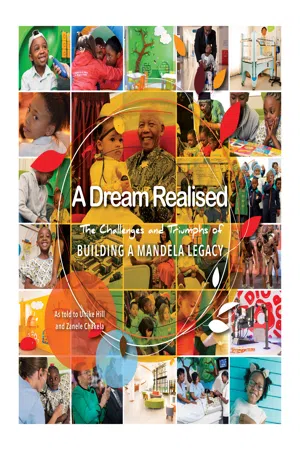
A Dream Realised
The Challenges and Triumphs of Building a Mandela Legacy
- 192 pages
- English
- ePUB (mobile friendly)
- Available on iOS & Android
eBook - ePub
About this book
'How can there be only one dedicated hospital in the country for our children?' When Madiba asked this question, he sowed the seeds of a challenge that would grow into a legacy.
A seed may be small but its size is disproportionate to what it can become over time. The Nelson Mandela Children's Hospital was a project that seemed impossible when it was just an idea that started with ten people seated around a dinner table. As they discussed the state of healthcare in the country and shared their experiences, they realised that it was the children of Southern Africa who were the most disadvantaged by the lack of dedicated paediatric facilities. At the end of the evening a statement by the late Dr Nthato Motlana took hold and became the catalyst for a remarkable journey: 'I will speak to Nelson,' he said.
With South Africa's first democratically elected president Nelson Mandela's backing, the board of the Children's Fund was inspired to take up the challenge to address this vital need. After years of global research and advice from experts in numerous different fields a Trust was formed to oversee the project and, critically, to set about raising the one billion rand it would take to build, equip and staff a state-of-the-art children's hospital.
The stories behind the planning for, fundraising and building of the Nelson Mandela Children's Hospital are inspiring, personal, and sometimes heart-breaking. It was a long and arduous journey, beset with difficulties, but the dedicated team's commitment and courage prevailed to create a living legacy that will truly impact the lives of children for generations to come.
Today, the Nelson Mandela Children's Hospital in Johannesburg is a proud testimony to a uniquely African story which honours the memory of a great statesman and celebrates the children for whom he cared so deeply.
Trusted by 375,005 students
Access to over 1.5 million titles for a fair monthly price.
Study more efficiently using our study tools.
Information
Topic
MedicineSubtopic
Architecture General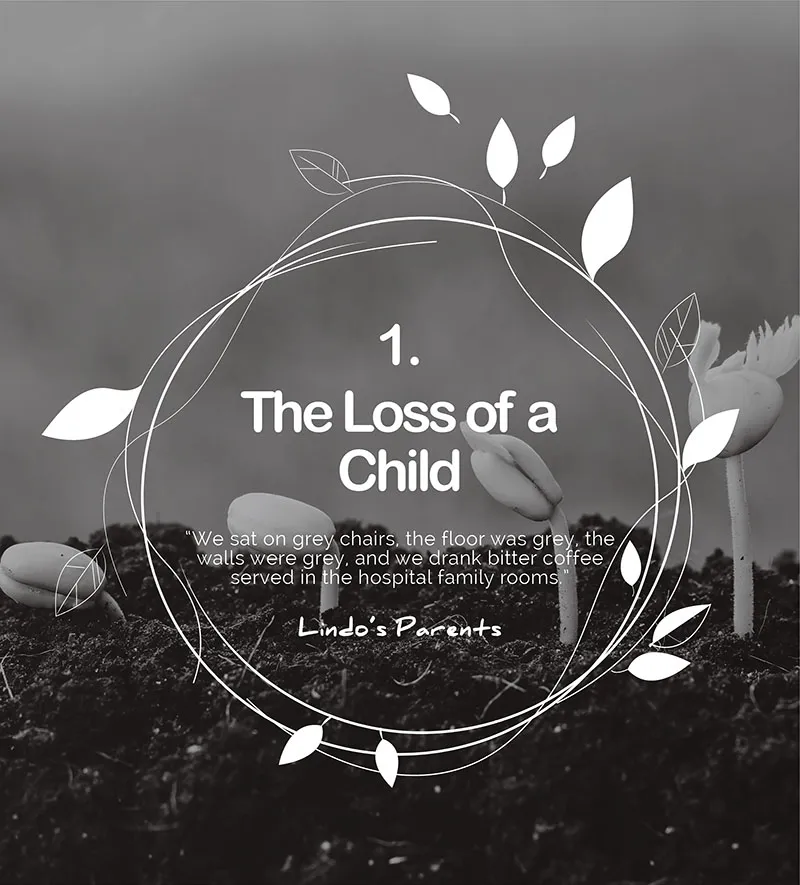
When Lindo’s mother answered the call from a number she didn’t know, the news was what every parent dreads receiving. ‘Your son has been in an accident and needs urgent medical attention.’ Instinctively, she asked the paramedic to take her son to the nearest children’s hospital.
There was a moment’s hesitation before the paramedic replied. ‘Ma’am, we can’t do that. We can’t fly him to Cape Town.’
‘I didn’t mean Cape Town,’ the mother answered, confused. Surely, there was a children’s hospital in Gauteng? ‘Where do people take their children in an emergency?’ she asked the paramedic. There had to be a place for children when they needed urgent treatment. Right?
‘There are no other children’s hospitals,’ explained the paramedic, as precious minutes ticked by. ‘If you have no personal preference, I’ll take him to the nearest private hospital.’
To their parents, children are their lights, their lives, their loves, their hearts walking outside their bodies. No parent should ever have to face a situation in which a child requires specialised care and then have to deal with challenges in accessing the specialised care while their child’s life hangs in the balance.
When she heard the news of her son’s injury, Lindo’s mother was engulfed by fear. Although she stayed calm throughout – instructing the paramedics and later the nurses at the hospital on what might be best for her son – she must have shuddered at the sight of him, so small and fragile, lying in a hospital bed linked to machines that assisted his breathing.
Lindo’s mother recalls her son fondly. Her eyes light up and pride fills her words.
‘He was a beautiful child, so gentle and loving.’ She pauses for a minute and then continues in her measured manner. ‘He always called me when the TV news featured former president Thabo Mbeki because, in his words, that was the adults’ president. And he wanted to be called whenever Mr Mandela was on TV because that was his – the children’s – president. He was wise beyond his five years.’
Five-year-old boys climb trees, kick soccer balls with their friends and snuggle up to their loved ones when they’ve skinned their knees. Lindo was that boy – a symbol of promise; promise for brighter days ahead, days filled with laughter, playfulness, energy and life.
No parent should outlive their child.
The paramedics phoned around desperately trying to establish which hospital would accept a severely injured five-year-old. They needed a hospital that would not only have the expertise, including plastic surgery, to deal with the child’s injuries but also have access to a paediatrician. And they needed one now, with the small boy clinging precariously to life. They tried a private hospital on the outskirts of central Johannesburg, aware of the precious minutes ticking by. ‘Look there’s no bed anywhere else – this is an emergency! Please will you take this child?’
Yes, they secured a bed, but there was another problem: ‘This is not a children’s hospital; we have no paediatricians.’ So, the search then moved to finding a paediatrician who could treat Lindo at that hospital.
Time kept on slipping by, slipping ...
Sister Ncediwe Stemela was on duty in the trauma unit the day that Lindo was admitted.
Ncedi is an experienced critical care nurse. She remembers wondering why the senior staff were called into an urgent meeting – had they done something wrong? As the nurses huddled into the office, the head nurse announced, ‘We are expecting a VIP patient.’
Despite their curiosity about who the important person was, they understood the protocols that usually surrounded important dignitaries, celebrities and other well-known people who were admitted to the hospital. They had to focus on the patient’s care at all times. The head nurse continued. ‘Mr Mandela will be visiting this patient. You know he loves children, so he’ll be the first person to walk in here. I need people who can conduct themselves professionally.’
Ncedi was one of the nurses assigned to care for the desperately injured Lindo. She was often at his side in a small ICU isolation cubicle. Because of the severity of his injuries, it was important to limit the risk of infection while he was in such a vulnerable state. The cubicle was incredibly small and cramped with all kinds of equipment that beeped and hissed as they tried to keep the young boy alive and pain-free.
When reflecting on her time with Lindo, the empathetic nurse battles to revisit the difficulty that faced his parents. She recalls the mother making a request when she had to leave her son’s bedside. ‘Please, just talk to him. Tell him what your name is, even if you think he is in a deep sleep because of the medication. Talk to him and explain what you’re doing.’
A mother always knows best. Lindo’s mother explained that although the nurses thought that Lindo might not feel anything because of his sedation, it was important that he was aware that there were people around him who were caring for him. This was her Lindo, an affectionate and intelligent child who thrived in the company of others. She knew the importance of continued engagement with and acknowledgement of Lindo, even though he was unconscious. The nurses could not help but feel attached to this little boy’s family who had put all their faith in them to soothe the young patient, waiting patiently for a miracle to save him.
“With burns this severe, it’s most unlikely that his body, this small five-year-old body, will be able to [cope].”
As Lindo’s treatment began, the medical team knew that the challenge facing them would be huge. It was the hospital’s policy to be transparent and to explain to the family what to expect. As Ncedi elaborates, ‘Because if you sugar-coat the whole thing, when things start to fall apart …’
The prognosis was dire: With such severe burns, it was most unlikely that his body would be able to cope. For the next 30 days, the parents kept vigil as the hospital team tried to save their son’s life. The room in which they spent many hours had cheerless furniture that seemed to match their grey world, while they continued to hope that Lindo, their last born, would recover from his serious burns. They sat on grey chairs, the floor was grey, the walls were grey, and they drank bitter coffee served in the hospital family rooms. But still they sat there. Hoping. Praying.
There are many occasions that will bring African people together, ensuring th...
Table of contents
- Imprint Page
- Table of Contents
- Foreword – Judge Yvonne Mokgoro
- Introduction – Mrs Graça Machel
- Prologue
- Chapter 1 – The Loss of a Child
- Chapter 2 – Seeds of Hope
- Chapter 3 – Children Are Not ‘Little Adults’
- Chapter 4 – The Medical Village
- Chapter 5 – Suffer the Little Children
- Chapter 6 – An African Landscape
- Chapter 7 – Building Foundations for the Future
- Chapter 8 – Angels in Uniform
- Chapter 9 – The Psychology of Nature and Monsters
- Chapter 10 – A Billion Reasons to Trudge On
- Chapter 11 – A Mighty Tree Bows Down
- Chapter 12 – An African Story
- Would you like to make a donation?
- Would you like to order multiple copies of this book?
- Stay in touch with the Nelson Mandela Children’s Hospital
- Acknowledgements
- Footnotes
Frequently asked questions
Yes, you can cancel anytime from the Subscription tab in your account settings on the Perlego website. Your subscription will stay active until the end of your current billing period. Learn how to cancel your subscription
No, books cannot be downloaded as external files, such as PDFs, for use outside of Perlego. However, you can download books within the Perlego app for offline reading on mobile or tablet. Learn how to download books offline
Perlego offers two plans: Essential and Complete
- Essential is ideal for learners and professionals who enjoy exploring a wide range of subjects. Access the Essential Library with 800,000+ trusted titles and best-sellers across business, personal growth, and the humanities. Includes unlimited reading time and Standard Read Aloud voice.
- Complete: Perfect for advanced learners and researchers needing full, unrestricted access. Unlock 1.5M+ books across hundreds of subjects, including academic and specialized titles. The Complete Plan also includes advanced features like Premium Read Aloud and Research Assistant.
We are an online textbook subscription service, where you can get access to an entire online library for less than the price of a single book per month. With over 1.5 million books across 990+ topics, we’ve got you covered! Learn about our mission
Look out for the read-aloud symbol on your next book to see if you can listen to it. The read-aloud tool reads text aloud for you, highlighting the text as it is being read. You can pause it, speed it up and slow it down. Learn more about Read Aloud
Yes! You can use the Perlego app on both iOS and Android devices to read anytime, anywhere — even offline. Perfect for commutes or when you’re on the go.
Please note we cannot support devices running on iOS 13 and Android 7 or earlier. Learn more about using the app
Please note we cannot support devices running on iOS 13 and Android 7 or earlier. Learn more about using the app
Yes, you can access A Dream Realised by Ulrike Hill,Zanele Chakela in PDF and/or ePUB format, as well as other popular books in Medicine & Architecture General. We have over 1.5 million books available in our catalogue for you to explore.