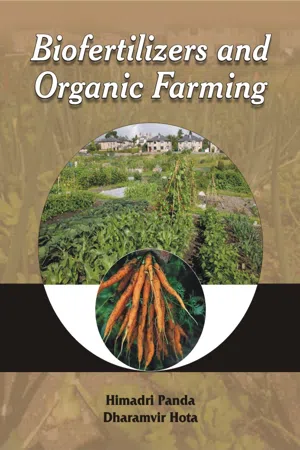
Increasing population levels on a near stabilized agricultural land places a heavy burden on the soil source—particularly its nutrient supplying power. Chemical fertilizers have come to increase the output of agricultural product and to meet ever increasing demand of human population. The problem is further compounded in several areas due to excessive use of chemical fertilizers which resulted into considerable deterioration in the quality of indigenous soil. Intensive agriculture with the use of chemical fertilizers in large amount has, no doubt, resulted in manifold increase in the productivity of farm commodities but the adverse effect of these chemicals are clearly visible on soil structure, microflora, quality of water, food and fodder. Organic farming has emerged as the only answer to bring sustainability to agriculture and environment. Organic farming is a farming integration of biological, cultural and natural inputs including integrated diseases and pest management practices. Integrated plant nutrition can be best if it is practised on scientific facts, local conditions and microeconmics. We hope this publication will create a balanced, objective and science based appreciation for meeting the nutrient needs of agriculture. This book has been written for agricultural planners, soil scientists, biologists, microbiologists, students, teachers, fertilizer industry, personnel research and development units, organisation engaged in biofertilizer production, training centres, all those interested in the efficient use and recycling of wastes, resource management and sustainable farming. Contents Chapter 1: Integrated Plant Nutrition Systems; Chapter 2: Organic Manures: Their Nature and Characteristics; Chapter 3: Livestock and Human Wastes: Characteristics and Value; Chapter 4: Potential of Organic Materials and Plant Nutrients; Chapter 5: Preparation, Processing and Preservation of Organic Manures; Chapter 6: Biogas Potential from Livestock Wastes and Human Excreta; Chapter 7: Response of Crops to Organic Manures; Chapter 8: Response of Crops to Oragnic Materials in Salt Affected Soils; Chapter 9: Nitrogen Fixation; Chapter 10: Mycorrhizae in Agriculture; Chapter 11: Fertilizers with Organics and Biofertilizers; Chapter 12: Bulky Organic Manures and Crop Residues; Chapter 13: Green Manuring: Nutrient Potentials; Chapter 14: Biological and Industrial Wastes: Source of Plant Nutrients; Chapter 15: Role of Biofertilizers in Crop Production; Chapter 16: Biofertilizers for Flooded Rice Ecosystem; Chapter 17: Production, Distribution and Promotion of Biofertilizers; Chapter 18: Effect of Biofertilizers on Growth; Chapter 19: Biofertilizer: A Supplementary Nutrient; Chapter 20: Bioinoculation and Biofertilizer on Growth; Chapter 21: Significance and Azospirillum brassilense and Pseudomonas on Growth; Chapter 22: Application of Mycorrhizae and Rhizobium on Biomass Production; Chapter 23: Effect of VAM Fungi on Banana Plants; Chapter 24: Mungbean with S
- 592 pages
- English
- PDF
- Available on iOS & Android
eBook - PDF
About this book
Information
Subtopic
AgricultureTable of contents
- Cover
- Preface
- 1. Integrated Plant Nutrition Systems
- 2. Organic Manures: Their Nature and Characteristics
- 3. Livestock and Human Wastes: Characteristics and Value
- 4. Potential of Organic Materials and Plant Nutrients
- 5. Preparation, Processing and Preservation of Organic Manures
- 6. Biogas Potential from Livestock Wastes and Human Excreta
- 7. Response of Crops to Organic Manures
- 8. Response of Crops to Organic Materials in Salt Affected Soils
- 9. Nitrogen Fixation
- 10. Mycorrhizae in Agriculture
- 11. Fertilizers with Organics and Biofertilizers
- 12. Bulky Organic Manures and Crop Residues
- 13. Green Manuring: Nutrient Potentials
- 14. Biological and Industrial Wastes: Source of Plant Nutrients
- 15. Role of Biofertilizers in Crop Production
- 16. Biofertilizers for Flooded Rice Ecosystem
- 17. Production, Distribution and Promotion of Biofertilizers
- 18. Effect of Biofertilizers on Growth
- 19. Biofertilizer: A Supplementary Nutrient
- 20. Bioinoculations and Biofertilizer on Growth
- 21. Significance and Azospirillum brassilense and Pseudomonas on Growth
- 22. Application of Mycorrhizae and Rhizobium on Biomass Production
- 23. Effect of VAM Fungi on Banana Plants
- 24. Mungbean with Solubilizing Bacteria
- 25. Performance of Asymbiotic Biofertilizers
- 26. Effect of Azospirillum on Quality of Sugarcane
- 27. Bio-inoculants for Recycling Banana Wastes
- 28. Pressmud as Plant Growth Promoter
- 29. Biofertilizer for Multipurpose
- 30. Tree Legumes Seedlings
- 31. Infectivity on Growth of Cajanus Cajan
- 32. Saline Soil Tolerance
- 33. Importance of VAM Mycorrhizae
- 34. Biochemical and Genetic Characterization of Mineral Phosphate
- 35. Effect of Phosphobacterium on Growth
- 36. Effect of Phosphomicrobes
- 37. Recommendations
- Bibliography
- Index
Trusted by 375,005 students
Access to over 1.5 million titles for a fair monthly price.
Study more efficiently using our study tools.
Frequently asked questions
Yes, you can cancel anytime from the Subscription tab in your account settings on the Perlego website. Your subscription will stay active until the end of your current billing period. Learn how to cancel your subscription
No, books cannot be downloaded as external files, such as PDFs, for use outside of Perlego. However, you can download books within the Perlego app for offline reading on mobile or tablet. Learn how to download books offline
Perlego offers two plans: Essential and Complete
- Essential is ideal for learners and professionals who enjoy exploring a wide range of subjects. Access the Essential Library with 800,000+ trusted titles and best-sellers across business, personal growth, and the humanities. Includes unlimited reading time and Standard Read Aloud voice.
- Complete: Perfect for advanced learners and researchers needing full, unrestricted access. Unlock 1.5M+ books across hundreds of subjects, including academic and specialized titles. The Complete Plan also includes advanced features like Premium Read Aloud and Research Assistant.
We are an online textbook subscription service, where you can get access to an entire online library for less than the price of a single book per month. With over 1.5 million books across 990+ topics, we’ve got you covered! Learn about our mission
Look out for the read-aloud symbol on your next book to see if you can listen to it. The read-aloud tool reads text aloud for you, highlighting the text as it is being read. You can pause it, speed it up and slow it down. Learn more about Read Aloud
Yes! You can use the Perlego app on both iOS and Android devices to read anytime, anywhere — even offline. Perfect for commutes or when you’re on the go.
Please note we cannot support devices running on iOS 13 and Android 7 or earlier. Learn more about using the app
Please note we cannot support devices running on iOS 13 and Android 7 or earlier. Learn more about using the app
Yes, you can access Biofertilizers and Organic Farming by Panda, Himadri in PDF and/or ePUB format, as well as other popular books in Technology & Engineering & Agriculture. We have over 1.5 million books available in our catalogue for you to explore.