Ten years ago, Clare Nash was struggling with a common problem: how to be an architect and still have a life. With no job, no savings and no clients in the midst of a recession, Clare set up her own practice with little more than a few postcards in local shop windows and a very simple website. Determined to better combine her life and family with professional work, she created an innovative practice that is flexible and forward-looking, based around remote working and the possibilities offered by improving technology.
Bursting with tips, ideas and how-tos on all aspects of designing a working life that suits you and your business, this book explains in clear and accessible language how to avoid the common pitfalls of long hours and low pay. It explores how to juggle work with family commitments, how to set your own career path and design priorities, and how to instil a flexible working culture within a busy lifestyle. Encompasses the full range of life-work challenges:
Money, fees and cashflow
Playing to your personal strengths
Outsourcing areas of weakness
Building a happy and productive remote-working team
Creating a compelling marketing strategy
Juggling parenthood and work
Studying and honing workplace skills
Provides the inside view from innovative practices: alma-nac, Gbolade Design Studio, Harrison Stringfellow Architects, Invisible Studio Architects, Office S&M Architects, POoR Collective, Pride Road Architects and Transition by Design.
I won’t pretend otherwise – running a business is hard. However, if you are entrepreneurial in spirit and prepared to think yourself out of problems creatively, it is very rewarding. I don’t know of a single business owner in any field who hasn’t had setbacks – sometimes enormous ones. The important thing is that they picked themselves back up again and made their business better. It’s easy to believe when looking at Instagram or reading business leader profiles that they’ve had an easy road to success, but the stories that lie behind those pictures are quite different. I have personally found it very challenging in a good way, as well as a lot of fun overall, despite my own setbacks.
Below, is a list of benefits of running your own business in a way that suits you. As an architect, when earning low fees and without a separate source of income, these benefits are only short-term. It’s possible to live for some time on low fees, just about paying your bills and enjoying your freedom, but sooner or later you will resent how hard you have to work and how much responsibility you take on behalf of clients.
Family: this is a big one. It applies to anyone with caring commitments. Having my own business has enabled me to work around a tiny baby, not have to commute and pay enormous amounts on childcare, not have to put up with less exciting work just due to working ‘part-time’ in an office. Mainly, it has allowed me to feel a big part of my son’s life without having to give up my identity to do so.
Set your own path: I explain in Chapter 3 how I have always been very interested in eco-design. It felt extremely frustrating not to be able to push sustainable practice as much as I would have liked in practice. As a business owner, I can prioritise research and development in this specialist area, which is very fulfilling.
Other interests and business ventures: at start-up stage, I had a sideline in German translating for a local clothing company. It helped to pay my bills and gave me the advantage of doing something I enjoyed without the pressure of making it into a full-time job.
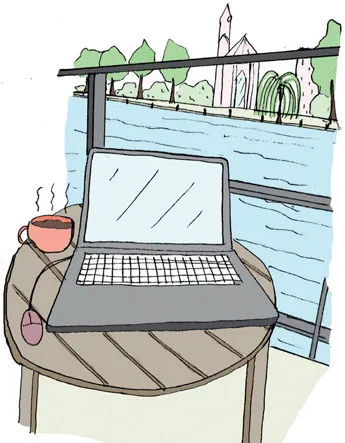
FIGURE 1.1 Drawing of a working/pleasure trip I took to Brandenburg, Germany
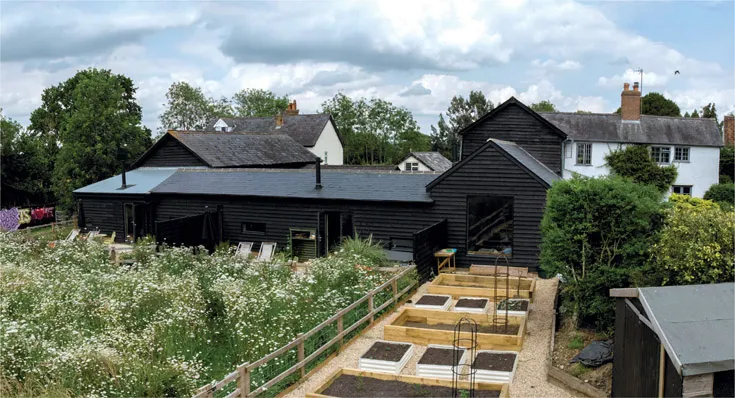
FIGURE 1.2 Benefits of flexible working means still being able to work on projects such as this stables and barn conversion, even with a family
Working holidays: when I am writing, I regularly escape for a few days to the sea to write. I also visit gardens, sit alone in a beautiful space and write or sketch out business vision ideas. I have previously worked from the Eurostar, an Austrian brewery, a Parisian café and even a boat!
Better use of time: the Covid-19 pandemic has made the benefits of working from home familiar to many more people, but I have always enjoyed the benefits of using natural breaks to make bread, chop vegetables for dinner or go for a walk. Without any guilt. In winter, I appreciate the opportunity to enjoy bike rides or running in daylight. I was fortunate while working in Oxford that my office had a shower and was on the doorstep of great outdoor space, so I enjoyed regular daylight runs in winter, but not all offices have this. Since my husband joined the firm, we enjoy lake swimming together in the middle of the day (while our son is at nursery).
Other projects: like ‘other business ventures’, above, one of the best things about flexible working is being able to fit in other projects around being an architect. After receiving the commission from RIBA Publishing to write my book, Contemporary Vernacular Design: How British Housing Can Rediscover its Soul, I set about organising case study visits, complete with designer, developer and resident interviews. Keeping my business going would have been impossible if I had needed to be in an office every day, as would holding down a job in a traditional architect’s practice. My employers would have needed to be very enlightened and tolerant of me disappearing around the UK and Europe for up to 10 days at a time, multiple times, over a two-year period.
Legacy: though possibly depressing for some, I find it uplifting to think about what my business may become without me, whether due to retirement, other interests or death. I want to create a truly sustainable business (in all senses) that lasts beyond my time on this earth.
DRAWBACKS OF YOUR OWN BUSINESS
Personally, there has only really been one drawback and that is the mental pressure on me as the sole director. I imagine it must feel easier as a partnership or a collective. Despite it taking me too long to realise this (see Chapter 7), I now draw on lots of help from my team, coaches, as well as my network of architects and consultants.
I do struggle sometimes to shut off easily in the evening/at weekends and focus on my life outside architecture. However, I don’t think this is exclusively about being a business owner; it also applies to people with a job, so I talk about this more in the work/life balance section (see p. 102).
Pressure and Responsibility: staying sane and good mindset practice
The separation of my personal self from my work self has been a long process. When your business is essentially your baby and you have put everything into it, it is hard not to take it personally when something goes wrong. However, I am not my business. I created it, but I am not it. Over the years I have learnt to separate myself more and more. If things go wrong, I try to remember it is a small failure in the vast sea of enjoyable projects and personal and business growth that I have enjoyed. As humans we focus on failure rather than achievements. It takes practise to reframe and rebalance. There are lots of mental techniques to deal with this. Here are some that I use:
I look at my ‘vision or dream board’, which is a collage of pictures of things I want in my life and inspiring quotes. It shows me where I am going and what it is all for. One step backwards is only a small hindrance in getting there. It is all worth the effort.
The stars or the sea never fail to make me feel small and insignificant (in a good way). If you are small, it means your problems must be too. They will pass. It also often brings to mind the time I visited San Pedro de Atacama in Chile. Looking at the millions of stars in the Milky Way was awe-inspiring. I have always remembered the astronomer saying (in reference to astrology/horoscopes) ‘the stars don’t give a s**t about you’. And why would they? I remember this when I am anxious about a project. It is very liberating.
I have a notebook in which I write all the good things that happen to me, be that a wonderful client testimonial or a lovely family day out or just a compliment. It really helps to flick back through that when times are tough.
One of my business coaches, Chris Gardener, helped me to understand that my thoughts are just thoughts, they don’t need to mean anything.
He also taught me this: Think about the fact that you can have two people living in the same house with the same problems. One is more optimistic and believes things will improve with a bit of time and energy; the other is very pessimistic and decides that they might as well give up because it’s all going to fail anyway. Both people will be ‘correct’, because how you imagine your future is how it will become.
I have had hypnotherapy. It has been really helpful to understand how certain beliefs could hold me back. I now have a few separate ‘places’ I can go to in my mind that help me to deal with problems. One particularly helpful vision is of me being very large, healthy and happy in the foreground. Far away is a tiny client. This helps me to understand that client or project problems don’t need to take up so much space. My health is more important than any client.
I garden. Gardening makes me feel closer to nature; I notice the seasons changing despite my troubles. Life carries on with or without you. That is very healing. Gardening is a form of creative activity; I get lost in it and again I am reminded of who I am, my overall reasons for being and that, no matter how big this problem feels right now, it will pass and I will carry on gardening.
The techniques that help you may be completely different. However, it is important to have those there as an arsenal to protect you when your times in business become rough – as they almost certainly will at some point.
THINGS YOU CAN DO TO IMPROVE YOUR LIFE AS AN ARCHITECT WITH A JOB
I think there are a number of factors that contribute to enjoying being an architect as well as having a life around it:
1. Autonomy over your life and work choices.
2. An interesting project work.
3. Feeling appropriately rewarded and appreciated.
4. Working at a practice that has morals and values that match your own.
5. Being effective.
6. Having time to enjoy family or friends outside work.
7. Having time for hobbies and other interests.
8. An ability to switch off after work or at weekends.
9. Feeling well.
You might already have some of these, or you might have none of these. The more you have, the happier you will feel at work. As a business owner I have all of these, most of the time, and I know my employees feel the same way. At times I don’t feel rewarded enough for the stress involved or I fall back into bad habits of working too long or too late on projects without proper breaks. However, keeping tabs on these criteria helps to keep myself in check. So how can you get more of these things from your own place of work? First, I want to explain why architects particularly have a tendency to work too long and neglect many of the above in preference for ‘great work’ or career progression.
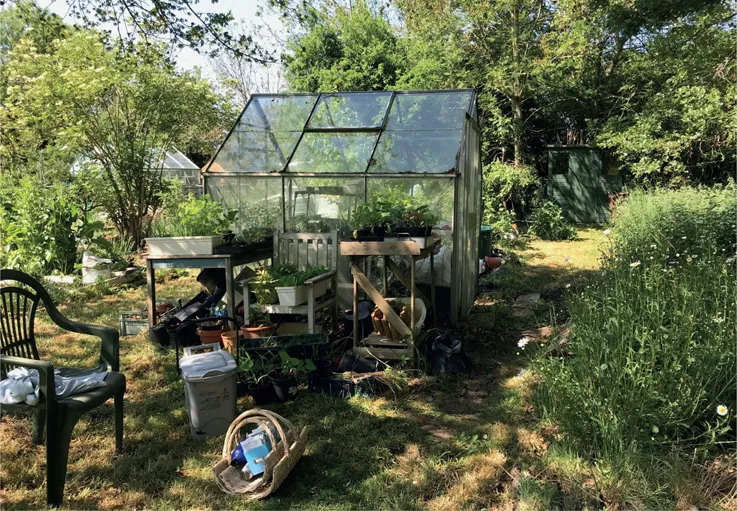
FIGURE 1.3 Time for my allotment and for growing is part of the ethics of my business model
LONG HOURS CULTURE AND PEER PRESSURE
If you are the type of architect who just cannot get enough, who loves working every hour of every day on architectural projects, then that is fine. However, if you are not the incredible Zaha Hadid by nature, then read on.
The long hours culture tends to start at architecture school. Until recently, when mental health issues became more understood, universities embraced a culture of coffee and all-nighters. Just like fine art, there is a sense of never finishing a project. This can lead to never feeling good enough and to over-perfectionism, neither of which are healthy traits. I heard about one overseas boss (from a student intern) who made employees wait for his latest creative idea, whether that happened at 1am or 10am, because he couldn’t possibly fit his ‘creativity’ into normal working hours. What is going on here? Yes, creativity can happen at any time at all, but others do not need to hang on to your every word. It can certainly wait until 9am the next morning. I mean, what an ego!
Presenting your work in crits in front of the people you most care about (your peers) is super-high pressure. You never forget that enormous fear of failure, of not being good enough, of always having more to work on.
The global pandemic has enforced a fundamental shift on how architectural practices work. I hope this leads to lasting change; particularly, that employers feel able to trust their team to work more flexibly. However, it is also up to the employee to take action. I regularly struggled with guilt, leaving the office at 5pm when others were still working but, overall, structuring my work like this had huge benefits on my efficiency, so no one complained. It is important to take action, not just expect an employer to provide this for you. Employers are busy people too; we need people to tell us when things need to change.
The long hours culture creates a vicious circle. You become less and less efficient because you are tired, and therefore need to work later and later to compensate. Not only this, but also your brain gets used to this schedule, so there is also no urgency around 4pm to complete whatever it is before you go home.
In this sluggish state, you are less likely to challenge poor business practice, even if you have an inkling that there is a better way. It is also a neurological fact that because we are pack animals, we do not like to stand apart from the group (we need to be accepted as part of the group because if we get booted out, we are far more likely to get eaten than if we remain part of the pack). You even have to override your prehistoric brain tendencies in order to make changes! All this is quite a tall order for any human, especially an overworked one keen to show commitment to their firm.
If you have children or other caring responsibilities, you may want to work part-time. I have done just that. However, it is notoriously difficult to find part-time work in architecture. I only hope that post-pandemic, finally we might understand that always being available is not essential. Collaboration does not need to be a constant background interruption; it can be more focused and useful.
Wanting to work part...
Table of contents
Cover Page
Title Page
Copyright Page
Dedication Page
Acknowledgements Page
Contents Page
About the author Page
Introduction Page
Chapter 1 How to be a business owner architect
Chapter 2 How to be an architecture student and still have a life
Chapter 3 Background
Chapter 4 Going solo
Chapter 5 Team
Chapter 6 Niche and marketing
Chapter 7 Easy mistakes and how to avoid them
Chapter 8 Systems and efficiencies
Chapter 9 Business and a baby
Chapter 10 Case Studies
Notes
Further reading
Index
Image credits
Trusted by 375,005 students
Access to over 1.5 million titles for a fair monthly price.
Study more efficiently using our study tools.
Frequently asked questions
Yes, you can cancel anytime from the Subscription tab in your account settings on the Perlego website. Your subscription will stay active until the end of your current billing period. Learn how to cancel your subscription
No, books cannot be downloaded as external files, such as PDFs, for use outside of Perlego. However, you can download books within the Perlego app for offline reading on mobile or tablet. Learn how to download books offline
Perlego offers two plans: Essential and Complete
Essential is ideal for learners and professionals who enjoy exploring a wide range of subjects. Access the Essential Library with 800,000+ trusted titles and best-sellers across business, personal growth, and the humanities. Includes unlimited reading time and Standard Read Aloud voice.
Complete: Perfect for advanced learners and researchers needing full, unrestricted access. Unlock 1.5M+ books across hundreds of subjects, including academic and specialized titles. The Complete Plan also includes advanced features like Premium Read Aloud and Research Assistant.
Both plans are available with monthly, semester, or annual billing cycles.
We are an online textbook subscription service, where you can get access to an entire online library for less than the price of a single book per month. With over 1.5 million books across 990+ topics, we’ve got you covered! Learn about our mission
Look out for the read-aloud symbol on your next book to see if you can listen to it. The read-aloud tool reads text aloud for you, highlighting the text as it is being read. You can pause it, speed it up and slow it down. Learn more about Read Aloud
Yes! You can use the Perlego app on both iOS and Android devices to read anytime, anywhere — even offline. Perfect for commutes or when you’re on the go. Please note we cannot support devices running on iOS 13 and Android 7 or earlier. Learn more about using the app
Yes, you can access Design your life by Clare Nash in PDF and/or ePUB format, as well as other popular books in Architecture & Professional Practice in Architecture. We have over 1.5 million books available in our catalogue for you to explore.