The Challenge
The world of business is becoming increasingly turbulent. Change is occurring more so at a geometric (1, 2, 4, 16) than an arithmetic (1, 2, 3, 4) rate. It has been estimated, for example, that more new technology has appeared in the last 20 years than in the rest of human history combined. At the same time, the level of competition is rising rapidly as strong new players enter the arena. Partnerships of different kinds are springing up between companies offering the same product, between companies offering complementary products, between companies on different continents, and between companies with very different cultures.
At least partially as a result of these advances in technology and our rapidly expanding perspective, facets of operations which were once relatively straightforward are growing more complex. Management systems are in a state of crisis. The top-down, hierarchical, “make no decisions without my okay,” channeled mode of operation has been out of fashion for a very long time (though management egos generally being what they are, the command-and-control methods seem to hang on and on despite the research that shows they are not nearly as effective as modern methods of management). The need for ever-increasing speed and accuracy requires us to flatten the chains of command and to break down the walls between functions.
One of the management responsibilities being most strongly challenged is decision making and problem solving. Increasingly we are hearing calls to push decision making and problem solving authority downward, to encourage the solution of problems on the lowest possible level.
Decades ago, when Frederick Taylor’s Scientific Management theories were in vogue, the emphasis was on simplifying jobs to the point where lower level employees did not have to think. Human potential was ignored, and employees were treated like simple, mindless, replaceable machines who were to do what they were told rather than try to contribute or improve the process. But this methodology eventually became fraught with problems as technology and services advanced beyond the cookie-cutter assembly-line approach to production (Cutterbuck 1979; Dickson 1977; Elliot 1990; Emery 1976; George 1968; Guiliano 1982; Gunn 1982; Roth 1993b).
Eventually it became apparent that top managers did not always have the time or knowledge necessary to make all the decisions for the growing number and variety of issues and problems encountered. For optimum operations, employees needed to think for themselves and take corrective action instead of simply complaining and seeking a solution from management.
In addition to the growing complexity of operations, a second factor reinforcing this trend is changes in the workplace itself. Technology has made old-style, centralized, office-based operations somewhat obsolete. Telecommuting and utilizing videoconferencing and other technologies have been demonstrated to be very effective. It makes no sense in terms of time, expense, efficiency, or the environment to force employees to travel long distances in order to meet the same job responsibilities they could perform just as well or better at home. But telecommuting made it difficult for authoritative bosses who like to watch their people to make sure they were working.
Despite our realization that change is inevitable and ultimately beneficial, we, as a culture, have always had difficulty moving away from an outdated mindset. We continue to operate “the way we’ve always done it” because that is familiar and comfortable. Frederick Taylor’s Scientific Management was in vogue for a very long time, and spawned an endless search for the most efficient means of monitoring employee activities. But this reactive approach to an increasingly complex issue is causing our quality of life, both at home and in the workplace, to suffer (Ackoff 1975; Chems 1975; Durmaine 1994; Fenwick 1978).
Eventually, of course, things will, indeed, change. It is inevitable. The most instinctual desire beyond survival which has driven civilization historically has been the desire to improve the quality of life for both individuals and for society as a whole. From this perspective, we have done well in terms of achieving our objectives and have come a long way in a relatively short period of time.
Our present difficulty in accepting advantageous change, therefore, is not new. Rather, it is normal. It is a coping mechanism to protect us from the unknown. It is reflected in individuals with power trying to hang onto the status quo because they are comfortable with it and not secure enough to accept change, no matter how obvious the need and benefits. It is another one of the stumbling blocks that have littered the pathway of progress but which will eventually be swept away by the irresistible forces of social evolution, like all the others before it.
As this happens, the workplace, management systems, decision making and problem solving are becoming increasingly decentralized. The nature of work itself is changing radically and we will, hopefully, begin as a culture to remember its development-related purpose.
A large-scale education effort is one of the support systems we must organize if we are to make the desired transition as smooth as possible. Two things will be key if such an education effort is to be effective. The first is that top-level management must be helped to rethink its concepts of organizational attitude and organizational design so that it encompasses strategic decision making. The second is that employees on all levels must concentrate on improving their decision making skills.
In terms of the top-level management rethinking exercise, those involved must be willing to look beyond what has brought success in the past and shift into the new world paradigm. They must move beyond the need for an organizational structure carved in stone with rigid lines of communication and authority. They must become more flexible and willing to risk creative new arrangements. They must become more pragmatic and be willing to go with what works in terms of decision making. They must honestly and openly address the following issues:
- Which employees should be responsible for making which decisions?
- Which employees should be responsible for addressing which problems?
- Who should have access to what information in order to effectively make good decisions?
- What is the best way to integrate the results of individual and group efforts?
- What is the best way to make sure that such a participative approach is effective in terms of the long-term objectives of the organization?
These are among the issues that will be addressed in this book. This is no easy challenge. These are tough issues that affect every facet of an operation. They cannot be addressed in the most effective manner until the necessary changes in organizational culture have occurred.
The Optimum Reward System
Perhaps the toughest of the challenges we are talking about, and the most threatening of the necessary changes, will involve the reward system. It must be reshaped. The reward system is the cornerstone of all operations. More than any other system, it determines the culture of the organization and frequently its structure and processes. It affects such things as the way employees on all levels interact with each other and with employees on other levels, the size of departments, the willingness of employees to take risks, and the way information is guarded or shared.
If a reward system pits managers against each other and creates an adversarial relationship between management and the workforce, the shift to the type of cooperative atmosphere necessary for more effective decision making will not occur. Each group will sub-optimize in favor of its own self-interest, to the detriment of the system as a whole. That is human nature.
People are not natively altruistic, generally. The major priority during their work lives is not to satisfy customers (in-house or external), bosses, or owners. Rather, the major priority is to shape a job in that way which will best satisfy their own needs and desires.
Unless the company also enjoys success, of course, such satisfaction will not occur. Customers, bosses, and owners (or “stakeholders” as systems professionals call them) are indeed important, but the most important stakeholder (in the eyes of the individual employee) is the individual employee himself or herself. That is as it should be in any pragmatic society. That is the realization upon which the free enterprise system was built.
Most of the models upon which the current quality improvement movement depends, for example, make the customer the most important target. This has happened because our quantitatively oriented business community favors measurement and numbers. Customer satisfaction is one of the factors that we are set up to measure in an improvement process. It is the most important strategic factor in the organization’s continued success.
We also make the customer the most important target because focusing on improving customer relations is much more fruitful in terms of public relations and marketing.
However, if we focus on the customer to the exclusion of the employees, we have confused the ends with the means, the results with the producers. Customer satisfaction is a result produced by committed employees. The focus, therefore, in organization improvement efforts should be to get employees effectively involved and do what is necessary to develop the necessary level of commitment.
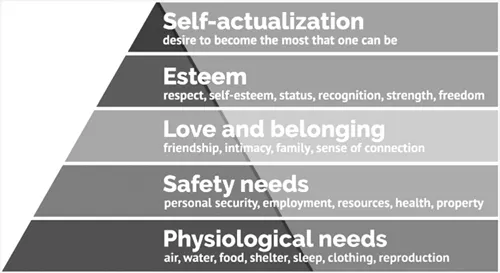
This can be accomplished by incorporating satisfaction of employee needs into the model. But to which employee needs and desires should we be paying attention? Which ones are important? Which ones are the company’s responsibility? If everyone wants to drive a new company-provided car, should we feel obliged to satisfy that desire? Must we, in essence, be willing to “give away the store” (Wilkerson 1995; Roth 1989c)?
The evidence refutes such fears. In poorly run organizations, where management is out to get the most from employees while giving the least, the employees will indeed take the company for everything they can. In companies like this, such fears are realistic. They are, however, also largely the result of management’s attitude.
In organizations that show true concern and respect for employees, such standoffs do not usually occur. Workers want to be there, and understand that they are part of a team. They are willing to make sacrifices of time, effort, and even money if such sacrifices are necessary to the survival and healthy growth of the organization, as long as everyone else, from top to bottom, has the same attitude.
When the team and the organization do well, the employees want to enjoy the victory, along with their coworkers, and be rewarded fairly for their contribution.