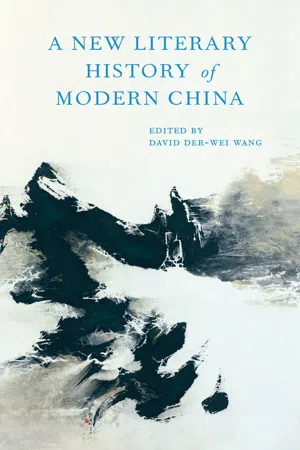
Literature, from the Chinese perspective, makes manifest the cosmic patterns that shape and complete the world—a process of "worlding" that is much more than mere representation. In that spirit, A New Literary History of Modern China looks beyond state-sanctioned works and official narratives to reveal China as it has seldom been seen before, through a rich spectrum of writings covering Chinese literature from the late-seventeenth century to the present.
Featuring over 140 Chinese and non-Chinese contributors from throughout the world, this landmark volume explores unconventional forms as well as traditional genres—pop song lyrics and presidential speeches, political treatises and prison-house jottings, to name just a few. Major figures such as Lu Xun, Shen Congwen, Eileen Chang, and Mo Yan appear in a new light, while lesser-known works illuminate turning points in recent history with unexpected clarity and force. Many essays emphasize Chinese authors' influence on foreign writers as well as China's receptivity to outside literary influences. Contemporary works that engage with ethnic minorities and environmental issues take their place in the critical discussion, alongside writers who embraced Chinese traditions and others who resisted. Writers' assessments of the popularity of translated foreign-language classics and avant-garde subjects refute the notion of China as an insular and inward-looking culture.
A vibrant collection of contrasting voices and points of view, A New Literary History of Modern China is essential reading for anyone seeking a deeper understanding of China's literary and cultural legacy.
- 1,033 pages
- English
- PDF
- Available on iOS & Android
eBook - PDF
A New Literary History of Modern China
About this book
Information
Table of contents
- Cover
- Title Page
- Copyright
- Contetns
- Acknowledgments
- Introduction: Worlding Literary China
- 1635; 1932, 1934. The Multiple Beginnings of Modern Chinese “Literature”
- 1650, July 22. Dutch Plays, Chinese Novels, and Images of an Open World
- 1755. The Revival of Letters in Nineteenth-Century China
- 1792. Legacies in Clash. Anticipatory Modernity versus Imaginary Nostalgia
- 1807, September 6. Robert Morrison’s Chinese Literature and Translated Modernity
- 1810. Gongyang Imaginary and Looking to the Confucian Past for Reform
- 1820. Flowers in the Mirror and Chinese Women: “At Home in the World”
- 1820, Beijing. Utter Disillusion and Acts of Repentance in Late Classical Poetry
- 1843, The Second Half of June. In Search of a Chinese Utopia: The Taiping Rebellion as a Literary Event
- 1847, January 4. My Life in China and America and Transpacific Translations
- 1852, 1885. Two Chinese Poets Are Homeless at Home
- 1853. Foreign Devils, Chinese Sorcerers, and the Politics of Literary Anachronism
- 1861. Women Writers in Early Modern China
- 1862, October 11. Wang Tao Lands in Hong Kong
- 1872, October 14. Media, Literature, and Early Chinese Modernity
- 1873, June 29. The Politics of Translation and the Romanization of Chinese into a World Language
- 1884, May 8. In Lithographic Journals, Text and Image Flourish on the Same Page
- 1890, Fall. Lives of Shanghai Flowers, Dialect Fiction, and the Genesis of Vernacular Modernity
- 1895, May 25. The “New Novel” before the Rise of the New Novel
- 1896, April 17. Qiu Fengjia and the Poetics of Tears
- 1897. Language Reform and Its Discontents
- 1899. Oracle Bones, That Dangerous Supplement ...
- 1900, February 10. Liang Qichao’s Suspended Translation and the Future of Chinese New Fiction
- 1900, Summer and Fall. Fallen Leaves, Grieving Cicadas, and Poetic Mourning after the Boxer Rebellion
- 1901. Eliza Crosses the Ice—and an Ocean—and Uncle Tom’s Cabin Arrives in China
- 1903, September. Sherlock Holmes Comes to China
- 1904, August 19. Imagining Modern Utopia by Rethinking Ancient Historiography
- 1905, January 6. Wen and the “First History(-ies) of Chinese Literature”
- 1905. Münchhausen Travels to China
- 1906, July 15. Zhang Taiyan and the Revolutionary Politics of Literary Restoration
- 1907, June 1. Global Theatrical Spectacle in Tokyo and Shanghai
- 1907, July 15. The Death of China’s First Feminist
- 1908, February; 1908, November. From Mara to Nobel
- 1909, November 13. A Classical Poetry Society through Revolutionary Times
- 1911, April 24; 1911. Revolution and Love
- 1913; 2011, May. The Book of Datong as a Novel of Utopia
- 1916, August 23, New York City. Hu Shi and His Experiments
- 1916, September 1. Inventing Youth in Modern China
- 1918, April 2. Zhou Yucai Writes “A Madman’s Diary” under the Pen Name Lu Xun
- 1918, Summer. Modern Monkhood
- 1919, May 4. The Big Misnomer: “May Fourth Literature”
- 1921, November 30. Clinical Diagnosis for Taiwan
- 1922, March. Turning Babbitt into Bai Bide
- 1922, Spring. Xiang Kairan’s Monkey
- 1922, December 2. New Culture and the Pedagogy of Writing
- 1924, April 12. Xu Zhimo and Chinese Romanticism
- 1924, May 30. Enchantment with the Voice
- 1925, June 17. Lu Xun and Tombstones
- 1925, November 9. Mei Lanfang, the Denishawn Dancers, and World Theater
- 1927, June 2; 1969, October 7. “This Spirit of Independence and Freedom of Thought ... Will Last for Eternity with Heaven and Earth”
- 1927, June 4. The Legend of a Modern Woman Writer of Classical Verse
- 1927, August 23. Ba Jin Begins to Write Anarchist Novels
- 1928, January 16. Revolution and Rhine Wine
- 1928. Genealogies of Romantic Disease
- 1929, September. Gender, Commercialism, and the Literary Market
- 1929. The Author as Celebrity
- 1930, October. Practical Criticism in China
- 1930, October 27. Invitation to a Beheading
- 1931, February 7. The Chinese League of Left-Wing Writers, 1930–1936
- 1932. Hei Ying’s “Pagan Love Song”
- 1934, January 1; 1986, March 20. Roots of Peace and War, Beauty and Decay, Are Sought in China’s Good Earth
- 1934, October–1936, October. Recollections of Women Soldiers on the Long March
- 1935, March 8. On Language, Literature, and the Silent Screen
- 1935, June 18. The Execution of Qu Qiubai
- 1935, July 28 and August 1. The Child and the Future of China in the Legend of Sanmao
- 1935, December 21. Crossing the River and Ding County Experimental Theater
- 1936, May 21. One Day in China
- 1936, October. Resonances of a Visual Image in the Early Twentieth Century
- 1936, October 19. Lu Xun and the Afterlife of Texts
- 1937, February 2. Cao Yu and His Drama
- 1937, Spring. A Chinese Poet’s Wartime Dream
- 1937, November 18; 1938, February 28. William Empson, W. H. Auden, and Modernist Poetry in Wartime China
- 1939, October 15. The Lost Novel of the Nanjing Massacre
- 1940, September 3. The Poetics and Politics of Neo-Sensationism
- 1940, December 19. Between Chineseness and Modernity: The Film Art of Fei Mu
- 1940–1942. Chinese Revolution and Western Literature
- 1941, December 25. Eileen Chang in Hong Kong
- 1942, January 22; 2014, Fall. In War She Writes
- 1942, March 16. Taiwan’s Genius Lü Heruo
- 1942, May 2–May 23. The Cultural and Political Significance of Mao Zedong’s: Talks at the Yan’an Forum on Literature and Art
- 1943, April. The Genesis of Peasant Revolutionary Literature
- 1944, November 14. The North Has Mei Niang
- 1945, August 1. Ideologies of Sound in Chinese Modernist Poetry
- 1945, August 29. The Enigma of Yu Dafu and Nanyang Literature
- 1946, July 15. On Literature and Collaboration
- 1947, February 28. On Memory and Trauma: From the 228 Incident to the White Terror
- 1947. The Socratic Tradition in Modern China
- 1948, October; 2014, February. The Life of a Chinese Literature Textbook
- 1949, March 28. Shen Congwen’s Journey: From Asylum to Museum
- 1949, 1958. A New Time Consciousness: The Great Leap Forward
- 1951, September; 1952, September. The Genesis of Literary History in New China
- 1952, March 18. Transnational Socialist Literature in China
- 1952, July. A Provocation to Literary History
- 1952, October 14. Salvaging Chinese Script and Designing the Mingkwai Typewriter
- Late 1953. Lao She and America
- 1954, September 25–November 2. The Emergence of Regional Opera on the National Stage
- 1955, May. Lu Ling, Hu Feng, and Literary Persecution
- 1955. Hong Kong Modernism and I
- 1956. Zhou Shoujuan’s Romance à la Mandarin Ducks and Butterflies
- 1956; 1983, September 20. Orphans of Asia
- 1957, June 7. Sino-Muslims and China’s Latin New Script: A Reunion between Diaspora and Nationalism
- 1958, June 20. A Monumental Model for Future Perfect Theater
- 1958. Mao Zedong Publishes Nineteen Poems and Launches the New Folk Song Movement
- 1959, February 28. On The Song of Youth and Literary Bowdlerization
- 1960, October. Hunger and the Chinese Malaysian Leftist Narrative
- 1962, June. Three Ironic Moments in My Mother Ru Zhijuan’s Literary Career
- 1962–1963. The Legacies of Jaroslav Průšek and C. T. Hsia
- 1963, March 17. Fu Lei and Fou Ts’ong: Cultural Cosmopolitanism and Its Price
- 1964. The “Red Pageant” and China’s First Atomic Bomb
- 1965, July 14. Red Prison Files
- 1966, October 10. Modernism versus Nativism in 1960s Taiwan
- 1967, April 1. The Spector of Liu Shaoqi
- 1967, May 29. The Red Lantern: Model Plays and Model Revolutionaries
- 1967. Jin Yong Publishes The Smiling, Proud Wanderer in Ming Pao
- 1970. The Angel Island Poems: Chinese Verse in the Modern Diaspora
- 1972, 1947. In Search of Qian Zhongshu
- 1972–1973, 2000. A Subtle Encounter: Tête-bêche and In the Mood for Love
- 1973, July 20. The Mysterious Death of Bruce Lee, Chinese Nationalism, and Cinematic Legacy
- 1974, June. Yang Mu Negotiates between Classicism and Modernism
- 1976, April 4. Poems from Underground
- 1976. A Modern Taiwanese Innocents Abroad
- 1978, September 18. Confessions of a State Writer: The Novelist Hao Ran Offers a Self-Criticism
- 1978, October 3. Chen Yingzhen on the White Terror in Taiwan
- 1979, November 9. Liu Binyan and the Price of Relevance
- 1980, June 7; 1996, April, on an Unspecified Day. A Tale of Two Cities
- 1981, October 13. Food, Diaspora, and Nostalgia
- 1983, January 17. Discursive Heat: Humanism in 1980s China
- 1983, Spring. The Advent of Modern Tibetan Free-Verse Poetry in the Tibetan Language
- 1984, July 21–30. Literary Representation of the White Terror and Rupture in Mid-Twentieth-Century Taiwan
- 1985, April. Searching for Roots in Literature and Film
- 1986. The Writer and the Mad(wo)man
- 1987, September. The Birth of China’s Literary Avant-Garde
- 1987, December 24. Gao Xingjian’s Pursuit of Freedom in the Spirit of Zhuangzi
- 1988, July 1. “Rewriting Literary History” in the New Era of Liberated Thought
- 1989, March 26. Anything Chinese about This Suicide?
- 1989, May 19. The Song That Rocked Tiananmen Square
- 1989, September 8. Trauma and Cinematic Lyricism
- 1990, 1991. From the Margins to the Mainstream: A Tale of Two Wangs
- 1994, July 30. Meng Jinghui and Avant-Garde Chinese Theater
- 1995, May 8. The Death of Teresa Teng
- 1995, June 25. Formal Experiments in Qiu Miaojin’s “Lesbian I Ching”
- 1997, May 1. Modern China as Seen from an Island Perspective
- 1997, May 3. “The First Modern Asian Gay Novel”
- 1997. Hong Kong’s Literary Retrocession in Three Fantastical Novels
- 1997. Representing the Sinophone, Truly: On Tsai Ming-liang’s I Don’t Want to Sleep Alone
- 1998, March 22. The Silversmith of Fiction
- 1999, February. The Poet in the Machine: Hsia Yü’s Analog Poetry Enters the Digital Age
- 1999, March 28. Sixteen-Year-Old Han Han Roughs Up the Literary Scene
- 2002, October 25. Resurrecting a Postlapsarian Pagoda in a Postrevolutionary World
- 2004, April. Wolf Totem and Nature Writing
- 2006, September 30. Chinese Verse Going Viral: “Removing the Shackles of Poetry”
- 2007. Suddenly Coming into My Own
- 2008. Writer-Wanderer Li Yongping and Chinese Malaysian Literature
- 2008–2009. Chinese Media Fans Express Patriotism through Parody of Japanese Web Comic
- 2010, January 10. Ang Lee’s Adaptation, Pretense, Transmutation
- 2011, June 26. Encountering Shakespeare’s Plays in the Sinophone World
- 2012. Defending the Dignity of the Novel
- 2012, 2014. Minority Heritage in the Age of Multiculturalism
- 2013, January 5. Ye Si and Lyricism
- 2013, May 12, 7:30 P.M. Lightning Strikes Twice: “Mother Tongue” Minority Poetry
- 2066. Chinese Science Fiction Presents the Posthuman Future
- Contributors
- Illustration Credits
- Index
Trusted by 375,005 students
Access to over 1.5 million titles for a fair monthly price.
Study more efficiently using our study tools.
Frequently asked questions
Yes, you can cancel anytime from the Subscription tab in your account settings on the Perlego website. Your subscription will stay active until the end of your current billing period. Learn how to cancel your subscription
No, books cannot be downloaded as external files, such as PDFs, for use outside of Perlego. However, you can download books within the Perlego app for offline reading on mobile or tablet. Learn how to download books offline
We are an online textbook subscription service, where you can get access to an entire online library for less than the price of a single book per month. With over 1.5 million books across 990+ topics, we’ve got you covered! Learn about our mission
Look out for the read-aloud symbol on your next book to see if you can listen to it. The read-aloud tool reads text aloud for you, highlighting the text as it is being read. You can pause it, speed it up and slow it down. Learn more about Read Aloud
Yes! You can use the Perlego app on both iOS and Android devices to read anytime, anywhere — even offline. Perfect for commutes or when you’re on the go.
Please note we cannot support devices running on iOS 13 and Android 7 or earlier. Learn more about using the app
Please note we cannot support devices running on iOS 13 and Android 7 or earlier. Learn more about using the app
Yes, you can access A New Literary History of Modern China by David Der-wei Wang in PDF and/or ePUB format, as well as other popular books in Literature & Asian Literary Criticism. We have over 1.5 million books available in our catalogue for you to explore.