The preeminent sociologist and National Book Award–winning author of Freedom in the Making of Western Culture grapples with the paradox of his homeland: its remarkable achievements amid continuing struggles since independence.
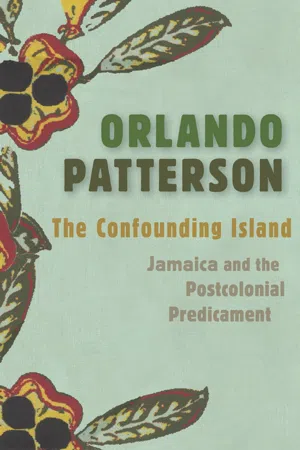
There are few places more puzzling than Jamaica. Jamaicans claim their home has more churches per square mile than any other country, yet it is one of the most murderous nations in the world. Its reggae superstars and celebrity sprinters outshine musicians and athletes in countries hundreds of times its size. Jamaica's economy is anemic and too many of its people impoverished, yet they are, according to international surveys, some of the happiest on earth. In The Confounding Island, Orlando Patterson returns to the place of his birth to reckon with its history and culture.
Patterson investigates the failures of Jamaica's postcolonial democracy, exploring why the country has been unable to achieve broad economic growth and why its free elections and stable government have been unable to address violence and poverty. He takes us inside the island's passion for cricket and the unparalleled international success of its local musical traditions. He offers a fresh answer to a question that has bedeviled sports fans: Why are Jamaican runners so fast?
Jamaica's successes and struggles expose something fundamental about the world we live in. If we look closely at the Jamaican example, we see the central dilemmas of globalization, economic development, poverty reduction, and postcolonial politics thrown into stark relief.
- 433 pages
- English
- PDF
- Available on iOS & Android
eBook - PDF
About this book
Information
Table of contents
- Cover
- Title Page
- Copyright
- Dedication
- Contents
- Introduction
- I. Explaining Postcolonial Failure
- II. Three Cultural Puzzles
- III. The Failures of Policy and Politicians
- Epilogue
- Notes
- Works Cited
- Acknowledgments
- Index
Trusted by 375,005 students
Access to over 1.5 million titles for a fair monthly price.
Study more efficiently using our study tools.
Frequently asked questions
Yes, you can cancel anytime from the Subscription tab in your account settings on the Perlego website. Your subscription will stay active until the end of your current billing period. Learn how to cancel your subscription
No, books cannot be downloaded as external files, such as PDFs, for use outside of Perlego. However, you can download books within the Perlego app for offline reading on mobile or tablet. Learn how to download books offline
Perlego offers two plans: Essential and Complete
- Essential is ideal for learners and professionals who enjoy exploring a wide range of subjects. Access the Essential Library with 800,000+ trusted titles and best-sellers across business, personal growth, and the humanities. Includes unlimited reading time and Standard Read Aloud voice.
- Complete: Perfect for advanced learners and researchers needing full, unrestricted access. Unlock 1.5M+ books across hundreds of subjects, including academic and specialized titles. The Complete Plan also includes advanced features like Premium Read Aloud and Research Assistant.
We are an online textbook subscription service, where you can get access to an entire online library for less than the price of a single book per month. With over 1.5 million books across 990+ topics, we’ve got you covered! Learn about our mission
Look out for the read-aloud symbol on your next book to see if you can listen to it. The read-aloud tool reads text aloud for you, highlighting the text as it is being read. You can pause it, speed it up and slow it down. Learn more about Read Aloud
Yes! You can use the Perlego app on both iOS and Android devices to read anytime, anywhere — even offline. Perfect for commutes or when you’re on the go.
Please note we cannot support devices running on iOS 13 and Android 7 or earlier. Learn more about using the app
Please note we cannot support devices running on iOS 13 and Android 7 or earlier. Learn more about using the app
Yes, you can access The Confounding Island by Orlando Patterson in PDF and/or ePUB format, as well as other popular books in Política y relaciones internacionales & Economía del desarrollo. We have over 1.5 million books available in our catalogue for you to explore.