- 176 pages
- English
- ePUB (mobile friendly)
- Available on iOS & Android
About this book
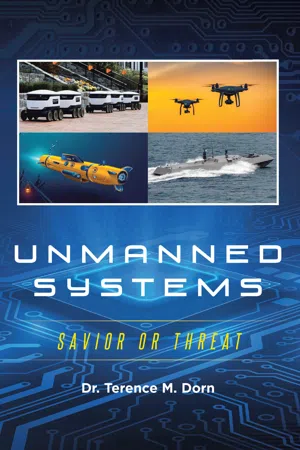
The threat of an attack involving an unmanned system armed with a weapon of mass destruction is a present one. With two million drones projected to be flying US skies in 2020, unmanned aircraft systems in the air domain pose a significant challenge to the nation's security. Other technological advancements, such as artificial intelligence, combined with unmanned systems, have transformed the threat's very nature, yet the skies are not the only domain of concern. The technology is also developing rapidly in unmanned undersea and surface systems, expanding potential weapons of mass destruction delivery options. This publication is an examination of unmanned aerial systems (UAS), unmanned surface systems (USS), and unmanned undersea systems (UUS). The technological innovation that led to the global commercialization of UAS is underway with USS and UUS. Until recently, no known scholarly studies existed that examined the vulnerabilities of one sector of US critical infrastructure to attack by UAS until A Phenomenological Examination of US Nuclear Power Plants to Attack by Unmanned Aerial Systems was published late in 2020. According to the Nuclear Regulatory Commission (NRC), there had been fifty-seven UAS incursions over twenty-four US nuclear power plants in the past five years, representing one of sixteen sectors of US critical infrastructure (Gardiner 2016; Rogoway and Trevithick 2020; Hambling 2020). Federal departments and organizations have largely ignored the threat potential that UAS pose despite the strategic guidance laid out in the 2017 National Security Strategy of the US. The nation's national security demands a close examination of the vulnerabilities and is immediately working to close those security gaps. This publication will focus on the emergency of new UAS capabilities and highlight the latest technologies, capabilities, and the significant national security threat implications that UAS, USS, and UUS platforms represent to US critical infrastructure.
Frequently asked questions
- Essential is ideal for learners and professionals who enjoy exploring a wide range of subjects. Access the Essential Library with 800,000+ trusted titles and best-sellers across business, personal growth, and the humanities. Includes unlimited reading time and Standard Read Aloud voice.
- Complete: Perfect for advanced learners and researchers needing full, unrestricted access. Unlock 1.4M+ books across hundreds of subjects, including academic and specialized titles. The Complete Plan also includes advanced features like Premium Read Aloud and Research Assistant.
Please note we cannot support devices running on iOS 13 and Android 7 or earlier. Learn more about using the app.
Information
Table of contents
- What If
- Introduction
- History of UAS
- National Security
- Key Components of the US Federal Government
- The Morality of UAS Use by the US Government
- UAS Success and Proliferation
- The Future of UAS
- The Vulnerabilities of Modern Societies to UAS Attack
- The Global Race for Counter UAS
- Introduction to USS
- Introduction to UUS
- Wrap Up