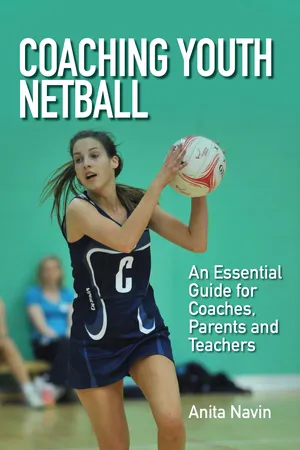
Coaching Youth Netball is a one-stop resource that will offer coaches, teachers and parents everything they need to deliver fun, dynamic, player-centred practice sessions as well as guidance to how to run a team and a club. Coaches at all levels will find ideas and information that will help them formulate plans to suit their players' abilities. Topics covered include practical games and drills; fundamental skills including movement, catching, throwing, passing and shooting; game sense, defensive and attacking skills and ways to manage your team and your club. Includes practical games and drills, enabling coaches to run productive sessions for young players and helps teach fundamental skills, including movement, catching, throwing, passing and shooting. This one-stop guide offers coaches, teachers and parents everything they need to deliver fun and dynamic netball practice sessions. Fully illustrated with photographs and diagrams.
- 304 pages
- English
- ePUB (mobile friendly)
- Available on iOS & Android
eBook - ePub
About this book
Trusted by 375,005 students
Access to over 1.5 million titles for a fair monthly price.
Study more efficiently using our study tools.
Information
Topic
EducationSubtopic
Education Teaching MethodsCHAPTER 1
INTRODUCTION TO COACHING YOUTH PARTICIPANTS
Successful coaching of children is associated with positive participant outcomes such as enjoyment, the promotion of intrinsic motivation and self-esteem. Effective coaches know all the techniques and tactics within the game of netball and will be able to demonstrate the ability to individualize communication and activities based on the needs of the participant. Effective coaching is not only related to the development of netball or game-specific outcomes, but is connected to the all-round holistic development of the individual. Successful coaching in the youth context should not be driven by winning but should prioritize the holistic development of the young person.

Fig. 1.1 The potential pressures and demands placed on a young participant.
There can be many influential factors underpinning a young person’s behaviour, motives and individual needs when they enter into a coaching session and it is therefore important to build a relationship with the individual. Fig. 1.1 offers an example of a young person’s commitments both within and outside netball. The coach should develop an understanding of any family or education demands that can impact upon the individual in a coaching context. In addition, if a participant is a member of a performance development pathway there will be added netball demands from another context.
A participant-centred and holistic coach will develop trusting working relationships with each individual and most of all will have an insight into the lifestyle demands of each person. Acknowledging an individual’s potential is vital, and ensuring the needs of the person are known and met is critical to success in the coaching role.
A humanistic approach in coaching is essential, where the total development of the participant is a priority. A coach will focus on enhancing self-awareness, growth and development of the participant, ensuring each individual is engaged in decision-making within a session. To facilitate the attainment of such humanistic outcomes, the coach will empower participants by asking a range of open questions to engage and prompt ownership of the learning process. In addition, participants will be encouraged to work collaboratively and foster a team climate for learning. The coach must provide a safe and supportive environment for learning, enabling the young person to make personal choices. Supporting a participant’s ideas and self-expression are important factors for the humanisticfocused coach. There are several assumptions connected to the humanistic approach and coaches are encouraged to model each and every one in their coaching practice.
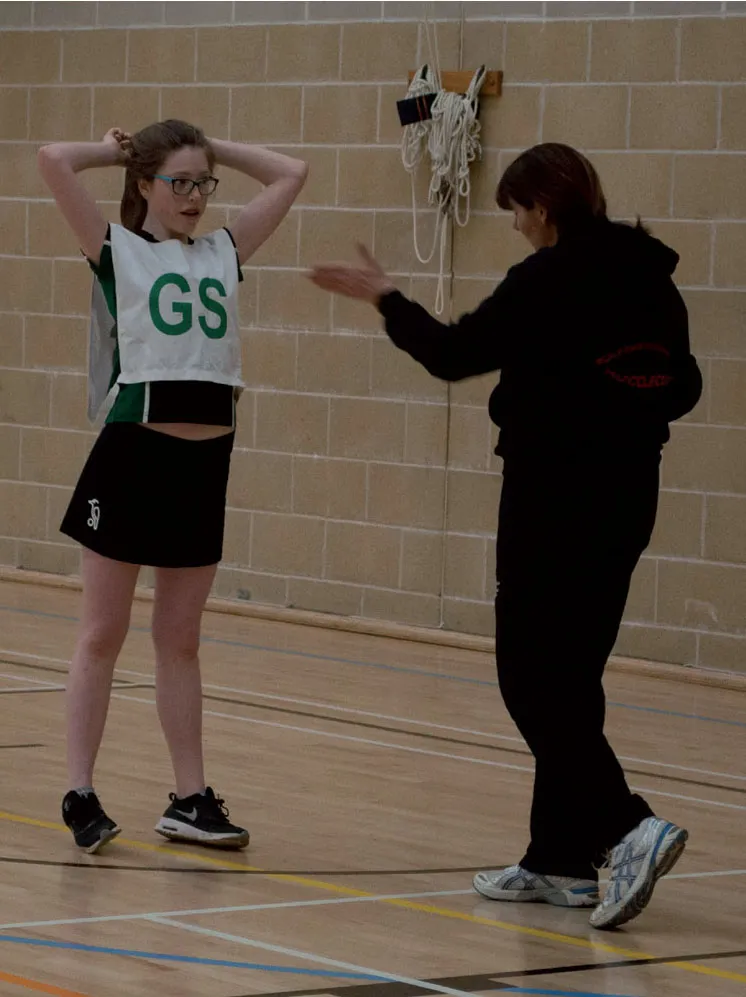
Understanding individual needs within the group is critical in coaching.
It is therefore not just about the development of sport-specific outcomes; the coach should promote the development of the young participant as an authentic and valued individual. When coaching young novice participants there will be greater coach control and coach dependency. As the individual develops competence and confidence there should be opportunities provided for self-management, self-determination and shared decision-making. A primary aim of any coach is to ensure there is a shift in coach dependency as an individual develops, in order to ultimately promote personal autonomy and participant independence.

Individuals should be encouraged to work collaboratively within a session.
Coaching effectiveness has also been defined by the participant outcomes a coach should strive for when supporting the development of the young participant. Known as the ‘4Cs’ – competence, confidence, connection and character (Côté and Gilbert, 2009) – the outcomes should be a reference for all coaches in the youth context. (Sports Coach UK offer ‘5Cs’, developed from the work of Jean Côté, which includes Creativity, and the five Cs are referred to later in the text.)
ASSUMPTIONS OF A HUMANISTIC APPROACH
- Competition goals should not take priority over personalized goals and the needs of the individual.
- A coach should promote an individual’s development through empowerment, engagement and self-determination.
- Netball will be only a part of an individual’s life, so a coach should consider this in relation to other human experiences such as family, career, education and health.
- Coaching should focus not only on the technical and tactical aspects of the sport but on emotional, social and psychological performance.
- Coaching should be built around successful interpersonal and professional relationships between the coach and participant.
The four Cs – representing the outcomes of effective coaching in netball:
Competence Technical and tactical skills of the game, improved health and fitness and healthy training habits.
Confidence Overall positive self-worth.
Connection Positive bonds and social relationships with people inside and outside netball.
Character Respect for the sport and others (morality), integrity, empathy and responsibility.
Coaches should always ensure they have a clear philosophy representing a set of values to underpin their coaching behaviour and practice. Successful coaches will be selfaware and will ‘know themselves’ through the ability to self-reflect on their coaching. This self-reflection should closely connect with your own philosophy, remaining as a guide for coaching practice and making sure you as the coach remain true to yourself. A coaching philosophy is often a statement of the beliefs and values that coaches will model their coaching practice upon. When difficult decisions have to be made in the coaching role, it is the philosophy that should be used to underpin the outcome.
Developing Your Coaching Philosophy
All coaches will possess values they believe explain their actions in both life and coaching. For example, if a coach values hard work and effort in a session, rewards will be based on this commitment and maximum effort. Other values may include respect, health, honesty, self-responsibility, trust, friendships and enjoyment. Coaches should uphold their values and model them in everyday life to ensure they impact positively on all individuals they come into contact with. Having a positive influence physically, psychologically and socially are important considerations for the youth coach. An example of a coaching philosophy for a coach in netball is outlined below:
AN EXAMPLE OF A COACH PHILOSOPHY
As a coach I will create an environment where there is mutual respect between the coach and participants. I will promote openness, honesty and equity at all times and I will be accountable for all that I do. I will educate participants to become independent and strive to ensure everyone reaches his or her true potential. I will remain committed to ongoing learning and development to maintain currency in the coaching role.
As a result of additional experiences in the coaching role your beliefs may change, so it is important to modify your philosophy. Reflect upon your coaching practice to ensure that there is a match with your philosophy. A philosophy should influence coaching practice and an individual’s coach development pathway.
Coaching Process Skills
The coaching process or craft-based skills provide a set of guiding principles for the delivery of an effective coaching session. A coach must have knowledge of technical and tactical components impacting upon performance, along with the necessary communication and interpersonal skills, to be...
Table of contents
- Cover Page
- Title Page
- Copyright Page
- Dedication
- Acknowledgementse
- Contents
- Contributor Profiles
- 1 Introduction to Coaching Youth Participants Anita Navin
- 2 Managing the Youth Netball Club Environment Nicky Fuller
- 3 Planning a Youth Netball Session Anita Navin
- 4 Application of a Game Sense Approach Alison Croad & Jose Castro
- 5 Coaching the Technical Skills in Netball Anita Navin
- 6 Coaching Defensive Skills Maggie Jackson
- 7 Top Practices for Developing Attacking Skills Denise Egan
- 8 Integrating the Rules of Netball in a Coaching Session Gary Burgess
- 9 Developing Psychological Skills and Leadership Jane Lomax
- 10 Nutritional Guidelines Penny Rumbould
- 11 Coach Development Abbe Brady and Barbara Daniels
- References
- Index
Frequently asked questions
Yes, you can cancel anytime from the Subscription tab in your account settings on the Perlego website. Your subscription will stay active until the end of your current billing period. Learn how to cancel your subscription
No, books cannot be downloaded as external files, such as PDFs, for use outside of Perlego. However, you can download books within the Perlego app for offline reading on mobile or tablet. Learn how to download books offline
Perlego offers two plans: Essential and Complete
- Essential is ideal for learners and professionals who enjoy exploring a wide range of subjects. Access the Essential Library with 800,000+ trusted titles and best-sellers across business, personal growth, and the humanities. Includes unlimited reading time and Standard Read Aloud voice.
- Complete: Perfect for advanced learners and researchers needing full, unrestricted access. Unlock 1.5M+ books across hundreds of subjects, including academic and specialized titles. The Complete Plan also includes advanced features like Premium Read Aloud and Research Assistant.
We are an online textbook subscription service, where you can get access to an entire online library for less than the price of a single book per month. With over 1.5 million books across 990+ topics, we’ve got you covered! Learn about our mission
Look out for the read-aloud symbol on your next book to see if you can listen to it. The read-aloud tool reads text aloud for you, highlighting the text as it is being read. You can pause it, speed it up and slow it down. Learn more about Read Aloud
Yes! You can use the Perlego app on both iOS and Android devices to read anytime, anywhere — even offline. Perfect for commutes or when you’re on the go.
Please note we cannot support devices running on iOS 13 and Android 7 or earlier. Learn more about using the app
Please note we cannot support devices running on iOS 13 and Android 7 or earlier. Learn more about using the app
Yes, you can access Coaching Youth Netball by Anita Navin in PDF and/or ePUB format, as well as other popular books in Education & Education Teaching Methods. We have over 1.5 million books available in our catalogue for you to explore.