This practical book provides a handy reference for the doctor confronted with patients complaining of headache. Headache is one of the most common complaints seen in the outpatient or ambulatory care setting, and may be caused by a wide variety of conditions. This book clearly explains up-to-date headache epidemiology, impact, and pathogenesis, and walks the reader through the steps to evaluating and treating the patient presenting with primary or secondary headache disorders. Also included are reviews of common headache comorbidities, including cardiovascular disease and stroke, epilepsy, fibromyalgia and mood disturbance. Copious use of easy-to-understand figures, tables, and algorithms make this book a useful and practical tool in the clinic. Guidance on selecting diagnostic tests and specific treatment protocols are provided. Treatment recommendations are evidence-based with full referencing and include emerging therapies. Sections on evaluating and treating headaches in children, women during pregnancy, and the elderly complete this comprehensive reference. The likely readership will include the following: neurologists, general physicians, doctors in training, hospital pharmacists, primary care physicians, nurses and nurse practitioners.
- English
- ePUB (mobile friendly)
- Available on iOS & Android
eBook - ePub
About this book
Information
Topic
MedicinaChapter 1
Epidemiology of headache
Introduction
Pain is the number one somatic complaint seen in ambulatory care (Figure 1) 1. Back pain is the most common complaint (10%), followed by lower extremity pain (9%), and upper extremity pain and headache (each 6%). Similarly, the National Health and Nutrition Examination Survey reported active, problematic localized chronic pain with episodes lasting at least 24 hours in an estimated 11% of adults in the United States, with chronic widespread pain in 4% of adults 2. This survey only included reports of major pain, resulting in a substantially lower prevalence of headache pain than reported in the studies cited in the next section, which included any headache complaint. Head pain was the fourth most common individual pain location (Figure 2), with head pain more common among women and variability within genders based on race (Figure 3).
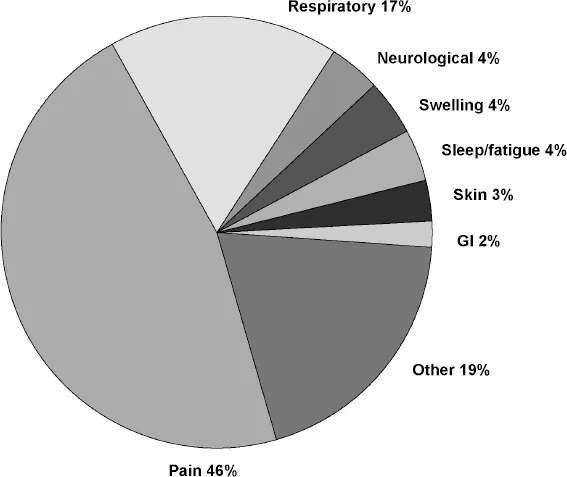
Figure 1 Somatic complaints in primary care office visits. GI includes gastroenteritis and nausea. (Based on Khan 2003.)
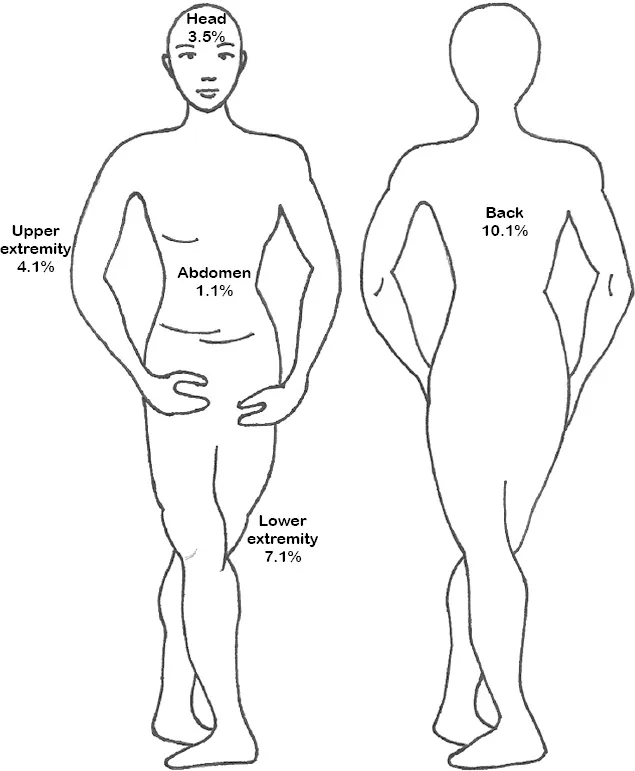
Figure 2 Estimated prevalence of major chronic pain with episodes lasting ≥24 hours by body regions. (Based on Hardt 2008.)
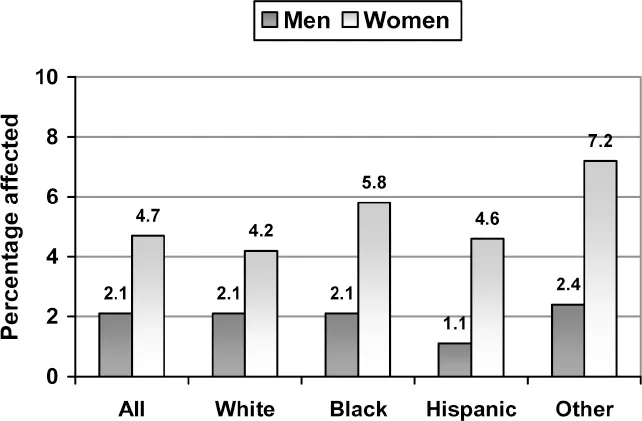
Figure 3 Gender and ethnic differences in major head pain population prevalence estimates. (Based on Hardt 2008.)
Headache epidemiology
Headache is endorsed as a current complaint by nearly half of all adults worldwide (Figure 4), with two in every three adults affected at some point during their lives 3. The vast majority of chronic headache patients are managed by primary care physicians (PCPs). According to the National Ambulatory Medical Care Survey, two in every three migraine patients are treated by PCPs, with only 17% treated by neurologists 4.
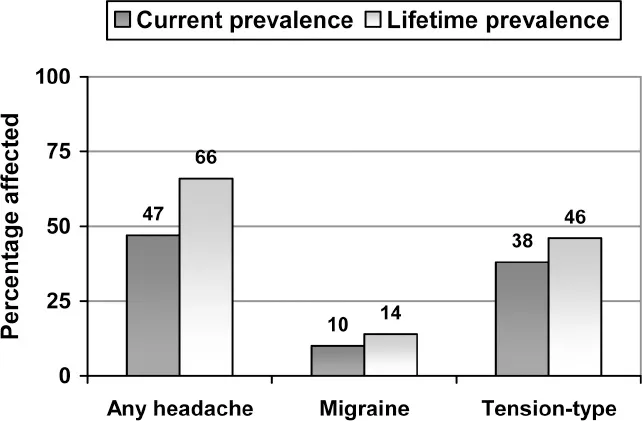
Figure 4 Worldwide headache prevalence. (Based on Stovner 2007.)
Acute or new onset headaches may be caused by systemic illness, such as infection or intracranial pathology (Table 1). Head pain may also occur as a consequence of musculoskeletal dysfunction in the neck or cervical spine. Chronic headache is most commonly caused by primary headache disorders, although some secondary headaches (like post-trauma headache, trigeminal neuralgia, post-herpetic neuralgia, and analgesic overuse headache) may also result in chronic pain syndromes.
| Table 1 Common causes of head pain. | |
| Primary headaches | |
| • | Migraine |
| • | Tension-type |
| • | Cluster |
| Secondary headaches | |
| • | Infection |
| – Viral illness | |
| – Respiratory infection | |
| – Meningitis | |
| • | Inflammatory |
| – Giant cell arteritis | |
| – Systemic lupus erythematosus | |
| • | Intracranial pathology |
| – Cerebrovascular disease | |
| – Subdural hematoma | |
| – Tumor | |
| – Vascular malformation or aneurysm | |
| • | Medications |
| – Analgesic overuse headache | |
| – Alcohol-induced headache | |
| – Caffeine, opioid, or estrogen withdrawal | |
| • | Musculoskeletal |
| – Temporomandibular dysfunction | |
| – Cervical myofascial or joint dysfunction | |
| • | Neuralgias |
| – Post-herpetic neuralgia | |
| – Trigeminal neuralgia | |
| • | Systemic illness |
| – Anemia | |
| – Thyroid disease | |
Adult headaches
Acute headaches
Patients with new onset acute or a recent change in headache will require a more thorough evaluation to rule out secondary conditions than patients with stable, chronic headaches. Patients reporting new headaches often experience headaches related to an acute viral illness or trauma.
Headaches seen in the emergency department (ED) may be acute heada...
Table of contents
- Cover Page
- Title Page
- Copyright Page
- Contents
- Preface
- Glossary of terms
- About the author
- Acknowledgements
- Chapter 1: Epidemiology of headache
- Chapter 2: Diagnostic testing in the headache patient
- Chapter 3: Distinguishing primary from secondary headaches
- Chapter 4: Pathophysiology of chronic headaches
- Chapter 5: Treating headaches
- Chapter 6: Headache comorbidity
- Chapter 7: Complementary and alternative therapies
- Chapter 8: Managing headaches in children and women
- Chapter 9: Emergency department treatment of headache
- Chapter 10: Uncommon and geriatric headaches
Trusted by 375,005 students
Access to over 1.5 million titles for a fair monthly price.
Study more efficiently using our study tools.
Frequently asked questions
Yes, you can cancel anytime from the Subscription tab in your account settings on the Perlego website. Your subscription will stay active until the end of your current billing period. Learn how to cancel your subscription
No, books cannot be downloaded as external files, such as PDFs, for use outside of Perlego. However, you can download books within the Perlego app for offline reading on mobile or tablet. Learn how to download books offline
Perlego offers two plans: Essential and Complete
- Essential is ideal for learners and professionals who enjoy exploring a wide range of subjects. Access the Essential Library with 800,000+ trusted titles and best-sellers across business, personal growth, and the humanities. Includes unlimited reading time and Standard Read Aloud voice.
- Complete: Perfect for advanced learners and researchers needing full, unrestricted access. Unlock 1.5M+ books across hundreds of subjects, including academic and specialized titles. The Complete Plan also includes advanced features like Premium Read Aloud and Research Assistant.
We are an online textbook subscription service, where you can get access to an entire online library for less than the price of a single book per month. With over 1.5 million books across 990+ topics, we’ve got you covered! Learn about our mission
Look out for the read-aloud symbol on your next book to see if you can listen to it. The read-aloud tool reads text aloud for you, highlighting the text as it is being read. You can pause it, speed it up and slow it down. Learn more about Read Aloud
Yes! You can use the Perlego app on both iOS and Android devices to read anytime, anywhere — even offline. Perfect for commutes or when you’re on the go.
Please note we cannot support devices running on iOS 13 and Android 7 or earlier. Learn more about using the app
Please note we cannot support devices running on iOS 13 and Android 7 or earlier. Learn more about using the app
Yes, you can access Headache Simplified by Marcus, Dawn A. in PDF and/or ePUB format, as well as other popular books in Medicina & Teoria, pratica e riferimenti medici. We have over 1.5 million books available in our catalogue for you to explore.