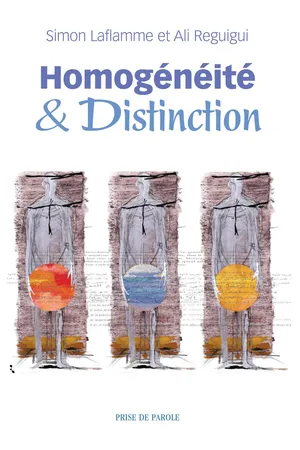
Le plus important des paradigmes en sciences sociales veut que la compétence linguistique, ainsi que la production des idées, s'expliquent principalement par référence à l'origine familiale, en fonction notamment du statut socioéconomique des parents. Ce livre met en évidence le caractère obsolète, voire erroné, d'une telle position. À l'heure actuelle, deux positions s'affrontent en sciences humaines: la première soutient que les sociétés postmodernes évoluent vers la diversification des comportements, allant même jusqu'à s'interroger sur la possibilité, pour l'humain, de vivre en collectivité; la deuxième annonce l'homogénéité des consciences et des actions et prédit la fin des différences entre les individus. Ce livre démontre que ces positions sont toutes deux à la fois vraies et fausses. Cette étude appuie son propos sur des données originales: des textes rédigés par des jeunes dans divers pays et des questionnaires auxquels ces jeunes ont répondu, des dizaines de codifications de ces textes et de ces questionnaires. La recherche repose sur une collecte de données complexe effectuée dans trois pays (le Canada, la France et la Tunisie) et sur cinq groupes linguistiques (les Canadiens français, les Canadiens anglais, les Français, les Tunisiens francisants et les Tunisiens arabisants). L'un des tours de force de l'ouvrage est d'avoir réussi à opérationnaliser ces hypothèses afin d'en vérifier le statut scientifique.
- 260 pages
- English
- PDF
- Available on iOS & Android
eBook - PDF
Homogénéité et distinction
About this book
Information
Subtopic
SociolinguisticsIndex
Social SciencesTable of contents
- C1
- DES MÊMES AUTEURS
- TITRE
- CRÉDITS
- INTRODUCTION
- CHAPITRE PREMIER: Des situations semblables et différentes
- CHAPITRE II: L’échantillon canadien-français
- CHAPITRE III: L’échantillon canadien-anglais
- CHAPITRE IV: L’échantillon français
- CHAPITRE V: L’échantillon des Tunisiens francisants 260
- CHAPITRE VI: L’échantillon des Tunisiens arabisants 343
- CHAPITRE VII: Analyse comparée
- CHAPITRE VIII: Homogénéité et distinction
- CONCLUSION
- BIBLIOGRAPHIE
- TABLE DES MATIÈRES
- C4
Trusted by 375,005 students
Access to over 1.5 million titles for a fair monthly price.
Study more efficiently using our study tools.
Frequently asked questions
Yes, you can cancel anytime from the Subscription tab in your account settings on the Perlego website. Your subscription will stay active until the end of your current billing period. Learn how to cancel your subscription
No, books cannot be downloaded as external files, such as PDFs, for use outside of Perlego. However, you can download books within the Perlego app for offline reading on mobile or tablet. Learn how to download books offline
Perlego offers two plans: Essential and Complete
- Essential is ideal for learners and professionals who enjoy exploring a wide range of subjects. Access the Essential Library with 800,000+ trusted titles and best-sellers across business, personal growth, and the humanities. Includes unlimited reading time and Standard Read Aloud voice.
- Complete: Perfect for advanced learners and researchers needing full, unrestricted access. Unlock 1.5M+ books across hundreds of subjects, including academic and specialized titles. The Complete Plan also includes advanced features like Premium Read Aloud and Research Assistant.
We are an online textbook subscription service, where you can get access to an entire online library for less than the price of a single book per month. With over 1.5 million books across 990+ topics, we’ve got you covered! Learn about our mission
Look out for the read-aloud symbol on your next book to see if you can listen to it. The read-aloud tool reads text aloud for you, highlighting the text as it is being read. You can pause it, speed it up and slow it down. Learn more about Read Aloud
Yes! You can use the Perlego app on both iOS and Android devices to read anytime, anywhere — even offline. Perfect for commutes or when you’re on the go.
Please note we cannot support devices running on iOS 13 and Android 7 or earlier. Learn more about using the app
Please note we cannot support devices running on iOS 13 and Android 7 or earlier. Learn more about using the app
Yes, you can access Homogénéité et distinction by Simon Laflamme, Ali Reguigui in PDF and/or ePUB format, as well as other popular books in Social Sciences & Sociolinguistics. We have over 1.5 million books available in our catalogue for you to explore.