This reassuring, practical and transformative guide is essential reading If you suffer from, or think you might be suffering from, IBS, an uncomfortable condition which can feel like it's running your life. This book will help you regain control. Beat Your Irritable Bowel Syndrome explains all the worthwhile therapies, helps you identify which one to try, and shows how to work with your doctor on defeating this distressing condition. It works through all the areas of your lifestyle which might be contributing, including diet and stress management, as well as making sure you have the right clinical support. It will give you strategies for immediate relief, along with showing how the latest research findings can offer long-term solutions, and explains the benefits of both well-known and less well-known therapies, including: - Exercise
- Relaxation and hypnotherapy
- Understanding the importance of balance in the gut.Change your life by picking up this book and making a plan to beat IBS.
eBook - ePub
Beat Your Irritable Bowel Syndrome (IBS) in 7 Simple Steps
Practical ways to approach, manage and beat your IBS problem
- 256 pages
- English
- ePUB (mobile friendly)
- Available on iOS & Android
eBook - ePub
Beat Your Irritable Bowel Syndrome (IBS) in 7 Simple Steps
Practical ways to approach, manage and beat your IBS problem
About this book
Information
Topic
MedicineSubtopic
Nutrition, Dietics & Bariatrics1
Understand your IBS

In Step 1 you will learn:
• what causes an irritable bowel
• how your digestive system works and why it sometimes goes wrong
• the Seven Steps to a successful treatment.
There’s a solution to your irritable bowel problems. And it might come as soon as today. But even if there are setbacks and disappointments and false trails followed and abandoned, in the end it will be beaten. With persistence you and this book together will find a solution.
Never doubt it.
If you’ve already been to a doctor, or possibly several doctors, you may have been told you have IBS (irritable bowel syndrome) and that there’s no cure for it. You may have read the same in books or on the Internet. Well, that’s simply not true. How can I say that so confidently? I say it because IBS is not a disease. A syndrome is a collection of symptoms. That’s all.
Being told you have IBS is only halfway between a description and a diagnosis. It’s as if you went to the doctor complaining of a recurring pain above your right eye and were told you had a headache.
Recurring headaches can have several causes and it’s the same with an irritable bowel. Some of the causes of an irritable bowel are definitely curable and all of them are treatable. When we know more, the term ‘IBS’ will probably disappear. In its place will be several defined conditions, some of which already have cures, while the rest will have cures one day.
The medical profession is in a state of flux over IBS. There are those who say IBS is quite specifically a loss of coordination in the muscles of the gut (which is why IBS is sometimes referred to as ‘spastic colon’ or ‘irritable colon’). Others use IBS as an umbrella term to cover what’s left when other identifiable diseases have been eliminated. As a sufferer it doesn’t really matter to you what terminology is used. You’re suffering discomfort, you’re in pain, you’re embarrassed, you’re worried, your life is being spoilt and you want the symptoms to go away, whatever the cause or causes (because several problems can sometimes act together). You want to be cured. And you can be.
Have I got IBS?
Many irritable bowel sufferers tell me they were relieved when they got a ‘diagnosis’ of IBS because at least they knew ‘what was wrong’. But, in reality, hearing that you have IBS is a long way from knowing what’s wrong. The problem with the phrase ‘irritable bowel syndrome’ is that it makes something vague sound like something quite specific. IBS is not specific. Nevertheless, it’s the term you’ll hear again and again when dealing with the medical profession. So let’s see how IBS is assessed.
Probably your doctor will use the Rome III criteria. These have nothing to do with Rome as a place but with the so-called Rome Foundation, a non-profit organization whose stated mission is specifically to improve the lives of people with functional gastrointestinal disorders (FGIDs), of which IBS is said to be one. A ‘diagnosis’ of IBS under Rome III requires:
• recurrent abdominal pain or discomfort at least three days a month for at least the last three months
Plus two of the following:
• improvement in symptoms following defecation
• change in the frequency of defecation
• change in the appearance of the stools.
I prefer simply to talk of an irritable bowel because it’s a vague term for a vague condition (or, rather, a large number of specific conditions that are all lumped together). However, when I’m discussing the work of researchers or other members of the medical profession I’ll use ‘IBS’ because that’s the term they use. To see if you have an irritable bowel answer the following ten questions.
 | Diagnostic test |
1 Do you experience bloating?
2 Do you have abdominal pain?
3 Is the pain worse after eating?
4 Is the urge to defecate sometimes embarrassingly urgent?
5 Is the pain relieved for a while after a bowel movement?
6 Do you feel as if evacuation of the bowel was incomplete?
7 Is there any blood or mucus in your stools?
8 Do you suffer from constipation or diarrhoea or both alternately? (Check with the Bristol Stool Scale Chart in Figure 1.1 below.)
9 Do you feel nauseous before or after bowel movements?
10 Do you suffer from any of the following: frequent headaches, fatigue, backache and muscular pains, poor appetite, quickly feeling full, belching, heartburn, frequent urination?
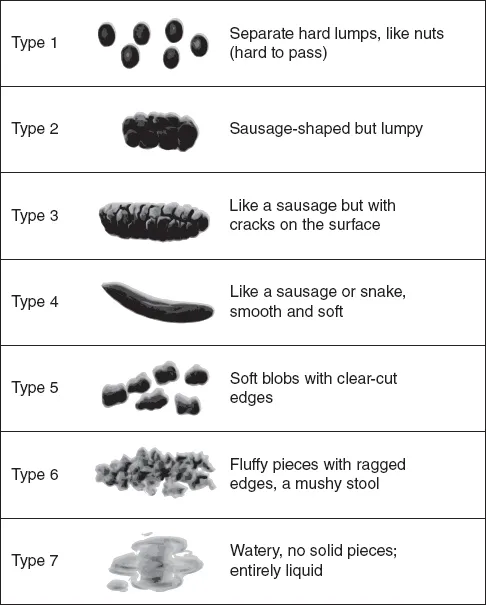
Figure 1.1 The Bristol Stool Scale Chart
Your score: ☐
Questions 1 to 9 set out the predominant symptoms of an irritable bowel. Question 10 lists the less frequent symptoms. If you answered ‘yes’ to all or most of those questions, then you have an irritable bowel. However, there are other specific conditions, such as inflammatory bowel disorder (IBD), that have the same or a very similar set of symptoms. Those conditions will need to be ruled out by your doctor.

What’s included in this book?
The idea of this book is to be as comprehensive as possible. You have irritable bowel symptoms and you want them treated. It doesn’t matter if they have other names or what causes them. You want them sorted and, if possible, you want them cured.
If your irritable bowel is caused by any of the following or comes into any of the following categories, this book is for you:
• Intestinal spasms. The muscles of the small and large intestines don’t work in a smooth and coordinated manner. Food being digested doesn’t churn and advance as it should. The result is discomfort and pain.
• Dysbiosis. Too many ‘bad’ bacteria and not enough ‘good’ bacteria. Symptoms include bloating, gas and pain. Treatment is via probiotics (food and supplements containing ‘good’ bacteria) and diet. (If the ‘bad’ bacteria are Clostridium difficile (C. diff) and can not be cleared by antibiotics, then a faecal microbiota transplant (FMT) may be a cure.)
• Faulty transporters. A problem with the transporters that carry nutrients across the epithelium (gut lining) may mean that certain foods can’t be tolerated. Treatment is through diet.
• Small intestinal bacterial overgrowth (SIBO). SIBO means you have bacteria growing in a part of the gut that should be virtually sterile. The symptoms include gas and abdominal pain. Treatment is by diet alone, or together with a special antibiotic.
• Enzyme deficiency. Enzymes are catalysts – that’s to say they speed up chemical reactions. Without the right enzymes your food will never be digested. Symptoms of deficiency include abdominal pain, bloating, gas and incompletely digested food in the stools.
• Lactose intolerance. An inability to digest lactose, a type of sugar mainly found in milk and dairy products. Symptoms include abdominal bloating, wind and diarrhoea. Lactose intolerance can be identified by a breath or blood test. Treatment is the avoidance of food or drink containing lactose.
• Gluten intolerance. Gluten is what’s known as a ‘protein composite’ and is found in wheat, barley, rye and certain other members of the grass family. Intolerance produces the classic irritable bowel symptoms of bloating, diarrhoea and abdominal discomfort or pain. Extreme sensitivity is known as coeliac disease. In 2016 another family of proteins in wheat and other grains was found to cause problems in susceptible individuals. Known as amylase-trypsin inhibitors (ATIs), these proteins can trigger powerful immune responses in the gut, provoking further problems in the lymph nodes, kidneys, spleen and brain.
• Food allergy or intolerance. For a variety of reasons you may not be able to cope with some of the foods that other people eat without problems. Lactose and gluten...
Table of contents
- Cover
- Title
- Dedication
- About The Author
- Acknowledgements
- Contents
- Foreword
- Step 1: Understand your IBS
- Step 2: Get relief fast
- Step 3: Decide what you and your doctor are going to do
- Step 4: Take control of your diet
- Step 5: Take control of your brains
- Step 6: Take control of your body
- Step 7: Take control of your hormones
- Taking it further
- Copyright
Trusted by 375,005 students
Access to over 1.5 million titles for a fair monthly price.
Study more efficiently using our study tools.
Frequently asked questions
Yes, you can cancel anytime from the Subscription tab in your account settings on the Perlego website. Your subscription will stay active until the end of your current billing period. Learn how to cancel your subscription
No, books cannot be downloaded as external files, such as PDFs, for use outside of Perlego. However, you can download books within the Perlego app for offline reading on mobile or tablet. Learn how to download books offline
Perlego offers two plans: Essential and Complete
- Essential is ideal for learners and professionals who enjoy exploring a wide range of subjects. Access the Essential Library with 800,000+ trusted titles and best-sellers across business, personal growth, and the humanities. Includes unlimited reading time and Standard Read Aloud voice.
- Complete: Perfect for advanced learners and researchers needing full, unrestricted access. Unlock 1.5M+ books across hundreds of subjects, including academic and specialized titles. The Complete Plan also includes advanced features like Premium Read Aloud and Research Assistant.
We are an online textbook subscription service, where you can get access to an entire online library for less than the price of a single book per month. With over 1.5 million books across 990+ topics, we’ve got you covered! Learn about our mission
Look out for the read-aloud symbol on your next book to see if you can listen to it. The read-aloud tool reads text aloud for you, highlighting the text as it is being read. You can pause it, speed it up and slow it down. Learn more about Read Aloud
Yes! You can use the Perlego app on both iOS and Android devices to read anytime, anywhere — even offline. Perfect for commutes or when you’re on the go.
Please note we cannot support devices running on iOS 13 and Android 7 or earlier. Learn more about using the app
Please note we cannot support devices running on iOS 13 and Android 7 or earlier. Learn more about using the app
Yes, you can access Beat Your Irritable Bowel Syndrome (IBS) in 7 Simple Steps by Paul Jenner in PDF and/or ePUB format, as well as other popular books in Medicine & Nutrition, Dietics & Bariatrics. We have over 1.5 million books available in our catalogue for you to explore.