Richard Stephens became the focus of international media attention in 2009 for his research on the psychological benefits of swearing as a response to pain. Now, fresh from winning the 2014 Wellcome Trust Science Writing Prize, Richard's first popular science book uncovers other pieces of surprising and occasionally bizarre scientific enquiry showing that what we at first perceive as bad can, in fact, be good.More pub conversation than science book, Richard's writing style is very accessible - both engaging and humorous. Think wasting time is bad? Not always! Research shows that taking time out can help you solve difficult problems. And if you can't be bothered tidying up, well fine, research shows that people are more creative in a messy environment. Swearing is rude but research shows that in some situations it can be a form of politeness. Swearing can also be used as a tool of persuasion.Black Sheep casts a slant on a range of human experiences from life to death, sex to romance, from speed thrills to halting boredom and from drinking alcohol (in moderation) to headily excessive bad language. This is a fascinating left-field tour of the world of psychological science. Get ready for the many hidden benefits of being bad that you really won't have seen coming.
- 256 pages
- English
- ePUB (mobile friendly)
- Available on iOS & Android
eBook - ePub
Black Sheep: The Hidden Benefits of Being Bad
About this book
Information
1
Sleep around
It was early evening at the 1983 American Urological Society annual meeting in Las Vegas and the scientists and their partners in the audience had already donned dinner jackets and ball gowns in readiness for the conference dinner. The final lecture of the day, ‘Vaso-active therapy for erectile dysfunction’, would explain a new treatment for impotence involving injecting a drug directly into the penis. However, as Laurence Klotz, who attended the lecture and produced a memoir for posterity, noted, the mode of presentation for conveying the research findings was unique and memorable [see Klotz, below].
As the talk got underway some audience members reflected that the speaker, Professor G. S. Brindley of the Institute of Psychiatry, King’s College London, was not noted for the unusually informal attire he had chosen to wear that evening. However, they quickly forgot about this as a series of highly explicit slides was projected onto the auditorium screen. The quantity and quality of the erections depicted were beyond dispute but, still, anyone with a healthy scientific scepticism would have been quick to point out that pictures don’t prove much on their own. This same thought seemed to be troubling the speaker and this led him to put an odd question to his audience: ‘Would a normal person experience sexual arousal as a result of giving a lecture?’ Encouraged by shakes of the head, the meeting headed into uncharted waters when Professor Brindley announced that he had injected his own penis shortly before the talk.
The audience had barely processed this shocking revelation when the ageing and bespectacled professor stepped out from behind the rostrum, and to gasps pulled his tracksuit trousers tightly around his crotch. It’s difficult to know whether what came next was brave or foolhardy. Still unsatisfied with the demonstration, Brindley took the unprecedented step of dropping his trousers and underwear, the better to display the undoubtedly impressive results of his research. The screams of the female audience members had not yet fully subsided when he set off towards the front row, trousers around ankles, offering the gallery a personal opportunity to ‘confirm the degree of tumescence’. However, the hubbub had by now grown so tumultuous that, still some way off, he at last had a change of heart. He pulled up his pants, returned to the rostrum and rapidly brought the talk to a close – but history had been made. Today Giles Brindley’s Wikipedia page records how, despite accomplishments in a diverse array of scientific fields, he remains best known for this most unusual and memorable conference presentation.
But why should such a hysterical reaction have occurred? It’s because sexual activity, in its many different forms, has been frowned upon by societies since Biblical times. As an example, Genesis 38:9 states: ‘And Onan knew that the seed should not be his; and it came to pass, when he went in unto his brother’s wife, that he spilled it on the ground, lest that he should give seed to his brother. And the thing that he did displeased the Lord: wherefore he slew him also.’
This passage describes Onan’s efforts to avoid impregnating his sister-in-law. It gave rise to the word ‘onanism’, meaning masturbation, and this Biblical passage is widely interpreted as outlawing this sexual practice. The passage highlights the attitude of the Bible towards sexual activity as bad.
However, times change and attitudes towards sex loosened up during the counter-cultural revolution of the 1960s. This all-encompassing movement ushered into the public consciousness new tastes in music, wider acceptance of recreational drug use, the radical politics of feminism, free speech and civil rights, a growing sympathy for revolutionary and anti-war sentiment and a sexual revolution espousing sex before marriage and gay liberation. Today, sexual content has become part of mainstream culture, and yet, in the second decade of the 21st century, sex is still a subject that can provoke discomfort when brought up in public. If you doubt that, picture yourself growing up watching a film on TV with your parents – and remember the mutual, intergenerational, toe-curling awkwardness engulfing the room during a sex scene. Topics related to sex have enormous potential to embarrass – as one scientist, who probably should have known better, found out.
The Brindley episode illustrates much, not least that science is not immune from the taboos and politics of the times. Still, as the barriers to studying sex have come down, including the legalization of certain sex acts that were outlawed not so long ago, there is now a thriving interest in the science of sex. It began with the work of pioneers like the biologist Alfred Kinsey in the 1940s, whose surveys revealed controversially high prevalence in middle class America of taboo sexual practices such as masturbation and oral sex. Then there was the US-based physician and psychologist team of Masters and Johnson in the 1960s, who for the first time observed and measured, up close and personal, human sexual activity in their laboratory.
The scope of studies conducted today span from volunteers viewing erotic material to having them perform live sex acts. Research participants have undergone brain scans, psychological testing and more besides both during and after sex. This means that we are now in a position to know, scientifically, more about the benefits and otherwise of sexual activity in its many forms than ever before. And I don’t mean the self-evident reproductive benefits of sex. There are many useful (and some not so useful) side effects of entering a state of sexual arousal. Let’s begin with a simple question – have you ever wondered what goes on in your brain during sex?
New uses for old equipment
Researchers at Stanford University in California wanted to find out how sexual arousal activates different parts of the brain [see Arnow et al, below]. They did this in a very straightforward way – they had some young men watch erotic movies while undergoing a functional magnetic imaging brain scan. Magnetic resonance imaging uses magnetization of atoms in the body to create images of internal organs. Functional magnetic resonance imaging, or fMRI for short, is a further refinement that uses the level of blood oxygen to detect changing activity in cells. An fMRI brain scan shows the parts of the brain that become active as people perform different tasks and activities.
The erotic films used in the study depicted couples engaged in intercourse and fellatio. The researchers were unsure whether to show several short two-minute erotic films or a longer nine-minute movie, so they tried both. As it turned out they need not have been overly concerned because sexual arousal was sustained for the duration of both lengths of film. Sports films were also used as a point of comparison. These portrayed sequences of play from American football and baseball games.
Ingeniously, an electrical expanding cuff designed to measure blood pressure was adapted to be placed over the penis to provide an objective measure of each young man’s level of ‘physiological interest’ in the movies. The technical term of this type of interest is penile turgidity. My inner science geek loves that there is a correct scientific term for penile erections and that these can be measured and scored such that the more prominent the erection, the greater the turgidity score. I’ve included a graph from the paper showing how turgidity increased each time a new erotic film started (this is the line of the graph that looks like a mountain range). While the young men were inside the scanner watching the films they were also invited to press a button whenever they found a scene particularly arousing – these button presses are also shown in the graph (marked ‘A’, ‘B’ and ‘C’) and you can see that they mostly correspond with moments of physiological arousal.
So what happens in the sexually aroused brain? The brain regions that became active during the sexual arousal brought about by watching an erotic film were the visual areas; the anterior cingulate gyrus, which is known to become active as we direct our attention to particular parts of our surroundings; the hypothalamus, which is known to coordinate body temperature, hunger, thirst, fatigue and sleep; and structures called the caudate nucleus and insula, known to be activated as part of the brain’s reward pathways. These latter are interesting because they became active for both the erotic movies and the sports movies – but that doesn’t mean that men get off on sport. It is well established that the brain has a ‘reward circuit’ that can be activated by many stimuli.
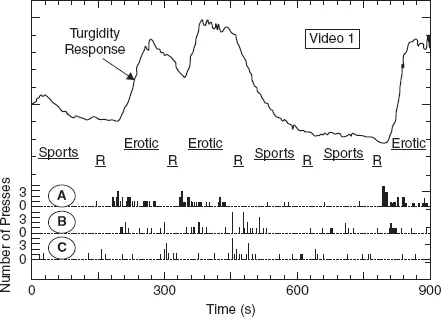
FIGURE 1.1 Experiments on penile turgidity
By permission of Oxford University Press © ‘Brain activation and sexual arousal in healthy, heterosexual males’ by Arnow, B. A. et al, Brain, Vol. 25 pp 1014–23
The caudate nucleus is known to be part of the reward circuit because of research showing that it becomes active in anticipation of receiving money. The insula is known to be part of the reward circuit because it has been shown to become active after taking cocaine. Other brain structures within the reward circuit are the anterior cingulate and the putamen. These brain structures were shown to become active in a study by researchers from Glasgow University [see McLean et al, below] in which male Scottish football fans watched video clips of their team scoring goals (compared with watching clips of near misses or midfield play). The activation of these general reward areas by a wide range of stimuli including watching erotic movies illustrates something very obvious – that sexual arousal is intrinsically rewarding. Here, we have an example of science backing up what everyone already knew – that sex is fun.
Indeed the author Charles Bukowski likened having sex to ‘kicking death in the ass while singing’. Clearly there’s a big difference between sexual arousal from watching an erotic film and the hugely immersive experience of having sex with another person. Is what happens to the brain during actual sex the same as for sexual arousal? And what about differences between men and women? For example (and as we shall see later on) when it comes to sex, men are thought to be more visually oriented, whereas women are more tactile. Believe it or not some Dutch neuroscientists have carried out a study in which men and women agreed to undergo brain scans while at the same time having sex.
Feel like a man/woman
Researchers from Groningen University in the Netherlands [see Georgiadis et al, below] invited couples to perform sexual acts while one of them underwent a brain scan using Positron Emission Tomography (PET). This type of scan involves injecting a radioactive tracer into the blood stream of the person being scanned, and this tracer is what shows up in the images generated by the machine. The areas of the brain that show increased blood flow at a given moment are thought to be working harder, and so to be particularly involved in whatever activity is happening in that moment.
The member of the couple that was being scanned definitely got the better deal. They sat on a comfortable chair, closed their eyes and enjoyed the sexual attention of their partner. The partner had to work a little harder, stimulating the genital area of their mate (penis for males; clitoris for females) sufficiently so that they would reach a state of sustained sexual arousal and eventually orgasm. To reduce unwanted effects the couples were asked not to communicate verbally during the scans. Despite these constraints, and the fact that these couples were having sex under some most unusual conditions, there was sufficient familiarity for the volunteers to agree that there were no important differences between their sexual experience in the scanner and how they usually went about things. Of interest were the similarities and differences in men’s and women’s brain activity during physical sexual arousal and orgasm.
There were various differences in the brains of people having sex compared with those in the previous study that watched erotic movies. The most apparent gender differences were pre-orgasm. At this point men showed increased activation of the right posterior claustrum compared with women. This region of the brain is used for integrating different sense modalities (e.g. touch and vision) and its activation provides one example of how men’s sexuality is more visual than that of women. On the other hand, women showed increased activation of the rear part of the left parietal cortex, which is a key interface between sensory and motor areas, as well as the motor cortices of the frontal lobes. This difference in men and women might be explained by ‘mirror neuron theory’, which is the idea that some parts of the brain connected with muscular movement don’t just become active when making movements, but also indirectly from watching another person perform a movement. This indirect activation is likened to a mirroring effect. The finding that women’s motor cortices become active when their partner performed genital stimulation on them hints at the idea that women have a higher capacity for sensing the perspective of others than men do. The women seemed to have been mirroring their partner’s movements at a neural level.
But the differences between men’s and women’s brains during sexual arousal are not what interest me most about this paper. What fascinates me is the similarity during orgasm. Men and women showed a clear deactivation of the orbitofrontal cortex during the moments of orgasm. This part of the brain, when active, is involved in urge suppression, appetite, self-monitoring and self-referential thought. Deactivation of the orbitofrontal cortex leads to opposite states – respectively, inability to suppress urges, no longer having an appetite (feeling satiated) and an absence of self-monitoring and self-referential thought such as would be associated with a more carefree state of mind.
Men’s and women’s perspectives on the world can seem so different. How men and women read situations can vary greatly and is captured succinctly by the well-known title of relationship counsellor John Gray’s book: Men Are from Mars, Women Are from Venus. Can a man ever know what it is like to be a woman? Can a woman understand what it is like to inhabit a man’s body? Usually, the answer is that they cannot but perhaps there are certain moments when they come close. The feeling of orgasm is very similar for both sexes to the extent that health professionals (gynaecologists, medics and psychologists) have been unable to tell apart men’s and women’s verbal descriptions of it. It could just be that the shared deactivated orgasmic brain state may be one instance when the inner workings of the minds of men and women are similar. A hidden benefit of sex is to unite men and women in the mental experience of orgasm – which appears to be identical for males and females. The moment of sexual climax may be when we are mentally closest to the opposite sex.
But as well as this psychological benefit of the act of sex, other more physical benefits can arise from our performances in the bedroom.
Frowns, scowls and grimaces
Beauty therapists like Eva Fraser recommend that you regularly exercise your face to maintain firm and healthy facial muscles. She claims that the muscles of the face can be toned like any other muscles in the body resulting in reduced lines and wrinkles, fuller uplifted cheeks, a firmer jaw line and stronger and lifted eyelids. All this adds up to a younger, healthier appearance, which is very desirable – but is it true? If popularity is any measure of success, then the answer is yes, because her book, Eva Fraser’s Facial Workout has been in print for more than 20 years. Peering inside, it recommends the reader to undertake ten minutes of various eyebrow-lifting, chin-gurning exercises each day. Now, personally, this is not something that I could commit to – repetitive exercises of any kind are just not my thing. But seeing this book made me wonder whether there might be another more fun way to work out those cheek muscles.
Psychologists have been interested in facial expressions during sex since the pioneering studies of Masters and Johnson who, as I mentioned earlier,...
Table of contents
- Cover
- Title
- Dedication
- Acknowledgements
- Contents
- List of illustrations
- Foreword
- 1 Sleep around
- 2 Drink up
- 3 Damn good
- 4 Floor it
- 5 Fancy that
- 6 Stress more
- 7 Waste time
- 8 Die hard
- Copyright
Trusted by 375,005 students
Access to over 1.5 million titles for a fair monthly price.
Study more efficiently using our study tools.
Frequently asked questions
Yes, you can cancel anytime from the Subscription tab in your account settings on the Perlego website. Your subscription will stay active until the end of your current billing period. Learn how to cancel your subscription
No, books cannot be downloaded as external files, such as PDFs, for use outside of Perlego. However, you can download books within the Perlego app for offline reading on mobile or tablet. Learn how to download books offline
Perlego offers two plans: Essential and Complete
- Essential is ideal for learners and professionals who enjoy exploring a wide range of subjects. Access the Essential Library with 800,000+ trusted titles and best-sellers across business, personal growth, and the humanities. Includes unlimited reading time and Standard Read Aloud voice.
- Complete: Perfect for advanced learners and researchers needing full, unrestricted access. Unlock 1.5M+ books across hundreds of subjects, including academic and specialized titles. The Complete Plan also includes advanced features like Premium Read Aloud and Research Assistant.
We are an online textbook subscription service, where you can get access to an entire online library for less than the price of a single book per month. With over 1.5 million books across 990+ topics, we’ve got you covered! Learn about our mission
Look out for the read-aloud symbol on your next book to see if you can listen to it. The read-aloud tool reads text aloud for you, highlighting the text as it is being read. You can pause it, speed it up and slow it down. Learn more about Read Aloud
Yes! You can use the Perlego app on both iOS and Android devices to read anytime, anywhere — even offline. Perfect for commutes or when you’re on the go.
Please note we cannot support devices running on iOS 13 and Android 7 or earlier. Learn more about using the app
Please note we cannot support devices running on iOS 13 and Android 7 or earlier. Learn more about using the app
Yes, you can access Black Sheep: The Hidden Benefits of Being Bad by Richard Stephens in PDF and/or ePUB format, as well as other popular books in Psychology & Behavioural Management. We have over 1.5 million books available in our catalogue for you to explore.