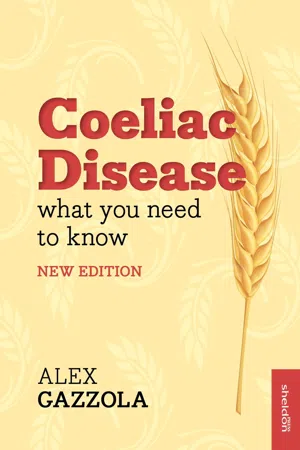
Coeliac disease (CD) is an auto-immune disease caused by intolerance to gluten, found in wheat, rye and barley. It affects an estimated 700, 000 in the UK, plus many more who are undiagnosed. This new edition is an invaluable guide to those who have just been diagnosed with CD, or who are going through the diagnostic process. It has been thoroughly updated in line with 2014 food labelling laws. It also covers the controversial issue of FODMAPS, a type of carbohydrate common in foods that are difficult to digest. Topics include: · tests and diagnoses
· food sense - labelling and shopping
· diet and nutrition
· health issues
· emotional wellbeing
· children and family
· research and future therapies
· further help and resources, including gluten-free food sources
- 160 pages
- English
- ePUB (mobile friendly)
- Available on iOS & Android
eBook - ePub
About this book
Information
Topic
MedicinaSubtopic
Nutrición, dietética y bariatría1
What coeliac disease is
Coeliac disease (CD) is characterized by chronic inflammation and erosion to the lining of the small intestine – the section of the digestive system that connects the stomach to the large intestine or colon and helps to digest and absorb food and nutrients – in genetically predisposed individuals.
The damage is caused by consuming gluten – a mix of proteins found in wheat, barley and rye, and therefore in many foods, such as breads, cakes and pastas, that contain them.
CD is not a food allergy, and neither is it accurate to call it a food intolerance. It is an autoimmune disease. Autoimmune diseases are those in which the body’s immune system attacks its own tissues. In CD, these tissues are those of the gut – although other organs may well also be affected.
The disease is permanent and presently incurable, but symptoms can be resolved and damage reversed in virtually all cases when gluten is removed from the diet.
(Coeliac is pronounced see-lee-ack and is spelled ‘celiac’ in North America.)
Symptoms
CD can affect many organs and systems in the body, producing any number of a wide range of non-specific symptoms that vary in severity between patients.
Some people have few or no obvious symptoms.
Symptoms in adults
Among the possible symptoms are:
•digestive – diarrhoea, fatty stools, bloating, wind, abdominal pain, constipation, heartburn, indigestion, nausea, sickness, loss of appetite, weight loss
•nutritional – deficiency of iron (anaemia), vitamin B12, folic acid and other minerals and vitamins (caused by poor absorption of nutrients as a result of the damaged gut lining)
•skin and hair – mouth ulcers, dermatitis herpetiformis (an itchy and blistering skin rash), hair loss
•musculoskeletal – muscle wasting, muscle spasms, joint or muscle pain, osteopenia or osteoporosis (thinning or brittle bones), defective dental enamel
•nervous system – numbness, tingling in the hands or feet (neuropathy), seizures or epilepsy, unsteadiness or shaking (ataxia)
•reproductive – delayed puberty, low fertility, recurrent miscarriage, early menopause
•cardiovascular – irregular heartbeat, palpitations, breathlessness
•emotional – depression, anxiety, mood swings
•physical – pallor, tiredness or lethargy, poor growth.
Presentation of symptoms in adults
It used to be the case that the ‘typical’ adult coeliac patient presented with severe digestive complaints and strong signs of malnutrition, but while doctors still see such patients, these days they are no longer the norm.
Instead, the kinds of people who doctors see have vague, non-specific or non-serious complaints, such as mild tummy upsets, feelings of tiredness, unresolved irritable bowel syndrome (IBS) or a general sense of ill health.
Diarrhoea remains the most common symptom, but it affects only around half of new patients, and it may be sporadic.
Other commonly reported symptoms are tiredness or lethargy (often caused by anaemia), weight loss, bloating and abdominal discomfort or pain.
Symptoms can come on so gradually that patients may not recognize that their health is slowly deteriorating. Often, when they do realize it, they may have only a vague sense of when the decline began.
Symptoms in babies and children
Infants and children can present with some of the complaints common to adults with CD, but typical symptoms generally include:
•digestive – diarrhoea or otherwise abnormal or pale stools, swollen tummy, low appetite or refusal to feed, vomiting, constipation
•emotional – behavioural problems, tearfulness, irritability
•physical – tiredness, signs of malnourishment, weak or wasted muscles, stunted growth or inability to gain weight.
Presentation of symptoms in children
Typical childhood CD is characterized by the onset of obvious symptoms at between six months and two years (i.e. soon after the usual introduction of grains), including pale diarrhoea, vomiting, swollen abdomen, muscle wasting, failure to gain weight, and general physical and emotional ill health.
Older children are more likely to have less severe digestive troubles, which may come and go. There may be delayed growth or puberty. There may be defects in tooth enamel, nutritional deficiencies and behavioural problems too.
Teenagers are more likely than other age groups (adults included) to show no symptoms at all, but any of the typical symptoms may present.
Prevalence
Screening studies suggest that around 1 per cent of Western populations has CD, though it varies by country and ethnicity.
However, only around 25 per cent of those with the disease in the UK are diagnosed – meaning 75 per cent of those with CD remain undetected. This represents almost 500,000 people.
Onset and diagnosis
CD can present at any point in life, from six months onwards well into old age.
Until only a few years ago it was believed that the detection of the disease in later life implied a long-standing undiagnosed case of CD, but new research has shown that this is not necessarily true. The disease can be triggered at any age, even after many years of gluten tolerance.
Peak age for diagnoses is among the under-tens and in those aged in their 40s – but increasing numbers are being diagnosed in older age.
Delayed diagnosis remains a significant problem, with many patients waiting over a decade after initially reporting symptoms. Increased awareness among the medical profession and the general public means this picture is improving, however.
Susceptibility and risk factors
Thanks to ever more cutting-edge research, we have come to learn more about who is susceptible to CD and which factors determine whether you may develop it. However, the full picture is not yet clear.
Genetics
There is a strong genetic component to CD. If you have an identical twin with CD, there is at least a 70 per cent chance you will have it or develop it too. If a first-degree relative (parent, sibling, child) has the disease, you are ten times as likely as the general population to have it (a 10 per cent chance). If a second-degree relative (grandparent, aunt, uncle, nephew, niece) has CD, you are twice as likely as the general population to have it (a 2 per cent chance).
In recent years scientists have unlocked more genetic secrets of CD, and we now know that virtually all people who develop the disease have one of two genetic tissue types, called HLA-DQ2 and HLA-DQ8. However, this is also true of around a third of the non-coeliac population, so clearly these genes are required, but not sufficient, for the development of CD.
Gluten and diet
Gluten must be present in the diet for CD to be expressed. Generally, the more gluten eaten, the more severe any symptoms, and possibly the greater the number of types of symptoms experienced.
In some cases the quantity and type of gluten consumed could be involved in triggering the disease. There have been suggestions that modern cultivars of wheat could be more problematic than ancient and traditional gluten grains. The intake of highly processed white flour-based products and the widespread consumption of loaves made by the Chorleywood Bread Process – which drastically reduced dough fermentation times when it was introduced in the 1960s, and which deploys a number of enzymes and other processing aids – has been implicated too. The ideas remain disputed and unproven.
‘Leaky gut’
Patients with CD are more likely to have a so-called leaky gut – that is, an intestinal lining that is more permeable than normal, and that allows incompletely digested food fragments, which are usually excluded from being absorbed, to pass through and potentially trigger an immune response.
Trigger events
For most people, there appears to be no clear reason or cause for the onset of symptoms of CD, but in others it seems con...
Table of contents
- Introduction
- 1 What coeliac disease is
- 2 Tests and diagnoses
- 3 Food sense: labelling and shopping
- 4 Food sense: eating and dining out
- 5 Food sense: diet and nutrition
- 6 Health issues
- 7 Emotional well-being
- 8 Practical issues
- 9 Children and family
- 10 Staying well
- 11 The outlook
- Useful addresses
- Further reading
- Search terms
Trusted by 375,005 students
Access to over 1.5 million titles for a fair monthly price.
Study more efficiently using our study tools.
Frequently asked questions
Yes, you can cancel anytime from the Subscription tab in your account settings on the Perlego website. Your subscription will stay active until the end of your current billing period. Learn how to cancel your subscription
No, books cannot be downloaded as external files, such as PDFs, for use outside of Perlego. However, you can download books within the Perlego app for offline reading on mobile or tablet. Learn how to download books offline
Perlego offers two plans: Essential and Complete
- Essential is ideal for learners and professionals who enjoy exploring a wide range of subjects. Access the Essential Library with 800,000+ trusted titles and best-sellers across business, personal growth, and the humanities. Includes unlimited reading time and Standard Read Aloud voice.
- Complete: Perfect for advanced learners and researchers needing full, unrestricted access. Unlock 1.5M+ books across hundreds of subjects, including academic and specialized titles. The Complete Plan also includes advanced features like Premium Read Aloud and Research Assistant.
We are an online textbook subscription service, where you can get access to an entire online library for less than the price of a single book per month. With over 1.5 million books across 990+ topics, we’ve got you covered! Learn about our mission
Look out for the read-aloud symbol on your next book to see if you can listen to it. The read-aloud tool reads text aloud for you, highlighting the text as it is being read. You can pause it, speed it up and slow it down. Learn more about Read Aloud
Yes! You can use the Perlego app on both iOS and Android devices to read anytime, anywhere — even offline. Perfect for commutes or when you’re on the go.
Please note we cannot support devices running on iOS 13 and Android 7 or earlier. Learn more about using the app
Please note we cannot support devices running on iOS 13 and Android 7 or earlier. Learn more about using the app
Yes, you can access Coeliac Disease by Alex Gazzola in PDF and/or ePUB format, as well as other popular books in Medicina & Nutrición, dietética y bariatría. We have over 1.5 million books available in our catalogue for you to explore.